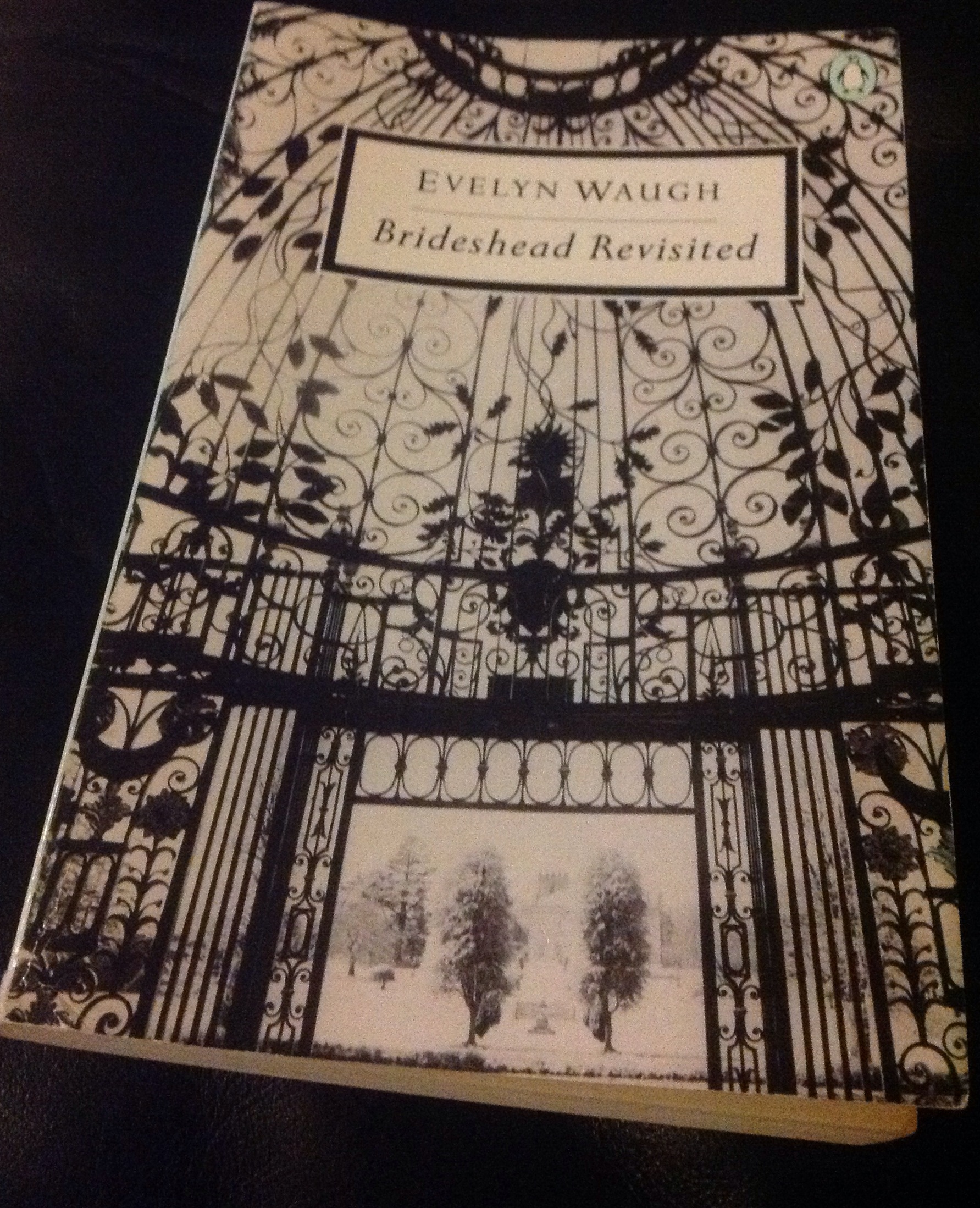
Books Read in 2014 4 – Brideshead Revisited – Evelyn Waugh

Reading Challenges : TBR Challenge2014tbrbutton

Genre: Classics, Family Drama

Narrative Style: First person narrator – Mostly told in flashback, framed by the present day in the prologue and epilogue.

Synposis: Charles Ryder falls in love with the beautiful Sebastian Flyte in his first year at university. He then comes to be fascinated by both his house and his family, eventually becoming involved with his beautiful but distant sister, Julia. photo (21)
Rating: 4/5

Format: Paperback

Published: 1944

Length of time on TBR pile: I have only had a physical copy of this book on my shelf for two years but it has been on the list of things that I feel I should have read by now and which I keep in my head since I finished university. 

I was vaguely aware of the story of this novel. I was too young in the eighties to see the BBC production of it although I did have a very clear image of Sebastian and his teddy bear. I thought I might find it a bit irritating, for a couple of reasons. It was about posh people and that always rubs me up the wrong way and I have a history of not liking books that are considered classics. (Just ask my father in law who thinks I am insane because I don’t like Tess of the D’urbervilles or Middlemarch.) However, in this case I was pleased to be proved wrong.

The early chapters, documenting Charles’ life at university are the most vivid and, in my opinion, contain the best prose. Sebastian is a fabulous character and I was as fascinated as Charles. In fact, I found his absence in the later chapters a little depressing and I longed for whatever news could be found of him, even though it was clearly never going to be good news. It may also be that the university experience was something I could relate to whereas the later chapters were further outside of my realm of experience.

This is a beautifully written novel, with sumptuous description and vivid emotion. In fact, this is much more a novel of feelings than events. Charles is an outsider and Brideshead and even when he is about to marry Julia, remains so. In this, he is the perfect narrator, charting for the reader, the tragedies of the family without really becoming involved with them.

There is a longing for times past in this novel. Not just from Charles who longs for something that the family, with their faith and their societal position, represent for him but on the part of Waugh too. This novel was published in 1945 and it must have seemed as though the world had fallen apart in the aftermath of the war. The need for a calmer, simpler time must have felt immense. Even the structure points towards this, with the prologue and epilogue set in the present of 1945 but the rest of the novel in the Arcadian past of the 1920s and 30s.

I found the ending a little disappointing because I felt sorry for Charles and I didn’t want it to be over. But there really wasn’t any more story to be told.

Books read in 2014 3. – Starter for Ten – David Nicholls

Reading Challenges: Eclectic Reader Challenge 2014eclecticchallenge2014_300

Genre: Romantic Comedy

Narrative Style: First Person Narrative, Chronological Timeline

Format: Kindle

Published: 2003

Synopsis: Working class boy, Brian Jackson goes away to university and makes an utter mess of it. 107896He enrolls for University Challenge in order to impress posh girl, Alice and spends the rest of the novel chasing after her hopelessly. He also finds time to annoy his childhood friends and just about anyone else who has the misfortune to bump into him.

Rating: 3/5

I thought I’d try to get this genre out of the way near the beginning as I have very little patience with the idea of romance even when joined with the more fun genre of comedy. I’d read One Day and The Understudy which were both okay so I thought I’d give Starter for Ten a go.

I thought that I might be able to identify with Brian Jackson, a working class boy going off to university albeit in the 80s and I went in the 90s, however he was very quickly unlikeable and annoying. Of course, Nicholls’ aim was undoubtedly to show a young man’s journey from annoying little boy to mature and sensible man but Brian never seems to learn any lessons and, indeed, at the end he is still making the same stupid mistakes.

While I understand that a working class boy at university might meet a lot of people who were posher than him, most of the characters in this book seem to be stereotypes of one type or another, none of which are very pleasant. This is also true of Jackson’s working class friends from home. I don’t know if Nicholls was trying to make a point about class difference but it was somewhat lost because none of these characters seemed like real people.

The romance with Alice is supposed to be amusing and Brian’s patheticness is a little funny, I guess but mostly I just wished he would wake up and realise that she was stringing him along. Alice is contrasted with Glaswegian socialist worker Rebecca who is angry and tough (Just another stereotype) and much more Brian’s type if only he could see it. I chose this book because I thought I’d find a romance with a male protagonist less annoying. It turns out that this was not true. Reading this reminded me of reading Bridget Jones’ Diary. I wanted to shake him just about all the way through.

The University Challenge storyline is more amusing and (unsurprisingly) I found all the angsty romance a little distracting at times. I do think that there are parts of this story that could have been developed and maybe then Brian’s character would have developed a bit more. Because he viewed Alice as some sort of unattainable beauty queen, as long as he is involved with her, he will always remain a boy.

The end of the book was not a surprise. I won’t spoil it but needless to say Brian has not learned his lesson. Even though he will be starting again at a new university, he has learned nothing and there is potential for the same mistakes being made.

Finally, all the way through this book, Nicholls makes reference to great works of literature – Tender is the Night, Brideshead Revisited, Great Expectations, to name but a few. If you are going to remind people of some of the best works in the English language, it might be a good idea to write a better book. All the many references made me think was, I wish I was reading that instead of this.

Books Read in 2014 – 2. Beautiful Losers – Leonard Cohen

Genre – Erotica, Experimental

Date of Publication – 1966

Narrative Style – stream of consciousness. Non-chronilogical

Format: Paperback

Published: 1966

Synopsis – A three part story about three friends / lovers – the first part is a first person narrative after the death of his wife and his lover, F, the second part is a letter from F to the first narrator and the third part is a thrid person summing up of their stories. 

Rating: 3/5 047533-fc222

I’m a big fan of Leonard Cohens music but I hadn’t read any of his fiction before this one so I was quite excited when I got Beautiful Losers for Christmas. Certainly, I wasn’t expecting to read something quite so erotic and quite so experimental.

One of the things that is immediately apparent about this book is that it is written by a poet. Quite often the language and the rhythm take precedence over meaning which leads to some beautiful imagery but like a lot of poetry, I didn’t always understand what was going on.

This is an intensely erotic book. Indeed, one of the original reviews called it ‘verbal masturbation and another suggested that it was the ‘most revolting book ever written in Canada’. There is more than one love triangle in this book as the three lovers experiment. However, it is never merely sex for the sake of it. Quite often it is described in an oblique way or involves body parts that aren’t necessarily thought of as erotic.

What I found more difficult to deal with were the long passages about the Catherine Tekakwitha and her religiosity. I didn’t find the historic information as interesting as the events in the present day, maybe because I have very little sense of religion myself. Also, I have a low tolerance of miracles and pilgrimages.

There seemed to be a preoccupation with ownership, with occupation of lands and with colonialism – the Indians by the Catholics, the French presence in Montreal, for example. I must admit to a lack of knowledge of the history of Canada but this book did make me think I might like to know more.

Finally, I found it a little unsatisfying. I was reminded of reading Joyce or Amis, maybe. Masters of language and they may be but they left me feeling a little lost and disappointed with myself. I don’t like to feel I may have missed the point.

Eclectic Reader Challenge – Published in 2013 – The Painted Girls – Cathy Marie Buchanan

I wasn’t really sure what to read for this category as, in terms of genre, it could be anything really. The last book I read for this category was Levels of Life by Julian Barnes so I knew I didn’t want it to be a memoir. I came across The Painted Girls on a Goodreads search and decided it was suitably different from everything else I had read for the Eclectic Reader Challenge.

download

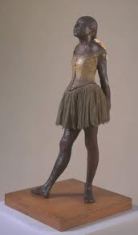
It took me a while to read it, partly because it was the summer and I was not travelling to work every day, partly because it took me a while to get into it. The novel tells the story of the van Goethem girls in Belle Epoque Paris. Marie, the middle daughter, models for Degas’ Little Dancer Aged Fourteen in order to gain extra money for a family permanently poverty stricken, while also dancing and aiming for the stars. However, life is not ready to carry her in this direction.

There has been much praise for this novel and it does have some good features. I liked the interspersing of newspaper articles and scientific treaties with the girls’ narratives, along with reviews of the art shows where Little Dancer is shown. This helps to give a period feel and added to the oppressive atmosphere. Also, reference to the ‘science’ of physiognomy – whereby it was judged you could tell what a person was like from their features – that was popular at the time, adds to the narrative as Marie is fearful that her own features make her a potential criminal and helps to contribute to her downfall.

9781594486241_custom-5864569c19efa3014fe4122c5fd149e320b924c9-s6-c30

Less successful, I feel, were depictions of Antoinette’s relationship with Emile Abadie which end with her prostituting herself in order to raise money to follow him when he is shipped off to New Caledonia. Emile is a brute – and a bit of a characiture, if you ask me -and even after he has been implicated in two murders, Antoinette still protests his innocence and dreams of her perfect future. When she does eventually realise the truth, her change of heart was equally unconvincing. 

Some reviews of The Painted Girls on Amazon complained that it was too depressing. Now, I am ready to admit that I am a miserablist and quite enjoy reading things that are considered depressing. Life would have been tough for the sisters and with the mention of Zola and L’Assommoir, the reader is given a clue to the downward trajectory of the girls’ lives. However, Buchanan moves away from the naturalist aspirations of Zola. Marie wonders why the heroine of L’Assommoir is fated by her lowly beginnings and it seems to me that Buchanan wished to give the sisters a different fate. However, for me, the happy ending seems a little too pat, a little unlikely.

Maybe it is just my lack of romance. I know I would have been happier had the ending been less so. In the end, I found that the narrative highs and lows were equally unconvincing. Don’t get me wrong, I didn’t hate this book but I didn’t love it as much as I thought I would. The descriptions of the ballet and of Marie modelling for Degas show exactly how tough the ballet world was and are perhaps my favourite part of this novel. Unfortunately other events were neither as touching or as well-written. 

Media Panics and the Need to be Sceptical: Bad Science by Ben Goldacre

I’ve always considered myself to be quite a sceptical person. That’s why I started to read Ben Goldacre’s Bad Science column in the first place. It was confirmation of things I already thought – the media are responsible for making the public both fearful and hopeful in a completely irresponsible way. It also gave me new tools with which to judge stories, the way statistics are distorted and science misrepresented, for example.

A little while ago, I went to see Goldacre speak about his new book Bad Pharma at The Showroom in Sheffield. It was both enlightening and deeply worrying as he highlighted exactly the ways that the big pharmaceutical companies bury results that don’t suit them and as a result, how doctors may not have all the information that they need to treat a patient. This was disturbing but, I thought, at least there are intelligent and motivated people like Goldacre trying to do something about it.

Seeing Goldacre speak prompted me to return to his writing and I decided to read Bad Science first although I don’t think it will be too long before I read Bad Pharma.

The first chapters in the book are about detoxing and other nonsense that the media seem to love. While it is always great to read someone debunking things quite so eloquently, part of me thought, well, if you are willing to fork out money for ear candles or an aqua detox so be it. A fool and their money and all that. I didn’t have very much sympathy for them.

One of the most interesting chapters was on the placebo effect. Everyone has some idea about what this means but I certainly had no idea how wide reaching it is. even the colour of the tablets or the packaging was important. Not long after this I tried – and failed – to convince my mother that own make, plain packaging pills were just as effective as the more expensive, official brand ones. She wouldn’t believe me or the doctor on the edition of Watchdog that we saw later that evening. It’s her money, I suppose. images

The subject matter gets more serious as the chapters progress. Goldacre looks at nutritional “experts” such as Gillian McKeith and Patrick Holford who play on the nation’s insecurities by peddling not just nonsense but expensive pills, gadgets and books. People may be foolish when it comes to dieting and miracle solutions to eating problems  but it is such an emotive issue and it is so caught up with self-esteem that it starts to be easier to sympathise. If someone is described as an expert in their field then why should the public not believe it. After all, most people don’t have the time to check up on these things. They take things at face value.

The final chapters look at how the media creates health panics and then specifically the MMR scare. I have to say, at this point, that I have no children so it is easy for me to look at this issue in an emotionless way and say I’d take the chance of immunisation and possible autism (if there were a link, which there isn’t) over the risk of a measles epidemic. That was my thought all the way through when this was all over the media. It is exactly the emotion of the case that the media have played on here along with the worry of being a bad parent. Imagine the guilt you would feel, they insinuate, if you did this to your child. Now you might say, this is all well and good because the media thought they were doing the right thing. Well, if that was the case it wouldn’t have taken them long to discover the flaws in this research but it is obviously more dramatic to blow a story out of proportion then to discover there isn’t really a story at all.

As Goldacre points out, there was a cry for more research into this area at the time and there has been more research, all of which finds no link. This does not make a good headline so it will probably never be reported so parents are still unable to make a balanced decision. Because even if you are sceptical, the details they still creep in. A part of your brain says well, there must have been something in it.

It is kill or cure and nothing in between is worth reporting on. Or creating  a scare about. And now measles and mumps are returning. Perhaps we will soon be seeing scare stories about that. And the media will probably blame the very research that they used to create the MMR scare in the first place.

In the end, I think the main thing I got from this book, is the need to be always sceptical. There will always be media panics – on health, video games, violent films, too much TV etc. – and they will always sell newspapers. It is down to us as readers to be aware of the tricks they use. Think it through and look beyond what it is saying.

Eclectic Reader Challenge – Romantic Suspense – Awaken – Katie Kacvinsky

This genre caused me problems the first time round and this time I decided to leave it until the end as I just couldn’t decide what to read for it. As anyone who knows me will tell you, I am not a romantic person and I do not like romance films and novels very much. I was amazed to find that I loved Come Unto These Yellow Sands by Josh Lanyon (which I read for this genre last time round) so much. In fact, I was contemplating reading another Lanyon or something similar. But I had tried to make the books I read for each category as different as possible this time round. And it is called the Eclectic Reader Challenge after all. So I found myself trawling through lists of dreadful sounding books on Goodreads, unable to make a decision.

In the end, I asked for help from the Goodreads community and Awaken was recommended to me. It sounded interesting and certainly better than anything else I’d looked at so I decided to go with it. After all, this is the point of reading communities, to find books you would never previously have read.8665876

This book is set in a future where everyone lives through their computers and never has actual physical contact with anyone. In fact, many people never leave the house. It touches on many things that I have blogged about myself such as reading a book rather than a kindle and the thinness of online communication compared to face to face communication. Maddie, the heroine, is one such teen who is liberated from her safe online world by a group of teenagers who meet face to face, dance to actual music and go to cafes. They also protest against the controlling online digital world. So far so good.

As ever, though, the R word troubled me and I felt the love story detracted from the main story and slowed the action down too much. Even worse, I found the gendered roles stereotypical and a little depressing. It occurred to me that this is probably why I found the romance between Josh Lanyon’s gay characters easier to deal with. They didn’t fall into typical roles. In this story, Madelaine is supposed to be independent and strong, yet she cannot live without the impossibly handsome Justin even though he is arrogant, distant and talks in polemic all the time. He put his job above everything and believed he knew what was best for everyone. She fell easily into the idea of saving him from himself and breaking through all his barriers. I failed to see how it could be worth her effort.

All in all, I enjoyed the main plot about overthrowing Digital School and some good points were made about the importance of face to face communication but the romance was unconvincing and sometimes it felt like I was being hit over the head with a sign saying online communication is bad, the points were that lacking in subtlety. Overall, six out of ten.

Eclectic Reader Challenge – New Adult – The Perks of Being a Wallflower – Stephen Chbosky

I bought this book when the movie came out with the intention of reading the book and then seeing the movie. In the end, I did neither. It has been on my to-read list since then. So it seemed perfecphoto-14t for the Eclectic Reader Challenge category of New Adult.

The book is series of letters to an unnamed person addressed simply as friend. They detail the ups and downs of Charlie’s life as he starts High School describing events and people with a warmth and naivety that was mostly charming. He is shy, awkward and has little grasp of social etiquette. He is befriended by a group of older misfits and through them goes to parties, takes drugs and learns about sex and relationships. While his voice was convincing, I think that I’d have enjoyed it more if I was nearer his age. I found myself feeling a little impatient with him, the way adults do with teenagers but for the most part I was keen to read on and find out what happened to him.

It is apparent quite early on that Charlie has psychological issues relating to the death of his Aunt Helen and he swings between depression and optimism throughout the book. Details are gradually revealed giving the reader clues to what the issues may be. However, the final reveal – I won’t give it away for those who have not read it – felt a little underwhelming. Not that it wasn’t a serious issue – it certainly justified Charlie’s issues – but that it wasn’t explored very deeply, was almost brushed off with an ease that seemed unlikely.

This book is often compared to The Catcher in the Rye and, in some ways, it is an apt comparison. Both Holden and Charlie are caught in cycles of behaviour that they seemed destined to repeat and both have distinctive voices. However, ultimately I prefer The Catcher in the Rye because it is darker and less twee. I found the end of The Catcher in the Rye devastating as so little progress has been made in Holden’s journey of discovery. I don’t know why but I find this easier to relate to then the sweet optimism of Charlie’s last letter.

Eclectic Reader Challenge – Humour – I Can Make You Hate – Charlie Brooker

I’m quite an angry person. I don’t mean that I go out and start fights or anything like that but intellectually, it is definitely my default position. The news, the abundance of stupid people on the TV, the growing gap between mainstream and genuinely alternative (rather than the mainstream MCfly version of alternative), all of these things and more are capable of making my blood boil. In this sense, Charlie Brooker’s I Can Make You Hate was the perfect book to read for the humour category of the Eclectic Reader Challenge. This book is very very funny but it is also incredibly angry. And understandably so.

I knew what to expect from this book. I’d read Brooker’s columns before – particularly when he used to write Screen Burn for The Guardian and of course, he is now on TV fairly regularly. He already ranked as one of my favourite angry people (along with Ben Goldacre, Mark Kermode and David Mitchell). You know the sort of people who are passionately and endlessly angry. Like when reading Kermode, there were numerous times when I felt as though Brooker had crawled inside my head and read my thoughts. Although, obviously, he expressed them with a lot more verve and potty humour then I would have managed.

Brooker’s bile is wide-ranging. There is political comment – in my mind, David Cameron will always be a foal swallowing lizard now – cultural comment on TV, video games, music and film, as well as coverage of the Royal Wedding and the Olympic preparations. Nothing escapes Brooker’s gleeful voice of angry destruction. He manages to cut photo-10through the bullshit of modern life with remarkable clarity. And while he can come across as an angry man on a rant and clearly does want to shock people out of their complacency, he manages to avoid saying things that are just offensive and not funny or pertinent; a knack that seems to have escaped Frankie Boyle.

I would recommend this book for anyone who thinks that modern life is a bit rubbish. Believe me, by the end of reading this book, you will know exactly who to blame.

GLBT – Eclectic Reader Challenge 2013 – Rent Boy – Gary Indiana

I read Resentment by Gary Indiana when I finished my MPhil in 2001. I really enjoyed it and I vowed to read more of his stuff. So here I am, 12 years later, finally getting round to it by reading Rent Boy for the Eclectic Reader Challenge.

The narrator, Danny, is a rent boy, as you might expect but also a waiter and an architecture student. He also goes under a number of different names. Danny is the name he goes by in the series of letters that make up the novel. The narrative voice is very entertaining – Danny is intelligent and funny, both about his clients, the other rent boys he knows and the social situations he finds himself in .

As you might expect, there is a lot of sex in this book and a lot of it is quite explicit. It isn’t, however, all that sexy. Danny’s world is not a glamorous one and he does not spare the reader some of the seedier details.

When Danny gets involved with a scheme to rob rich people of the kidneys they are not using, you just know that things are not going to go well for him and fairly soon he is up to his neck in trouble and having to leave New York at an urgent pace.298753

In the end, he gives two possible endings to this scenario, both of which involve him on the run. It is difficult to say which is true. We also discover that Danny isn’t his real name either. The final lines of the novel are devastating and poignant. Danny says “I have no real name. I live where nothing has a name, and the rest is silence.” The person he is writing to is never revealed but it seems they are no wiser than the reader as to who Danny actually is.

I really enjoyed this. It was funny, full of biting social comment and gritty descriptions of the underbelly of New York. I’ll try and make it less than twelve years before I read another Gary Indiana novel.

Venus in Furs – Leopold von Sacher-Masoch – Translated Literature – Eclectic Reader Challenge

I wanted to read something a bit different for translated literature for the Eclectic Reader Challenge and this had been on my to read list for a while. I’ve read De Sade before (although a long time ago) and I thought it would be interesting to read the author who had given his name to the opposite end of the spectrum to De Sade. I can’t help wondering how you would feel having such a thing named after you (in case you don’t know, the term masochism comes from Masoch’s name). Do you suppose he knew, did it happen in his lifetime? How would friends and family react to that?

The book itself was not really what I was expecting. It is not particularly explicit and the protagonist’s Severin’s beatings are not particularly graphic. That said, this was published in 1870 and was considered shocking at the time, particularly, I think due to the idea of female dominance and cruelty and Severin’s willingness to submit to it. venus

There are some parallel’s with Fifty Shades of Grey (although this is considerably better written). Severin is in love with his venus, Wanda and adores her so much that he is willing to submit to her every whim and become a slave. They sign a contract outlining the exact nature of their relationship. Interestingly, it is Wanda who seems to have the most misgivings – at least at the beginning. Severin is more than willing to be her slave.

Unfortunately for Severin, Wanda becomes infatuated with another stronger man (in a particular stroke of cruelty, she allows him to beat Severin, marking the very end of their relationship).  It seems that being allowed to be so cruel has killed any love she had at the beginning of the novel.  She finds that she wishes to submit to her new lover whom she loves with a greater passion.

Is this suggesting that this willingness to submit is a part of love, something that is present in all of us but which shouldn’t be acted on? Certainly, I like the way that roles seem more fluid in this book than in Fifty Shades of Grey and also unlike between Christian and Anastasia, it is Severin who wishes to submit who asks for Wanda to fulfil his dreams and Wanda, the dominant one, who has to be persuaded. This certainly made me less uncomfortable than the sexual politics in Fifty Shades.

This wasn’t a great read – it wasn’t terrible either – but in terms of historical interest and cultural significance, I’m glad to have read it at last.