Eclectic Reader Challenge – Memoir – It’s Only A Movie – Mark Kermode.

There were a couple of reasons for picking up this book. First of all, it fulfilled the memoir category for the Eclectic Reader Challenge but, as the last couple of books I have read have been a bit rubbish (Yes, Tell No One by Harlan Coben, I do mean you”) I knew I wouldn’t be disappointed.

And of course, I wasn’t. In this book, Kermode imagines his life as a made for TV movie – a very funny idea which sees him detailing who would play him – Jason Isaacs – and his family members. It does seem as if spending so much time in front of a cinema screen has left Kermode with an odd view of reality and a lot of the episodes he recounts wouldn’t be out of place in a (slightly dubious) biopic. Maybe that is the point.

photo (14)

The story starts with Kermode’s early cinematic experiences, moves through his love of horror, particularly The Exorcist, through his early experiences as a critic to the celebrity status he has today. The early experiences were the most interesting, I thought. Recalling as they do, a different era when going to the cinema was a more intimate experience. Y’know when cinemas had two screens and ran two features. It made me think about going to the cinema in the early eighties and I began to recall my own experiences. Although unlike Kermode, who seems to be able remember which cinema and when for every film he has ever seen, I can’t remember what I went to see first although it was undoubtedly a Disney rerun, this being back in the days before Pixar and Dreamworks and a whole business aiming to sell cinema to small kids.

There is no doubt that Kermode is a geek – and I say this as a compliment – and a particularly grumpy geek, at that. (Amusingly a review of this, or possibly The Good, The Bad and the Multiplex, on Goodreads complained about this grumpiness as though it was a surprise. As if he had happened upon the book by sheer chance, knowing nothing about Kermode. It reminded me of when a friend went to see Billy Bragg and afterwards complained that he was too political. Well, duh.) He gamely outlines the number of people he was annoyed and irritated over the years including being put on the spot by Dame Helen Mirren after saying The Queen wasn’t a  proper film and, my own personal favourite, getting punched in the arm by Benedict Cumberbatch on behalf of Kiera Knightley who resented being called Ikea Knightley on account of her plank-like acting style. A very apt description, if you ask me.

Ultimately, this is a book about obsession and I think this is why Kermode can get away with his rants and raves. He loves cinema with his whole heart and hates the fact that some people do not give it the respect it deserves. It is only possible to remain calm about things that do not matter. Cinema matters an awful lot to Mark Kermode and thank goodness for that.

Eclectic Reading Challenge – Made into a Movie – Election – Tom Perotta

election-tom-perrotta-paperback-cover-artI loved the movie of this book. That is why I chose it for The Eclectic Reader Challenge. So I had expectations. Perhaps that was the problem. In my head, Matthew Broderick, Reese Witherspoon and a vivid portrait of high school life in America. Whichever way round it is – a beloved book or movie – it is often problematic when you approach the other version. (That’s why I still haven’t been to see The Great Gatsby and why I didn’t love The Life of Pi.)

The main problem for me was the switching between narrators. There were two problems with this. First of all, as they were all telling the same tale and it was linear, jumping between narrators was irritating and didn’t add much in the way of viewpoint, especially when sometimes the narrator might only have one or two paragraphs before someone else took up the tale again. The other problem was that none of them seemed that distinct from each other. They were lacking in personality.

The plot did drive me on though. And the theme of corruption in high school mirroring the corruption in American politics was clever and interesting but when it came done to it, the rigged election was a bit of a damp squib. I wasn’t attached enough to any of the characters to really care. Who was ruined by it and who wasn’t didn’t have an impact. The whole thing left me cold.

Maybe I would have liked this better if I hadn’t seen the movie. It’s hard to say. Without expectations, we are less disappointed. At the end, I just thought, well, there you go, that it finished. Nothing more or less than that.

The Road – Cormac McCarthy – Dystopia – Eclectic Reader Challenge 2013

I first read Cormac McCarthy years ago. I read Blood Meridian and really enjoyed it. It was gritty, violent, nihilistic and it really appealed to me. It is a little shameful that it has taken more than 10 years to follow up on that enjoyment and read another McCarthy book. To read The Road to fulfill the dystopia category for the Eclectic Reader Challenge 2013the_road.large seemed the perfect way to rectify this.

I had no expectations. I haven’t seen the film so I was aware only vaguely as to what this was about. McCarthy doesn’t give many details. There has been an unspecified happening and now there are (at first) unspecified dangers. This had the effect of unsettling the reader as there was no way of knowing exactly where the danger would come from. Details start to emerge but not enough to ever offer security to the reader. Not enough to allow knowledge of the future.

The crux of this novel is the relationship between The Man and his son, The Boy. The fact that they are not named gives the novel an universal feel. While specific events will have lead to this particular situation, there is a sense that it is a timeless situation. Acts of war, violence, atrocity have always existed and will always exist. The Man and The Boy are just the current version of the victims of this violence. Not the first, nor the last.

The Man tells The Boy to watch out for bad guys and that they are the good guys. And while the bad guys are cannibalistic and the signs we are given of their presence are horrific, The Man also acts in a way that The Boy perceives to be bad – he doesn’t help people when he could and when they are robbed, The Man retaliates in a way that is extremely brutal. This suggests that the ‘bad’ guys may also merely be responding to circumstances, in whatever way they can. In these extreme circumstances, the difference between good and bad gets smaller and smaller. After all, what would you do in order to survive?

The prose and the plot are not complicated but that does not stop this from being one of the most devastating books that I have ever read. The details that McCarthy does give build an atmosphere of tension and fear that is both compelling and horrendous. I wanted to read on and not to read on, both at the same time. I worried for The Man and for The Boy because it seems inevitable that it will not end well for them. There is no note of hope here. As such, the ending is open to interpretation. It could be seen as a rescue, as a hopeful moment but if we have learned anything in this novel, it is that human nature finds it difficult to retain its goodness under extreme circumstances and that it is difficult to tell who are the good guys and who are the bad guys. I want to hope for the best for The Boy because he, more than the man, does seem to represent the good of humanity. He often berates The Man over what he perceives to be bad behaviour but which we can can see is to do with self-preservation. Because of this, I do not feel that the ending can be straightforwardly positive but it can hope for the best. Perhaps that is all any of us can do.

A Test of Wills – Charles Todd – Eclectic Reader Challenge 2013 – Historical Mystery

Historical mystery – Eclectic Reader Challenge 2013

There are a lot of good things about this book. The setting is convincing – just after the first world war – and many of the characters are still recovering from it. The main character, Inspector Ian Rutledge, is himself suffering from the ongoing effects of shell shock and has the voice of a Scottish soldier, Hamish, forever criticising him inside his head. There were interesting moral dilemmas as well as an early suspect was a decorated war hero and the evidence against him came from another soldier who was in the process of drinking himself to death and the townsfolk considered him a coward due believing he was only pretending tp suffer from shell shock to avoid fighting. The attitude towards him seems appalling now but was certainly the prevalent view at the time. Indeed, Rutledge is very careful to keep the extent of his own problems a secret or else risk losing his position in Scotland Yard.

So far, so interesting and I started reading full of anticipation, expecting complications – because every reader of detective fiction knows that there is no such thing as an open and shut case – and there were plenty. And then somewhere, about halfway through, I started to get a little weary. First of all, Rutledge’s character began to seem a little unchanging. He gave nothing away and even Hamish’s comments started to lose their startling effect. Some of his conversations with witnesses or potential suspects seemed repetitive as he tried to get to the bottom of the story and no one would open up to him. Secondly, the other characters were all a little wearing. Perhaps, it was to do with the setting – the prim English village just after the first world war – but everybody was just a little careful and that got on my nerves.

a test of wills

In terms of the plot, there were some very interesting twists and turns along the way, some I saw coming, some not. The idea of shell shock and its effect is played out in a number of different ways – all of which are interesting and some particularly disturbing. Indeed, the moment the reader finds out exactly who Hamish was and why he died, is one of genuine emotional power and a highpoint in the novel.

However, the ending seemed a little rushed and after all the painstaking work seemed more like luck than good judgement on Rutledge’s part. It was an interesting ending but not, from my point of view, a completely satisfying one.

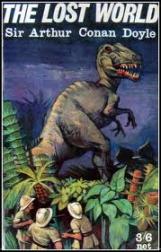
The Lost World – Arthur Conan Doyle – Eclectic Reader Challenge – Action Adventure

Since I discovered that classics are free on the kindle, I have been reading more of them. I’m not sure I would have ever got round to buying this – there would always have been something more pressing to spend my money on- but when I was looking for my next kindle buy, it jumped out at me. I’ve read quite a few of the Sherlock Holmes stories and I was curious to know whether Conan Doyle could do anything else.

When I started to read this, I had just finished the Eclectic Reader Challenge and I didn’t really know if I was going to do it twice as someone suggested. However, I realised that it would fit with the category Action Adventure so this is now the second blog I have written in my second round of reviews.

I really enjoyed this book. Certainly, Conan Doyle proves here that he is capable of writing in more than one style as this is really nothing like the Sherlock stories. The main character Edward Malone is a news reporter who, at the start of the story, proposes marriage only to be turned down by the object of his affections and told that she could only love a man who has had a great adventure. So, obediently, Malone finds himself an adventure to go on – off to the amazing lost world of the dinosaurs. (Interestingly, by the time he returns, she has married some one else – a clerk, no less. At the end of the novel, Malone is planning another adventure – presumably so he doesn’t get hurt again by one of those fickle women.)

The characters are all very well-drawn. Professor Challenger is superbly arrogant and annoying in his condescension. His intellectual rival, who is initially sceptical of the dinosaurs, Professor Summerlee is equally argumentative and arrogant and the pair have some superb arguments. The descriptions also give a wonderful sense of place and the platea

u is made to feel creepy and otherworldly before any of the dinosaurs are even s

ighted. In fact, it is a good third into the book before they even arrive at the plateau. Not that this was a problem for me – the events beforehand were all important  – but I could imagine it trying the patience of someone more used to modern literature.

lost worldIt has to be mentioned that some of the attitudes in this book are a little hard to stomach now. For example, it is taken as a given that the white men are superior, being further along the scale of evolution than any of the native characters. The one black character is loyal to the point of stupidity and talked about as if he were a pet rather than a human being. There is also a sense of imperialism, with the discussion of what to call the lakes and forests they discover as well as the assumption that the land was now theirs. This book is a hundred years old and in these attitudes it really shows. However, the sense of adventure and the action in this book are just as appealing as they ever were.

Eclectic Reader Challenge – Urban Fantasy – Something Wicked This Way Comes – Ray Bradbury

So despite having finished the Eclectic Reader Challenge, here I am posting reviews again. I’m not sure yet whether I will plan the next eleven books I read to fit with the challenge but I am certainly going to post a review when I read a book that fits.

This is one from my to be read pile. When Ray Bradbury died last year, I realised I had not read very much of his writing at all. Fahrenheit 451, a couple of short stories – a mere drop in the ocean of Bradbury’s extensive bibliography. So I went out and bought Something Wicked This Way Comes. It then took me a year to get round to reading it. Boy, am I glad I picked it up.

This book is creepy from the very first. It is set the week before Halloween. One of the boys is called Jim Nightshade. A lightening rod salesman called Tom Fury gives the boys a rod ahead of the coming storm. The scene was definitely set.

An archetypal battle between good and evil ensues. Jim and his friend Will are on the cusp of manhood, are desperate to be older, to be different and the carnival owner Mr Dark knows exactly how to give them that future. At a price, of course, there is always a price to be paid.

IMG_0048

Bradbury does not miss an opportunity to sent chills up the readers spine. The descriptions of the fairground rides and of the various circus freaks are some of the most blood-curdling I have come across. Of course, I already had some belief in the creepiness, the evilness of the carnival. Bradbury plays on those childhood fears throughout.

The ending of this book – the triumph in the end of good – felt like a merciful relief. I genuinely felt worry that Will and Jim would not survive their boyhood. I won’t spoil the ending but the way in which good triumphs is truly a joy to behold and it certainly made me feel warm again after all the chills.

Bradbury claimed that his own fears of the carnival started at age four and it seems never really left him. I hope that after writing this book, he was able to be a little bit freer from them.

Eclectic Reader Challenge – Published in 2013 – Levels of Life – Julian Barnes

In an earlier book, (The History of the World in 10 and a half chapters, a book dedicated to Pat Kavanagh) Julian Barnes made in clear how much he loved his wife. He recounted, with a sense of wonder, the moment in sleep when she moves her hair from the back of her neck so that he can snuggle in closely to her. For Barnes, this is a moment that every night proves the bond between them. (Incidentally, it is an image I think of almost nightly as I move my own hair from the back of my neck so that my husband can snuggle closer to me.) I had already associated the word uxorious with him, a word I am nearly certain I came across in one of his books although I cannot prove this without looking back through them all to find it. His once close friend, Martin Amis, called him uxorious (perhaps suggesting that Barnes was henpecked) when he moved from Kavanagh’s publishing company and Barnes severed all ties with him. This was a man that really loved his wife. So when I decided to read Levels of Life for the Eclectic Reader Challenge and I realised it was, at least in part, a meditation on grief at the loss of his wife I knew that it was going to be an emotional ride.

And it certainly was. The final chapter – The Loss of Depth – felt almost intrusive in its honesty about how he felt. It was like reading a diary entry or even an extended suicide note. Barnes has laid his soul bare for the reader to judge. I wonder if it has helped him to write it as he seems even at the end to be confused and lost, wondering if anything will ever change from the moment he is in now.

When I was reading the earlier chapters, I was wondering how this could possibly fit with what I the book to be about. But it soon became clear that they were joined by an extended metaphor photo (7)about flying, about freedom and about love, all of which Barnes feels he has now lost. All of this is exquisitely written. (Maybe I’m biased, Barnes is one of my favourite voices but it is always clear that he has a love of language and he writes in a very precise way which I enjoy.) But is in the final chapter that the writing has real emotional resonance. I felt devastated on his behalf as if he was someone I knew, not just an author I love. In the way of the un-bereaved, in the face of real grief, I longed to be able to do something. All I could do was make myself a cup of tea and shed a few tears for a woman I didn’t know who had such a profound effect on the life of one man.

Eclectic Reader Challenge – Humour – A Walk in the Woods – Bill Bryson

This was the category it took me the longest to decide on for the eclectic reader challenge. It almost seemed too obvious to pick Pratchett, Adams, Bryson, Collins, Maconie, all writers that had made me laugh out loud. At the same time, it seemed a bit risky to pick an author that I wasn’t sure of – maybe their humour wouldn’t appeal – so I decided to go for the tried and tested. Really, all of this was simply a justification for reading another wonderful Bill Bryson book.

I picked A Walk in the Woods because although I have never hiked the Appalachian Trail, I do like to hike and have done a long distance walk before so I thought I would have some empathy with what he went through.photo-3

As with all of the Bryson books that I have read, this was like being reunited with a particularly talkative old friend. The tone of the book is warm and friendly as if you were one of the fellow hikers that Bryson meets and chats to after a long days hike. Bryson is always engaging even when passing on historical detail which could be boring in a lesser writer’s hands.

Bryson, and his friend Stephen Katz, face many challenges on this walk, not least of which is their own lack of fitness at the beginning. They hit snowstorms, are assailed by insects, have maps that are dangerous in their uselessness and meet a fellow hiker so annoying that I would certainly have understood if they had murdered her in the middle of the night. In the end, they abandon her and go to spend the night in a motel.

Even when Bryson feels he is facing certain death – be it by bear, snow, sun or dehydration – he never loses his sense of humour and is quite happy to describe his own idiocy in as much detail as he describes Katz’s. He knows he is a little bit hopeless and that helps the reader to warm to him.

In the end, they do not hike the whole trail – the hundred mile wilderness at the end proves too much for them. And I must confess I was disappointed. Not because I felt that they should tried harder but because it meant the end of my journey with them, a little bit sooner than expected. A superb read for anyone who has ever donned a pair of walking boots.

Eclectic Reader Challenge – Memoir – Girl Interrupted – Susanna Kaysen

I have always been interested in reading about madness so when I signed up to do the Eclectic Reader Challenge, I decided to use Girl Interrupted for the memoir category as I had been meaning to read it for a bit. I had re-read The Bell Jar not so long ago and was interested to see what comparisons there would be in Kaysen’s memoir of the same hospital, in roughly the same era.

And there were some similarities. Both Plath and Kaysen seem distanced IMG_0045from life, unable to envisage the future or find joy in the things that were supposed to be joyful for girls their age. The difference came in the fact that Kaysen’s life outside of the asylum is not shown, simply the time she spent in hospital and, of course, in the fact that Kaysen survived to be able to look back on this period of her life.

Kaysen does not seem particularly insane. A lot of the time, her voice is reasonable with the odd descent into hysteria. Even then, like when she demands to know how long she has been unconscious during a tooth extraction and no one will tell her, there is something understandable about it. Maybe you or I wouldn’t continue to obsess about it but it was surely a reasonable request.

The ward is described in unrelenting detail and it is possible to imagine the horror of it. Every minute of their lives are accounted for. But what really comes across is the relationships between the women and the way they help each other. There are casualties along the way but there is no time to mourn and perhaps dwelling on it would be too difficult.

Towards the end of the book, Kaysen includes the description of her diagnosis – Borderline Personality – from the Diagnostic and Statistical Manual of Mental Disorders III and reflects on whether it was apt and whether she has recovered. For me, this was the most interesting part of the book. She is finally allowed to leave the hospital, not because she is cured, but because she has a marriage proposal. It does seem that a lot of the problem was to do with the narrow opportunities for women at that time. One of the symptoms of Borderline Personality is social contrariness which seems to point to social causes rather than medical ones. The fact that she is released in order to get married reinforces this fact.

Kaysen’s conclusions about her own madness reflect how I imagine a lot of people feel about themselves, a constant checking to make sure that we are not that crazy, an internal questioning and striving for normality that may evade us to a greater or lesser extent. She didn’t seem out and out crazy, more like there but for the grace of god type crazy. The sort of crazy you could imagine going.

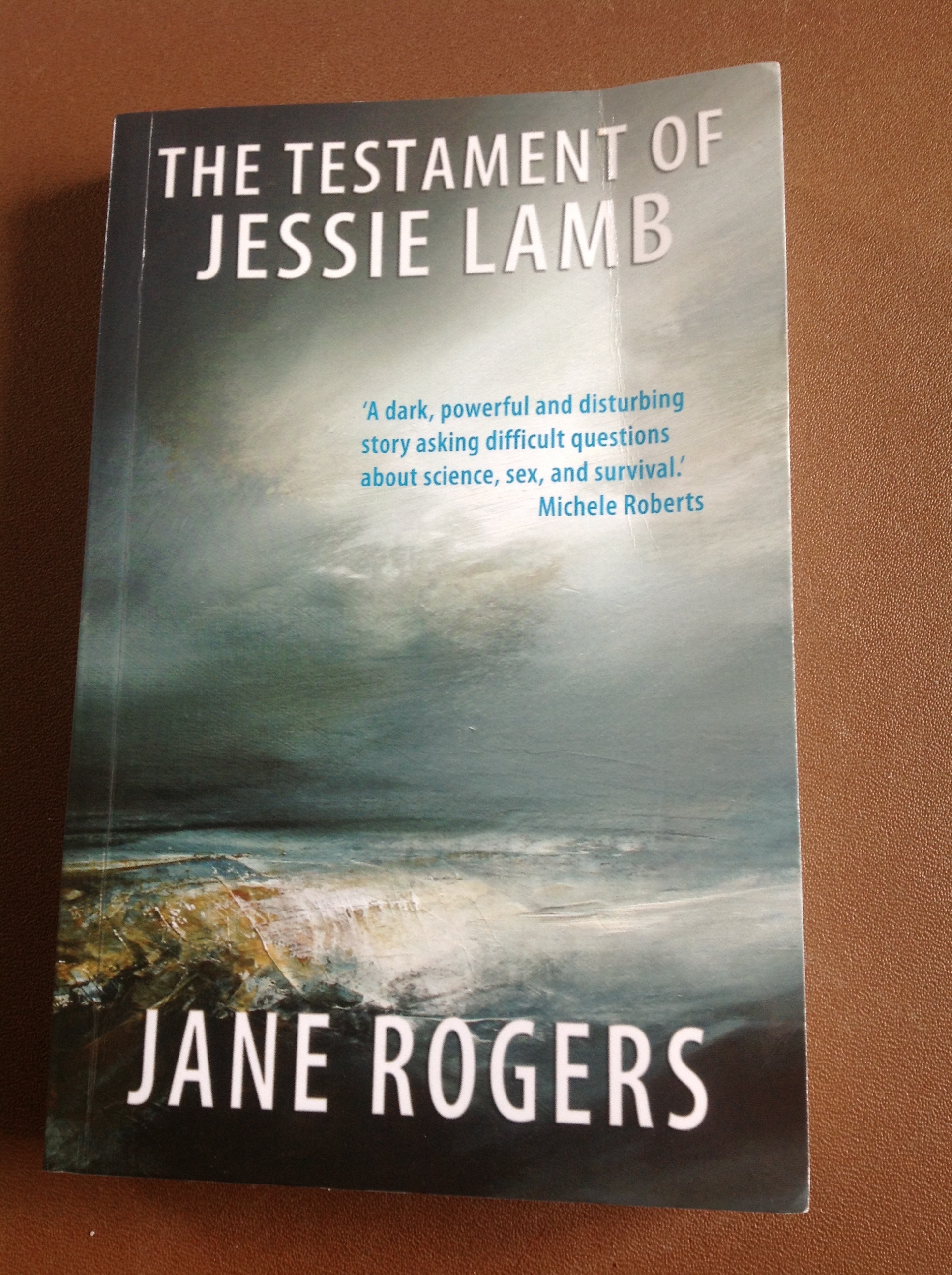
Eclectic Reader Challenge – Dystopian – The Testament of Jessie Lamb by Jane Rogers

Dystopian fiction is always interesting to read so I was pleased that it was one of the categories for the Eclectic Reader Challenge. A vision of the future, based on the problems in ours, maybe offering solutions, maybe only disasters. I am always curious to see what it is that makes other people angry and worried. So the premise of this novel interested me straightaway. The idea of women dying in their millions as soon as they become pregnant and the response of the scientists and governments to this problem was certainly intriguing (although you might say it is not a completely new idea) and I was expecting to enjoy it a lot.

In fact, I did enjoy it. Particularly the ideas about protest and what the proper response should be to the state that our world is in. There are groups that protest violently, some peacefully, some who turn to religion, some who are willing to sacrifice themselves and the novel turns on the relative success of the different types of protest. Unfortunately, the heroine Jessie turns to noble self-sacrifice as her chosen method and I found it quite hard to get behind her after that. In fact, her actions seemed typical of a teenager, assuming that she was right, that she alone could change the world. I couldn’t be sure whether this was the point- that such self sacrifice was an immature response – or whether this form of protest was privileged because the author believed in this method.photo

The symbolism in this novel is not very subtle. Jessie’s surname is Lamb and apart from the connotations with innocence and sacrifice, I think this represents the Lamb of God – i.e. Jesus Christ, further linking her to the idea of noble sacrifice. There were suggestions that the future was with the youth, rather than the older generation who clearly ruined everything. Which is fine expect then we are returned to the idea of youth sacrificing itself for the future of the world and that does not seem like a valid solution.

This book made me think about protest, about feminism and about science and religion so it was enjoyable in that sense. But in the end, I felt that the way the story unfolded was not what I would have expected and did not really sit well with me.