Eclectic Reader Challenge – Urban Fantasy – Stardust by Neil Gaiman

A long time ago, I read Neil Gaiman’s series of Sandman graphic novels. I was introduced to them by a friend and it was against my better judgement that I started to read them. Making an early start on my career as an intellectual snob, I reckoned they weren’t going to be up to much. Boy was I wrong! I really enjoyed the stories, the characters and the clear and shining light that is Gaiman’s imagination. As a result, I had been meaning to read one of Gaiman’s novels for quite some time now.

So when looking at the genre of Urban Fantasy for The Eclectic Reader Challenge on Goodreads and I realised that I was able to choose a Gaiman, I was really pleased. I chose the one that I already had on my shelf, Stardust.

This book is quite different from what I would normally read, taking the form, as it does, of an adult fairy tale. It is a simple story but it also has depth and as with all good fairy tales it contains lessons and, of course, a happy ending.

There is a pleasantly old fashioned feel to the book. It is set in Victorian times and the folklore and mythology that is referred to seem apt for this setting. The theme of going on a quest for your heart’s desire, only to discover that it is something different from what you thought is also a tale that has been told for a long time. Yet Gaiman manages to give it a new and interesting twist.

IMG_0004

What I really enjoyed about this novel was Gaiman’s style and the to

ne of the writing which was perfect for the telling of a fairy tale. It is like sitting down around a campfire and being told a tale that you could al

most half believe in, by that friendly fellow traveller who looks like he might have lived out the story he is telling. In fact, you leave this novel longing for a

place such as faerie to exist – how the inhabit

ants of Wall manage to exist knowing that the faerie lands are right next door is beyond me.

Having said all that, this is not a genre I am particularly fond of and while this was a fun read, I’m not sure that I would be interested in reading much more like it. I prefer my fairy tales to be darker, if truth be told and I’m not very good with happy endings either. As this is a fairy tale, the characters are quite simple and while that obviously fits with the genre, I prefer my heroes to be, at the very least, ambiguous. 
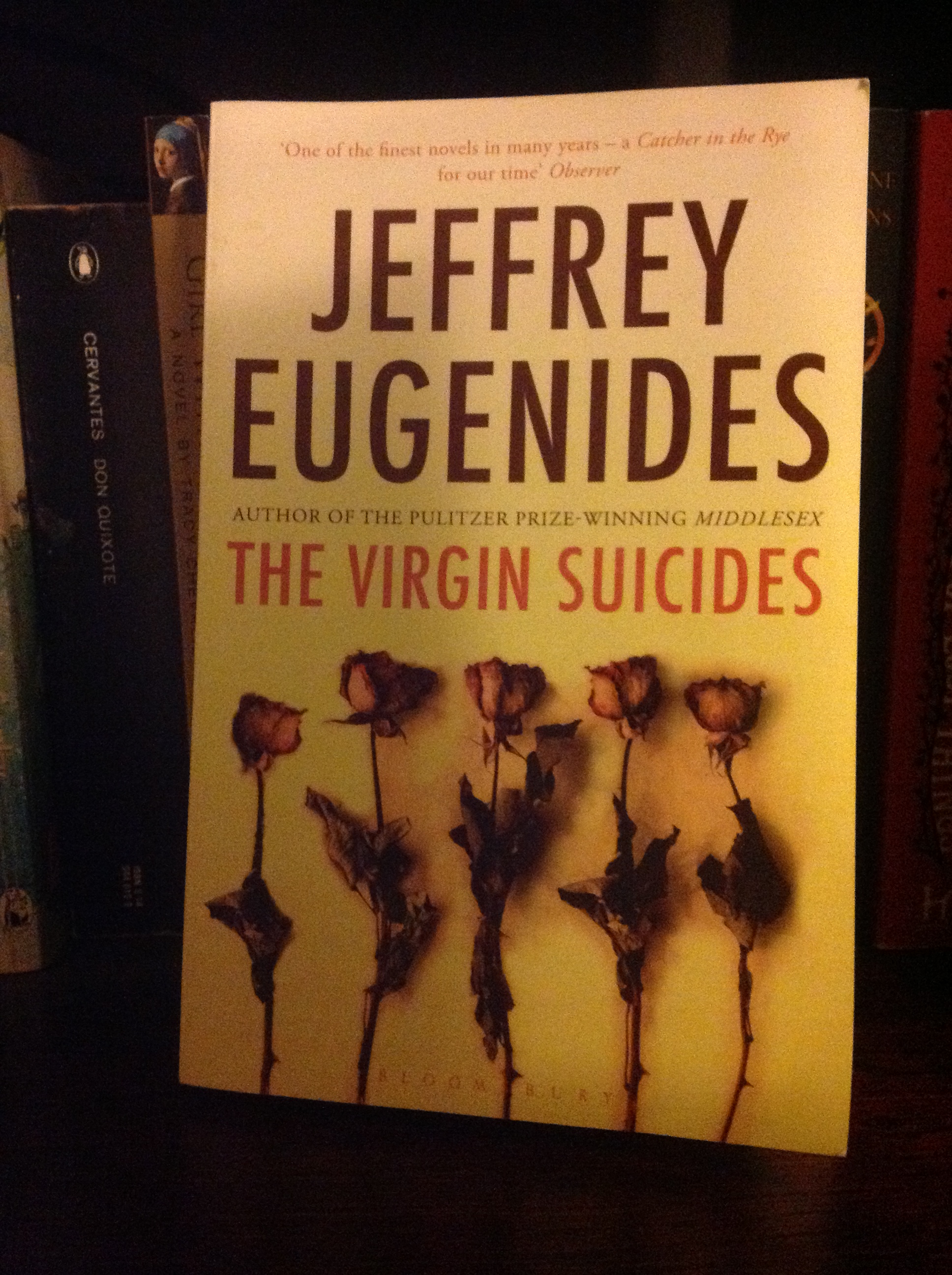
Eclectic Reading Challenge – The Virgin Suicides – Book that was made into a film.

Read as part of the Eclectic Reading Challenge.

I wasn’t sure what to expect from this book. I had an idea of what it was about and I was certainly curious. I haven’t seen the film although I would now like to see how it was done. I expected to find a narrative that was punctuated by the girls’photo-2 suicides, at regular intervals, keeping the reader involved. However, this book is much cleverer than that.

The narrative voice is one of the most interesting I have come across. It is ostensibly first person although ‘I’ is never used. It is written from the perspective of a ‘we’, the group of adolescent boys who are so fascinated by the Lisbon girls. This gives the voice a strange anonymity. Although lots of boys are named, give opinions and interact with the Lisbon girls, the narrator is not named. The voice is collective. This gives the story an universal feel. As if the boys represent all boys who are understandably fascinated by the teenage girls in their social circle. While the suicides are extreme, the lack of understanding between the boys and the Lisbon girls comes to represent the difficulties of communication between the sexes at this awkward time of life.

The first suicide occurs early in the novel and to my mind is the most devastating. The suspense that follows is even greater than if there had been a suicide every few chapters. I will not give away the ending but I could not have predicted how it would go. All the narrative is directed towards understanding the suicides of the Lisbon girls. However, the reader does not yet have the details of the rest of the suicides and so they are trying to understand something ephemeral, not quite real.

To my mind, the novel is about the painful transition from adolescence into adulthood. In this way, the deaths of the girls represent the death of childhood. Many of the boys who are visited twenty years on are past their prime, having had their best moments early in life. The girls have avoided the disappointment of life by taking control early on and killing themselves. They do not have to see the inevitable decay that begins to destroy the archive of their stuff that the boys keep. They escape the ageing process and instead remain forever beautiful and mysterious.

The reader is placed in the voyeuristic position of the boys who watch and note and obsess. The Lisbon girls are the unreadable difficult novel that they cannot understand. The girls are unknowable and the ordinariness of their deaths is baffling. Even with all the clues at their fingertips, understanding is not possible. This is perhaps the real tragedy. Not simply the girls suicides but the fact that whatever message they intended to send was lost in translation.

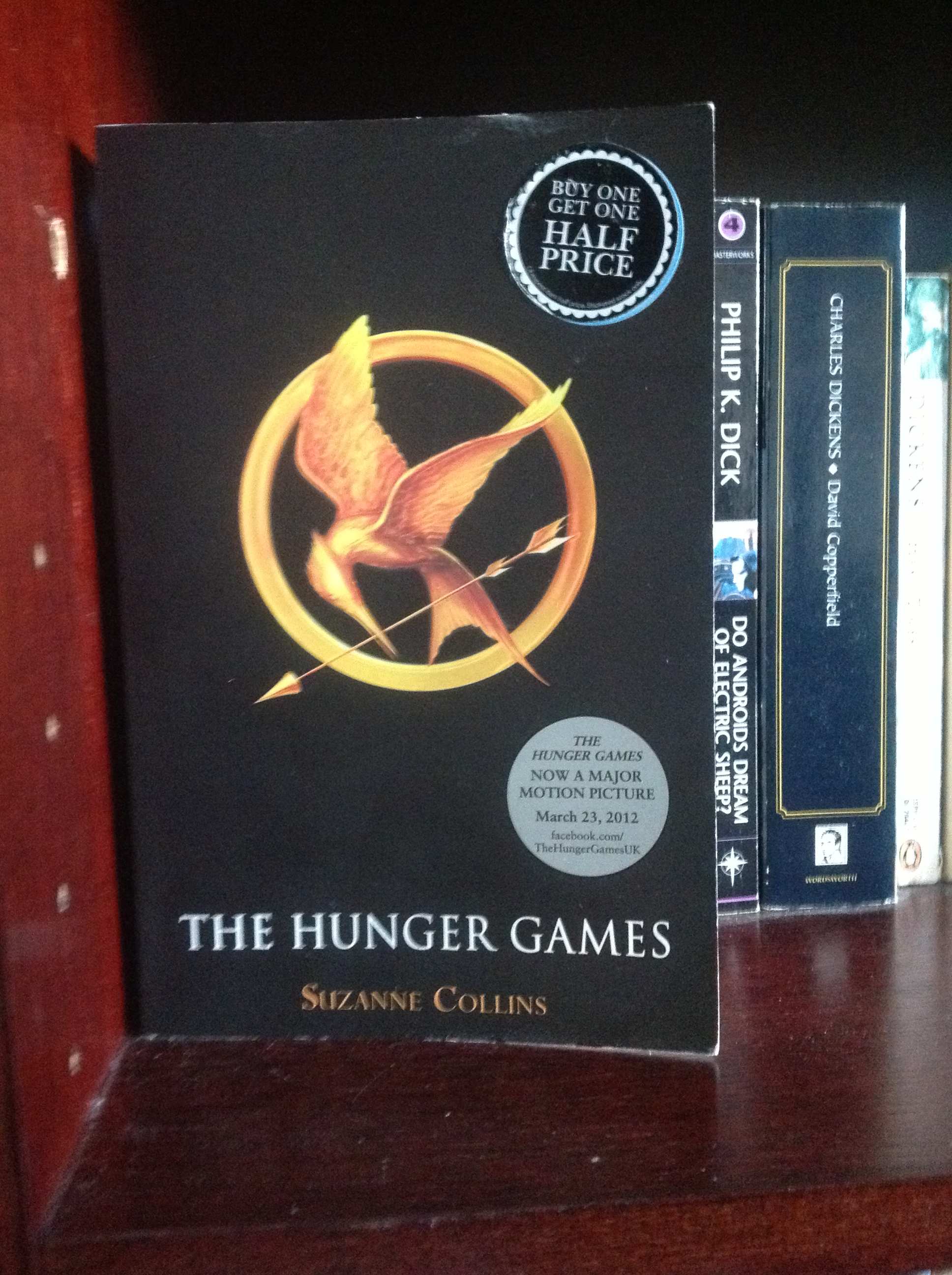
Eclectic Reading Challenge – New Adult – The Hunger Games by Suzanne Collins

I’d not heard of the New Adult genre before I signed up to do the Eclectic Reader Challenge – although I suspect that it means books for teenagers that adults would like to read – but I looked it up on Goodreads and The Hunger Games was one of the first books I noticed and I’d been meaning to read it for a while.

I really enjoyed this book. It had everything really – action, strong characters, a serious point to make and it was exciting enough to keep you turning the pages. In fact, I could not put it down. IMG_0030

The character of Katniss and her relationship with fellow tribute, Peeta was compelling and I think teenagers particularly would be drawn into their potential romance. I do think this is clearly aimed at a teenage audience but that didn’t stop it from being an excellent read.

The idea of the hunger games is completely apt and believable. I could imagine Channel Four commissioning it. And people would watch it and vote for different ways for the contestants to die without a seconds thought. Well, hopefully not but it certainly wasn’t beyond the realms of possibility. And to me, that is the definition of what good science fiction should do – take some aspect of the current reality and magnify it, show what would happen if we took it to its logical extreme.

If I had to make a complaint about this book, I would say that I thought some of the plotting was a little heavy handed – for example the changes to the games rules annoyed me a little. But this in no way spoiled my enjoyment of this book. And while I haven’t rushed to the shop to buy the next one, I know I will read it. Perhaps when I’ve got through a few more of my to read list.