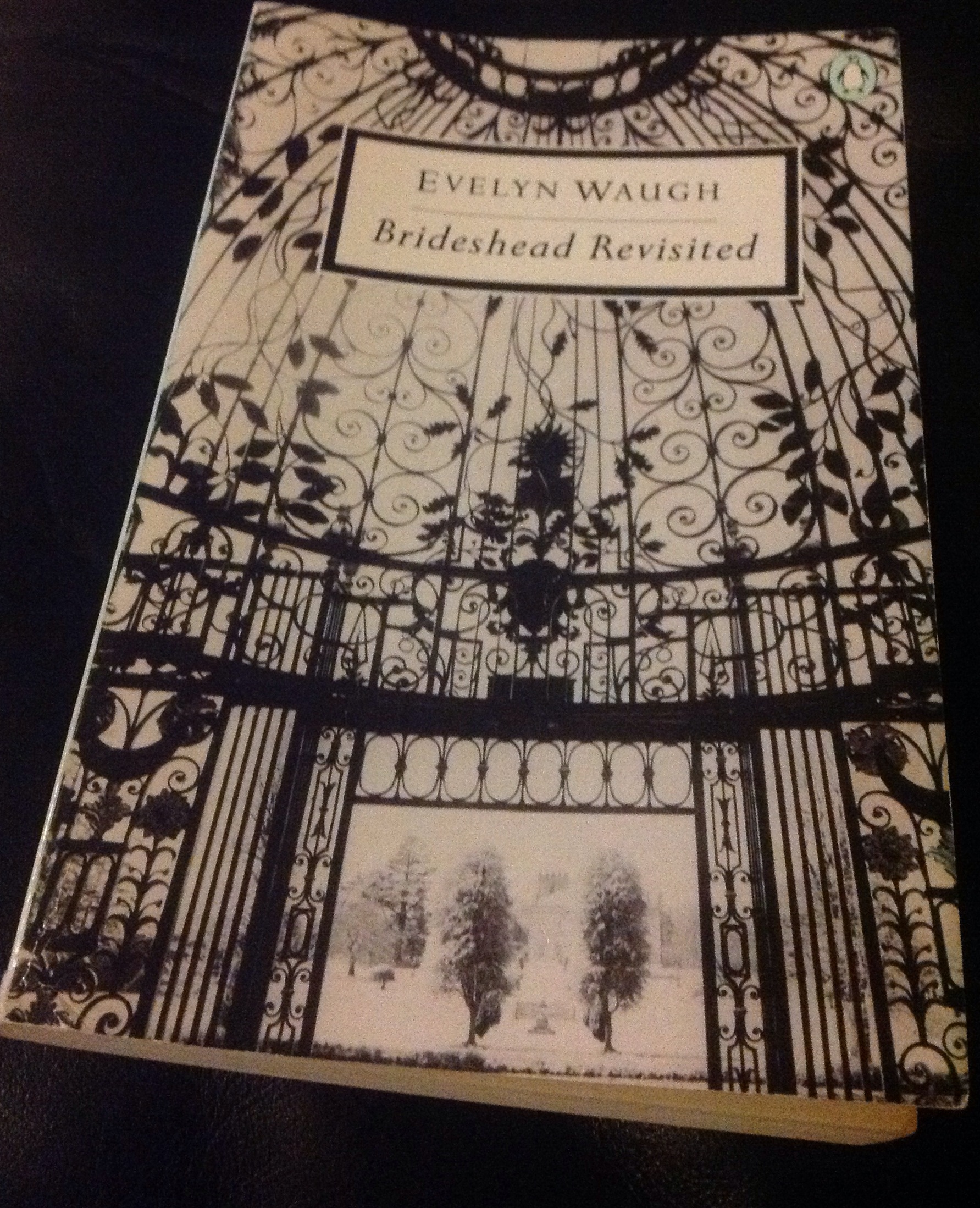
Books Read in 2014 4 – Brideshead Revisited – Evelyn Waugh

Reading Challenges : TBR Challenge2014tbrbutton

Genre: Classics, Family Drama

Narrative Style: First person narrator – Mostly told in flashback, framed by the present day in the prologue and epilogue.

Synposis: Charles Ryder falls in love with the beautiful Sebastian Flyte in his first year at university. He then comes to be fascinated by both his house and his family, eventually becoming involved with his beautiful but distant sister, Julia. photo (21)

Rating: 4/5

Format: Paperback

Published: 1944

Length of time on TBR pile: I have only had a physical copy of this book on my shelf for two years but it has been on the list of things that I feel I should have read by now and which I keep in my head since I finished university. 

I was vaguely aware of the story of this novel. I was too young in the eighties to see the BBC production of it although I did have a very clear image of Sebastian and his teddy bear. I thought I might find it a bit irritating, for a couple of reasons. It was about posh people and that always rubs me up the wrong way and I have a history of not liking books that are considered classics. (Just ask my father in law who thinks I am insane because I don’t like Tess of the D’urbervilles or Middlemarch.) However, in this case I was pleased to be proved wrong.

The early chapters, documenting Charles’ life at university are the most vivid and, in my opinion, contain the best prose. Sebastian is a fabulous character and I was as fascinated as Charles. In fact, I found his absence in the later chapters a little depressing and I longed for whatever news could be found of him, even though it was clearly never going to be good news. It may also be that the university experience was something I could relate to whereas the later chapters were further outside of my realm of experience.

This is a beautifully written novel, with sumptuous description and vivid emotion. In fact, this is much more a novel of feelings than events. Charles is an outsider and Brideshead and even when he is about to marry Julia, remains so. In this, he is the perfect narrator, charting for the reader, the tragedies of the family without really becoming involved with them.

There is a longing for times past in this novel. Not just from Charles who longs for something that the family, with their faith and their societal position, represent for him but on the part of Waugh too. This novel was published in 1945 and it must have seemed as though the world had fallen apart in the aftermath of the war. The need for a calmer, simpler time must have felt immense. Even the structure points towards this, with the prologue and epilogue set in the present of 1945 but the rest of the novel in the Arcadian past of the 1920s and 30s.

I found the ending a little disappointing because I felt sorry for Charles and I didn’t want it to be over. But there really wasn’t any more story to be told.

Top Ten Tuesday – Top Ten Worlds We’d Never Want to Live In

Top ten Tuesday is hosted by The Broke and the Bookish. This week we are talking about fictional worlds we would not want to live in.

In no particular order:

1. The Handmaid’s Tale – Margaret Atwood. This is one of the first dystopia that I read and still ranks as one of the scariest. The humiliations that the handmaid’s go through are almost beyond imagining. Atwood’s nightmare world is frighteningly convincing.

2. 1984 – George Orwell. I read this at school. I am sure that it is at least partly responsible for my own political convictions. It is a shame that things like room 101 and big brother have been stripped of most of their meaning by imbecilic television programmes.

3. Brave New World – Aldous Huxley. I often feel like the savage in this book when I look at modern culture. I feel a little lost and confused when I see the things that people do, watch, listen to, post on social media.

4. Mad Addam series – Margaret Atwood. I haven’t read the third book of this series yet but the first two were really disturbing. As with The Handmaid’s Tale, you could really see the roots of reality in this book. Take it as a warning, folks. This is where we could be headed.

5.  Do Androids Dream of Electric Sheep? – Philip K. Dick / Bladerunner. It is particularly unsettling not to be able to tell if someone is human or not. Even more frightening is the idea that you might not even know yourself. This one eats at the very heart of the reader.

6. War of the Worlds – H. G. Wells. Oh, I know, the Martians get it in the end but up until that point, there really is no stopping them. I can’t help feeling this is what  it would be like if any aliens found us. Why travel across space and time, if you’ve not already conquered everything nearer at hand?

7. The Hunger Games – Suzanne Collins. I’ve not read the rest of this series either. I liked the idea of the games and the different sectors more than I liked the way the story played out. You know everyone would watch it, that’s what makes it seem real.

8. Animal Farm – George Orwell. Another early influence on me politically. I imagine I’d be like poor old Boxer. Well-meaning but ultimately useless. I’d soon be carted off to the equivalent of the glue factory.

9. The Road – Cormac McCarthy. This is probably the bleakest book I have ever read. Some unnamed catastrophe has caused society to break down. McCarthy really captures the way that it would go once those rules were gone.

10. Never Let Me Go – Kazuo Ishiguro. This is another book where I liked the idea better than the execution. Children being bred purely for their organs is a chilling – and not unlikely – idea that gets to the heart of the issues surrounding cloning.

642 things to write about – Write two very different love letters

You are a thirteen year old. Write a love letter to your boyfriend.

OMG, you are so beautiful. Your blond hair is all gold like the sun. Your eyes are blue like the sky. When you smile, my heart flutters round like a butterfly. The other day, when you waited for me outside chemistry for you and I saw you there, all handsome and tall, I thought I was having a heart attack, it was pounding so hard. I was tempted to faint. Jen. Lisa and Caro were so jealous. LOL. If I had died right there, it would have been perfect. 

Yesterday, when you held my hand for the first time, I was in heaven. All I can think about, all the time, is when you kiss me for the first time. I am literally dying for that to happen. I hope it will be tomorrow when we go to the pictures but it doesn’t matter how long it takes because I love you forever. 

You are twenty one years old. Write a letter to your girlfriend.

I’m not sure I should write this down. Is this stupid? Perhaps it will scare you away. Don’t get me wrong, I do like you. I like you a lot. But words on a page are very definite, aren’t they? They can’t be unwritten. Does it seem a bit full on?

I would like to have a future with you. I can see it sometimes, like in the morning when I wake up and you are still sleeping. I know then that I wouldn’t be sorry if this was forever. You look so content and peaceful. There is a calmness in my life now and I know that I like that very much. That’s not too scary, is it? You feel it too, don’t you? God, I hope so.  

Books read in 2014 3. – Starter for Ten – David Nicholls

Reading Challenges: Eclectic Reader Challenge 2014eclecticchallenge2014_300

Genre: Romantic Comedy

Narrative Style: First Person Narrative, Chronological Timeline

Format: Kindle

Published: 2003

Synopsis: Working class boy, Brian Jackson goes away to university and makes an utter mess of it. 107896He enrolls for University Challenge in order to impress posh girl, Alice and spends the rest of the novel chasing after her hopelessly. He also finds time to annoy his childhood friends and just about anyone else who has the misfortune to bump into him.

Rating: 3/5

I thought I’d try to get this genre out of the way near the beginning as I have very little patience with the idea of romance even when joined with the more fun genre of comedy. I’d read One Day and The Understudy which were both okay so I thought I’d give Starter for Ten a go.

I thought that I might be able to identify with Brian Jackson, a working class boy going off to university albeit in the 80s and I went in the 90s, however he was very quickly unlikeable and annoying. Of course, Nicholls’ aim was undoubtedly to show a young man’s journey from annoying little boy to mature and sensible man but Brian never seems to learn any lessons and, indeed, at the end he is still making the same stupid mistakes.

While I understand that a working class boy at university might meet a lot of people who were posher than him, most of the characters in this book seem to be stereotypes of one type or another, none of which are very pleasant. This is also true of Jackson’s working class friends from home. I don’t know if Nicholls was trying to make a point about class difference but it was somewhat lost because none of these characters seemed like real people.

The romance with Alice is supposed to be amusing and Brian’s patheticness is a little funny, I guess but mostly I just wished he would wake up and realise that she was stringing him along. Alice is contrasted with Glaswegian socialist worker Rebecca who is angry and tough (Just another stereotype) and much more Brian’s type if only he could see it. I chose this book because I thought I’d find a romance with a male protagonist less annoying. It turns out that this was not true. Reading this reminded me of reading Bridget Jones’ Diary. I wanted to shake him just about all the way through.

The University Challenge storyline is more amusing and (unsurprisingly) I found all the angsty romance a little distracting at times. I do think that there are parts of this story that could have been developed and maybe then Brian’s character would have developed a bit more. Because he viewed Alice as some sort of unattainable beauty queen, as long as he is involved with her, he will always remain a boy.

The end of the book was not a surprise. I won’t spoil it but needless to say Brian has not learned his lesson. Even though he will be starting again at a new university, he has learned nothing and there is potential for the same mistakes being made.

Finally, all the way through this book, Nicholls makes reference to great works of literature – Tender is the Night, Brideshead Revisited, Great Expectations, to name but a few. If you are going to remind people of some of the best works in the English language, it might be a good idea to write a better book. All the many references made me think was, I wish I was reading that instead of this.

Plans for this year

I’m bit late writing this. It is now beyond the middle of January and I still haven’t posted my new year resolutions / plans for the rest of the year. Perhaps one of them should be getting myself organised.

In terms of reading, I am doing two challenges this year:

  • The TBR challenge – I’m excited about this challenge for a nu2014tbrbuttonmber of reasons. First of all, it is always exciting to be forced to read books you’ve been meaning to read for ages. One of the books I am reading for this (Death Comes to the Archbishop) has been on my shelf for twenty years. This really is ridiculous. If not for this challenge then I probably would never have picked it up. It becomes far too easy to ignore these books in favour of new and more exciting books. The other reason that this challenge is good is that it does not involve my kindle. It is all books from my shelf. It doesn’t involve buying new books either. This can only be a good thing.
  • The Eclectic Reader Challenge 2014 – I’m looking forward to theclecticchallenge2014_300is challenge for different reasons. I really enjoyed the way it took me out of my reading rut. This year there are even more genres that I don’t usually read so that should be interesting.

In terms of writing, I have a few things I want to do.

  • In terms of reviewing, I am going to try to write a review for every book I read this year, regardless of whether it is for a challenge or not.
  • I have a few final tweaks to Choose Yr Future and then I will be looking for beta readers and hopefully be looking towards publication this year.
  • I am going to try and use writing prompts to write more short fiction and also make more efforts to get what I have written published / entered in more competitions.
  • Finish my current project which hasn’t got a name yet but is about 60000 words long.

So an exciting year hopefully. Certainly a busy one with lots of challenges and lots of fun and hard work ahead.

Books Read in 2014 – 2. Beautiful Losers – Leonard Cohen

Genre – Erotica, Experimental

Date of Publication – 1966

Narrative Style – stream of consciousness. Non-chronilogical

Format: Paperback

Published: 1966

Synopsis – A three part story about three friends / lovers – the first part is a first person narrative after the death of his wife and his lover, F, the second part is a letter from F to the first narrator and the third part is a thrid person summing up of their stories. 

Rating: 3/5 047533-fc222

I’m a big fan of Leonard Cohens music but I hadn’t read any of his fiction before this one so I was quite excited when I got Beautiful Losers for Christmas. Certainly, I wasn’t expecting to read something quite so erotic and quite so experimental.

One of the things that is immediately apparent about this book is that it is written by a poet. Quite often the language and the rhythm take precedence over meaning which leads to some beautiful imagery but like a lot of poetry, I didn’t always understand what was going on.

This is an intensely erotic book. Indeed, one of the original reviews called it ‘verbal masturbation and another suggested that it was the ‘most revolting book ever written in Canada’. There is more than one love triangle in this book as the three lovers experiment. However, it is never merely sex for the sake of it. Quite often it is described in an oblique way or involves body parts that aren’t necessarily thought of as erotic.

What I found more difficult to deal with were the long passages about the Catherine Tekakwitha and her religiosity. I didn’t find the historic information as interesting as the events in the present day, maybe because I have very little sense of religion myself. Also, I have a low tolerance of miracles and pilgrimages.

There seemed to be a preoccupation with ownership, with occupation of lands and with colonialism – the Indians by the Catholics, the French presence in Montreal, for example. I must admit to a lack of knowledge of the history of Canada but this book did make me think I might like to know more.

Finally, I found it a little unsatisfying. I was reminded of reading Joyce or Amis, maybe. Masters of language and they may be but they left me feeling a little lost and disappointed with myself. I don’t like to feel I may have missed the point.

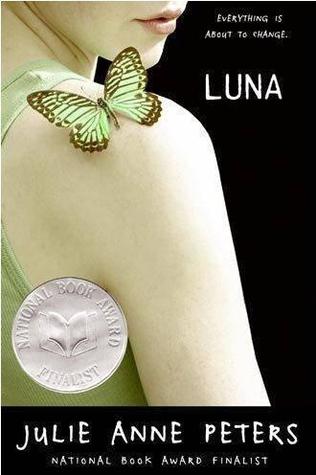
Books Read in 2014 – 1. Luna – Julie Ann Peters

Genre – Young Adult, GLBT

Year of Publication: 2006

316445

Narrative Style – First Person narrative, chronological timeline

Format: Kindle

Published: 2004

Synopsis: Regan’s brother Liam really wants to be a girl. He has always known that he was a girl. At night, he dresses as Luna, his true self and named in honour of the moon. The story is told from the point of view of Regan and shows the problems that both Liam / Luna and Regan face.

Rating: 2/5

I was quite excited to start reading this. It seemed it would touch on gender issues that I find very interesting and also be something new and exciting. It is exactly the sort of issue that books for teenagers and young adults should be tackling. And it does, successfully I think, show some of the issues that transgender teens face and also the effect on their families.

However, ultimately this book did not fulfill that promise. There were a number of reasons for this. The first was stylistic. I found Regan intensely irritating. To be fair, her voice was recognizably teenage and I am willing to admit that if I was sixteen or so, I probably wouldn’t have found it so annoying. She came across as having very little personality of her own. It may be that this is a side effect of her family situation where she focuses on Liam / Luna so much but it didn’t lead to her being a very engaging protagonist. Personally, I think it would have been more interesting for Liam / Luna to have the narrative voice as after all this was her story.

This lead to difficulty at the end of the novel which ends at a positive moment for Liam/Luna but leaves the story hanging in terms of Regan. As we have found out about other aspects of her life, it would be nice to have some closure on these too. It’s as if she isn’t even the centre of her own first person narrative. Even the writer just dismisses her in the end. Also, it lets everyone else off the hook. Because Liam leaves, the opportunity for just not dealing with the situation is given to his parents.

The other issue I have is to do with stereotypes. This novel seems to be full of them. The stereotypical masculine father who only wants his son to play sports and never gives up hope that one day it will happen. The pill-popping working mom who ignores all family issues. And of course, any feminine gender stereotype you care to mention in terms of Luna’s personality. There was some danger of associating femininity with vanity as when she was Luna, she became obsessed with her looks. Understandable I suppose, given the circumstances. But a little irritating all the same.

Maybe it is true that when you feel you are living a life that is not your own, that you will take any opportunity to dress as your alter ego, but there seemed to be a suggestion that Liam was unable to control his urge to be Luna. This led to him dressing up at a neighbours house, going through the wardrobe of the mother of the children he was supposed to be baby-sitting. This, and the extreme reaction of the children’s parents when they returned, was one of the least convincing moments in the book. It made Liam seem less sympathetic and I didn’t really believe he would risk it all in such a way. Not when he was so careful about other aspects of his life.

Overall, it was an interesting attempt to tackle a difficult subject but one, for me, that didn’t quite make it.

Writing Prompt – Make a list of the things that make you angry and then choose one of them to write about

This is quite an easy prompt for me as just about everything in the world makes me angry these days. Or if not angry at least a little irritated. So I am being quite restrained in keeping this list to ten things. There was a temptation, once I’d started, to just keep going. 

Writing prompt from 642 things to write about – Make a list of the things that make you angry and then choose one of them to write about. 

  1. Homophobia / Racism / Sexism
  2. Reality TV
  3. Stupidity
  4. Current education policy / Ofsted
  5. Mainstream music / film
  6. Modern parenting
  7. Ads with celebrity voiceovers / cameos
  8. People who are famous for nothing
  9. My computer’s inability to work for more than half an hour without crashing
  10. Trivial facebook statuses – I really don’t care what you are eating / watching / listening to right now.

Ads with celebrity voiceovers / cameos

Why does nobody ever seem to think about what they are advertising? Celebrities seem all too willing to sell their soul to whoever will give them the most money. And for a lot of them, it can’t be an issue of need. So why do it? Exactly how are we supposed to take David Mitchell seriously as a cultural commentator now that he has done a voiceover for that Phones For You advert. Surely the sort of nonsense he would be only to happy to ridicule if it were anyone else. But it’s okay. Just so long as he got paid shed loads.

The current king of all this is Kevin Bacon. Once a fairly good actor, now purveyor of dubious mobile phone promises. Whenever I see him, I feel let down. I’m not sure if it’s the chummy, smugness of his tone or the deadness of his expression that is more annoying. Whatever it is, I doubt I could ever take him seriously on the big screen again. Still, I’m sure the huge amount of money he got paid more than makes up for the loss of his dignity. 


The 2014 TBR Challenge

2014TBRbutton

Last year, I only did one reading challenge and I managed to do it twice (Eclectic Reading Challenge 2013). So I’m hoping that this year I will be able to do The 2014 TBR Challenge – hosted by Roof Beam Reader –   as well as the Eclectic Reading Challenge 2014. After all, I read 61 books so 24 will hopefully be manageable.

The goal of the TBR Challenge is to read 12 books that have been on your to read pile for more than a year (plus to alternatives in case of getting stuck with on of the 12.) Easy enough as my to read pile grows every year.

Here is my list for the challenge. I’ll link reviews as I go along.Complicity –

1.Iain Banks (1993) (April)

2. Death Comes for the Archbishop – Willa Cather (1927)

3. The Inheritance of Loss – Kiran Desai (2005) (June)

4. The Rules of Attraction – Bret Easton Ellis (1987) (July)

5. The Eyre Affair – Jasper Fforde (2003) (February)

6. The Rapture – Liz Jensen (2009) (August)

7. Translated Accounts – James Kelman (2001) (March)

8. Let the Right one in = John Ajvide Lindgvist (2004) September)

9. The Distant Echo – Val McDermid (2003) (October)

10. The Flood – Ian Rankin (1986) (November)

11. Brideshead Revisited – Evelyn Waugh (1945) (January)

12. The Slap – Christos Tsiolkas (2008) (May)

Alternates

  1. The Anniversary Man – R. J. Ellory (2009)
  2. Raven Black – Ann Cleeves (1997)

An Excellent Gift for a Writer – 642 things to write about.

My favourite gift this year was a book called 642 Things to Write About which is full of writing prompts. I could barely wait for guests to leave before I started to write in it.

As I am always looking for things to write in this blog, I shall share what I write. I’m not going to promise to do it everyday as once I am back at work, that will be impossible but I will try to do it regularly.

Here is the first one:

Write a scene that begins “It was the first time I killed a man.”

It was the first time I had killed a man. But not the last.

It didn’t feel as bad as I might have supposed. The distance was the thing. It was the bullet rather than the knife so I didn’t have to witness it eye to eye, as it were. There was no hot blood oozing over my hands. I saw his body drop though, all heavy like lead. Straight for the floor. Like a giant hand had cut all his strings. The wound was to the head so death was probably instant. If not, it would surely have been quick.

Of course, he was one of the bad guys. That was what the Government said. So his death didn’t really trouble me. No more than shooting a rat might have. Vermin. Better off dead. And of more use. 

Now that the Fuel Wars are over and the Government has retained supreme control, it is hard for the young ones to imagine what it was like. The fear we had then was all-consuming. And then there was the cold. That sneaks up sometimes. I’ll wake in the morning and the toes are outside the quilt and they are like ice and I get transported back there. To huddling together with all the people in your building. To having nothing to sit on, nothing to read, nothing at all because it had all been burned. And the thought, what would happen when everything had been burned. 

That had been my reason for going to fight for the Government rather than the rebels. The Government gave you a thermal uniform. You got gloves, socks and regular meals. All the rebels could give you was a sense of moral superiority and that does not really keep you warm. 

I admit I don’t think often of those who died, whether by my hand or one of my fellow soldiers. I think, instead, of how warm it is now.