
Well, it doesn’t seem like two minutes but WordPress informed me yesterday that my blog is indeed two years old. Back then I was so nervous and really unsure as to whether there was any point to blogging. Now I feel like I’m losing out in some great conversation if I don’t write posts or read them.
I really enjoy writing posts – particularly book reviews as obviously they have a ready made subject matter and aren’t just me wittering on. Or ranting. That’s always a possibility. And it still makes me crazily happy when someone likes a post or follows my blog. It also always surprises me that people might want to read my random thoughts. There really is no accounting for taste.
I haven’t had massive sales of Shattered Reflections but I never really expected to. I have had some four star reviews on Amazon and that is pleasing for the minute. Of course it would be disingenuous to say I wouldn’t like to make lots of money but at the same time I would continue to write even if every review I had was dreadful. It something I have always done and will always do regardless of sales.
Now I have finished marking exam papers and there is only a week of school left, I’m starting to look forward to getting some serious writing done over the summer. And I’m looking forward to the next year of writing this blog.
Author: kepagewriter
I am a writer of literary fiction. My first novel Shattered Reflections will be out in the next couple of months and available through Amazon and Kindle. I am currently working on my second novel.
Books Read in 2014 – 38. The Lie by Helen Dunmore
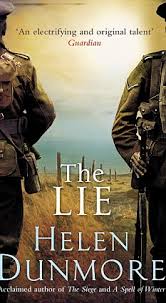
Genre: War, Historical Fiction
Narrative Style: First person narrative set in 1920 with flashbacks to the first world war.
Rating: 3/5
Publication: 2013
Format: Kindle
Synopsis: Daniel has survived the First World War and is now back in his hometown, homeless and without family. He is haunted by his experiences in the trenches and by the death of his best friend, Frederick as he tries to make a new life for himself.
I picked this to read because I enjoy reading about the First World War and because it had good reviews but I found that it paled compared to other fiction that I have read about this conflict. I found it neither as emotionally compelling as some (The Absolutist by John Boyne) or as interesting in terms of the themes treated here (Regeneration by Pat Barker, Birdsong by Sebastian Faulks).
The main reason for my discontent was that the plot seemed stretched, little more than a short story’s worth of content strained by its extension to a novel. Daniel is sympathetic and interesting but not a lot happens to him, even during his flashbacks so there is little to move the plot along.
Where Dunmore does succeed is in her descriptions – both of the Cornish coast and the life in the trenches. They are vivd and really give the reader a sense of Daniel’s isolation and horror. Also the descriptions of him re-working Mary Pascoe’s land are an interesting metaphor for his attempts at starting a new life whilst also constantly reminding him of the mud in the trenches.
I also liked the analysis of class and the differences between Daniel and his much richer friend, Frederick are apt and seem realistic. The differences between them become particularly apparent when they are both in the army but in completely different roles.
Unfortunately, this couldn’t make up for the lack of action and also the I found the ending unsatisfying and a little ridiculous.
Books read in 2014 – 37. The Rules of Attraction – Bret Easton Ellis

Genre: Masculinity, GLBT
Narrative Style: Various first person narratives. Chronological.
Rating 4/5
Publication: 1987
Format: Paperback
Synopsis: Paul is in love with Sean but is on the rebound from Mitchell. Sean is in love with Lauren but that doesn’t stop him from going to bed with Paul. Lauren is in love with Victor who is in Europe and not communicating. These are the main voices in Ellis’s novel of disconnection and loneliness who recount their many attempts at love and sex.
Challenges: TBR Challenge
Time on Shelf: About four years. Not sure why – I like Ellis but this just seemed to slip to the bottom of the pile again and again.
This is a fairly typical Ellis novel. The characters are empty, trying desperately to fill their lives with something – drugs, sex, alcohol – certainly not with what they are supposed to be studying. This isn’t a criticism. I enjoy Ellis’s style and subject matter, just that it is easy to see where this fits before American Psycho and Glamarama. Of course, both of those branch off from this one so I suppose it isn’t surprising.
The main characters are Sean, Paul and Lauren and they get the narrative the most often. The triangle is absurd. Paul is besotted with Sean and describes their time together but if you only read Sean’s chapters then you’d never know about this relationship as he only mentions Paul in passing. In fact, it is almost possible to believe that Paul has the wrong person although some details do seem to be backed up by Lauren. He claims to be in love with Lauren but only because he thinks that she has been leaving love notes for him. Lauren’s motives for sleeping with Sean are uncertain although she is bored and angry with Victor who she discovers is chasing somebody else.
This is typical of the relationships in the novel and of the other characters who get the narrative voice. Everyone is in love with the wrong person. This is a novel about disconnection. Not just between people but with life and with themselves. No one really knows what anyone else is thinking or even comes close to guessing. In fact, more often then not, they have it about as wrong as it is possible to be.
This lack of connection is shown in the way the characters bed hop with about as much thought for sex as any other bodily function. It is no more important than scratching an itch. Even while Sean claims to be in love with Lauren, he still sleeps with her best friend. Also, it is symbolised by the fact that no one seems able to decide on a subject to study. These people do not know themselves so it makes sense that they would be unable to form relationships or settle on a pathway for the future.
This novel is funny in places and Ellis has a superb ear for dialogue so the meaningless student exchanges seem realistic and reminded me of the sort of conversations that you have at that age. Ultimately though, this is a difficult book to read and I found the characters a bit depressing. They have no characteristics, they only have things. And while I know these sort of people exist, I certainly wouldn’t want to spend anymore time than I just have in their company.
Books read in 2014 – 36. A Perfectly Good Man – Patrick Gale
Genre: family, religion
Narrative Style: Third person, non-chronological
Rating: 4/5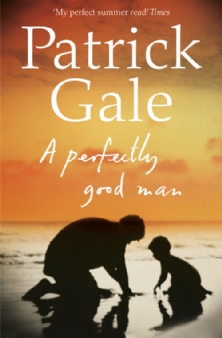
Format: Paperback
Published:2012
Synopsis: Lenny decides to take his own life after being paralyzed in a rugby accident. He asks the parish priest, Barnaby Johnson to be present. His decision and Barney’s involvement will turn the parish upside down and bring old secrets to light.
This had me hooked from the first with Lenny’s meticulous plans for suicide and his request for the parish priest to be present. Barnaby has no idea what is going to happen until it is far too late and Lenny has already committed the act. He is left with nothing but prayer.
The story then unfolds from various characters points of view at various points in their life so we learn of Barnaby’s marriage, his difficult relationship with his adopted son and his affair with a local artist from his point of view and theirs. We learn about Lenny’s mother and a local parishioner named Modest who turns out to play a crucial role in events a number of times in the narrative without always realising.
The pace is unhurried and it is easy to work out some of the secrets but that really isn’t the point of this story. The narrative is as much about Barnaby’s difficult relationship with his faith and with God as it is about the actual events. It is about family and the ways we come to find love in the most unexpected ways. There are no big twists and turns because this is a novel about ordinary people dealing with what life throws at them.
The characters were convincing and I felt able to empathise with most of them even those I didn’t actually like. Even Modest, the most horrible character, was pathetic rather than anything else. It was interesting to see both sides of the father son relationship between Barnaby and his son, Phuc and realise exactly how hard it is sometimes to do the right thing.
The book ends well, in that it ties up loose ends and it is generally a happy ending but there is nothing forced or unlikely about it and no doubt if you continued to follow these characters life would continue to throw challenges at them but this was where this particular story ended.
Books Read in 2014 – 35. Plain Truth – Jodi Picoult
Genre: Chick Lit, Morality
Narrative Style: Third Person chapters alternating with first person
Rating 3/5
Format: Paperback
Published: 2000
Synopsis: A dead baby is found in a barn on an Amish farm. At first, none of the women will even admit to being pregnant. And then there is the mystery of how the baby died. Ellie Hathaway is the streetwise attorney who becomes far too involved in her client’s life.
I picked this up because I wanted something that would be easy to read while I was marking exams, something that would help me switch off at the end of a day of reading accounts that can’t decide what tense to be in. I certainly didn’t want to be struggling through some heavy piece of literary fiction. This had belonged to my mother (for all you wondering why I would even have a Jodi Picout book on my shelves) and when she died at the start of the year, it made its way onto my shelf. I was also curious. A few years ago I was loaned Change of Heart by a Picoult nut and while I thought it was okay, I wasn’t overwhelmed. I wanted to give her another try.
I must admit that the storyline drew me in quite quickly. Once it became apparent that the eldest daughter of the household, Katie, was the baby’s mother and that she denied giving birth, never mind killing the baby, then my interest was piqued. Picoult had also clearly researched her subject matter thoroughly as the picture given of Amish life was full of detail and seemed (to me anyway) realistic. I was ready to say I was wrong and that this was a very good book.
However, as I read on, things started to jar for me. The first thing was the mention of the ghost of Katie’s little sister. Which was fine when it seemed it was a figment of Katie’s imagination but it soon became apparent that not only could other people see this ghost but Picoult herself seemed to believe in its existence. I find this sort of spirituality quite troubling and it didn’t seem to fit with Katie’s character at all. It did mean, however, that there could be an utterly sickeningly corny image at the end of the book which I personally found completely unnecessary.
Picoult described the Amish as a group of people that lived for the community and the good of the group and who frowned on individuality. And there are some obvious advantages to this way of thinking but also disadvantages. In the novel, two characters have been shunned and had to leave because of decisions that they made and this is given as a possible motivation for the murder of the baby – and indeed, in a round about way, it does have to do with the baby’s death. Some of the difficulties this leads to are described in the beginning. However, by the end of the novel, through the decisions that Katie makes, Picoult seems to be privileging this form of living, as Katie decides to return to the fold, rather than follow her own heart. It may be that I find it too hard to fit in with any groups to be able to understand this sort of thinking but it does seem that at the start of the novel, this way of thinking is criticized but by the end, it is seen as some sort of salvation.
This is also shown in the character development of Ellie which I also found a little unsatisfying. At the beginning, she was a hard bitten attorney who liked to win so much that she had just managed to get a sex offender, she knew was guilty, off scot free. She ends up living with Katie as part of her bail conditions and as a result, begins to understand the faults in her own character. While it is apparent that Ellie had faults to understand, it all seems very easy for her and, in my mind, she doesn’t struggle enough psychologically for her change for the better to ring true.
At the end of the day, I have given this 3/5 because I did want to keep reading and I did feel sympathy for Katie but ultimately it didn’t work for me.
Books Read in 2014 – 34. Nineteen Seventy Four (Red Riding 1) – David Pearce
Genre: Crime
Narrative Style: First Person Narrative
Rating 4/5
Format: Paperback
Published: 1999
Synopsis: Ed Dunford is back in Yorkshire with his dream job as a crime correspondent. He begins investigating the horrible death of a little girl and finds himself mired in corruption and violence until he barely knows what is right and what is wrong.
This book really isn’t for the fainthearted. It is brutal and violent almost from the very first. Ed is thrown into a world he thinks he understands but that really is beyond his very worst imaginings. No one is to be trusted and in the end, Ed feels he has to become like the men he is trying to stop because they are outside of the normal rules of law and order.
Pearce has a lot in common with hard-boiled American writers such as James Ellroy. None of the characters are pleasant, they all double-cross each other. Ed – supposedly the good guy – is just as misogynistic and unpleasant as the rest of them. I have seen complaints about the amount of violence against the female characters in this book and it is true that very few survive the length of the book and those that do are still effected by male violence. However, I feel that given the subject matter of the book and the setting in the seventies, this is to be expected. This is a book about male violence and its consequences. It would seem unrealistic for this violence not to be against women. That said, I’m not sure that Ed needed to be quite so unpleasant towards the women in his life, forcing on into having an abortion, forcing another into anal sex. To me, this was superfluous, an unnecessary addition to the already high levels of misogyny. It added nothing to Ed’s character development.
The narrative voice was convincing throughout – especially as Ed started to unravel. It was interesting to have a hard-boiled novel set in Yorkshire and to have a narrative voice that was so very northern. The pace was perfectly judged with things happening so quickly towards the end it was hard to keep track and no wonder that Ed could barely keep up. I will certainly be reading the next installment.
Books Read in 2014 – 33. The Inheritance of Loss – Kiran Desai
 Genre: Indian Literature, Family
Narrative Style – Third person, non-chronological
Rating: 3/5
Format: Paperback
Published: 2005
Synopsis: In an old, isolated house a retired judge lives his life in solitude despite those around him, his granddaughter, Sai is in love with her Gurkha tutor and their cook can think only of his son in New York. The son is desperately moving from one dead end kitchen job to another. Around them all hell breaks loose and they are all forced to reconsider their emotions.
Reading Challenges: Eclectic Reader Challenge (Award Winning), TBR Challenge
Time on Shelf: I rescued this book about two years ago from my father in law when he was having a rare sort out of books for the charity shop. He hadn’t read it but decided he never would (this seems like sacrilege to me but he does have a lot of books).
I’m still not really sure how I feel about this book. It did make me think. And it opened my eyes to some of the issues that have plagued India in recent years and I realised that I had no idea of the history and the politics and it may be something that I read more about in the future. So for that it was certainly good.
The prose was beautiful; poetic and haunting. It even made the desolation seem magnificent. It was easy to see how this had won the Booker Prize. However, sometimes it seemed like the frosting over not very much and left me feeling a bit empty.
I think my main problem was identifying with some of the characters. The judge was a very difficult character to empathise with and I didn’t really enjoy all the time given to his back story. More interesting was Sai’s relationship with her Ghurka tutor, Gyan, which falls apart when the Ghurka’s start to demand independence. Also, some of the minor characters were more interesting (in my mind) than the Judge and I would have liked to hear more about some of them.
Ultimately, I can see why this book won The Booker Prize and I can appreciate its beauty but in the end, it wasn’t really to my taste.
Books Read in 2014 – 32. Bioethics: All That Matters – Donna Dickenson
Genre: Science, Academic
Narrative Style: Academic
Rating 3/5
Format: Paperback
Published: 2012
Synopsis: Dickenson tackles the main issues in the area of Bioethics such as the patenting of genes by big drug companies, the storage of placenta blood and the exploitation of vulnerable populations by big companies.
I picked this book up for a number of reasons. First of all, it is an area that I find both interesting and concerning. I have half an idea for a dystopia which would look at some of these concerns so I thought I’d make a start on research. Finally, I thought it seemed like a good introduction to the area which I do not have a close knowledge of, being a arts graduate rather than a science one.
It was a good introduction, working through each issue clearly and in a straightforward manner so that I had no problems understanding it. The examples given were helpful in elucidating her points and it was clearly researched with a lot of follow up reading, web sites and articles which will be helpful to me as I further my research.
Dickenson clearly has a strong moral viewpoint with regard to what science should and shouldn’t be doing. And given some of the dark dealings she mentions in this book (testing vaccines cheaply in third world countries even though there is no intention to use the vaccine in that country, for example) it is unsurprising. A number of times I had to stop reading in order to vent some anger. (Luckily my husband barely even notices my rants, these days) There is no doubt that the pace of research has outpaced our moral reaction in terms of the law.
However, I did find Dickenson’s tone annoying at times. She had the moral highground and boy, did she like it up there. There was an ‘I’m right and anyone who doesn’t agree with me is not only wrong but an idiot’ feel about it, especially towards the end.
Still, I do feel that I learned a lot from reading it. It has given me food for thought and I will be reading more in this area in the future.
Books Read in 2014 – 31. The Stepford Wives – Ira Levin
Genre: Horror, Dystopia, Satire
Narrative Style: Third Person from the point of view of one character
Rating 4/5
Format: Paperback
Published: 1972
Synopsis: Joanna moves to Stepford at the insistence of her husband, Walter and, at first, it seems to good to be true. She soon becomes irritated by the passiveness of the women and their housework obsession. Then the two friends she thought were different start to show the same obsessions and she starts to wonder what exactly is going on in Stepford. I can remember seeing the 1975 film version of this book when I was fifteen so I knew what the basic story was. You might think that this would spoil the story, making it less tense but this was not the case. Levin unfolds Joanna’s story masterfully and knowing what might happen to her only made me more anxious for her to escape the clutches of the men of Stepford. Joanna begins the novel an independent, strong woman who works as a photographer. She does housework when she has to and is used to having strong female friendships. She is sexual and attractive without the need for make-up. However, when she comes to Stepford she finds all the women are eerily similar and coldly distant. They are unable to find a place in their housework schedule to even meet for coffee. They are beautifully coiffed and clothed. She is rightly appalled by this and by her husband leaving every evening to go to the men’s association. Joanna does meet two other like-minded women – both of whom have not lived in Stepford for long – and they try desperately to get some sort of female movement going. However, when one of them suddenly becomes docile like the other women, they start to worry that they’ll be next. Eventually there is only Joanna left and she tries desperately to warn the one woman to move to Stepford after her before the men seal her fate. Levin cleverly does not tell the reader exactly what happens to Joanna. She merely loses narrative perspective. Ruthanne takes over the narrative point of view and she runs into Joanna in the supermarket, noting her coldness, her obsession with housework and how good she looks. As Ruthanne is a writer, it can be assumes that she will be the men’s next victim. The men in the novel respond specifically to their wives’ attempts at politicising themselves. Joanna discovers that the women were once activists or very successful professionals that held feminist meetings. The message that Levin is trying to get across is clear. Men will not just stand back and let women gain power from them. As Chuck Palahniuk notes in the introduction, perhaps more heed should have been taken. The whole beauty industry and the obsession with women’s appearance is one very successful way of keeping them in their place regardless of their professional position.
Books Read in 2014 – Gone Girl by Gillian Flynn (contains spoilers)

Genre: Thriller
Narrative Style: Two first person accounts of events. Chronological timeline
Rating: 3/5
Format: Paperback
Published: 2012
Synopsis: Nick Dunne’s beautiful wife goes missing on the eve of their fifth wedding anniversary and he doesn’t react the way that loving husbands should. What secrets is he keeping from the police? But is this crime as obvious as it first appears?
Somehow I managed to avoid any spoilers for this book. I always sort of intended to read it as it had so much hype around it but it wasn’t at the very top of my list. However, I did know that it was a twisty little narrative so almost from the first I was trying not to be fooled by it. I guessed straightaway that the anniversary treasure hunt was going to figure highly and that once Nick worked out the clues, he receive his present – in this case a very long jail sentence. So at the end of the first section, I was more pleased that I was right than surprised. Once you realised the importance of the anniversary clues then it seemed apparent that Amy was behind it all. For me, this was by far the best section of the book. The contrast between Amy’s faked diaries and Nick’s view of her and their marriage was well portrayed and it was exciting trying to figure out exactly what must have happened.
I found Amy’s real voice even more annoying than the fake sweet girl of the diary entries. She was arrogant, self-centred and vindictive – almost impossible to empathize with. I was actually pleased when the two people she’d befriended at the motel where she was staying robbed her of her remaining cash because she was under the impression that she was infallible. Nick, however, developed some backbone and I began hoping that when she inevitably returned, he’d kill her as he kept imagining.
The final section was disappointing, I felt. There was still some tension but it soon became apparent that Nick would not be able to escape Amy’s clutches. That Nick would decide to stay with Amy seemed a step too far into the unlikely for me. His reasons were understandable – she becomes pregnant using stored sperm – but all the same it didn’t quite work for me.
Ultimately, this book left me feeling a little depressed. Amy seems like every man’s worst nightmare; controlling, manipulative, self-centred – all those nasty words that men like to throw at women. Flynn points out in an interview at the end of the book that she does have good points – she’s organised, intelligent, meticulous but that is a bit like letting a sociopath off the hook because they planned their crime to the letter. She’s a version of negative feminine stereotypes who wins in the end. Nick is her perfect opposite, taking the easy route of staying with her and appeasing his own conscience by saying its for the best for his inborn child. Some dubious sexual politics there. I was left wondering if the portrayal of Amy was sexist. Obviously not every portrayal of a woman should be positive but Amy is strong and she does get things done but she is also a monster. It made me feel uncomfortable.
 kepagewriter
You must be logged in to post a comment.