Books Read in 2015 34. The Well of Loneliness – Radcliffe Hall

2015tbrbutton

Genre: GLBT, Classics

Narrative Style: Third person

Rating: 3/5

Published: 1928

Format: Paperback

Synopsis: When Stephen Gordon was born, her father had really wanted a boy and so stuck with the masculine name. It soon becomes apparent that Stephen is not the same as other girls. She wants to be a boy, hates dresses and refuses to ride side 8f3ce012b7cbcd5217e89aaff6520959saddle. Soon she develops her first crush on a housemaid. The novel follows her through her growing realisation that she is a lesbian and into her tragic attempts at  a relationship. 

Reading Challenges: TBR Challenge

Time on Shelf: About twenty years. I certainly bought this while at university although I’m not sure exactly when. I was put off by the picture of two very severe looking woman on the front which seemed to suggest that the book might be quite dry and severe. 

It took me over a month to read this book. In fact, towards the end I really didn’t want to pick it up. It was only the thought that it was nearly over that spurred me on. There were a number of reasons why I found this hard going.

First of all, the writing is incredibly melodramatic. Stephen is a martyr to her desires and Hall frequently makes reference to the terrible lot of the invert. Of course, at the time this was written, that attitude made perfect sense but now it is a little bit hard to stomach.

This is particularly true at the end of the novel when Stephen heroically sacrifices her own feelings so that her lover, Mary, can be happy in the arms of a man who can give her ‘normal’ things like marriage and children. Once I realised that this would be the end, I felt incredibly annoyed that Hall refused the possibility of a happy ending for Stephen. I really didn’t want that to be the ending. Again, I think that it is an understandable impulse at the time that Hall was writing but it really did annoy me.

I found it hard to like Stephen and therefore to have sympathy for her. She seems determined that things will be as bad for her as possible. Some of the other characters in the novel are better drawn, I think, especially in the Paris section of the novel where Stephen is temporarily happy.

Hall has the annoying habit of bestowing the animals in the novel with human thoughts. Stephen is very close to her horse, Ratfery and although he obviously can’t communicate  with Stephen, Hall notes the thoughts that he has, suggesting complete understanding of Stephen’s moods. I found this intensely irritating.

Having said all that, it is easy to see why this is such an important book. It must have felt like a godsend to women reading it at the time of its publication. If it seems old fashioned in its ideas, that only shows how far we have come. The sections during the first world war and in Paris afterwards are very evocative of time and place and this was the part of the novel I enjoyed the most.


Books Read in 2015 – 33. We Are All Completely Beside Ourselves – Karen Joy Fowler (Contains spoilers)

Genre: Literary Fiction, Family drama

Narrative Style: First person, non-chronologicalUnknown

Rating: 4/5

Published: 2013

Format: Kindle

Synopsis: Rosemary Cooke no longer talks very much and has difficulty connecting with people. Her brother is on the run and she hasn’t seen her sister, Fern, since they were quite young. She has no idea where either of them are. Her parents are equally traumatised by some event in their past. Rosemary needs to find out what happened to Fern if she is to come to terms with the past.

It took a little while for me to get into this book and that is the main reason that I didn’t give it five stars. Rosemary is emotionally distant from the other characters and it is hard for the reader to get close to her as well. I couldn’t imagine that her story was going to become all that interesting.

Although there are hints, I didn’t guess that Fern was a chimp  – and I managed to avoid any spoilers – and initially, I felt a little cheated but this was definitely the point where the story took off for me. I did psychology at A Level and also a little at degree level so I was familiar with a lot of the experiments that are mentioned in the book. When I was doing my A Levels, I was fascinated by the work done trying to teach chimps to sign and the comparison of a human child and a young chimp here was equally fascinating.

The traumatic event of the past was the sudden removal of Fern from the family. Rosemary eventually comes to terms with her own role in Fern’s sudden departure but not before we have seen exactly how strange the relationship was, both for Rosemary and for Fern. It is hard to imagine that these sort of experiments were allowed to take place but as the excellent documentary Project Nim shows, they definitely did, with scant regard for chimp or research students.

Rosemary’s brother discovers where Fern is and tries to visit her but instead becomes involved in animal rights activism as a result of seeing the cruelty with which she is treated. The scene where she recognises him and refuses to let him go was heartbreaking and one of the best moments in the book.

There are a couple of moments where the plot doesn’t entirely convince – the brother’s reappearance for example, but for the most part this was a strong and emotional piece of writing that I couldn’t put down.

Can’t quite believe it has been three years!

It really doesn’t seem that long. I can still remember how nervous I used to be at first. I’m rubbish at public speaking and blogging seemed a bit like that at first. I’m not really given to baring my soul to other people either so it took a while to become comfortable with the whole process.

At first, the aim was to market my book – something I didn’t do very well and hope to do better at this time with Choose Yr Future  – and to talk about culture and anything that interested / annoyed me. Having my novel published was exciting and even though I didn’t sell loads, I have had four and five star ratings and in a lot of ways (although obviously not mortgage paying ways) I’m happy with that state of affairs. I’d hate to make loads of money but have realms and realms of one star reviews. It wouldn’t seem worth it.

Part of the reason I failed miserably in my promotion of Shattered Reflections was I had a lot of family issues and was travelling constantly between Newcastle and Sheffield. I quickly lost track of things that I was supposed to be doing with the book and it seemed less important anyway compared to what I was going through.

The blog helped me then in a new way with various reading challenges. I have always read a lot and at this particular point in my life, I was definitely in need of some escapism. So I started to post book reviews and that was interesting because it made me take in what I was reading a bit more.

It’s too late now to try and rescue Shattered Reflections but when Choose Yr Future is ready to go, hopefully I will have learned enough lessons to make a better go of it.

Finally, I would just like to say thank you to everyone who reads my blog and who likes posts or follows me. It never ceases to amaze me that people might like the words I put down on the page and it always makes me feel a little happier.

Books Read in 2015 32. Babette’s Feast – Karen Blixen

eclecticreader15

Genre: Historical Fiction

Narrative Style: Third Person

Rating: 3/541+8Z8uVWwL._SL500_AA300_

Published: 1952

Format: Kindle

Reading Challenges: Eclectic Reader Challenge 2015 – genre fiction for foodies

Synopsis: Martine and Phillipa live a quietly pious life in a remote part of Norway. Their lives are ordered and there are no surprises. That is until the arrival of Babette, a  refugee from the French revolution. Babette is a cook and although she wishes to cook more extravagant meals, she agrees to cook the simple dishes that the sisters require. That is until she wins money in the French lottery and insists on catering for the whole town. 

I really had no idea what to expect from this book. I was looking specifically for the challenge as I must admit fiction for foodies is not really a genre I know much about and a lot of the books I was finding seemed like chick lit and I tend to find that a bit annoying. So when I saw this, I jumped at it.

The main characters are two elderly sisters – named after radical religious reformers – who have eschewed love and adventure to remain pious and devote their lives to the church and God. Growing up, they are much in the thrall of their father, the pastor who stops any chances of marriage that the sisters may have had.

Years later, Babette appears on their doorstep, a French refugee who cooks for the sisters. Every week, she faithfully plays the French lottery. One day, many years later she wins 10000 francs and instead of moving home, as the sisters assume she will, she offers to create the feast to celebrate the anniversary of the pastor’s 100th birthday.

The feast represents everything that the sisters have removed from their lives. It is sumptuous, rich and over the top. The sisters and the townsfolk have misgivings about the feast but resolve not to mention the food, no matter what they think of it. So they sit and eat the most incredible meal they have ever had without ever commenting on it.

This was an odd story which was rich in symbolism and an interesting look at the meaning of self-sacrifice. The sisters may have devoted their lives to the church but Babette sacrifices her entire winnings to pay for the feast, to have the townsfolk not even mention her efforts. Her sacrifice is surely greater. While it was interesting, I wasn’t really grabbed by the characters and didn’t really feel any emotion at the end of the story.

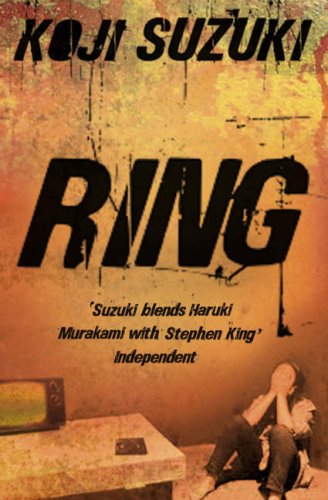
Books Read in 2015 31. Ring – Koji Suzuki

Genre: Horror

Narrative Style: third person from various perspectives51BD0RBSMCL

Rating: 3/5

Published: 1991

Format: Kindle

Synopsis: Asakawa is a journalist who is intrigued by his niece’s strange death. When he discovers other young people have died suddenly and inexplicably, he begins to seriously investigate. In the course of his investigation, he discovers a videotape that is cursed – if you watch it, you will die within the week. There is a charm against the curse but that part is missing from the tape. Asakawa has a week to discover what it is in order to save not only his own life but that of his wife and child. 

I really enjoyed the start of this book. Asakawa’s discovery of the four deaths is compelling and I was keen to read on. He was an interesting character, not a straightforward hero and that was good too. I expected that I would be rating it highly.  However, the plot loses momentum in the last third. I think that the investigative process is too drawn out and considering how little time Asakawa has left by this point, is strangely lacking in tension. In the end, the deaths and then the discovery of how to break the curse seemed a little anti-climactic.

It seems ridiculous to claim that the ending was unrealistic. After all, this novel already involves a huge suspension of disbelief with the notion of psychics being able to imprint thoughts onto film or in this case, into wave forms so that images could be seen on a tv. In the end, I think that it all just fell apart for me. I just couldn’t keep believing.

It may be that Suzuki’s novel suffers in comparison to the excellent film 1998 film version. Wisely. the film doesn’t get bogged down in the more intellectual ideas about psychics and wooden conversations that add helpful details but seem unrealistic. But ultimately, I think it is the medium that is the problem. It is just so much more chilling to watch a film about a murderous film then it is to read about it.

Books Read in 2015 30. Shakespeare – Bill Bryson

Genre: Biography, History

Narrative Style: third person, academic51NyyX+LRzL._SY344_BO1,204,203,200_

Rating: 5/5

Published: 2007

Format: Kindle

Synopsis: This is a biography of sorts although it focuses as much on what we don’t know as what we do. Written in Bryson’s inimitable style, it is funny, informative and clever. A must read for anyone with a passing interest in Shakespeare. 

I’ve been meaning to read this for a while. There were a couple of reasons for this. I’ve read a lot of Bryson’s work – including Mother Tongue and A Short History of Nearly Everything as well as some of the travel writing so I knew that it would be readable and informative. And I was interested in the life of Shakespeare. I expected that we would know about him. I’m not sure why that was. It makes sense  that we would not know much about him.

So unlike conventional biographies, this is not a simple run from birth through life to death. It explores what we know about each area of Shakespeare’s life, attempts to discuss any mysteries or controversies and explains why we don’t know more.

It’s fascinating really, that Shakespeare should still mean so much to our culture and yet we can barely verify what he looked like or what he did for large periods of time. We can place him at a specific time and place only rarely. We can barely prove that he wrote the plays that take his name and that has led to a whole other academic avenue. The ‘who was Shakespeare really’ brigade.

Bryson makes short shrift of their theories. They all seem to be fabulously eccentric and it is almost a shame to have to tear their wonderfully hopeful theories apart. Bryson does this in style and this was one of my favourite parts of the book. It is almost inevitable, given the darkness that surrounds most of Shakespeare’s life that there would be those who would like to join the dots. Unfortunately, they very rarely come anywhere close to the real picture.

Bryson’s curiosity cannot be faulted and as with all his works, his enthusiasm comes across clearly and the book is a pleasure to read. In fact, at the end, I wished there was more to say. I was very sad to put it down.

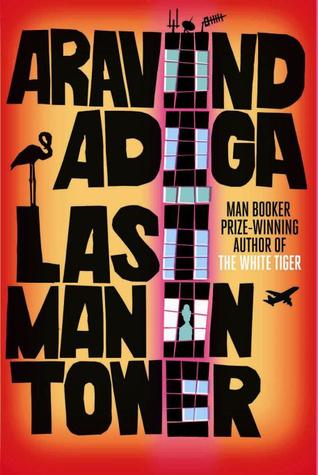
Books Read in 2015 – 29. Last Man in Tower – Aravind Adiga

Genre: Indian Literature, Literary Fiction

Narrative Style: Various third person perspectives10854908

Rating: 3/5

Published: 2011

Rating: 3/5

Synopsis: When they are offered a large amount of money to leave their flats, most of the residents jump at the chance. However, a small number – for various reasons – do not want to leave. They are not interested in the money, at least at first. The developer is a very determined man and he quickly discovers their weaknesses and exploits them. Soon there is just one man left who will not back down.

I loved The White Tiger and, although, it was probably unfair to do so, I was judging Last Man in Tower by that standard and unfortunately it didn’t quite live up to it.

This is a novel about greed. The residents of Tower A and Tower B can barely imagine the amount of money offered to them by charismatic developer Dharmen Shar. It would mean a new life for all of them. Happily, they jump at the chance without considering the ethics of the situation. I was with them – at least at first. We’d all love such an opportunity, I’m sure.

At first, there are four who refuse. Mrs Rego, social worker and possible communist, elderly couple, the Pintos who are worried that Mrs Pinto will not be able to find her way around a new building as she is blind but used to her surroundings and Masterji, a former school teacher who opposes the redevelopment on moral grounds and also emotional ones as his memories of his dead wife and daughter are all in the building.

Eventually, after fair means and foul, they all fall by the wayside and accept an offer apart from Masterji. They cannot move forward unless all residents agree to the redevelopment and Masterji keeps on stubbornly refusing. A noble man, you might think but Adiga doesn’t make it as simple as that. It is almost impossible to be completely on Masterji’s side. Just as it is impossible to sympathise with his neighbours. Especially as they begin to get meaner and meaner in their desperation.

Amiga does show what desperation can do to a person. All the residents can see the money slipping through their fingers and it makes them insane. Shar doesn’t even have to do most of the dirty work himself. They are more than happy to turn on Masterji themselves. The strength of the novel is that, even at the very end, it is easy to believe in the actions of the residents. I never doubted for a moment that seemingly decent people would resort to violence and psychological torture in order to get what they wanted.

There were two things I found problematic. First of all, there are a lot of characters in this book. I found it difficult to remember who was who and where they stood in relation to events. The second was the pace. The first half of this book is very slow. Once Masterji has become the universal enemy of the rest of the tower then things heat up a bit and the end of the novel is much better paced but I very nearly didn’t get that far.

Books Read in 2015 – 28. The Secret History – Donna Tartt (Contains spoilers)

Genre: Thriller

Narrative Style: First person41K7TYBGF4L

Rating: 3/5

Published: 1992

Format: Paperback

Synopsis: A set of misfits at an exclusive college studying classics decide to try and emulate the morality of ancient times. This sees them start to view themselves as being outside current morality and they begin to follow their own rules.

There is no doubt that Donna Tartt can string a sentence together and the strength of her prose is the main reason that I rated this as I did. Richard’s narrative voice is quite powerful and I had a clear idea about the personality of each of the group as he saw them and also of his own feelings on the matter.

However, I did not find the story particularly compelling. It was hard to feel anything for such a bunch of odd, emotionally stilted individuals. When reading about the rich and the privileged I always feel a little like I am viewing some sort of alien species and there was definitely an element of that here. These weren’t people like any I knew. As such, I didn’t care about their petty jealousies or there murderous intentions.

The killing of Bunny is signposted straightaway and the reasons for it were quickly obvious. Bunny himself, was irritating even before he knew that the group had killed someone in a bacchanalian night of excess and I watched detached as they plotted to kill him. It was hard to feel any sort of suspense as I didn’t care whether they carried it out or not.

There is still a lot of the book to go at this stage and I do feel that it could have been shorter but Richard analyses every emotion and every action afterwards as the group fall apart in various different ways. The only one who seems to have any sort of control is Henry who was the main force behind killing Bunny. He is the one who tries to keep the others in control. It was clear that he was meant to be some sort of monster but he just seemed cold and empty and he made me feel sad rather than anything else. When, in the end, he shoots himself, I felt nothing, no shock or emotion at all. It just made me feel pleased that the story was nearly over.


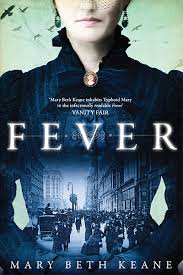
Books Read in 2015 – 27. Fever – Mary Beth Keane

Genre: historical fiction

Narrative Style: third person, chronologicalUnknown

Rating: 4/5

Published: 2013

Format: Kindle

Synopsis: Mary Mallon – also known as Typhoid Mary – has cooked in many big houses in New York. She doesn’t think anything of the fact that often the families contract Typhoid fever. It is prevalent in New York as a whole and many people die from it. However, when a new theory of germs and carriers gains popularity, Mary finds herself held in quarantine while they do tests on her. 

Before reading this, I had no idea that Typhoid Mary was a real person. Of course, I’d heard the phrase used. Now, having read Mary’s story, it seems a shame that this should be her legacy. Imagine that was your contribution to the world, what you were famous for. Very depressing.

The story itself is interesting. At first, Mary could have had no idea that she was spreading the disease. The theories about germs and about healthy carriers were in their infancy and the authorities clearly had no idea what to do about it. Mary is arrested and taken into quarantine but she does not go without a fight. It is this fighting spirit that constantly works against her.

While, undoubtedly, there were real public health issues at stake, there are also issues of class, race and gender. Mary is unlucky enough to be Irish, working class and female – three ways in which she is powerless. Newspaper stories suggest that she had ideas above her station and was infecting the upper class houses on purpose – a disease based class revenge.

Eventually, Mary is allowed back into society on the promise that she will never cook for anyone again. But cooking is the one thing that makes Mary feel alive, the one thing that she is good at. And she still doesn’t really believe that she passed on the fever to others so she starts a job at a bakery. While the modern part of my brain, the part that knew she would start to make people ill again, was appalled at her seeming recklessness, it was also possible to feel sorry for Mary. After the way she was treated, it was unsurprising that she would not want to do what the authorities asked of her.

Keane manages to successfully evoke New York in the early 1900s and the atmosphere is heavy with diseases and potential unrest. I think she also captures Mary well. Of course, as she herself acknowledges in the afterword, there is no way of knowing if that was what Mary was like but she seemed real and of her time and I don’t think that you could do much more than that.

Books Read in 2015 26. Sleepyhead – Mark Billingham

Genre: Detective, Thriller

Narrative Style: Third person from various points of view, first person from the point of9780751531466_Z view of a surviving victim

Rating: 4/5

Published: 2001

Format: Kindle

Synopsis: Three women are found dead, seemingly from strokes, when a pathologist spots that it may be murder. The next victim survives but is unable to communicate with anyone. Enter Tom Thorne, detective, who quickly realises that this victim is the killer’s one success. This is what he was aiming for all along. Equally quickly, he forms an idea of who the killer is and will not let it go even when the evidence is against him. 

I like to read detective fiction but I find I am often disappointed by it. The first series I liked was Ian Rankin’s Rebus books and they set a high standard, one that is rarely lived up to. I was pleased to discover that I loved Tom Thorne almost as much as I loved Rebus and I decided pretty quickly that I would be reading on.

There are a number of similarities. Thorne is equally unpredictable. He ploughed his own furrow and was not afraid of annoying his superiors. When he decided who he thought the killer was, there was no shaking his certainty. Even when this turned into obsession, the reader stayed with him and I desperately wanted him to be right, even while I knew he probably wouldn’t be. Like Rebus, he was a lone wolf and didn’t make friends easily. His relationship with Anne, his love interest in the novel, was equally complicated.

The plot was also strong. The idea of a killer aiming to leave people in a coma as they viewed this as the ultimate in freedom was as interesting as it was disturbing. Thorne’s unpredictability meant that it wasn’t always possible to spot what was going to happen next. And while I certainly put some of the clues together, I didn’t manage to come up with the whole picture which is always good.

The third person sections were written from a number of different viewpoints and often  used ‘he’ instead of immediately naming the character which added suspense and meant that the reader always had to work to understand who was being talked about. The first person sections from the point of view of Alison, the one surviving victim, were poignant and added emotional resonance to the story.

Overall, this kept me reading and I’m pleased to discover another series that I can really get my teeth into.