Books Read in 2015 – 44. A Scanner Darkly – Philip K. Dick

Genre: Dystopia

Narrative Style: Third person from various points of viewUnknown

Rating: 5/5

Published: 1977

Format: Kindle

Synopsis: Bob Arctor is an undercover agent trying to find the source of a batch of Substance D, an extremely addictive narcotic. He has to report back on his friends and housemates who are also being watched by the powers that be. As a part of being undercover, he too has to take the drug. As it takes hold of him, he becomes more and more divorced from himself and more and more dependant on the drug. 

It is hard to know how to put this novel into words. At its centre is Arctor’s swirl downwards into addiction. His paranoia and inability to recognise himself increase with his addiction and it is hard for the reader to tell what is real and what is not.

At the start, we are informed that Arctor has a scramble suit that he wears so his superiors cannot recognise him and with that is the name ‘Fred’ which he uses when he reports back on the household that he lives in. It is during one of these reports, he learns that Bob Arctor is under suspicion and another layer of surveillance is added when his superiors start to watch the house as well.

It all starts to get a bit messy inside of Arctor’s head. Watching the videos, he has to report on himself and his housemates. He watches in a safe house, in his scramble suit, with other scrambled individuals, watching other houses. It could easily be one of his housemates in the suit and he would never know. As he watches and continues to take the drug, he starts to not recognise himself on the TV and begins to refer to Arctor in the third person. He gets more and more paranoid and his superiors think that he may be losing it. He is put through a series of absurd tests by men in lab coats that talk in riddles. Eventually, they decide he needs to go into rehab because the drugs have finally broken him.

The novel is a difficult read. Dick says that the instances of drug taking, psychosis and withdrawal were all true and it certainly is unflinching in its description of the horrors of drugs. Dick also says that he does not consider it to be novel with a moral and if he means in terms of his attitude towards the addicts in the novel, that is probably true. There is no judgement. These people just are who they are, having come to a point in their lives where they can do no other than take drugs.

However, I do think that there a sense of morality with regard to the way that addicts are treated and the way the powers that be try to solve the ‘problem’ of addiction. This is shown in a couple of ways. First of all, once Arctor is no longer useful as an informant (and they admit that they used him to get to Barris, one of his housemates) they quickly remove him, not forgetting to charge him for becoming an addict while undercover. He is removed to a facility to withdraw but it is clear he will never be the same again.

Dick suggests that the facility – which is in need of addicts to get funding – may actually be the source of Substance D that Arctor was supposed to investigate. They create the addicts by growing and selling the drug which then secures their future as a clinic. This is suggested by two colleagues who have tried to control Arctor’s descent into addiction so that when he withdrew, he might be able to investigate. Unfortunately, he is too destroyed to do so.

At the end, I was relieved to have finished reading because the narrative was making my head hurt a little. There is a small ray of hope at the end, when Bruce (who it may be assumed is Arctor) sees the Substance D plant growing and picks one for his friends. But whether this will lead to anything other than more addiction, it is difficult to say.

The Irritation of Lost Files

It hasn’t been a hugely productive summer. That isn’t exactly true. I have written quite a bit but it hasn’t felt like going forward. There’s a good reason for this.

Somehow I managed to lose the most recent version of Choose Yr Future. I’m not sure how as I never delete anything – there must be at least twenty versions of Shattered Reflections still sitting on my hard drive – but gone it is. There are quite a lot of versions of Choose Yr Future too, some claiming to be the final version although none of them were.

It is frustrating – not least because I know it is my fault. I suspect that it was some sort of iCloud mixup because sometimes I do remove things from there but that is usually safe in the knowledge that there is a copy sitting on my hard drive as well. I can’t quite believe I’ve been so careless.

The worst thing about this isn’t the re-writing although that has been annoying. It is the suspicion that what I wrote before was inevitably better than the new version which covers the same ground but with second hand footsteps. Of course, it may be better but as there is no way to check so my pessimistic mind insists that the new version is inferior.

Still it is re-done now and although I now need to read through the whole thing again to ensure that it still makes sense, it is satisfying to have the finished product in front of me. It certainly feels better than the despair of the missing file at the start of the summer.

Books Read in 2015 43. A Thousand Splendid Suns – Khaled Hosseini

2015tbrbutton

Genre: War, Historical Fiction

Narrative Style: Third Person from the point of view of two women

Rating: 4/5

Published: 2007

Format: Paperback

Synopsis: Mariam is fifteen years old when she is married off by her father to the much older, Rasheed. Laila is born to a different generation but also finds herself  married to Rasheed, The women form a bond that helps them to survive not only the horrors of their marriage but the war and oppression all around them. 

Reading Challenges: TBR Challenge

Time on Shelf: About five years. I suspected that this might be a bit of a bleak read and so put off reading it. 

This is a compelling book. The story of Afghanistan from the seventies until the present day told through the eyes of two women trapped by war and marriage. The history was something I was sort of familiar with – it became more familiar as it came closer to the present day – but nothing prepared me for reading about the horror of life for actual citizens.

Hosseini creates a vivid picture of the various stages of war and the various enemies. He shows how men like Rasheed used the rise of the Taliban and the oppression of women to commit their own personal atrocities. Rasheed was already determined to control the women he was married to – it must have seemed like a gift from heaven that women were not even allowed out without a male escort. He was a brutal man and the regime legitimised his brutality and meant that Mariam and Laila had no escape.

Both women as portrayed convincingly as they battle against the many hardships the war throws at them. I’m not sure I was 100% convinced by Mariam’s eventual self sacrifice but maybe it was only because I wanted it to be otherwise. I wanted her to be able to share in the future with Laila and Tariq.

This is a bleak story and it was such a relief at the end that things did start to pick up for Laila and her family.  I’m not sure I could have coped with much more heartache. As with the best of fiction, this gave me insight into a situation that I didn’t know much about and has encouraged me to read more about this subject.


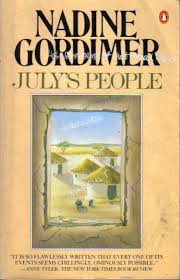
Books Read in 2015 42. July’s People – Nadine Gordimer

eclecticreader15

Genre: Political fiction, African Literature

Narrative Style: Third person from various points of view

Rating: 4/5

Published: 1981

Format: PaperbackUnknown-1

Synopsis: Violence has broken out in South Africa and this time the rebels have planes and bombs at their disposal. Bam and Maureen Smales and their children are rescued by their servant, July, who takes them to his village. This changes their relationship in ways that they could not have envisaged and inevitably leads to tension between the servant and his former masters. 

Reading Challenges: Eclectic Reader Challenge – genre: Set in a country beginning with S – South Africa

I must admit that I do not know a lot about the history of South Africa. At the point when this novel is set, I was nine years old. I was aware of the situation in the same way that I was aware of the Irish problems of those years. There was often violence on the TV  but I didn’t really understand the reasons behind it or who I should have sympathy for.

In this novel, it is easy to have sympathy for both sides. The Smales are liberal whites who have tried their hardest to be fair to their servant and treat him with respect. So much so that he decides to rescue them. However, they are still on the side of privilege and they really understand little of July’s life outside of serving them.

This is brought into clear relief when they are brought to his village. They are no longer in charge of him or their lives. They are placed in the position of the blacks in South Africa. They are displaced and have no control and they do not like it.

It is equally difficult for July and his family to cope with the Smales’ presence. July’s wife and mother do not trust them and they reject Maureen’s attempts to try to help and laugh at her because she does not have their skills at picking the right plants or cooking them properly. July is caught in the awkward position of having more power than the people he has been serving, something they all find difficult to deal with.

This was a clever look at power and relationships within a racist society and it shows that it is anything but simple to resolve. The only complaint I would have is that I sometimes found it difficult to follow Gordimer’s prose. It was sometimes hard to know who’s point of view was being given or who was speaking. Other than that, this was an excellent dissection of a harmful power structure.

Books Read in 2015 41. The Ocean at the end of the Lane by Neil Gaiman

Genre: Fantasy, bildungsroman 

Narrative Style: First person, flashback framed at both ends by the present day.

Rating: 4/5Unknown

Published: 2013

Format: Kindle

Synopsis: A middle aged man returns to his childhood home after a funeral.  He ventures to the house down the lane and remembers long forgotten and sinister events from his childhood. 

The nameless narrator of this novel returns to the place where his childhood home used to be. Seemingly compelled to investigate, he starts down the lane to see if the farm and the “ocean” that used to be there still exist. Once there, he sits down by the pond and begins to remember Lettie Hempstock, the little girl who used to say that the pond was an ocean.

With memories of Lettie, come memories of a chilling nature. Events start with the suicide of a man who has stolen money from his friends. This awakens a supernatural force which tries to give money to people. One of the most creepy parts of this book is when the nameless narrator wakes from a dream in which he is choking to discover he really has got a coin stuck in his throat. This really touched on one of my deeper fears.

Events quickly take a fantastical turn, with monsters in human form and creatures from a realm beyond our understanding. The governess Ursula Monkton enthrals all except the narrator who sees her as the personification of evil especially as she seems to have a strong hold over his father. The narrator’s perception of her as a monster is like a child’s explanation of adult events that are beyond his understanding and the forgetting of these events as the child ages.

The darkness in this story – personified by Ursula Monkton and the Hunger Birds – is pretty unsettling especially when the Hunger Birds start to eat away at the universe. But the images of friendship and sacrifice – personified by the Hempstock family – are equally powerful. I liked the idea that the universe is being protected from the worse of evil by three generations of strong women.

Perhaps because this was the story of a young boy who didn’t entirely understand events all of the time anyway, there is never any room for disbelief. The story was utterly convincing. It transpires that the man has visited the farm a few times in his adult life although he cannot remember doing so. By the time he leaves the farmhouse, the reader realises that he will not remember this visit either. This made me think of the way that difficult childhood memories can have such a powerful hold even if you cannot remember them fully.

Reading this was a little like reading a modern fairy tale. You could take it at face value, a scary story about death, friendship and sacrifice or you could look at it as an allegory about good and evil, childhood and growing up. Like the pond, that was really an ocean, this is a novel with unexpected depth.

Books Read in 2015 40. Tender is the Night – F. Scott Fitzgerald

2015tbrbutton

Genre: Romance, Classics

Narrative Style: Third Person, Mostly chronological

Rating: 4/5 

Published: 1933

Format: Paperback

Synopsis: Set in the 1920s, Tender is the Night, is a doomed romance. When Rosemary Hoyt first meets Dick Diver, he is married to Nicole and their world seems perfect. However, Dick is not merely husband to Nicole but doctor too and the strain of such a relationship starts to take its toll on both of them. 

Reading Challenges: TBR Challenge

Time on Shelf: So long that I have lost track of where it came from. 

When I started to read this, I didn’t realise that it was considered semi-autobiographical. In fact, I knew nothing about Fitzgerald at all. The fact that this novel mirrors his own descent into alcoholism and his actual wife’s struggles with schizophrenia make the events in it even more poignant.

The sense of tragedy invades the pages of the novel from the very beginning when the reader does not know the reasons for it. For all Rosemary’s impression of the perfection of Dick and Nicole’s love, it seems there is something missing from the picture even though I couldn’t quite put me finger on what it was. Of course, Dick’s growing obsession with Rosemary shows that there must be something wrong with the relationship and there are hints at the strangeness of Nicole’s behaviour but nothing concrete.

All is revealed in the next part of the book when it is discovered that not only is Dick Nicole’s husband but her doctor also. Her madness and the reasons for it are revealed and also Dick’s part in bringing her back to health. When he meets her again, it seems inevitable they will fall in love and also inevitable that it will end badly. How could such a relationship possibly survive?

As the novel continues, the roles of Dick and Nicole slowly reverse themselves. As Dick begins to drink, he becomes the one who behaves erratically, the one who offends other people and by the end of the novel, he is unable to hold down a job or stay in one place. Nicole, when released from the need of being a patient, at last seems happy in her new marriage.

The novel is beautifully written and there is no doubt that Fitzgerald was one of the writers of his generation. He describes the French Riviera as one fascinated by something both monstrous and beautiful. The characters are products of this time and Fitzgerald is merciless in describing their flaws as well as their good points. Both Dick and Nicole are easy to empathise with as their decisions impact their lives and their marriage starts to crumble.

This was one of those novels where i wanted to go back to the beginning where things seemed happier and to have no knowledge of the tragedy that followed. I wanted to remember Dick as the successful young doctor, full of potential, rather than the drunken wreck he became. Dick is symbolic of wasted talent and has become so removed from his starting point that he is not even anchored to any one place anymore.

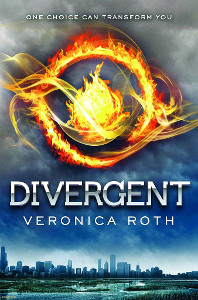
Books Read in 2015 – 39. Divergent – Veronica Roth (Contains spoilers)

Genre: Young Adult, Dystopia

Narrative Style: first person, chronologicalDivergent_(book)_by_Veronica_Roth_US_Hardcover_2011

Rating: 3/5

Published: 2012

Format: Kindle

Synopsis: In the future, society is divided up into factions based on personality types – abnegation, amity, cantor, dauntless and erudite – and all children must choose their faction when they are 16. While undergoing the tests that will help her decide, Beatrice discovers that she is another type altogether – she is divergent. She is warned to keep this secret at all costs. 

It is almost inevitable that I would compare this to The Hunger Games, having read that series fairly recently. Unfortunately I didn’t find this scenario quite as convincing. Although I understand the point that Roth was trying to make, it just didn’t ring true the way that the world of The Hunger Games did. Also, it meant that some of the characters seemed a little one sided as they were representing an entire personality type. Nevertheless, the story has a lot of tension and so I did want to find out what happened next and I didn’t have any problem reading to the end.

I liked the fact that the setting was recognisably Chicago and the way that this suggested a not too distant future. The landmarks are used well by Roth and are not merely window dressing. I particularly liked the parts where they climb the ferris wheel and when they zip-line off the Hancock Building. Having been to the top of the Hancock Building helped me imagine how terrifying that moment would have been.

As with Katniss, I did find Tris a little annoying. As I have said before, I am sure this is mostly because I am not a teenage girl anymore. At times, she did seem wilfully blind as to what was going on about her but I guess that was supposed to add tension to the story. I wasn’t sure whether Roth meant the reader to be one step ahead of her or not.

I enjoyed all the descriptions of initiation and the problems that Tris and the other initiates faced. Roth offers the reader two forms of authority  – two ways of being Dauntless – as the contrast between Four and Eric is described. Obviously this relates to the transition of teenagers into adults and learning about the correct way to be in charge. At times, this was a little trite but again this may be merely an adult perspective.

The romance between Tris and Four wasn’t too distracting from the action. Four was one of the more interesting characters – he was more ambiguous at first. The only point I found unconvincing was when he was part of the simulation and Tris miraculously brings him out of it due presumably to the intensity of their love. That was a bit nauseating.

Obviously, the book is part of a series and ends in such a way that you are supposed to rush off and buy the next one. I don’t really feel compelled to do that. I will probably read the next one but I am in no rush to do so.

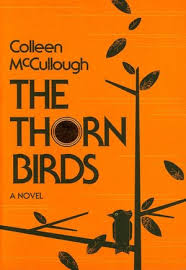
Books Read in 2015 – 38. The Thorn Birds by Colleen McCullough

Genre: Australian Fiction, Romance

Narrative Style: Third person from various points of view

Rating: 2/5Unknown

Published: 1977

Format: Kindle

Synopsis: Meggie Cleary is very young when she first meets Father Ralph de Bricassart but she loves him from the very first. She soon learns two things – that she can never have him and that he desires her too. So begins this sprawling novel about love and sacrifice that touches on life, death and love in its many forms. 

To say I was annoyed by this book would be an understatement. About three-quarters of the way through I felt like I might be reading it for the rest of my life. It was hard not to give up but I hate abandoning a book especially when I have already spent a lot of time with it. Still, the major emotion at the end was relief.

In a way, I only have myself to blame. I know I don’t especially get on with romance and melodrama. And this had melodrama in spades. I had read another of McCullough’s novels (Tim) but that was a long time ago – I was about 18 – and I was probably thinking about Mel Gibson in the film of the book. I was curious because I enjoyed the TV series in the eighties although if there is one thing I should know, it is that good TV and film can be made from less than great literature.

To be fair, I was about 50% of the way through before the book really started to get on my nerves. The romance between Meggie and Ralph is quite compelling at first. He is torn apart by his longing, she is destroyed by his refusal to give up God. There is the makings of a great story there. Unfortunately, McCullough tries to tackle too much and the story stretches out of her control. If she had stuck to the simple story of an outback family, it would have been so much better. But sections such as that about twins, Patsy and Jims, fighting in Egypt are not only superfluous to the main plot but unconvincing. In fact, none of the men on Drogheda are particularly well drawn. It is as if McCullough couldn’t be bothered to do anything with them as none of them get married or do anything individually. They are lumped together as the Uncles and none of them are developed enough to have their own personality.

There is a lot of melodrama in this book. In some ways, Meggie was similar to Stephen in The Well of Loneliness. She is a martyr to her cause and while it is a different cause, the results were the same. It was difficult to believe that so many bad things could keep happening to her. It was draining and it wasn’t long before my empathy was exhausted.

The last section of the book focuses on Meggie’s two children, Justine and Dane. Again, this section did not particularly convince. Dane was too good to be true and it was no surprise that he would die such a martyr’s death. Justine wasn’t strong enough as a character to carry the weight of the story after that. Once you start to become annoyed with a book, it is hard to take any of it seriously so when Father Ralph died in Meggie’s arms, the only emotion I felt was that of disbelief.

It’s a shame that I ended up feeling that way. The beginning of this novel has some great descriptions of the outback and the toughness of the life that they have to lead. Perhaps I should have stopped reading about halfway through. I certainly wouldn’t feel so let down by the book if I had.


We’re all narcissists now

Unknown


Okay, apologies in advance, this will probably be a bit of a rant. And it probably won’t be all that original either. But I need to let off steam before I carry on with my editing or I won’t be able to concentrate.

If you were out, in town say, and there was someone you knew stood shouting in the town square “Look at me. Look at me,” you’d probably go and have a serious word with them. But this is perfectly acceptable on social media. In fact the louder you shout, the better. Or at least that is what it feels like. It must be the same impulse that allows people to bully people online that allows them to be so nakedly needy. I’m sure it is all to do with not actually being able to see the people we are talking to that allows both of these dubious behaviours.

My irritation is a permanent side effect of looking at Facebook. And while I know I could just not look, I find it is almost compulsive. Perhaps it allows me to feel superior. After all, here I am blogging about my annoyance – no different really. I wouldn’t do it if I thought no one was going to read it. It is ironic to complain about narcissism by being narcissistic but I feel the need to rid myself of some irritation so I guess I’ll just have to cope with it.

What annoyed me today and prompted this blog is the phenomenon of threatening to leave Facebook or unfriend dozens of people if they don’t interact with you in what you deem to be the proper manner. There will be a big proclamation of how terrible social media is, how they can no longer cope with it or with the people who don’t interact with them (or God forbid, disagree with their opinions). There is then a big outpouring from said friends about how they cannot possibly live without that person’s contributions to social media and the original person then decides to stay. I find it hard to believe that people I know are really that needy. Imagine if you did that in real life. You’d probably end up with no friends whatsoever. I personally do not particularly care if someone decides to cull their friends and decides I am on of the ones that needs to go. So be it. You can’t force some one to be friends with you. Would you really keep pushing on real life if you knew that you didn’t have that much in common with people.

I keep saying in real life and maybe that is why I can’t get to grips with this behaviour. I do not live my life through my keyboard and monitor. There is a gap between Facebook and the real world for me but I guess that isn’t true for everyone. And maybe it’s because I’m not that good at sharing in real life so even the mask of anonymity that a screen gives you is not enough for me to lay everything out for inspection. I don’t really understand but I do know it makes me mad.

Everyone likes to be liked and I suppose that Facebook can give you that in spades. I like it as much as anyone when someone likes my status or this blog post. No one is immune. I would just hope that I could hold on to my sense of decorum and not nakedly plead for someone’s pity or love. I do not want to be that person, standing yelling in the middle of town. That is the image I will keep in my head in case I am tempted to do it.


Books Read in 2015 37. Just My Type – Simon Garfield

eclecticreader15

Genre: Non-Fiction, Microhistory

Narrative Style: Academic, Some first person anecdotes

Rating: 5/5

Published: 201151lZzrI4UcL._SX323_BO1,204,203,200_

Format: Paperback

Synopsis: This is book is the story of how we came to live in a type saturated world and how there came to be quite so many fonts to choose from. This is a book for anyone who has ever pondered what font to write that letter in or why the 2012 Olympics logo was just so terrible. This book takes us from the very beginnings of print to the very latest computer designed fonts and takes in all the stages in between. 

Reading Challenges: Eclectic Reader Challenge Genre: Microhistory

The reading of this book came about because my husband is obsessed with fonts and often bemoans the trend for not saying what font a book has been typeset in. So I bought him this book a while ago and when this genre came up, it seemed to fit perfectly.

This is not just a book about type and its (seemingly) infinite varieties. it is also about the history of the industry. It takes the reader from the very beginnings of type when it was a laborious and highly skilled job to the modern day where anyone can invent a font or base on one their handwriting using their personal computer. This is not to suggest that modern font designers are not craftsmen, just that it is a completely different process and as with so many things, the computer has made it a much wider playing field.

Along the way, there was much nostalgia with discussions about printing sets for children and Letraset – both of which I can remember. I loved the inkiness of using the printing set and it was less irritating than trying to actually use Letraset. Certainly, children who are interested in such things these days will never know that particular frustration. There is an undercurrent of longing for the old days throughout this book as if the computer has sucked some of the romance out of font design. Which undoubtedly it has.

There are also chapters on specific fonts, the circumstances of their birth and the use to which they are now put. These were particularly interesting as they showed the eccentricity of many designers. This thankfully hasn’t changed with the advent of computer design. There are still mavericks out there, doing their best to be as different as possible despite the universal pull towards simple – and I think boring – fonts such as Helvetica which is becoming stupidly ubiquitous.

Finally, here is a warning. When you read this book, you will bore your friends silly with the amount of interesting font trivia in this book. And also, you will find that it is almost impossible to walk down the street without surveying every single sign you see. It’s funny how much we take for granted. It is strange to think of motorway signs being designed. This is because they work so well. (And when you see the font we could have had, you understand exactly how important this design was.) Everywhere in our lives, we see type working well, doing its job. it’s only when the font doesn’t work that we groan and hold our heads. For the most part, the designers get it right and fonts don’t invade our consciousness when we are trying to find our way or read important information. But now, I will certainly think about it a little more and appreciate the effort a designer took to make life a little bit more effortless for me.