Books Read in 2014 – 15. Some of Your Blood – Theodore Sturgeon

Genre: Horror, Epistolary
narrative style: a variety of letters, third and first person narration, sturgeon-some-blood-tempsychiatric evaluations and interviews.

Rating:4/5

Format: Kindle

Published: 1961

Synopsis:A soldier who calls himself “George” is admitted to the army’s psychiatric ward after a vicious attack on the major of his company. The major was concerned about the contents of a letter “George” wrote home to his girl, Anna but the contents are not revealed to the reader until the very end.

Dr Phil Outerbridge is given the task of dealing with a soldier who is surrounded with some mystery. The army want the issue of his attack on the major dealt with quickly and sensitively. The novel opens with a series of letters between Phil and his superior Al, discussing the way in which this case could be dealt with and Phil’s initial impressions of the patient.

At the very beginning, before the story proper, there is a section describing the reader sneaking into Phil’s office (We are assured it is safe, after all it is only fiction) and opening this particularly curious file and working through it.  The different voices and styles that this requires are skillfully handled and the psychiatric reports and analysis are convincing and intelligent.

The soldier is tasked with writing his own story. He is advised that it might be easier in the third person and chooses the name “George” for himself.The third person narrative that follows gives a lot of detail about “George’s” early life, his time in a boys’ home and then in the army and details his love of hunting. Whenever it seems that there may be some sort of revelation, George moves on to the next event and the reader is left wondering exactly what has happened. As Phil later comments, there are a number of holes in his story.

After “George’s” narrative, there follows a number of psychiatric evaluations and interviews in which more details are slowly revealed about the exact nature of “George’s” sickness. The way the story slowly unfolds reminded me of the narrative structure of The Strange Case of Dr Jekyll and Mr Hyde where witness accounts and letters hint at the horror that the reader eventually faces.

In the end, the contents of the letter is revealed and the story finishes with no absolute decision on whether “George” will stay in the hospital or not. Instead, there is a return to the authorial voice of the beginning offering us possible fictional outcomes and inviting us to decide. Then in the final chilling moments, we are warned to hurry in case Phil catches us and it isn’t fiction after all but real. Of course, such horror does exist in the real world and this could easily be a real case study. It is a clever and unnerving ending to what was a clever and unnerving story.

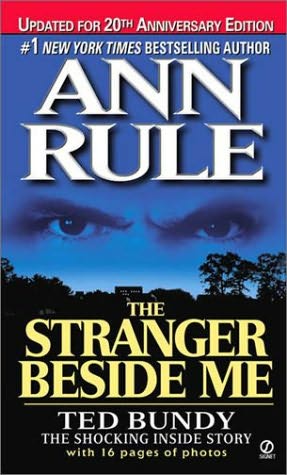
Books read in 2014 – 14. The Stranger Beside Me: Ted Bundy, The Shocking Inside Story – Ann Rule


eclecticchallenge2014_300

Genre: True Crime, Serial Killers
narrative style: first person, largely chronological Rating:3/5

format: Kindle

Published: 1980

Synopsis: Rule describes Bundy’s murders and also her reaction to them. She decribes their friendship and the difficulties she faced in accepting his guilt.

Challenges: Eclectic Reader Challenge 2014 – genre True Crime.

I first came across Ted Bundy when I was writing my MPhil. I was writing a section comparing Bret Easton Ellis’ American Psycho with Helen Zahavi’s Dirty Weekend and my research led me to read a lot about serial killers. Bundy stood out as one of the stranger cases. There was such a disparity between the persona he used to snare his victims (he liked to pretend to be helpless in some way, sometimes having his arm in a sling or using crutches) and the violence and depravity of his attacks. It stuck with me over the years and when I realised that I had to read a true crime book for this years challenge, I knew it would be about Bundy.ann rule

It is this disparity that is at the heart of Rule’s book. She knew Bundy, worked with him in fact, and was already writing a book about the series of violent murders when he became the prime suspect. She knew a charming and polite Ted, a man who worked the phones at a crisis centre, persuading people not to take their own lives. It is little wonder that she did not want to believe that he was the killer the police had searched for. Indeed, it didn’t seem possible that two such different personas could exist in the one person.

It surprised me how long Rule continued to be supportive of Bundy, even when she started to believe in his guilt. Perhaps it is easy to say when you are not emotionally attached to the person involved but I’m not sure I could have kept corresponding with him, sending him cheques and money as well. It maybe that she realised that this would help with her writing career – having the inside line on an infamous killer – and indeed this book did put her on the map. However, I think that the hold that Bundy had on her was a lot simpler. He knew exactly how to manipulate people and bend them to his will. Rule seems taken in by his need for her and at times seems almost awestruck. She claims not to have been in love with him and this may be true but there is something in the way that she writes about him that goes beyond mere friendship.

The details of Bundy’s crimes are horrendous and I had no idea how many women he had killed and how many murders he has been linked to that cannot be proved. Also his escapes from prison and many last minute reprieves from the electric chair made for interesting reading. However, I did get bogged down in what I felt was extraneous detail. Rule, undoubtedly, is very observant and thorough but there was no need to detail the weather or the background of every bit player. Also, I felt that the expression was clumsy at times and felt that who ever edited this work should have had a sharper red pencil. It was a shame because by the time I got to the end and Ted was finally going to be executed, I didn’t really care. I just wanted the book to be over.


Books read in 2014 – 12. Red Carpets and Other Banana Skins – Rupert Everett

Genre: Autobiography, film, glbt
narrative style: first person, mostly chronological
Rating: 4/5
Format: Paperback
Published: 2006

Synopsis: Everett recounts his life in film and theatre with amusing rupert everett_vividness. This takes the reader from the very beginning to the Hollywood years and beyond. Full of vignettes and asides about various stars and directors.

I’ve been a fan of Rupert Everett since I was a teenager and saw Another Country and Dance with a Stranger in close succession – both of which feature stunning performances from Everett. Even though his career has been patchy – to say the least – when he is good, he is very good. Of course, he is also intensely outspoken (as his recent comments about gay marriage show) and so it could be assumed that this would be an exciting read.

And so it was. Everett is a consummate story teller. His tales are full of vivid detail and are often at his own expense. He spares himself no humiliation in describing his own diva tendencies and ability to choose the wrong script. Where he is most amusing is in his descriptions of the stars that he met and worked with. (Who’d have thought that the cocky arrogance that led to Live Aid was due to Geldof literally having a big one.) There were a number of laugh out loud moments. This was delightfully camp and intelligently witty.

There are also a number of tender moments. Everett’s description of his relationship with Paula Yates, for example, was particularly poignant as was his description of a holiday with his ageing father. Everett certainly knows how to draw the reader in and there were times when this felt like an intimate chat with a good friend.

However, there is a limit. This is very much a Hollywood memoir and it is great as far as that goes. You are left with a feeling that there is more to Everett than this but you aren’t going to get to see it. And maybe that is fair enough. After all, we are only the audience and this is only one more great performance.


Books Read in 2014 – 11. In Other Worlds: SF and the Human Imagination

Genre: Literary criticism, Science, Science Fiction
narrative style: first person, academic
Rating: 5/5
Format: Paperback
Published: 2011

Synopsis: A series of essays from varying points in Atwood’s career covering her views on science fiction and dystopia, the origins of her own ideas, reviews of science fiction that has influenced her and finally some short stories.

This was an excellent read. Atwood is an intelligent commentator on fiction and on culture. She traces the impulse towards utopia and dystopia, in both her own writing and within our culture.
The descriptions of her early reading and the differences between then and now are interestingly examined. It is fascinating to me, a person who has always known a certain level of technology, to imagine what it must have been like pre-television when people listened to the radio so much more. No doubt when space travel first began, it must have seemed so exciting and so beyond what anyone else had done. These days, it seems almost old hat. Atwood shows the same unfailing intelligence when examining her own fictional impulses as others which offers the reader a new insight.
Her reviews of classics such as The Island or Doctor Moreau, Women on the edge of time, 1984 and such like are equally intelligent. In fact, I was made to rethink my position on these books a couple of times because her views were so well thought out. I now have a long list of books that I need to read based on all the books that were mentioned that I hadn’t read.
Finally, tucked away at the end of this book are five short science fiction stories, all of which are filled with Atwood’s trademark sly humour and love of langauage. My favourite of these takes the form of a dinner party conversation about the perils of having your head cryogenically frozen. Atwood really picks the issue apart.
All in all a great read for anyone with an interest in science fiction.

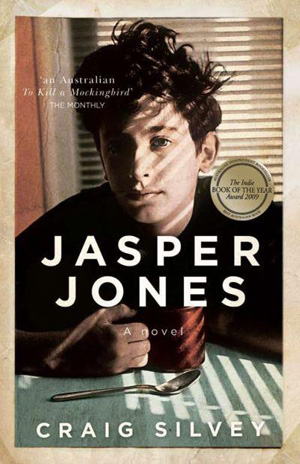
Books Read in 2014 – 10. Jasper Jones by Craig Silvey

Genre: Young Adult, Bildungsroman, Crime

Narrative Style: First person narrative, Straightforward chronological timeline

Rating 4/5jasper-jones-book-cover1

Format: Kindle

Published: 2009

Synopsis: Charlie Bucktin is both alarmed and gratified when Jasper Jones first knocks on his window. However, he soon wishes not to share Jasper’s secret and it weighs heavily on him over the summer. The sleepy town where he grew up, that seemed so safe becomes a place of secrets, violence and prejudice that he desperately wants to escape. 

This book had me from the first. Charlie’s excitement and worry is almost palpable when Jasper Jones, town outcast, first comes to his window to ask for help. Their journey to Jasper’s hideout is agonising. The suffocating weather doesn’t help. You can almost feel the heat. Of course, from the synopsis of the novel, you realise that Jasper has probably discovered a body so that wasn’t really a surprise but the boys decision to cut the body of Laura Wishart down and throw it into the river so that Jasper will not be blamed for her death is a little more shocking.

Events soon start to spiral. Charlie finds it hard to live with his knowledge and that contributes to his disintergrating relationship with his mother. He starts to fall in love with Laura’s sister which makes his secret knowledge all the more uncomfortable. Jasper’s decision to confront who he assumes is the killer reveals town secrets that go back decades. The seemingly innocent town reveals its darker side with a series of racial incidents.

Charlie was a lively and intelligent narrator who read as if his life depended on it. He describes life in the town vividly, as well as his own insecurities and worries. The novel is full of school boy humour through his conversations with his best friend. It was easy to read and compelling enough to want to read on. Jasper Jones, as the town outsider, blamed for everything, was full of pathos but never pathetic.

If I have any complaints, it would be that it was easy to see what the reveals were going to be. There were no surprises although the bad luck that might have saved Laura’s life was well plotted and interesting. Having said that, I always wanted to read on to see how Charlie and Jasper would react to the events as they unfolded.

The issues in this novel were skilfully handled. There was no preaching, just the sense of a young person trying to find their way in an increasingly difficult world.


Books read in 2014 – 8. Fatal Shadows – Josh Lanyon

Genre: Detective, LGBT, Romantic Suspense

Narrative Style: First person narrative, Straightforward chronological timeline1274861

Rating 4/5

Format: Kindle

Published: 2000

Synopsis: Someone is out to get Adrien English. First, his closest friend and employee, Robert, is murdered and then someone ransacks his shop. Even worse, the police seem to think that he murdered Robert. And everything he tries to do to help ends up making him look even more guilty.  

I love a well-written detective story. After the annoyance of reading Post Mortem by Patricia Cornwell, I wanted to read an author that I knew could deliver the goods so I decided to read the first of the Adrien English series. I wasn’t disappointed.

There are a number of things that bring me back to reading Lanyon’s work, first and foremost being the plot lines are always suspenceful with twists and turns that don’t seem forced. In short, he keeps you turning the pages. As with the main character in Come Unto These Yellow Sands, Adrien is very good at getting himself into awkward situations which adds an extra dimension to the suspense.

The character of Adrien was convincing and I took to him straight away. Lanyon shows the homophobia that he faces without making him seem like a victim and while he has some of the stereotypical traits of a gay man, he never seems like a type but like a real person. His first person narrative is full of humour and ironic asides which made the reader warm to him.

To me, it was obvious from the start that Detective Riordan was gay but closeted but it may be that this was deliberate as it allowed the reader knowledge that Adrien did not have. It was soon apparent that Riordan had a crush on Adrien and was on his side, sharing knowledge with him and eventually saving his life. But as I said, it was not at all obvious to Adrien who was too busy fearing for his life to notice.

I was sorely tempted to go straight on and read the next book in the series but I’ve decided to save it for the next time I feel I need the knowledge that the book I am about to open will be really pleasing.


Books read in 2014 – 7. Postmortem – Patricia Cornwell

Reading Challenges: Eclectic Reader Challenge 2014eclecticchallenge2014_300

Genre: Medical Thriller

Narrative Style: First person narrative, Straightforward chronological timeline

Rating 3/5

Format: Kindle

Published: 1990

Synopsis: Someone is strangling and binding women in Virginia, America. Kay Scarpetta is the chief medical examiner assigned to the case. The novel starts with the fourth murder and shows the way the murders are making everyone from single women to city hall officials to reporters jumpy. postmortem

I was excited to read Cornwell for the first time so I was pleased when her name came up on a search for medical thrillers. She was one of the major crime writers that I had yet to sample. I decided to start at the beginning of the Kay Scarpetta series, instead of diving in in the middle which is my usual habit. I wish I hadn’t.

This novel was published in 1990. I found I kept saying that to myself while I was reading it as if it was an excuse. Kay Scarpetta seemed the absolute product of 80s feminism; all bitter and distant from having to climb the corporate ladder in a man’s world. Okay, maybe that is how you would be but it made her difficult to like and even harder to identify with. She seemed to dislike men on principle regardless of whether they were sympathetic to her or not. That started to be a little wearing as the novel progressed and I found myself getting annoyed with her.

It was a bit of a distraction from what was a good thriller. It kept you guessing until the end. It was interesting to note the differences from modern crime stories which rely so heavily on technology. DNA profiling was still in it’s infancy and Cornwell seems a little unsure at times exactly what to do with her evidence. That said, the novel is full of close detail and medical information that is interesting. The process of working from evidence through research and finally to a solution was impeccably described.

In the end, the story was compelling enough to keep me reading despite my reservations about the characters. However, I doubt I’ll read on.

Books Read in 2014 – 6. The Doll’s House – Neil Gaiman

Sandman_Dolls_HouseGenre: Graphic Novel, Fantasy

Narrative Style: Mix of viewpoints. Generally linear.

Rating 4/5

Format: paperback

Published: 1989

Synopsis: Due to the absence of Dream from his realm, some of the dreams and nightmares have escaped. This leads to all sorts of bloody mayhem. Add in the presence of a Vortex that could wreck the dream world forever and you have the makings of an exciting story.

As I mentioned in my last post I was going straight on to read the next Sandman book The Doll’s House. I was glad to have been loaned the second one as well as otherwise I would have felt a little bereft. I’m pleased to say that I was not disappointed.

Having said that, this is much less a story about Dream – obviously he appears in it but he isn’t the centre as much as he was in the first book. Instead, Rose, granddaughter of Unity Kinkaid (a character from the first book) is the focus and her search for her younger brother supplies most of the narrative momentum.

One the way she meets a whole host of wacky and wicked characters. There seems to be no limits to Gaiman’s imagination in this respect. And while they are strange, they are never less than convincing. Such is the level of his talent.

There is plenty of gore, as well and the illustrations are just as impressive and vivid – in fact more so, as the story allows for an unleashing of the artists twisted imagination much more than in the first book.

I felt this book was more compact and self-contained than the first and I don’t feel such a compulsion to read on immediately. Having said that I am much more interested in reading the rest of them now.

Books read in 2014 3. – Starter for Ten – David Nicholls

Reading Challenges: Eclectic Reader Challenge 2014eclecticchallenge2014_300

Genre: Romantic Comedy

Narrative Style: First Person Narrative, Chronological Timeline

Format: Kindle

Published: 2003

Synopsis: Working class boy, Brian Jackson goes away to university and makes an utter mess of it. 107896He enrolls for University Challenge in order to impress posh girl, Alice and spends the rest of the novel chasing after her hopelessly. He also finds time to annoy his childhood friends and just about anyone else who has the misfortune to bump into him.

Rating: 3/5

I thought I’d try to get this genre out of the way near the beginning as I have very little patience with the idea of romance even when joined with the more fun genre of comedy. I’d read One Day and The Understudy which were both okay so I thought I’d give Starter for Ten a go.

I thought that I might be able to identify with Brian Jackson, a working class boy going off to university albeit in the 80s and I went in the 90s, however he was very quickly unlikeable and annoying. Of course, Nicholls’ aim was undoubtedly to show a young man’s journey from annoying little boy to mature and sensible man but Brian never seems to learn any lessons and, indeed, at the end he is still making the same stupid mistakes.

While I understand that a working class boy at university might meet a lot of people who were posher than him, most of the characters in this book seem to be stereotypes of one type or another, none of which are very pleasant. This is also true of Jackson’s working class friends from home. I don’t know if Nicholls was trying to make a point about class difference but it was somewhat lost because none of these characters seemed like real people.

The romance with Alice is supposed to be amusing and Brian’s patheticness is a little funny, I guess but mostly I just wished he would wake up and realise that she was stringing him along. Alice is contrasted with Glaswegian socialist worker Rebecca who is angry and tough (Just another stereotype) and much more Brian’s type if only he could see it. I chose this book because I thought I’d find a romance with a male protagonist less annoying. It turns out that this was not true. Reading this reminded me of reading Bridget Jones’ Diary. I wanted to shake him just about all the way through.

The University Challenge storyline is more amusing and (unsurprisingly) I found all the angsty romance a little distracting at times. I do think that there are parts of this story that could have been developed and maybe then Brian’s character would have developed a bit more. Because he viewed Alice as some sort of unattainable beauty queen, as long as he is involved with her, he will always remain a boy.

The end of the book was not a surprise. I won’t spoil it but needless to say Brian has not learned his lesson. Even though he will be starting again at a new university, he has learned nothing and there is potential for the same mistakes being made.

Finally, all the way through this book, Nicholls makes reference to great works of literature – Tender is the Night, Brideshead Revisited, Great Expectations, to name but a few. If you are going to remind people of some of the best works in the English language, it might be a good idea to write a better book. All the many references made me think was, I wish I was reading that instead of this.

Books Read in 2014 – 2. Beautiful Losers – Leonard Cohen

Genre – Erotica, Experimental

Date of Publication – 1966

Narrative Style – stream of consciousness. Non-chronilogical

Format: Paperback

Published: 1966

Synopsis – A three part story about three friends / lovers – the first part is a first person narrative after the death of his wife and his lover, F, the second part is a letter from F to the first narrator and the third part is a thrid person summing up of their stories. 

Rating: 3/5 047533-fc222

I’m a big fan of Leonard Cohens music but I hadn’t read any of his fiction before this one so I was quite excited when I got Beautiful Losers for Christmas. Certainly, I wasn’t expecting to read something quite so erotic and quite so experimental.

One of the things that is immediately apparent about this book is that it is written by a poet. Quite often the language and the rhythm take precedence over meaning which leads to some beautiful imagery but like a lot of poetry, I didn’t always understand what was going on.

This is an intensely erotic book. Indeed, one of the original reviews called it ‘verbal masturbation and another suggested that it was the ‘most revolting book ever written in Canada’. There is more than one love triangle in this book as the three lovers experiment. However, it is never merely sex for the sake of it. Quite often it is described in an oblique way or involves body parts that aren’t necessarily thought of as erotic.

What I found more difficult to deal with were the long passages about the Catherine Tekakwitha and her religiosity. I didn’t find the historic information as interesting as the events in the present day, maybe because I have very little sense of religion myself. Also, I have a low tolerance of miracles and pilgrimages.

There seemed to be a preoccupation with ownership, with occupation of lands and with colonialism – the Indians by the Catholics, the French presence in Montreal, for example. I must admit to a lack of knowledge of the history of Canada but this book did make me think I might like to know more.

Finally, I found it a little unsatisfying. I was reminded of reading Joyce or Amis, maybe. Masters of language and they may be but they left me feeling a little lost and disappointed with myself. I don’t like to feel I may have missed the point.