Books Read in 2014 – 43. The Witches of Eastwick by John Updike

imagesGenre: supernatural, magic realism

Narrative Style: Third person, chronological

Rating: 4/5

Published: 1984

Format: Hardback

Synopsis: In a quiet Rhode Island town, three divorcees join forces to create a powerful magical force. When Darryl Van Horne arrives in their town, the balance between them is disturbed and all hell breaks loose.

I was surprised to enjoy this quite so much. I wasn’t a big fan of the film although it was a long time ago that I saw it. But I recently inherited a lot of John Updike books and I thought a familiar storyline was a good place to start. Having said that, the story really didn’t ring any bells which might be because I can’t remember it or it may be that the film is completely different.

The story starts with a description of the three witches and their various talents and powers. It is true that their power does seem to rest with their sexuality or with nature – typically feminine forms of power. This was a bit of an irritant but I found that Updike’s rich prose and stunning description kept me reading regardless of any issues I may have had with stereotypical representations of women.

The arrival of Darryl Van Horne in Eastwick has a profound effect on all three of the women and he nurtures their talents as well as inviting them to his house for long sexy baths. He may have been conjured up by their collective longing or he may be the devil come to check on their powers. Either way, he upsets the balance of power between the women and in the town in general and things start to take a darker turn. What is also certain is that his powers are really no match for theirs and when he fails to gain what he wants, he dematerializes as suddenly as he came.

This is a fabulously, abundantly written book with almost too much to take in one every page. Updike never misses an opportunity to satirize small town life and the small ways people try to gain power for themselves. The details are nothing if not convincing even in amongst the supernatural happenings. I will certainly be reading more Updike and I wish I had not waited so long to read my first one.

Books Read in 2014 – 42. Chocky by John Wyndham

download (12)
Genre: Dystopia
Narrative Style: First person, chronological
Rating 4/5
Published: 1970
Format: Kindle
Synopsis: When Matthew starts to communicate with an unseen being named Chocky, his parents are understandably worried. After all, Matthew is too old for an imaginary friend. Furthermore, Matthew is starting to ask questions that seem to have come from somewhere beyond his own mind. As time passes, they grow more and more concerned and involve outside help. This turns out to be a big mistake.

There were a couple of reasons for choosing to read this book. I could vaguely remember the TV series and was curious to read the book behind it. Secondly, I had been meaning to read more Wyndham since reading The Day of the Triffids a few years ago. So I had high hopes for the book and I certainly wasn’t disappointed. This is a really good read and the only thing that stopped it getting five stars is that sometimes it seemed a little old fashioned which is inevitable, I suppose, with this sort of fiction.
The story begins with Matthew’s parents noticing little oddities that are out of place for an eleven year old – like having an imaginary friend. It seems harmless enough and although they are curious, they are not unduly worried, as their son seems happy enough in himself.
However, clues begins to appear that suggest that this is no ordinary imaginary being. Matthew starts to ask questions that are almost beyond his understanding. His teachers complain that he is starting to ask about concepts that are too difficult to explain and he sometimes appeared to be arguing with another being. They decide to seek outside help and it is suggested that Matthew may be possessed by an outside force. Understandably, they find this an unsatisfactory answer and seek help elsewhere.
Events do become more sinister – for example, Matthew rescues his sister from drowning without being able to swim. The press start to become interested and Matthew is sent to an important psychologist who equally has no answers for them.
I must admit that I wished I had no knowledge of the events that were to come as I could remember exactly who Chocky was, However, I could not remember the exact storyline and so when Matthew goes missing near the end of the novel, I was as perplexed as his parents. I also could not remember Chocky’s purpose in using Matthew as a reporter on this world. I was impressed by the ecological reasoning used by Chocky in her disgust at our dependency on fossil fuels that will inevitably disappear. This reads now like a warning still unheeded as we are still desperate for a clean, safe solution to this problem. There was a contrast between Chocky’s altruistic attitude and that of the doctors who want to exploit Matthew’s unusual knowledge.
The narrative is written from the point of view of David, Matthew’s father and was convincing in its curiosity about Chocky and its concern for Matthew. The story is written in a straightforward way but that only made the ending seem more devastating because the reader could believe in its reality. Very enjoyable.

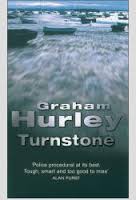
Books Read in 2014. 41. Turnstone – Graham Hurley

download (11)

Genre: British Detective

Narrative Style: Third Person, Chronological
Rating: 2/5

Format: Kindle

Published: 2000

Synopsis: Joe Faraday is an overworked cop with family issues. Even though he lacks resources, he knows that he must help Emma Maloney find out what happened to her father. He is already dealing with a drugs bust gone wrong and a murdered grandfather. Furthermore, he lacks evidence and his boss wants him to focus on cases that will give the station a better media image. Joe cannot let the case go even when it seems that it is an obsession that is all in his head.

I picked this book to read because in the blurb it mentioned that it was about a daughter searching for her father and it sounded interesting. However, apart from a brief prologue, this storyline doesn’t appear until about a quarter of the way through. To me, this is too long before introducing what will be your main storyline. This problem of balance is one that effects the whole of this novel. At first, we have the murder of a grandfather and a drugs bust that goes wrong. But these are all but abandoned once the search begins for Maloney’s father. At times, Joe’s son is the focus of the story and then he too is abandoned. Moving between plot and subplot could certainly have been handled better.
I wasn’t convinced by the character of Joe. Maybe I am too much in thrall to detectives like Ian Rankin’s Rebus but Joe just didn’t convince. He seemed too well-behaved to go off on his own in the way that he does. By contrast, his opposite number, the corrupt cop was just a bundle of stereotypical bad cop attributes to really convince or make the reader have any feelings for.
The worst part of this novel though is the ending. Not so much the solving of the disappearance which was interesting enough but the epilogue which saw all of Joe’s family and personal problems neatly wrapped up. It was too simplistic by far. I won’t be reading anymore in this series.

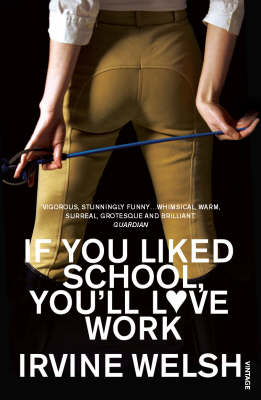
Books read in 2014 – 40. If You Liked School, You’ll Love Work by Irvine Welsh

tumblr_l4q7515v0u1qb6r71o1_400

eclecticchallenge2014_300

Genre: short stories, Scottish fiction

Narrative Style: varies – five stories in collection

Rating: 3/5

Published: 2007

Format: Paperback

Synopsis: Rattlesnakes – three friends drive out into the desert to take drugs and end up stranded with unexpected results. If you liked school, you’ll love work – an expat struggles to juggle all of the women in his life. The DOGS of Lincoln Park – a trendy young woman who loves her dog more than her friends is disturbed by the arrival of a Korean chef in her apartment block. Miss Arizona – a struggling screenwriter meets his match in lonely Miss Arizona. Kingdom of Fife – Jason King and Jenni Cahill struggle with the boredom of living in a small Scottish town.

Book Challenges: Eclectic Reader Challenge – Anthology genre

This collection was a mixed bag. I’m not a massive fan of short stories but Welsh’s previous collections (The Acid House and Ecstasy) were both excellent so I thought I’d give it a go for the anthology genre in this year’s Eclectic Reader Challenge. I’m not sure why they didn’t quite grab me this was fairly typical Welsh fare. All the usual ingredients. But then maybe that was the problem.

Rattlesnakes started well. You know you’re in a Welsh story when someone gets bitten on the penis by a rattlesnake and the only way to avoid death is for his best mate to suck the poison out. However, this story was spoiled by the borderline racist depiction of a psychotic Mexican. When he finds the pair in their tent, the story becomes pointlessly seedy and the main aim seems to be to make the reader as uncomfortable as possible. So far, so Welsh, you may say but there was nothing underneath the shock, no subtext or cleverness, just smut.

If you liked school, you’ll love work seemed like a case of masculine wishful thinking. The narrator takes great pains to say that he isn’t particularly attractive or slim, yet woman love him and despite some close calls, he never does get caught out. Nothing about this character or any of the women rang true. A series of stereotypes in a series of false set pieces.

The DOGS of Lincoln Park. This is where the collection started to pick up. Welsh carefully plays with racial stereotypes as he forces the reader to make certain assumptions about his Korean chef’s eating habits. You are then left with uncomfortable feeling that you believed the racist hype and assumed that the dog had become dinner.

Miss Arizona. This was a little bit Tales of the Unexpected but very enjoyable. The narrator is clearly trapped somewhere when he starts to tell his tale of making a documentary about his favourite director and interviewing his ex-wife who is heavily into taxidermy. It isn’t too hard to work out what has happened but is a good read nonetheless.

Kingdom of Fife. This is the only story set in Scotland and as such rings the most true. Welsh really does have an ear for his native tongue and captures Jason’s voice well. However, his depiction of Jenni Cahill was less successful and I wasn’t really convinced by her or her sudden change of heart about Jason either.

Books Read in 2014 – 39. A Son Called Gabriel – Damian McNicholl

download (10)

Genre: GLBT, Irish Fiction

Narrative Style: First Person Narrative, Chronological

Rating: 5/5

Published: 2004
Format: Kindle

Synopsis: As if it wasn’t hard enough growing up Catholic in Northern Island in the 1970s, Gabriel starts to suspect that he isn’t like other boys. Add to this the pressure of getting into grammar school, a turbulent relationship with his father and the strange secret of Uncle Brendan’s leaving and you have a compelling tale of teenage confusions.

This grabbed me from the very start. Gabriel was a funny and honest narrator who details his life from his first day of school until he is ready for university. From the very first, Gabriel is sensitive and doesn’t like many of the things it is considered normal for boys to like. At school he is bullied, at home his father is always on his back about not being masculine enough. Added to this is the constant presence of the Catholic church and his mother’s horror of what the neighbours might say and you get some impression of the pressure that Gabriel is under.

The conflict between Gabriel’s growing knowledge of his homosexuality and the ideas of the Catholic church is sensitively handled. Gabriel tries desperately to pray his way out of homosexuality and his strategies for dealing with his feelings are both funny and painfully touching.

When Uncle Brendan’s secret was revealed I was surprised although the clues had actually been obvious enough. It was pleasing to have not spotted them though and to be surprised for once. The ending itself was ambiguous in as much that Gabriel tells his mother his homosexual phase is over. However, the reader suspects that this is wishful thinking on his part.

My only complaint about this book is that it had to end. I could happily have gone on reading about Gabriel’s university years. Very enjoyable.

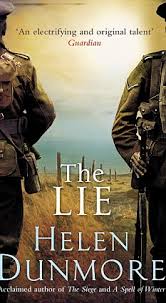
Books Read in 2014 – 38. The Lie by Helen Dunmore

download (9)

Genre: War, Historical Fiction
Narrative Style: First person narrative set in 1920 with flashbacks to the first world war.
Rating: 3/5
Publication: 2013
Format: Kindle
Synopsis: Daniel has survived the First World War and is now back in his hometown, homeless and without family. He is haunted by his experiences in the trenches and by the death of his best friend, Frederick as he tries to make a new life for himself.

I picked this to read because I enjoy reading about the First World War and because it had good reviews but I found that it paled compared to other fiction that I have read about this conflict. I found it neither as emotionally compelling as some (The Absolutist by John Boyne) or as interesting in terms of the themes treated here (Regeneration by Pat Barker, Birdsong by Sebastian Faulks).
The main reason for my discontent was that the plot seemed stretched, little more than a short story’s worth of content strained by its extension to a novel. Daniel is sympathetic and interesting but not a lot happens to him, even during his flashbacks so there is little to move the plot along.
Where Dunmore does succeed is in her descriptions – both of the Cornish coast and the life in the trenches. They are vivd and really give the reader a sense of Daniel’s isolation and horror. Also the descriptions of him re-working Mary Pascoe’s land are an interesting metaphor for his attempts at starting a new life whilst also constantly reminding him of the mud in the trenches.
I also liked the analysis of class and the differences between Daniel and his much richer friend, Frederick are apt and seem realistic. The differences between them become particularly apparent when they are both in the army but in completely different roles.
Unfortunately, this couldn’t make up for the lack of action and also the I found the ending unsatisfying and a little ridiculous.

Books read in 2014 – 37. The Rules of Attraction – Bret Easton Ellis


2014tbrbutton

Genre: Masculinity, GLBT

Narrative Style: Various first person narratives. Chronological.

Rating 4/5

Publication: 1987

Format: Paperback

Synopsis: Paul is in love with Sean but is on the rebound from Mitchell. Sean is in love with Lauren but that doesn’t stop him from going to bed with Paul. Lauren is in love with Victor who is in Europe and not communicating. These are the main voices in Ellis’s novel of disconnection and loneliness who recount their many attempts at love and sex. 

Challenges: TBR Challenge

Time on Shelf: About four years. Not sure why – I like Ellis but this just seemed to slip to the bottom of the pile again and again. 

This is a fairly typical Ellis novel. The characters are empty, trying desperately to fill their lives with something – drugs, sex, alcohol – certainly not with what they are supposed to be studying. This isn’t a criticism. I enjoy Ellis’s style and subject matter, just that it is easy to see where this fits before American Psycho and Glamarama. Of course, both of those branch off from this one so I suppose it isn’t surprising.

The main characters are Sean, Paul and Lauren and they get the narrative the most often. The triangle is absurd. Paul is besotted with Sean and describes their time together but if you only read Sean’s chapters then you’d never know about this relationship as he only mentions Paul in passing. In fact, it is almost possible to believe that Paul has the wrong person although some details do seem to be backed up by Lauren. He claims to be in love with Lauren but only because he thinks that she has been leaving love notes for him. Lauren’s motives for sleeping with Sean are uncertain although she is bored and angry with Victor who she discovers is chasing somebody else.

This is typical of the relationships in the novel and of the other characters who get the narrative voice. Everyone is in love with the wrong person. This is a novel about disconnection. Not just between people but with life and with themselves. No one really knows what anyone else is thinking or even comes close to guessing. In fact, more often then not, they have it about as wrong as it is possible to be.

This lack of connection is shown in the way the characters bed hop with about as much thought for sex as any other bodily function. It is no more important than scratching an itch. Even while Sean claims to be in love with Lauren, he still sleeps with her best friend. Also, it is symbolised by the fact that no one seems able to decide on a subject to study. These people do not know themselves so it makes sense that they would be unable to form relationships or settle on a pathway for the future.

This novel is funny in places and Ellis has a superb ear for dialogue so the meaningless student exchanges seem realistic and reminded me of the sort of conversations that you have at that age. Ultimately though, this is a difficult book to read and I found the characters a bit depressing. They have no characteristics, they only have things. And while I know these sort of people exist, I certainly wouldn’t want to spend anymore time than I just have in their company.

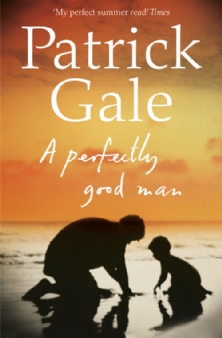
Books read in 2014 – 36. A Perfectly Good Man – Patrick Gale

Genre: family, religion

Narrative Style: Third person, non-chronological

Rating: 4/5065917-fc222

Format: Paperback

Published:2012

Synopsis: Lenny decides to take his own life after being paralyzed in a rugby accident. He asks the parish priest, Barnaby Johnson to be present. His decision and Barney’s involvement will turn the parish upside down and bring old secrets to light. 

This had me hooked from the first with Lenny’s meticulous plans for suicide and his request for the parish priest to be present. Barnaby has no idea what is going to happen until it is far too late and Lenny has already committed the act. He is left with nothing but prayer.

The story then unfolds from various characters points of view at various points in their life so we learn of Barnaby’s marriage, his difficult relationship with his adopted son and his affair with a local artist from his point of view and theirs. We learn about Lenny’s mother and a local parishioner named Modest who turns out to play a crucial role in events a number of times in the narrative without always realising.

The pace is unhurried and it is easy to work out some of the secrets but that really isn’t the point of this story. The narrative is as much about Barnaby’s difficult relationship with his faith and with God as it is about the actual events. It is about family and the ways we come to find love in the most unexpected ways. There are no big twists and turns because this is a novel about ordinary people dealing with what life throws at them.

The characters were convincing and I felt able to empathise with most of them even those I didn’t actually like. Even Modest, the most horrible character, was pathetic rather than anything else. It was interesting to see both sides of the father son relationship between Barnaby and his son, Phuc and realise exactly how hard it is sometimes to do the right thing.

The book ends well, in that it ties up loose ends and it is generally a happy ending but there is nothing forced or unlikely about it and no doubt if you continued to follow these characters life would continue to throw challenges at them but this was where this particular story ended.


Books Read in 2014 – 35. Plain Truth – Jodi Picoult

Genre: Chick Lit, Morality

Narrative Style: Third Person chapters alternating with first person

Rating 3/5

Format: Paperback

Published: 2000

Synopsis: A dead baby is found in a barn on an Amish farm. At first, none of the women will even admit to being pregnant. And then there is the mystery of how the baby died. Ellie Hathaway is the streetwise attorney who becomes far too involved in her client’s life. 

I picked this up because I wanted something that would be easy to read while I was marking exams, something that would help me switch off at the end of a day of reading accounts that can’t decide what tense to be in. I certainly didn’t want to be struggling through some heavy piece of literary fiction. This had belonged to my mother (for all you wondering why I would even have a Jodi Picout book on my shelves) and when she died at the start of the year, it made its way onto my shelf. I was also curious. A few years ago I was loaned Change of Heart by a Picoult nut and while I thought it was okay, I wasn’t overwhelmed. I wanted to give her another try.

I must admit that the storyline drew me in quite quickly. Once it became apparent that the eldest daughter of the household, Katie, was the baby’s mother and that she denied giving birth, never mind killing the baby, then my interest was piqued. Picoult had also clearly researched her subject matter thoroughly as the picture given of Amish life was full of detail and seemed (to me anyway) realistic. I was ready to say I was wrong and that this was a very good book.

However, as I read on, things started to jar for me. The first thing was the mention of the ghost of Katie’s little sister. Which was fine when it seemed it was a figment of Katie’s imagination but it soon became apparent that not only could other people see this ghost but Picoult herself seemed to believe in its existence. I find this sort of spirituality quite troubling and it didn’t seem to fit with Katie’s character at all. It did mean, however, that there could be an utterly sickeningly corny image at the end of the book which I personally found completely unnecessary.

Picoult described the Amish as a group of people that lived for the community and the good of the group and who frowned on individuality. And there are some obvious advantages to this way of thinking but also disadvantages. In the novel, two characters have been shunned and had to leave because of decisions that they made and this is given as a possible motivation for the murder of the baby – and indeed, in a round about way, it does have to do with the baby’s death. Some of the difficulties this leads to are described in the beginning. However, by the end of the novel, through the decisions that Katie makes, Picoult seems to be privileging this form of living, as Katie decides to return to the fold, rather than follow her own heart. It may be that I find it too hard to fit in with any groups to be able to understand this sort of thinking but it does seem that at the start of the novel, this way of thinking is criticized but by the end, it is seen as some sort of salvation.

This is also shown in the character development of Ellie which I also found a little unsatisfying. At the beginning, she was a hard bitten attorney who liked to win so much that she had just managed to get a sex offender, she knew was guilty, off scot free. She ends up living with Katie as part of her bail conditions and as a result, begins to understand the faults in her own character. While it is apparent that Ellie had faults to understand, it all seems very easy for her and, in my mind, she doesn’t struggle enough psychologically for her change for the better to ring true.

At the end of the day, I have given this 3/5 because I did want to keep reading and I did feel sympathy for Katie but ultimately it didn’t work for me.

Books Read in 2014 – 34. Nineteen Seventy Four (Red Riding 1) – David Pearce

Genre: Crime

Narrative Style: First Person Narrative659058

Rating 4/5

Format: Paperback

Published: 1999

Synopsis: Ed Dunford is back in Yorkshire with his dream job as a crime correspondent. He begins investigating the horrible death of a little girl and finds himself mired in corruption and violence until he barely knows what is right and what is wrong. 

This book really isn’t for the fainthearted. It is brutal and violent almost from the very first. Ed is thrown into a world he thinks he understands but that really is beyond his very worst imaginings. No one is to be trusted and in the end, Ed feels he has to become like the men he is trying to stop because they are outside of the normal rules of law and order.

Pearce has a lot in common with hard-boiled American writers such as James Ellroy. None of the characters are pleasant, they all double-cross each other. Ed – supposedly the good guy – is just as misogynistic and unpleasant as the rest of them. I have seen complaints about the amount of violence against the female characters in this book and it is true that very few survive the length of the book and those that do are still effected by male violence. However, I feel that given the subject matter of the book and the setting in the seventies, this is to be expected. This is a book about male violence and its consequences. It would seem unrealistic for this violence not to be against women. That said, I’m not sure that Ed needed to be quite so unpleasant towards the women in his life, forcing on into having an abortion, forcing another into anal sex. To me, this was superfluous, an unnecessary addition to the already high levels of misogyny. It added nothing to Ed’s character development.

The narrative voice was convincing throughout – especially as Ed started to unravel. It was interesting to have a hard-boiled novel set in Yorkshire and to have a narrative voice that was so very northern. The pace was perfectly judged with things happening so quickly towards the end it was hard to keep track and no wonder that Ed could barely keep up. I will certainly be reading the next installment.