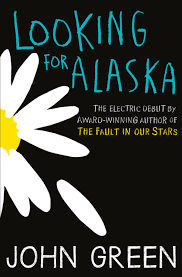
Books Read in 2015 51. Looking for Alaska – John Green

Genre: Young Adult, Bildungsroman

Narrative Style: First person

Rating: 4/5Unknown

Published: 2006

Rating: 4/5

Format: Kindle

Synopsis: Miles Halter thinks that going away to boarding school is going to be a great adventure but little prepares him for the way his life is going to change when he meets Chip Martin and Alaska Young. 

I had mixed feelings about reading another John Green. While I enjoyed the others that I read, I also found his style a little annoying as everything is overblown with significance. However, I enjoyed this more. Maybe it is because it was his first novel but it isn’t quite so over the top.

The characters were well drawn and I took to Miles straightaway with his obsession with last words and his longing for something more. I have to say that these kids are much more well read and intellectual than most of the teenagers that I come into contact with but that is not to say such kids don’t exist. Both Alaska and Chip were convincing as well, both representing different sorts of teenage angst.

The story counts down – some many days before – to an event and I have to admit, I did not see what this event would be. I assumed that this was the prank they were planning and not the terrible thing that actually happened. As a result, I was completely shocked and upset by it – almost as much as Miles himself.

Ultimately this is a book about grief and about learning to let go, lessons Miles in particular finds it hard to learn. it is about growing up and about not giving up. In the end, I felt hopeful for Miles and for his future.

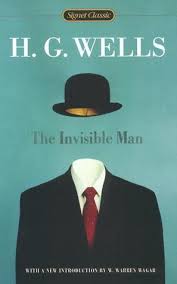
Books Read in 2015 50. The Invisible Man – H.G. Wells

Genre: Science Fiction, Horror, Madness

Narrative Style: Third person, reported with details from witnesses Unknown

Rating: 5/5

Published: 1897

Format: Kindle

Synopsis: A stranger arrives at a village pub and brings with him all manner of strangeness. At first, the visitor is merely surly and unfriendly but it soon becomes clear that all is not quite right with him and the chaos begins. 

It is one of those things that people are thought to wish for – to be invisible, even for just a day. It is always considered to be a fun concept, one which involves all the mischief you could possibly imagine. It is this idea that Wells explores in The Invisible Man. It quickly becomes apparent that not all of the consequences are pleasant.

The novel begins with the arrival of the Invisible Man at a pub where he means to lodge. He is wrapped up to the eyeballs with scarf, hat and coat hiding the truth of his state. For the reader, there is never any doubt about his identity. The audience is in a position of knowledge compared with the characters and they wonder how the truth will be revealed. Wells slowly peels back the layers from the character until his true state is understood. Chaos ensues and it quickly becomes apparent just how difficult it is to capture what you cannot actually see.

What follows is essentially an extended chase albeit with a pause for the Invisible Man – his name is Griffin, it transpires – to tell his tale. The science of the process is plausible enough and the pause heightens the tension as it begins to seem that being invisible is sending Griffin mad. Wanting to see what the consequences of this madness will be are what keep the reader’s interest.

As with all good horror and science fiction, this is actually a philosophical discussion of what it means to be human. When Griffin becomes invisible he begins to lose what grounds him and attached him to other humans. He descends into megalomania and no rules or laws can hold him. Wells asks the question how far would you go if you had such power and who is to say that we wouldn’t all react in the same way if we had the chance.

There is a moral aspect to this tale as well. Not only is there the idea of absolute power corrupting but also it becomes clear that Griffin was an albino before he became invisible. In becoming invisible, he escapes the unfriendly gaze of those who view him as different and becomes much more powerful than them. A sad story, then of the revenge of one who feels himself bullied.

I really enjoyed this. It is pacy and the narrative voice is like that of a friend passing on the latest urban myth. Did you hear about that invisible man…. This is easily as enjoyable as the excellent 1933 film version if not better.

The End of Eclectic Reader 2015

eclecticreader15

Well, that is another Eclectic Reader Challenge finished. And as ever, it has led me to some interesting books and into some unusual genres. Some I certainly would not have read otherwise, some I was looking for an excuse to read.

My favourite book of the challenge was Just My Type by Simon Garfield for the genre of Microhistory. This is an interesting and informative look at the history of fonts. It certainly opened my eyes to the amount of fonts around us and made any journey I took straight after, both a joy and a pain as I assessed all the fonts around me.

Most of the books I read, I was happy with. The only real disappointment was Before I Go To Sleep which I expected to love as I had really loved the film. However, I found it a harder concept to deal with in the book and by the end of it I could no longer suspend my disbelief.

I’m pleased to have finished the challenge with plenty time left. I wasn’t sure I was going to manage it as I didn’t pick books that crossed over with other challenges. I’m looking forward to next year already.

Books Read in 2015 – 49. The Fight by Norman Mailer

eclecticreader15

Genre: Boxing, 

Narrative Style: Third person – Norman features as a character in his own reporting.

Rating: 4/5

Published: 1975Unknown

Format: Paperback

Synopsis: Norman Mailer is one of many journalists invited to Kinshasa to see the Rumble in  the Jungle between Mohammad Ali and George Foreman. He documents the many characters on both sides and in the process takes sports’ writing to a new level. 

Reading Challenges: Eclectic Reader Challenge 2015 – Genre: sport

I’m  not entirely sure how I came to be in possession of this book but as I had been wanting to read some Norman Mailler for a while, it came into my head straightaway for this challenge. And while I don’t really watch boxing, there is no doubt that it has produced some of sports’ biggest personalities, Muhammad Ali being a case in point.

In a lot of ways, this is a psychological study, not only of Ali and Foreman but of Mailer himself. Throughout the text, Mailer refers to himself in the third person as if he is just another character in this narrative. He tries to unpick his own magical thinking and attempts to ensure that Ali will be the winner and his racial attitudes come under scrutiny as well.

The run up to the fight is described first along with the training methods of two very different men and all the attendant hangers on that they both inspired. Neither Foreman or Ali seemed particularly likeable in a straight forward sense. But then that is scarcely the point. It was whoever was braver, stronger, more arrogant that was going to win this contest and these are the traits that they both showcase.

If you didn’t know the outcome, you might not expect the winner to be Ali. This is one reason that “Norman” is so worried early in the text. Ali is curiously disinterested in the beginning while Foreman shows no fear whatsoever. In fact, I found myself questioning my knowledge of the outcome. Had I really got it right? That was until the fight itself started.

I’m not the biggest fan of boxing but Mailer’s praise made it seem a noble pursuit, almost as delicate as a dance rather than a brutal fight. Certainly, he takes sports’ journalism to a new level, to where it is poetic rather than merely descriptive. It was a joy to read the in depth account of each round. I felt like cheering when Ali eventually won whilst also feeling a great deal of sympathy for Foreman who at first seemed under the impression that he had won.

I don’t read a lot of sports’ writing but based on this, I would certainly read more of Mailer’s work.

Books Read in 2015 – 48. burners by Bob Mayer

Genre: dystopia

Narrative style: third person, chronologicalUnknown

Rating: 2 and a half / 5

Published: 2015

Format: Kindle

I received a copy of burners through Librarything’s Early Reviewers program.
burners is a dystopia, set after The Chaos when humans and cyborgs fought to the near destruction of the planet. Now humanity is separated into burners, people, middlemores and evermores, according to how long they live for. The world is run by dealer who decides, according to DNA, who will live in each group.
I was quite interested in this story at first. It begins with Grace and Millay, twin sisters who have managed to swap places between burner and people. The action begins straightaway as they fail to meet up and both are nearly captured. However, the pace was not sustained and the twists and turns started to seem less convincing particularly the sudden appearance of Ruth, the cyborg, just in time to save someone from death.
At first, I was intrigued by the different sections of society, what they meant and how they had come into being. There are a lot of references to poker and to the hand you have been dealt which were interesting but could have been expanded into something more. Again as the novel progresses, I became less convinced. The explanation of how the categories came into being was a bit too simplistic and left me with questions that the novel did not answer.
Each chapter is separated into sections from the various’ characters points of view. This did add to the tension but I also found it a little frustrating as some of the sections were quite short and then you were off again to another character.
The ending was sudden but I guess that is how you make someone read the next book in the series. I would have liked a bit more closure as I had a lot of questions, however, I don’t think I will be reading on. While this is an interesting idea, I felt it could have been better executed.

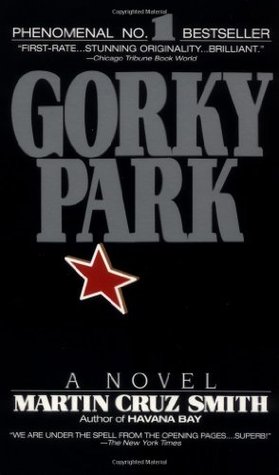
Books Read in 2015 47. Gorky Park – Martin Cruz Smith

Genre: Spy, thriller, politics

Narrative Style: Third person mostly from Arkady’s point of view762806

Rating: 3/5

Published: 1982

Format: Kindle

Synopsis: When three bodies are found in Gorky Park, minus any identifying features (e.g. fingertips and faces), Arkady Renko is called in to investigate. Renko knows from the very first that there is more to this crime than anyone is letting on and when his investigations lead him to wealthy American John Osbourne, he soon finds his own life is in danger.

I have seen the film of this book and so was quite excited when this appeared in my weekly kindle e-mail. Unfortunately the book didn’t live up to my memories of the film for a number of reasons.

It started well and at first I was gripped by Renko’s investigations and the inevitable clashes with the power structures in Russia. Renko is an outsider who has failed in life due to his inability to play the party game and as such has little to lose. I liked him almost instantly for the same reasons that I love Inspector Rebus in Rankin’s books. No one was above the law for Renko. He was not about to let the KGB get away with murder.

The story is certainly full of twists – at least at first. In fact, I found myself sometimes getting a little lost and having to look back through the book. That is fine, I’d rather that than the stodgy plot towards the end. The ending goes on for far too long and with not really that much happening. I thought the ending was generally disappointing although I was definitely glad to get to it.

I wasn’t particularly convinced by the love story between Renko and Irina Asanova and felt that whenever they were together, the plot slowed right down. There was no real explanation why Asanova suddenly changes her mind about Renko and decides not only to help him but to sleep with him as well.

Finally, the Americans in this book are stereotypical – as, I suppose, is the portrayal of Renko. There is the Irish New York cop who is out to revenge his brother’s death and there is Osbourne himself, the very living embodiment of capitalism, willing to sacrifice anything for his precious furs. Neither of them are really developed beyond the obvious.

So, in the end, the film was better than the book. The plot was interesting at first. By the time it got to the end, I really just wanted it to be over and I had stopped caring about the characters.

Books Read in 2015 46. The Autograph Man by Zadie Smith

2015tbrbutton

Genre: Literary Fiction, Religion

Narrative Style: Third person largely from Alex’s perspective

Rating 4/5

Published: 2002AutographMan

Format: Paperback

Synopsis: Alex Li-Tandem collects autographs for a living and is obsessed with Kitty Alexander. He is so desperate for her autograph that he writes to her every day. When, after a drunken binge, he finds he has her autograph everyone thinks he has faked it but the truth is much much stranger. 

Reading Challenges: TBR Challenge.

Time on Shelf: About ten years. I bought this and White Teeth at the same time. I read White Teeth straightaway and loved it. I meant to read this not long after but other books got in the way.

This is an interesting book. It is interesting in a number of ways. It is about fame from the point of view of non-celebrity autograph men who hunt for memorabilia like vultures. It shows the fickle nature of the market where what counts is not how famous you were but how many times you signed your name. Alex is obsessed with getting Kitty’s autograph for just this reason. She rarely signed anything and so it would be a tremendous coup to have one.

The second way it is interesting is the way it talks about religion and Jewishness. Alex himself is half Jewish and it would seem that this is the reason that he splits everything into two camps – Jewishness or Goyishness. One of his best friends is a rabbi, another has found transcendence through his dope smoking. He is fully immersed in Jewish culture without ever being an actual part of it. I must admit that I don’t know a lot about Judaism (or any religion really) but I could understand Alex’s wish to keep his distance from it all and the way it made him feel uncomfortable.

Finally, this is a novel about death. At the very beginning, Alex’s father dies, a loss which Alex is still recovering from as an adult. His death permeates the whole story. Alongside it, is the idea of fame as an avoidance of death – your image and your things live on after you. Those who leave nothing in the way of autographs and so on, might as well be dead even before the event occurs. When Kitty’s death is mistakenly announced , Alex takes the opportunity to sell all his autographs while the price is high. Even Kitty, although annoyed at first, soon sees the monetary value.

The novel was funny as you might expect given Smith’s reputation as a writer of humour. There are some great gags such as the running joke of Alex constantly being thwarted by a group of Rabbis trying to get an improbably large piece of furniture into an unfeasibly small car. But the real strength of this novel is the description of Alex’s grief and his arrested development because of it. The reader can empathise with Alex’s pain and his difficulties in moving forward. It was touching without being sentimental and funny without being cruel. A very enjoyable read.   

Books Read in 2015 45. Consider Phlebus – Iain M. Banks

eclecticreader15

Genre: Science fiction, Adventure

Narrative Style: Third person

Rating: 3/5

Published: 1987

Format: Paperback8935689

Reading Challenges: Eclectic Reader Challenge – Genre: Science fiction set in space.

Synopsis: Horza is charged by the Idirans with finding one of the Culture’s minds which, while escaping from its ship, has taken refuge on Schar’s World, a planet that Horza knows well. Nominally on the side of the Idirans, Horza starts the mission optimistically but even his journey to the planet is not straightforward and once he arrives, he realises that finding the mind is the least of his problems. 

There is no doubt that Iain M. Banks has quite an imagination. The space within which this story takes place is exciting and interesting and Banks is clearly fascinated with where technology might take us as a race and how that will effect our humanity. This is most apparent in his descriptions of the Culture, the most advanced race in the book, and in Horza’s objections to them.

The story is action packed and races along like an out of control racing car, leaving the reader little time for breath or even thought. And while I did want to see if they were going to succeed in their mission, it left little space for character development or emotion of any kind.

That was my problem with it. There was little in the way of depth. Horza, a changer, could have been a fascinating character but you never really find out that much about him or his inner life. Even as his relationship with one of his fellow mercenaries develops and she announces that she is pregnant, there is little in the way of emotion developed between them.

There are some grisly moments in this book and that is where some of the best writing is. As in Iain M. Banks other fiction, his warped imagination takes the reader into some very dark places. It was a bit disappointing that in the end, this became merely a gun battle with all the usual cliches.

In the end, I felt about this the way I feel about a lot of big budget science fiction. It looks amazing but it is all surface. It left me feeling a little cold and  empty.

Books Read in 2015 – 44. A Scanner Darkly – Philip K. Dick

Genre: Dystopia

Narrative Style: Third person from various points of viewUnknown

Rating: 5/5

Published: 1977

Format: Kindle

Synopsis: Bob Arctor is an undercover agent trying to find the source of a batch of Substance D, an extremely addictive narcotic. He has to report back on his friends and housemates who are also being watched by the powers that be. As a part of being undercover, he too has to take the drug. As it takes hold of him, he becomes more and more divorced from himself and more and more dependant on the drug. 

It is hard to know how to put this novel into words. At its centre is Arctor’s swirl downwards into addiction. His paranoia and inability to recognise himself increase with his addiction and it is hard for the reader to tell what is real and what is not.

At the start, we are informed that Arctor has a scramble suit that he wears so his superiors cannot recognise him and with that is the name ‘Fred’ which he uses when he reports back on the household that he lives in. It is during one of these reports, he learns that Bob Arctor is under suspicion and another layer of surveillance is added when his superiors start to watch the house as well.

It all starts to get a bit messy inside of Arctor’s head. Watching the videos, he has to report on himself and his housemates. He watches in a safe house, in his scramble suit, with other scrambled individuals, watching other houses. It could easily be one of his housemates in the suit and he would never know. As he watches and continues to take the drug, he starts to not recognise himself on the TV and begins to refer to Arctor in the third person. He gets more and more paranoid and his superiors think that he may be losing it. He is put through a series of absurd tests by men in lab coats that talk in riddles. Eventually, they decide he needs to go into rehab because the drugs have finally broken him.

The novel is a difficult read. Dick says that the instances of drug taking, psychosis and withdrawal were all true and it certainly is unflinching in its description of the horrors of drugs. Dick also says that he does not consider it to be novel with a moral and if he means in terms of his attitude towards the addicts in the novel, that is probably true. There is no judgement. These people just are who they are, having come to a point in their lives where they can do no other than take drugs.

However, I do think that there a sense of morality with regard to the way that addicts are treated and the way the powers that be try to solve the ‘problem’ of addiction. This is shown in a couple of ways. First of all, once Arctor is no longer useful as an informant (and they admit that they used him to get to Barris, one of his housemates) they quickly remove him, not forgetting to charge him for becoming an addict while undercover. He is removed to a facility to withdraw but it is clear he will never be the same again.

Dick suggests that the facility – which is in need of addicts to get funding – may actually be the source of Substance D that Arctor was supposed to investigate. They create the addicts by growing and selling the drug which then secures their future as a clinic. This is suggested by two colleagues who have tried to control Arctor’s descent into addiction so that when he withdrew, he might be able to investigate. Unfortunately, he is too destroyed to do so.

At the end, I was relieved to have finished reading because the narrative was making my head hurt a little. There is a small ray of hope at the end, when Bruce (who it may be assumed is Arctor) sees the Substance D plant growing and picks one for his friends. But whether this will lead to anything other than more addiction, it is difficult to say.

The Irritation of Lost Files

It hasn’t been a hugely productive summer. That isn’t exactly true. I have written quite a bit but it hasn’t felt like going forward. There’s a good reason for this.

Somehow I managed to lose the most recent version of Choose Yr Future. I’m not sure how as I never delete anything – there must be at least twenty versions of Shattered Reflections still sitting on my hard drive – but gone it is. There are quite a lot of versions of Choose Yr Future too, some claiming to be the final version although none of them were.

It is frustrating – not least because I know it is my fault. I suspect that it was some sort of iCloud mixup because sometimes I do remove things from there but that is usually safe in the knowledge that there is a copy sitting on my hard drive as well. I can’t quite believe I’ve been so careless.

The worst thing about this isn’t the re-writing although that has been annoying. It is the suspicion that what I wrote before was inevitably better than the new version which covers the same ground but with second hand footsteps. Of course, it may be better but as there is no way to check so my pessimistic mind insists that the new version is inferior.

Still it is re-done now and although I now need to read through the whole thing again to ensure that it still makes sense, it is satisfying to have the finished product in front of me. It certainly feels better than the despair of the missing file at the start of the summer.