DAY 29. – A book you hated.

I’m not really into hating books. Some books I don’t like obviously. But hate seems dreadfully harsh. Reserved, in fact only for books that offend in some way. Books that are blatantly racist, sexist, homophobic would be deserving of my hatred. Thankfully, I have not read many books that are.

There is only one book that I can think of that i have read recently that I have found offensive in this way. In my mind, Fifty Shades of Grey is anti-feminist. I know a lot of people claim that the ending of the first book is a feminist ending because she leaves him but the next two books obviously put a damper on this.

There are many annoying things about this book, not least that it really should be called Christian Grey and his ever-ready erection. I’m sure this is one of the things that women like about this book. Christian is always ready, no matter how recently he has already had an orgasm. That and the fact  that Ana has amazing wonderful orgasms right from the first. Every time. Then there is all the talk of Christians ‘considerable length.’ Actually that’s not offensive, it’s laughable. I’d have been happier if she had said Christian has an enormous cock. I find euphemisms much more cringe worthy for some reason. All the talk of inner goddesses had me cringing in much the same way. So far, so annoying but not quite enough to warrant hatred.

So here are two things that I really hated about this book. (I could choose more but these are the two that stand out.) Ana gives Christian a blow job in the bath. In fact, she deep throats him then he praises her lack of gag reflex. Really! Because they’re the words every woman is just waiting to hear. If a man had written this scene I am sure that women would have been appalled. Well, the fact that a woman wrote it doesn’t make it any less dubious as far as I am concerned.

The other thing that Christian says that should have women screaming in outrage is “You’ve had six orgasms so far and all of them belong to me.” So Ana is not even allowed to own the pleasure of her own body. Was this book really written in these last few years? To me, it seems hard to believe because the sexual politics in this book are so ridiculously old fashioned. It would be amusing if so many women didn’t love this book.

I’m not even going to comment on the whole s/m thing. Enough words have been shed over this book already. I am told that I should read the other books because they explain Christian’s background but to be honest I do not need to know because there is no excuse for the way he makes Ana act and the things that he does to her. That is as true in fiction as it is in real life.
 

Day 27 the book that has been on your to read list the longest.

As I mentioned earlier in this challenge, I have been trying to knock off some of the longer residents on my bookshelves. Earlier this year, I read The Story of the Eye by Gearge Bataille. I bought this when I was at university. Only twenty years ago. Pretty appalling really, especially as it is classic erotica. Forget 50 Shades of Grey, this book was genuinely shocking.

Books that are still on my shelf from this time are:

  1. Death comes for theArchbishop – Willa Catha
  2. Dead Souls – Nikolai Gogol
  3. The Well of Loneliness – Radclyffe Hall.

It makes me feel a little guilty. As if I was somehow hurting their feelings. I will have to read at least one of them this year.

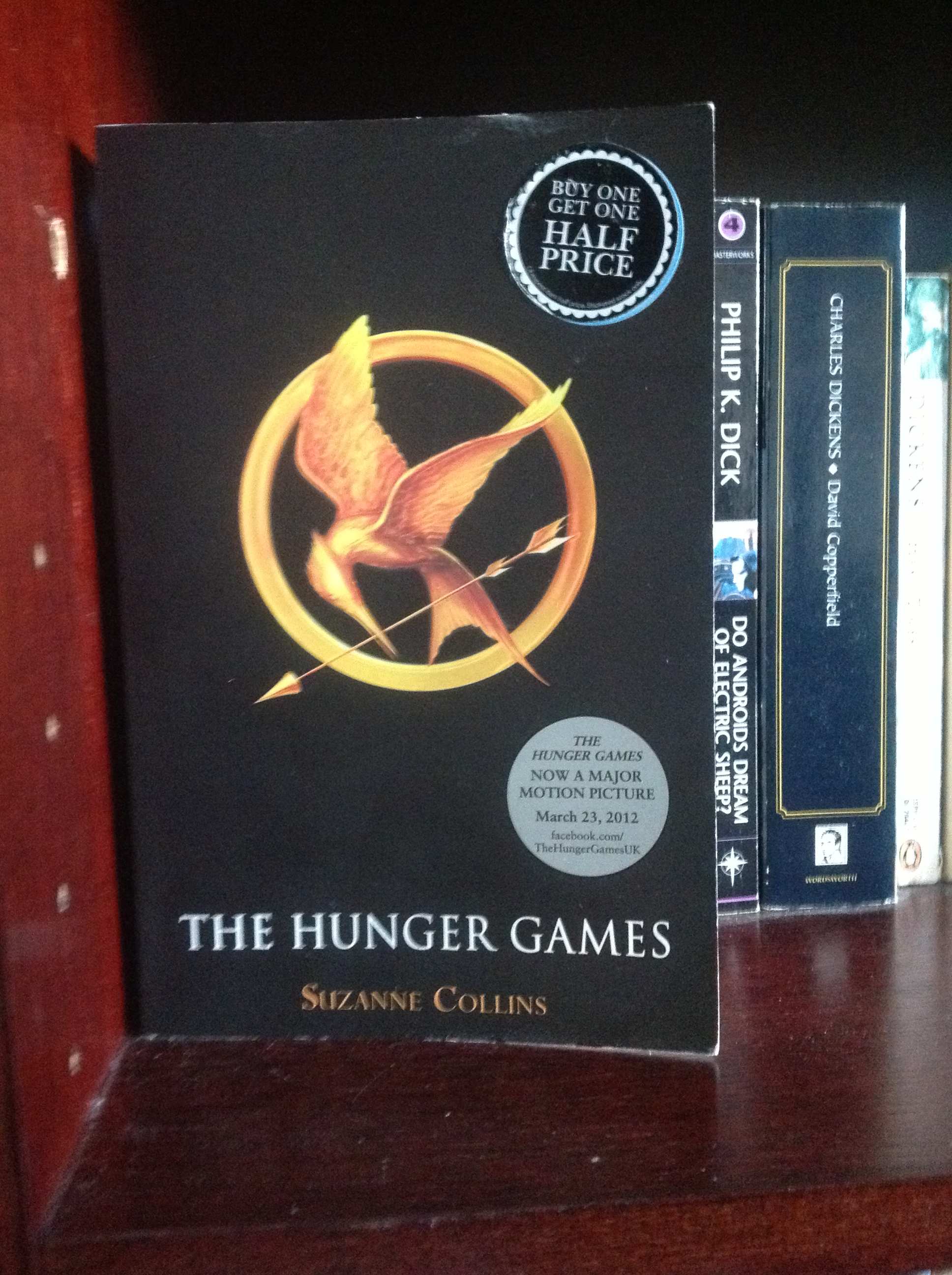
Eclectic Reading Challenge – New Adult – The Hunger Games by Suzanne Collins

I’d not heard of the New Adult genre before I signed up to do the Eclectic Reader Challenge – although I suspect that it means books for teenagers that adults would like to read – but I looked it up on Goodreads and The Hunger Games was one of the first books I noticed and I’d been meaning to read it for a while.

I really enjoyed this book. It had everything really – action, strong characters, a serious point to make and it was exciting enough to keep you turning the pages. In fact, I could not put it down. IMG_0030

The character of Katniss and her relationship with fellow tribute, Peeta was compelling and I think teenagers particularly would be drawn into their potential romance. I do think this is clearly aimed at a teenage audience but that didn’t stop it from being an excellent read.

The idea of the hunger games is completely apt and believable. I could imagine Channel Four commissioning it. And people would watch it and vote for different ways for the contestants to die without a seconds thought. Well, hopefully not but it certainly wasn’t beyond the realms of possibility. And to me, that is the definition of what good science fiction should do – take some aspect of the current reality and magnify it, show what would happen if we took it to its logical extreme.

If I had to make a complaint about this book, I would say that I thought some of the plotting was a little heavy handed – for example the changes to the games rules annoyed me a little. But this in no way spoiled my enjoyment of this book. And while I haven’t rushed to the shop to buy the next one, I know I will read it. Perhaps when I’ve got through a few more of my to read list.

DAY 26. – Book that makes you laugh out loud.

This was a difficult one. I don’t read a lot in the way of funny books. An obvious choice would have been Terry Pratchett or perhaps Douglas Adams as both their series of books have made me laugh out loud. However, choosing a single book by either of these authors was impossible. In the end, I decided on Notes from a Small Island by Bill Bryson which is on of the best travel guides to Britain you could hope to read.

I have read a few of Bryson’s travel books and they are all immensely photo (6)amusing but what is particularly good about this one is that I knew the truth of Bryson’s observations. Whenever I climb a hill in the Lake District, I think of Bryson puffing and panting his way up Haystacks and try and convince myself that it will be worth it when I get to the top. As Bryson knows, it always is but he describes the way you wonder what on earth you are doing when you are about halfway up perfectly.

Bryson has an easy going style which makes it feel like you’re having a chat with a good friend. I recently read A Short History of Nearly Everything and felt, at least for a short while after reading, that I understood some of the science involved, largely due to Bryson’s humorous and open style. His description of some of the early eccentrics of science and geology were truly wondrous to behold. It seems that there is no subject that Bryson could not make entertaining and funny.

DAY 25. – The most surprising plot twist or ending.

My first choice here is The Life of Pi. It should be obvious that the story of Pi and Richard Parker cannot possibly be true. A boy in a boat with a Bengal tiger, obviously it could not happen. But the skill of Martel’s writing means that you are completely drawn into the situation. You never doubt it for a moment and in fact, if you are like me, you want to believe in the story that Pi spins even when you know the truth.

As this is a story about faith and belief, it is fitting that belief wins over the rational, logical version of events. For me, before this book, I never really understood the impulse towards religion but this book suggested how it was a solace in difficult times and how it helped people cope with terrible events. I wouldn’t say that I am now religious but I at least understand why you might be.

My second choice is The Wasp Factory by Iain Banks. This is a disturbing book with one of the most unsympathetic narrators I think I have ever come across. This is a bildungsroman like no other, although you could say it follows in the tradition of books such as The Catcher in the Rye and A Clockwork Orange. The violence is gruesomely inventive and unlike anything else I have ever read. Even the horrors of the book could not prepare me for the ending. I won’t spoil it for those who haven’t read it but it is cruel, humurous and wonderfully inventive. It puts the rest of the story in another light.

Day 24. – Book you’re most embarrassed to say you like/liked.

I don’t really get embarrassed about what i read. As I mentioned when it was a book that is a guilty pleasure, I like what I like. I think there is very little point to being embarrassed about liking something. Why bow down to what other people think you should or shouldn’t like? It all seems a bit pointless.

I was embarrassed to read 50 shades of Grey. Not because I liked it. I think I’ve made my feelings about it clear. And not because of the sex either which is neither original or all that exciting. Embarrassed because I knew the judgements I’d be making if I saw myself reading it on the train. I did not want people to make those sort of inferences about me. So I actually hid the front of it. It is not easy to read with a book flat on your lap but this is what I did so that no one would know what I was reading. I probably looked a little weird. I wouldn’t pick up the Twilight series for much the same reason. So maybe I am being a little disingenuous when I say you shouldn’t be embarrassed by what you read when I am pre-selecting what I would be embarrassed to say I liked in advance.

DAY 23. – Best book you’ve read in the last 12 months – The Good, The Bad and The Multiplex

It wasn’t an easy decision. Last year, I read the Song of Fire and Ice series and loved each of the books and it was tempting to pick the entire series as my favourite reads. I also had a bit of a Pratchett re-read in October when I wasn’t very well but picking a re-read felt like a bit of a cheat. After all, I already knew what I was going to get.

In the end, I picked The Good, The Bad and The Multiplex by Mark Kermode because it is not often that I feel somebody has read my mind quite so clearly or quite so often as when I was reading this book.

I was already a big fan of Kermode and he is one of the few film critics that I would take any notice of. Compared to Claudia Winkleman and her ilk, Kermode is a serious reviewer, giving film as a medium, the consideration it deserves. His knowledge of film history is second to none. In short, he knows his stuff.

It isn’t just knowledge that comes across in The Good, The Bad and the Multiplex although there is certainly plenty of it. There is also a clear love of the movies and also a disappointment with the whole modern movie-going experience. This is where the mind reading feeling came in. My husband and I stopped going to multiplexes years ago, preferring the intimate surroundings of the Showroom in Sheffield to the huge and unfriendly Odeon. I don’t know if it is to do with being of a certain generation when going to the cinema meant going to a two screen (or if you were really lucky four screen) building that had probably once been a theatre.

IMG_0028

The Odeon in Newcastle had this amazing sweeping staircase that gave you a real sense of occasion when you visited. That is all gone now. There is a similar nostalgia to some of the writing here.

Kermode is at his best when he gets irate  And luckily for the reader (although not for what it suggests about the state of the film industry today) that is quite often. Near the beginning of the book, he recounts a visit to the local mulitplex where every step of his journey from trying to book tickets online to seeing the movie shown in the wrong ratio, is a complete nightmare. It is both hilarious and depressing in just about equal measure.

This is an intelligent book about the decline of certain aspects of the film industry. He is not trying to suggest that there are no good modern films. That would be stupid. It is more that this book mourns the passing of certain elements of the film industry and the viewing experience that we are undoubtedly worse off without.

Eclectic Reader Challenge – Translated Literature – The Prague Cemetery – Umberto Eco.

Read for the Eclectic Reader Challenge.

I really wanted to love this book. I’ve read Eco before – The Name of the Rose and Foucault’s Pendulum – and really enjoyed his work. I was expecting to feel the same about this book.

I’m not even really sure what I found less enjoyable about it. It certainly isn’t as densely written as Foucault’s Pendulum and it covers some of the same sort of ground – conspiracies, fakes, the Masons – I just couldn’t get excited about it. In fact, at one point I was ready to abandon it altogether. I hate to not finish a book and besides I’d already said I would review it for this challenge. So I plodded onwards.

In actual fact, about half way through, the narrative suddenly caught

IMG_0026

me and I was intrigued to see where it would all end up. In terms of historical accuracy, Eco claims that all the events and characters existed in real life which is a little unnerving as this book is about anti-semitism and the faking of documents that suggested a Jewish global conspiracy that is said to have influenced Hitler. That gave the book a rather disturbing air.

One of the more convincing elements of this book was the description of the mind of Simonini, a man full of hatred and who was willing to kill anyone who got in the way of his grand plans. He becomes so disturbed that he actually takes on the persona of one of the many people that he kills. He was very effectively written and genuinely unsettling.

Ultimately, I think that I would have enjoyed this book more if it had started about halfway through and avoided all the detail about Garibaldi. And then perhaps it could have continued a bit longer as I felt I was just beginning to enjoy it when it actually ended.

Day 22 – A plot device that annoyed you – Atonement and The Time Traveller’s Wife

I’ve changed the title of today’s blog a little as I couldn’t think of any plot devices that had annoyed me over and over. I don’t read many series or books that are really similar to each other so instead I have chosen to look at two plot devices that I found so annoying they really spoiled my enjoyment of the books.

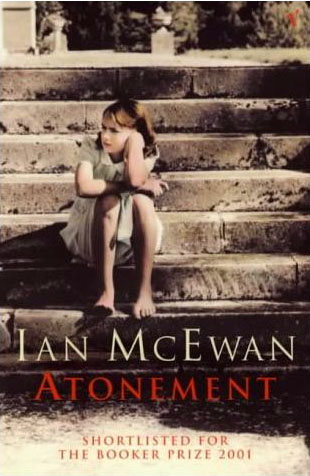
I really did enjoy reading Atonement by Ian McEwan. From the opening of the novel in Cambridgeshire, to the scenes of fighting and the horrors of working as a nurse in the second world war, I was convinced by the characters and the way their lives interwove. I think it is the fact that I had been so taken with the novel and its supposed resolution that annoyed me so much when I finally got to the end.

ian-mcewan-atonement

In the final section, it is revealed that the previous chapters were a novel written by Briony and in fact tragic lovers Robbie and Cecilia were not reunited in ‘real life’ but in a fiction within a fiction. Writing the novel was Briony’s atonement for the fact that she accused Robbie of rape and ruined any chances the pair might have had of actual romance. I admit that I felt a little cheated by this and I still feel it is akin to the sort of ending children write all the time, a more sophisticated version of ‘and then I woke up.’ The story is not the story you thought it was. Briony claimed that she did not want to give readers a hopeless ending but in actual fact the ending was much worse for giving hope and then saying that they could only have it within a fiction. Very disappointing.

My second choice is The Time Traveller’s Wife by Audrey Niffenegger. I found this book interesting and annoying in just about equal measure.

IMG_0027

The concept was exciting and Henry was a good romantic lead. The idea of the time travel wasn’t that hard to swallow once the story got going and I liked the muddled chronology of their romance.

However, what did annoy me was the way that despite the fact that Henry supposedly has no control over when he will travel and where to, he manages to get winning lottery numbers so that Clare will be able to carry on with her art without having to worry. I felt that this was a narrative cheat. Either Henry could control his travel or he couldn’t, but not control when it suited him and Niffenegger.

Incidentally, as this doesn’t directly fit with the title of today’s blog, it goes without saying that I found the end of this novel really irritating. The idea of a women waiting all those years because she knows she will have one more glimpse of the man she loved seems a little too like a fairy tale for my taste. It did not seem romantic, just out-moded and a little depressing. Most of the women I worked with at the time loved it so, hey, what do I know.

DAY 21. – Book you tell people you’ve read, but haven’t (or haven’t actually finished).

There are a few of candidates here. Books that I have made it known that I don’t like despite not having finished them. It doesn’t happen often because I am quite careful to choose things I am fairly sure I will like.

The first is On The Road by Jack Kerouac which I would probably never have picked of my own accord but it was for a class on my MA. Obviously for the purpose of the course I claimed to have finished it and I started to believe myself. It was only recently I remembered that I hadn’t actually finished it.

What was it about this book that meant I didn’t finish it? I found the tone irritating and the style worse. It gained the rare honour of having been thrown across my living room the most times due to the dubious attitude towards women shown. Ultimately I didn’t feel compelled to find out what happened. I just didn’t care.

Similarly, I read (or started to read) Hemmingway’s The Old Man and The Sea when it was on the GCSE syllabus as I realised that I might have to teach it. (How to put teenagers off reading in one easy lesson.) Part of the problem was I already knew how it ended and when I got bogged down in the narrative, it just didn’t seem worth it. I quickly realised there was no way I could possibly teach this book as I could barely summon up the enthusiasm to pick it up, never mind try to get the point across to others. Thankfully, I have never worked in a school where they have taught it. Maybe it’s not just me!

Finally, in a doomed attempt at reading more classics (something I keep trying despite the evidence that I will probably never enjoy them), I decided to try The Scarlet Letter by Nathaniel Hawthorne. I picked it because the subject matter sounded interesting. However, I soon found myself ignoring the book in favour of something with less dense prose and it was abandoned on my bedside table for a while before eventually winging its way back onto the downstairs bookshelves. Probably I should give it to charity as I will never pick it up again.