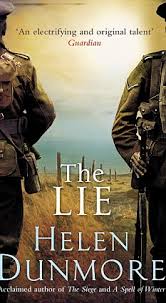
Books Read in 2014 – 38. The Lie by Helen Dunmore

download (9)

Genre: War, Historical Fiction
Narrative Style: First person narrative set in 1920 with flashbacks to the first world war.
Rating: 3/5
Publication: 2013
Format: Kindle
Synopsis: Daniel has survived the First World War and is now back in his hometown, homeless and without family. He is haunted by his experiences in the trenches and by the death of his best friend, Frederick as he tries to make a new life for himself.

I picked this to read because I enjoy reading about the First World War and because it had good reviews but I found that it paled compared to other fiction that I have read about this conflict. I found it neither as emotionally compelling as some (The Absolutist by John Boyne) or as interesting in terms of the themes treated here (Regeneration by Pat Barker, Birdsong by Sebastian Faulks).
The main reason for my discontent was that the plot seemed stretched, little more than a short story’s worth of content strained by its extension to a novel. Daniel is sympathetic and interesting but not a lot happens to him, even during his flashbacks so there is little to move the plot along.
Where Dunmore does succeed is in her descriptions – both of the Cornish coast and the life in the trenches. They are vivd and really give the reader a sense of Daniel’s isolation and horror. Also the descriptions of him re-working Mary Pascoe’s land are an interesting metaphor for his attempts at starting a new life whilst also constantly reminding him of the mud in the trenches.
I also liked the analysis of class and the differences between Daniel and his much richer friend, Frederick are apt and seem realistic. The differences between them become particularly apparent when they are both in the army but in completely different roles.
Unfortunately, this couldn’t make up for the lack of action and also the I found the ending unsatisfying and a little ridiculous.
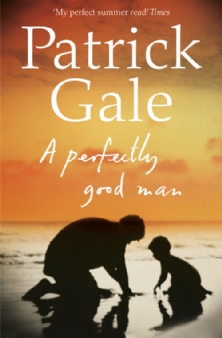
Books read in 2014 – 36. A Perfectly Good Man – Patrick Gale

Genre: family, religion

Narrative Style: Third person, non-chronological

Rating: 4/5065917-fc222

Format: Paperback

Published:2012

Synopsis: Lenny decides to take his own life after being paralyzed in a rugby accident. He asks the parish priest, Barnaby Johnson to be present. His decision and Barney’s involvement will turn the parish upside down and bring old secrets to light. 

This had me hooked from the first with Lenny’s meticulous plans for suicide and his request for the parish priest to be present. Barnaby has no idea what is going to happen until it is far too late and Lenny has already committed the act. He is left with nothing but prayer.

The story then unfolds from various characters points of view at various points in their life so we learn of Barnaby’s marriage, his difficult relationship with his adopted son and his affair with a local artist from his point of view and theirs. We learn about Lenny’s mother and a local parishioner named Modest who turns out to play a crucial role in events a number of times in the narrative without always realising.

The pace is unhurried and it is easy to work out some of the secrets but that really isn’t the point of this story. The narrative is as much about Barnaby’s difficult relationship with his faith and with God as it is about the actual events. It is about family and the ways we come to find love in the most unexpected ways. There are no big twists and turns because this is a novel about ordinary people dealing with what life throws at them.

The characters were convincing and I felt able to empathise with most of them even those I didn’t actually like. Even Modest, the most horrible character, was pathetic rather than anything else. It was interesting to see both sides of the father son relationship between Barnaby and his son, Phuc and realise exactly how hard it is sometimes to do the right thing.

The book ends well, in that it ties up loose ends and it is generally a happy ending but there is nothing forced or unlikely about it and no doubt if you continued to follow these characters life would continue to throw challenges at them but this was where this particular story ended.


Books Read in 2014 – 31. The Stepford Wives – Ira Levin

Genre: Horror, Dystopia, Satire

Narrative Style: Third Person from the point of view of one characterdownload (8)

Rating 4/5

Format: Paperback

Published: 1972

Synopsis: Joanna moves to Stepford at the insistence of her husband, Walter and, at first, it seems to good to be true. She soon becomes irritated by the passiveness of the women and their housework obsession. Then the two friends she thought were different start to show the same obsessions and she starts to wonder what exactly is going on in Stepford. I can remember seeing the 1975 film version of this book when I was fifteen so I knew what the basic story was. You might think that this would spoil the story, making it less tense but this was not the case. Levin unfolds Joanna’s story masterfully and knowing what might happen to her only made me more anxious for her to escape the clutches of the men of Stepford. Joanna begins the novel an independent, strong woman who works as a photographer. She does housework when she has to and is used to having strong female friendships. She is sexual and attractive without the need for make-up. However, when she comes to Stepford she finds all the women are eerily similar and coldly distant. They are unable to find a place in their housework schedule to even meet for coffee. They are beautifully coiffed and clothed. She is rightly appalled by this and by her husband leaving every evening to go to the men’s association. Joanna does meet two other like-minded women – both of whom have not lived in Stepford for long – and they try desperately to get some sort of female movement going. However, when one of them suddenly becomes docile like the other women, they start to worry that they’ll be next. Eventually there is only Joanna left and she tries desperately to warn the one woman to move to Stepford after her before the men seal her fate. Levin cleverly does not tell the reader exactly what happens to Joanna. She merely loses narrative perspective. Ruthanne takes over the narrative point of view and she runs into Joanna in the supermarket, noting her coldness, her obsession with housework and how good she looks. As Ruthanne is a writer, it can be assumes that she will be the men’s next victim. The men in the novel respond specifically to their wives’ attempts at politicising themselves. Joanna discovers that the women were once activists or very successful professionals that held feminist meetings. The message that Levin is trying to get across is clear. Men will not just stand back and let women gain power from them. As Chuck Palahniuk notes in the introduction, perhaps more heed should have been taken. The whole beauty industry and the obsession with women’s appearance is one very successful way of keeping them in their place regardless of their professional position.

Books Read in 2014 – 29. Rabbits in the Garden by Jessica McHugh

Genre: Horror, Madness

Narrative Style: Third person chronological10504227

Rating 1/5

Format: Kindle

Published 2011

Synopsis: Life is perfect for Avery – she is in love with her best friend, Paul, and he loves her too. They have just shared a first kiss. However, trouble starts
when Avery’s mother finds out about the liaison and is determined to stop her daughter from taking the wrong path.

It’s not often that I give a book 1 star. Usually because if something is that bad, I don’t finish it. I’ve always hated doing that and even more so now that I add books on Goodreads. I feel obliged to get to the end. Even if, like this novel, it is a real struggle.

I picked this book because I liked the sound of the story and because it has a lot of good reviews. And it did start well with the appearance of Avery’s mother’s madness being quite well executed.

However, it went downhill fast. Events are easy to spot and there were little in the way of surprises. For example, when Natalie meets a handsome stranger, it is obvious that it is Paul. When she mentions that they did not use a condom, it obvious that she will be pregnant. When Avery’s mother appears the next morning, just in time to tell them of their real identities, it all just seems like a bit too big a coincidence. The whole novel is like that. events and characters are bent to the plot with no care as to whether that seems likely or not.

There are pages of unlikely dialogue which slow the action down. The characters often sound like they are spouting platitudes rather than having a conversation. it was like reading a bad made for TV film.

Even the ending was not that satisfying. There was never any doubt that Avery would win in the end. The lack of narrative tension was one reason why I struggled to finish this. Everything moves in Avery’s favour. The police do not find her. She manages to escape. She will live happily ever after. Even though she does suffer setbacks – like the loss of Paul – it never daunts Avery and the reader knows exactly how things will come to pass.


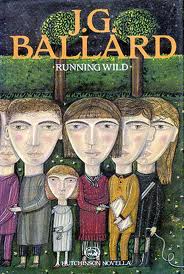
Books Read in 2014 – 28. Running Wild – J. G. Ballard (Contains spoilers)

Genre: Crime

Narrative Style: First Person reports on Pangbourne Massacredownload (7)

Rating 3/5

Format: Hardback

Published 1988
Synopsis: All the adults at expensive gated community Pangbourne are dead and all the children have disappeared. Richard Grenville is the psychologist called into investigate. The novella begins two months after the massacre. 

After two months, when no terrorist groups have laid claim to the Pangbourne Massacre, the home office calls in Dr. Richard Grenville and asks him to investigate. He takes the reader through the crimes and the theories surrounding them in a clinical and professional way so that it is possible to be both detached and disturbed by them.

When one of the children reappears, in a catatonic state, Grenville realises who the culprits are. She is clearly disturbed by what has happened and reporters assume this is due to the treatment of her kidnappers. However, Grenville realises that it is because she is one of the murderers herself. He then revisits the scene of the crime and works out the exact events.

To be honest, it was fairly apparent straightaway that the children were to blame. There lives were filled with love and approval but were also stifling. They had no freedom – except as Grenville points out – the freedom to escape into madness. For me, the obviousness of this, meant that the novel lacked suspense.

That said, the issues raised by the novel are certainly interesting. One of the reasons that the public never believe in the theory that the children are to blame is that on the surface, their lives are perfect. They want for nothing. Who wouldn’t want the constant affection of one’s parents, never arguing and having nothing to rebel against. But teenagers need to rebel, regardless of whether there is anything real to rebel against.

The crimes at Pangbourne are fascinating, not just to the public and press in the novella but to the reader as well. They hit at what we all want to avoid thinking about. Children are brutal, to each other and to their parents. They have a savagery that we like to believe we can civilize. This is those in authority persist in viewing the massacre as an act of terroris, even though that is patently absurd.

This is well written and the ideas are good but I did feel that it became a bit pointless as it went on because of the obviousness of the culprits. The ending – when the teenagers attack a former prime minister – felt a bit forced. Although it could be taken as an interesting metaphor for the way that youth and the next generation remove what has gone before.

Books read in 2014 – 25. The City, Not Long After – Pat Murphy

Genre: Dystopia / Utopia

Narrative Style: Third Person, largely chronological

Rating: 3/5

Format: Kindle

Published: 1989

Synopsis: The narrative centres on San Fransisco after a plague. The survivors are all artists or eccentrics and are all peace loving. When a girl comes from outside of the city, warning of war, they realise that they have to $(KGrHqJ,!l!E8EqSozg6BPNuf3zchg~~60_35defend the city somehow.

This is different from other dystopia that I have read, in as much as it doesn’t see the very worst in people. So it may be more apt to call it a utopia. It represents the way that you might hope people would react, the very best that humans can be. Once it occurred to me that this was a utopia, I was able to cope with it a little better.

The characters are all a little bit wacky – a group of dreamers and artists who spend their lives creating works of art rather than struggling to survive. Danny Boy begins a project to paint the Golden Gate Bridge blue. The Machine spends his time creating metal insects and creepy crawlies. Books is trying to write a history of post plague San Fransisco. No one struggles for food.

Jax is guided to the city by an angel (which may have been made by The Machine) and her mother’s ghost. She brings the news that an army is planning to attack. However, the artists are loathe to take her seriously. And even when they do start to prepare, they vow not to kill but scare the army, unnerve them. Even those who have to be dealt with close up are merely sedated.

I understand the points that Murphy is trying to make about warfare and it’s dehumanising effect on the human psyche. She references many historical figures (like Gandhi for example) who used peaceful protest. And the utopian ideas are pertinent. However, I have to admit that I found it a little naive. I couldn’t quite stop my own cynicism from infecting the story. Maybe I’m essentially misanthropic but I find it hard to believe in the best of people. Especially in the area of warfare. At the end of the day, I prefer my post-apocalyptic fiction to be a little harder round the edges. This was too nice by far.


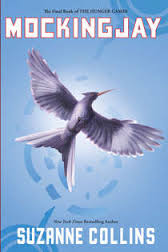
Books Read in 2014 – 23. Mockingjay by Suzanne Collins (Contains Spoilers.)

Genre: Dystopia, Young Adult

Narrative Style: First person narrative, chronologicaldownload (6)

Rating: 2.5/5

Format: Kindle

Published: 2010

Synopsis: Having been pulled from the arena at the end of Catching Fire, Katniss finds herself in the hands of the rebels. She is reluctant to accept the role of Mockingjay but does so when she realises what the Capitol has done to Peeta. The battle for supremacy between the rebels and the Capitol begins in earnest.

This is definitely the weakest book of the trilogy. I was keen to read on at the end of Catching Fire. It wasn’t obvious what would happen to Katniss and I dived in straightaway. It wasn’t long before I felt disappointed though.

There were a number of reasons for this. First of all, Katniss is whinier than ever, determined to take the blame for everything and reluctant to accept her new role. I found her even more irritating than usual. She is naive in her views and the reader is probably supposed to find this innocently refreshing but to me it just seems unrealistic. Gale is much more pragmatic but no less annoying as he seems more a rebel mouthpiece than a real character. The transformation of Peeta to a tool of the Capitol didn’t convince either. He moved between good Peeta and evil Peeta at the mercy of the plot with little thought for his actual character. I didn’t believe in either role. Especially as it started to be apparent that he and Katniss would end up together. There was no tension as to whether his good side would return.

A bigger problem is that of the action, a lot of which happens away from Katniss. The reader is then given a couple of paragraphs about what has happened. (This will be solved in the film, I guess where they will be more able to use multiple viewpoints.) This is particularly troublesome after Katniss shoots Coin and there is a trial happening while Katniss is singing to herself in her cell. But it’s okay because she is found innocent and allowed to go home. Very unsatisfactory.

The ending was equally unsatisfactory. (In fact, about halfway through I realised that there was no way this could end in a way that would please me. I’m glad that Katniss didn’t end up with Gale but the idea that she was able to have a family with Peeta was just as problematic to me.) The epilogue was mawkish and sickening. I felt the same at the end of the last Harry Potter. I’m not sure why it is felt to be necessary. It wasn’t a fairy tale so why end with a happily ever after?

To end on a more positive note, there are some interesting ideas in this novel – the use of propaganda, the nature of warfare, the way power corrupts, for example – I just wish that they had been played out in a different way.


Books Read in 2014 – 22. Catching Fire by Suzanne Collins

Genre: Dystopia, Young Adult

Narrative Style: First Person narrative, largely chronologicalcatchingfire02-718973

Rating 3/5

Format: Kindle

Published: 2009

Synopsis: Following their win at the Hunger Games, Katniss and Peeta are preparing themselves for their victory tour and the next games. As this is a celebration of 75 years of the games, it calls for a special games to be designed, one which Katniss and Peeta will never forget.

I read The Hunger Games last year and I have to admit, I didn’t feel particularly compelled to read on. However, I always meant to read the others and so I finally got round to downloading Catching Fire and Mockingjay onto my kindle.

If anything, I enjoyed this more than The Hunger Games. The plot twists were a little less blatant and I loved the idea of the clock shaped games arena. The Capitol and the gamemakers seemed more cruel and some of the weapons / tricks played within the arena were truly horrible.

The book trotted along and I did find it hard to put down. I wanted to know that Katniss and Peeta would survive. Or rather how they would survive – the existence of a third book suggesting that they both lived through this one. I was glad to have the third one ready and waiting as the end of this one was much more of a cliff hanger than the last one.

I still found Katniss intensely annoying. She is constantly selfish, ignorant and mistrustful. The way she swings between Gale and Peeta is also irritating. While she is a strong lead character who takes action, she is often in the wrong or acts in a foolish way. She was hard to like. Whilst, on the one hand, Peeta is more sympathetic, in some ways he is just as annoying. His essential goodness doesn’t quite ring true.

The final reveal at the end of the book and Katniss’ reaction too it seemed a little forced and sudden. More subtle clues throughout might have helped with this. The appearance of Gale at the end and his rebel status also did not quite convince.

Maybe I’m being a bit harsh but I did feel that I constantly wanted to shake Katniss. Maybe, again, it is just that I am too far removed from Katniss’ age to really be able to relate to her. Certainly, the idea of these books is strong and interesting, I was left feeling that the execution could have been better.


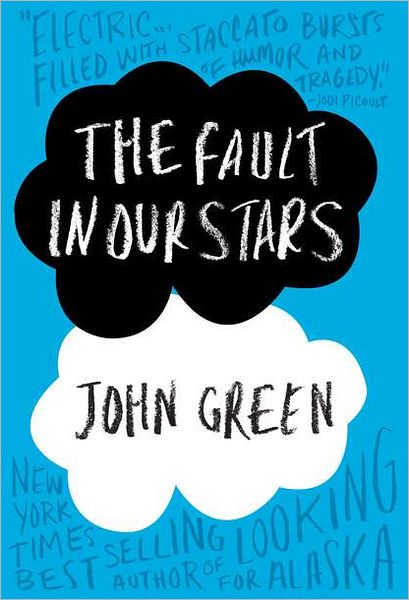
Books Read in 2014 – 21. The Fault in our Stars – John Green

Genre: Young Adult, Illness. Romance

Narrative Style: First Person Narrative, Chronological Timeline The_Fault_in_Our_Stars

Rating: 4/5

Format: Paperback

Published: 2012

Synopsis: Hazel has cancer and even though she is taking a drug to shrink her tumours, her prognosis is still terminal. At a cancer support group, she meets Augustus, seemingly recovered from his cancer, and discovers what life is all about.  

This is an excellent book for debunking myths and showing exactly how difficult it is for teenagers with cancer. It is funny and lively as well as being devastatingly sad. From the moment that Hazel meets Augustus, there is a sense that this cannot end well. (Otherwise what sense in telling the story.) There was always a sense of grabbing happiness while you can and one of the lessons Hazel learns is that you cannot stop people from loving you just so they don’t get hurt and equally you cannot stop yourself from doing the same.

I was impressed with the gallows humour in this book and it always felt right and didn’t step over the mark at all. I was a little wary of reading it, thinking that it might be too upsetting but in fact I found I laughed more than anything. There was one point towards the end when it is obvious what is going to happen and I put the book down, thinking I might not pick it up again. But I did and it was painful but not impossible to read.

One of the reasons I didn’t find it more upsetting, I think, is that it never stopped feeling like a book. The characters were well written and the plot moved well and wasn’t cliched but I never really suspended my disbelief. In the book, Augustus is obsessed with the metaphoric resonance of everything he does and the story often seemed symbolic rather than real as if everything was imbued with too much meaning.

Still, undoubtedly an important book about the importance of living even when you are dying.


Books Read in 2014 – 20. Dissolution by C. J. Sansom

Genre: Historical Fiction, Detective Fiction

Narrative Style: First person recount, largely chronological

Rating: 4/5

Format: Kindle

Published: 2003

Synopsis: Matthew Shardlake is commissioner to Cromwell during the dissolution of the monasteries. He is sent by Cromwell to investigate the death of a previous commissioner at a monastery in Scarnsea. When he arrives it seems that quite a number of monks are potentially guilty and Shardlake has to walk a difficult path to get to the truth. 51xcXRFlN0L

Tudor history is one of my favourite eras to read about and I love a good detective story so this seemed to tick all the boxes. The fact that it was set in a monastery and all the monks had some sin that they are trying to keep secret only added to the fun.

When Shardlake is first sent to Scarnsea and we are introduced to the potential murderers, it seems that any number of people could have murdered the previous commissioner. Clues and red herrings rain down through the plot with an astonishing quickness and Shardlake is quickly out of his depth. When the bodies start to pile up and he starts to feel pressured, he begins to make dubious decisions and mistakes.

The historical detail seems note perfect and I particularly enjoyed the various descriptions of Cromwell. The battle between traditional and new religion is well described and Shardlake is as uncompromising in his views about the new ways as the traditionalists were about theirs. Ultimately (like In The Name of the Rose) this is a story about knowledge and power and who should be allowed to have it.

I did find Shardlake to be an irritating narrator. I’m sure this was intentional but his peevish voice started to grate by the time I got to the end. This, and the fact that I worked out who the murderers were (although not why) before the end, were the reasons for this not being a 5/5 read. Other than that, it was a very enjoyable mixture of historical fact, political intrigue and detective story.