Books Read in 2014 – 22. Catching Fire by Suzanne Collins

Genre: Dystopia, Young Adult

Narrative Style: First Person narrative, largely chronologicalcatchingfire02-718973

Rating 3/5

Format: Kindle

Published: 2009

Synopsis: Following their win at the Hunger Games, Katniss and Peeta are preparing themselves for their victory tour and the next games. As this is a celebration of 75 years of the games, it calls for a special games to be designed, one which Katniss and Peeta will never forget.

I read The Hunger Games last year and I have to admit, I didn’t feel particularly compelled to read on. However, I always meant to read the others and so I finally got round to downloading Catching Fire and Mockingjay onto my kindle.

If anything, I enjoyed this more than The Hunger Games. The plot twists were a little less blatant and I loved the idea of the clock shaped games arena. The Capitol and the gamemakers seemed more cruel and some of the weapons / tricks played within the arena were truly horrible.

The book trotted along and I did find it hard to put down. I wanted to know that Katniss and Peeta would survive. Or rather how they would survive – the existence of a third book suggesting that they both lived through this one. I was glad to have the third one ready and waiting as the end of this one was much more of a cliff hanger than the last one.

I still found Katniss intensely annoying. She is constantly selfish, ignorant and mistrustful. The way she swings between Gale and Peeta is also irritating. While she is a strong lead character who takes action, she is often in the wrong or acts in a foolish way. She was hard to like. Whilst, on the one hand, Peeta is more sympathetic, in some ways he is just as annoying. His essential goodness doesn’t quite ring true.

The final reveal at the end of the book and Katniss’ reaction too it seemed a little forced and sudden. More subtle clues throughout might have helped with this. The appearance of Gale at the end and his rebel status also did not quite convince.

Maybe I’m being a bit harsh but I did feel that I constantly wanted to shake Katniss. Maybe, again, it is just that I am too far removed from Katniss’ age to really be able to relate to her. Certainly, the idea of these books is strong and interesting, I was left feeling that the execution could have been better.
 

Books read in 2014 – 19. The Absolutist by John Boyne

Genre: Historical Fiction, War

Narrative Style: First person narration, Moves between 1919 and Tristan’s memories of the war

Rating: 5/5

Format: Paperback

Published: 2011

Synopsis: Tristan Sadler has decided to deliver letters written by Will eclecticchallenge2014_300Bancroft to his sister in Norwich. Will was shot as a coward but Tristan knows the truth of what happened and hopes to be able to tell Will’s sister his deepest secrets. 

Reading Challenges: Eclectic Reader Challenge: War. 

Having previously read The Boy in the Striped Pyjamas, I should have been more prepared for the onslaught on the emotions that this book provided. At the end, I was devastated. My mind kept playing over the details of the ending as if I could somehow change the narrative and give Will and Tristan a better ending.

The narrative begins with Tristan’s arrival in Norwich to give the letters to Will’s sister Marian. He had trained and fought with Will and it soon became apparent that he had loved him very much. Marian wants answers as to why Will died and proof that he was not a coward for laying down his arms and refusing to fight. the absolutist

At first it seems that Tristan’s great secret is his homosexuality and the physical acts that he and Will shared. Understandably at this moment in history, and in the army, this was something that both men found difficult to deal with. However, the truth of the matter was much more painful and dark. And although I had worked out exactly what Tristan had done, that didn’t lessen the trauma of actually reading about it.

The themes of this book run through many war novels – the nature of bravery, what makes a man, the effect of brutality on the psyche – but I don’t think I have ever read a novel that tackles them so directly. Before Will lays down his arms, another character, Wolf, is murdered by the other soldiers when he finally hears that he will not have to fight. The treatment of those who wished not to fight and those who could not was appalling – much worse than I’d realised. The treatment of Marian and Will’s parents is equally deplorable.

In the end, although Tristan’s behaviour was also deplorable, I had a lot of empathy for him. Boyne’s characterisation and use of historical detail is so good that it is possible to see past the terrible act he commits and see the man and the reasons behind it. Easily the best book I’ve read in an age.


Books Read in 2014 – 15. Some of Your Blood – Theodore Sturgeon

Genre: Horror, Epistolary
narrative style: a variety of letters, third and first person narration, sturgeon-some-blood-tempsychiatric evaluations and interviews.

Rating:4/5

Format: Kindle

Published: 1961

Synopsis:A soldier who calls himself “George” is admitted to the army’s psychiatric ward after a vicious attack on the major of his company. The major was concerned about the contents of a letter “George” wrote home to his girl, Anna but the contents are not revealed to the reader until the very end.

Dr Phil Outerbridge is given the task of dealing with a soldier who is surrounded with some mystery. The army want the issue of his attack on the major dealt with quickly and sensitively. The novel opens with a series of letters between Phil and his superior Al, discussing the way in which this case could be dealt with and Phil’s initial impressions of the patient.

At the very beginning, before the story proper, there is a section describing the reader sneaking into Phil’s office (We are assured it is safe, after all it is only fiction) and opening this particularly curious file and working through it.  The different voices and styles that this requires are skillfully handled and the psychiatric reports and analysis are convincing and intelligent.

The soldier is tasked with writing his own story. He is advised that it might be easier in the third person and chooses the name “George” for himself.The third person narrative that follows gives a lot of detail about “George’s” early life, his time in a boys’ home and then in the army and details his love of hunting. Whenever it seems that there may be some sort of revelation, George moves on to the next event and the reader is left wondering exactly what has happened. As Phil later comments, there are a number of holes in his story.

After “George’s” narrative, there follows a number of psychiatric evaluations and interviews in which more details are slowly revealed about the exact nature of “George’s” sickness. The way the story slowly unfolds reminded me of the narrative structure of The Strange Case of Dr Jekyll and Mr Hyde where witness accounts and letters hint at the horror that the reader eventually faces.

In the end, the contents of the letter is revealed and the story finishes with no absolute decision on whether “George” will stay in the hospital or not. Instead, there is a return to the authorial voice of the beginning offering us possible fictional outcomes and inviting us to decide. Then in the final chilling moments, we are warned to hurry in case Phil catches us and it isn’t fiction after all but real. Of course, such horror does exist in the real world and this could easily be a real case study. It is a clever and unnerving ending to what was a clever and unnerving story.

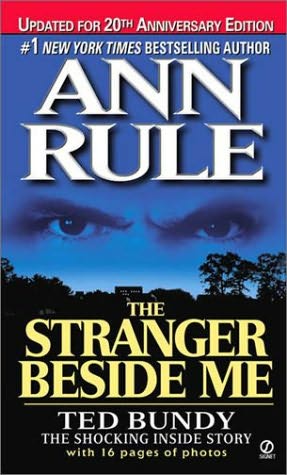
Books read in 2014 – 14. The Stranger Beside Me: Ted Bundy, The Shocking Inside Story – Ann Rule


eclecticchallenge2014_300

Genre: True Crime, Serial Killers
narrative style: first person, largely chronological Rating:3/5

format: Kindle

Published: 1980

Synopsis: Rule describes Bundy’s murders and also her reaction to them. She decribes their friendship and the difficulties she faced in accepting his guilt.

Challenges: Eclectic Reader Challenge 2014 – genre True Crime.

I first came across Ted Bundy when I was writing my MPhil. I was writing a section comparing Bret Easton Ellis’ American Psycho with Helen Zahavi’s Dirty Weekend and my research led me to read a lot about serial killers. Bundy stood out as one of the stranger cases. There was such a disparity between the persona he used to snare his victims (he liked to pretend to be helpless in some way, sometimes having his arm in a sling or using crutches) and the violence and depravity of his attacks. It stuck with me over the years and when I realised that I had to read a true crime book for this years challenge, I knew it would be about Bundy.ann rule

It is this disparity that is at the heart of Rule’s book. She knew Bundy, worked with him in fact, and was already writing a book about the series of violent murders when he became the prime suspect. She knew a charming and polite Ted, a man who worked the phones at a crisis centre, persuading people not to take their own lives. It is little wonder that she did not want to believe that he was the killer the police had searched for. Indeed, it didn’t seem possible that two such different personas could exist in the one person.

It surprised me how long Rule continued to be supportive of Bundy, even when she started to believe in his guilt. Perhaps it is easy to say when you are not emotionally attached to the person involved but I’m not sure I could have kept corresponding with him, sending him cheques and money as well. It maybe that she realised that this would help with her writing career – having the inside line on an infamous killer – and indeed this book did put her on the map. However, I think that the hold that Bundy had on her was a lot simpler. He knew exactly how to manipulate people and bend them to his will. Rule seems taken in by his need for her and at times seems almost awestruck. She claims not to have been in love with him and this may be true but there is something in the way that she writes about him that goes beyond mere friendship.

The details of Bundy’s crimes are horrendous and I had no idea how many women he had killed and how many murders he has been linked to that cannot be proved. Also his escapes from prison and many last minute reprieves from the electric chair made for interesting reading. However, I did get bogged down in what I felt was extraneous detail. Rule, undoubtedly, is very observant and thorough but there was no need to detail the weather or the background of every bit player. Also, I felt that the expression was clumsy at times and felt that who ever edited this work should have had a sharper red pencil. It was a shame because by the time I got to the end and Ted was finally going to be executed, I didn’t really care. I just wanted the book to be over.


Books read in 2014 – 8. Fatal Shadows – Josh Lanyon

Genre: Detective, LGBT, Romantic Suspense

Narrative Style: First person narrative, Straightforward chronological timeline1274861

Rating 4/5

Format: Kindle

Published: 2000

Synopsis: Someone is out to get Adrien English. First, his closest friend and employee, Robert, is murdered and then someone ransacks his shop. Even worse, the police seem to think that he murdered Robert. And everything he tries to do to help ends up making him look even more guilty.  

I love a well-written detective story. After the annoyance of reading Post Mortem by Patricia Cornwell, I wanted to read an author that I knew could deliver the goods so I decided to read the first of the Adrien English series. I wasn’t disappointed.

There are a number of things that bring me back to reading Lanyon’s work, first and foremost being the plot lines are always suspenceful with twists and turns that don’t seem forced. In short, he keeps you turning the pages. As with the main character in Come Unto These Yellow Sands, Adrien is very good at getting himself into awkward situations which adds an extra dimension to the suspense.

The character of Adrien was convincing and I took to him straight away. Lanyon shows the homophobia that he faces without making him seem like a victim and while he has some of the stereotypical traits of a gay man, he never seems like a type but like a real person. His first person narrative is full of humour and ironic asides which made the reader warm to him.

To me, it was obvious from the start that Detective Riordan was gay but closeted but it may be that this was deliberate as it allowed the reader knowledge that Adrien did not have. It was soon apparent that Riordan had a crush on Adrien and was on his side, sharing knowledge with him and eventually saving his life. But as I said, it was not at all obvious to Adrien who was too busy fearing for his life to notice.

I was sorely tempted to go straight on and read the next book in the series but I’ve decided to save it for the next time I feel I need the knowledge that the book I am about to open will be really pleasing.


Books read in 2014 – 7. Postmortem – Patricia Cornwell

Reading Challenges: Eclectic Reader Challenge 2014eclecticchallenge2014_300

Genre: Medical Thriller

Narrative Style: First person narrative, Straightforward chronological timeline

Rating 3/5

Format: Kindle

Published: 1990

Synopsis: Someone is strangling and binding women in Virginia, America. Kay Scarpetta is the chief medical examiner assigned to the case. The novel starts with the fourth murder and shows the way the murders are making everyone from single women to city hall officials to reporters jumpy. postmortem

I was excited to read Cornwell for the first time so I was pleased when her name came up on a search for medical thrillers. She was one of the major crime writers that I had yet to sample. I decided to start at the beginning of the Kay Scarpetta series, instead of diving in in the middle which is my usual habit. I wish I hadn’t.

This novel was published in 1990. I found I kept saying that to myself while I was reading it as if it was an excuse. Kay Scarpetta seemed the absolute product of 80s feminism; all bitter and distant from having to climb the corporate ladder in a man’s world. Okay, maybe that is how you would be but it made her difficult to like and even harder to identify with. She seemed to dislike men on principle regardless of whether they were sympathetic to her or not. That started to be a little wearing as the novel progressed and I found myself getting annoyed with her.

It was a bit of a distraction from what was a good thriller. It kept you guessing until the end. It was interesting to note the differences from modern crime stories which rely so heavily on technology. DNA profiling was still in it’s infancy and Cornwell seems a little unsure at times exactly what to do with her evidence. That said, the novel is full of close detail and medical information that is interesting. The process of working from evidence through research and finally to a solution was impeccably described.

In the end, the story was compelling enough to keep me reading despite my reservations about the characters. However, I doubt I’ll read on.

Books Read in 2014 – 6. The Doll’s House – Neil Gaiman

Sandman_Dolls_HouseGenre: Graphic Novel, Fantasy

Narrative Style: Mix of viewpoints. Generally linear.

Rating 4/5

Format: paperback

Published: 1989

Synopsis: Due to the absence of Dream from his realm, some of the dreams and nightmares have escaped. This leads to all sorts of bloody mayhem. Add in the presence of a Vortex that could wreck the dream world forever and you have the makings of an exciting story.

As I mentioned in my last post I was going straight on to read the next Sandman book The Doll’s House. I was glad to have been loaned the second one as well as otherwise I would have felt a little bereft. I’m pleased to say that I was not disappointed.

Having said that, this is much less a story about Dream – obviously he appears in it but he isn’t the centre as much as he was in the first book. Instead, Rose, granddaughter of Unity Kinkaid (a character from the first book) is the focus and her search for her younger brother supplies most of the narrative momentum.

One the way she meets a whole host of wacky and wicked characters. There seems to be no limits to Gaiman’s imagination in this respect. And while they are strange, they are never less than convincing. Such is the level of his talent.

There is plenty of gore, as well and the illustrations are just as impressive and vivid – in fact more so, as the story allows for an unleashing of the artists twisted imagination much more than in the first book.

I felt this book was more compact and self-contained than the first and I don’t feel such a compulsion to read on immediately. Having said that I am much more interested in reading the rest of them now.

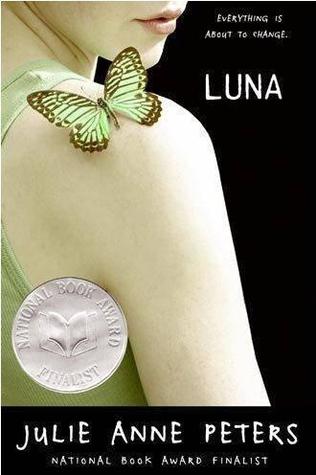
Books Read in 2014 – 1. Luna – Julie Ann Peters

Genre – Young Adult, GLBT

Year of Publication: 2006

316445

Narrative Style – First Person narrative, chronological timeline

Format: Kindle

Published: 2004

Synopsis: Regan’s brother Liam really wants to be a girl. He has always known that he was a girl. At night, he dresses as Luna, his true self and named in honour of the moon. The story is told from the point of view of Regan and shows the problems that both Liam / Luna and Regan face.

Rating: 2/5

I was quite excited to start reading this. It seemed it would touch on gender issues that I find very interesting and also be something new and exciting. It is exactly the sort of issue that books for teenagers and young adults should be tackling. And it does, successfully I think, show some of the issues that transgender teens face and also the effect on their families.

However, ultimately this book did not fulfill that promise. There were a number of reasons for this. The first was stylistic. I found Regan intensely irritating. To be fair, her voice was recognizably teenage and I am willing to admit that if I was sixteen or so, I probably wouldn’t have found it so annoying. She came across as having very little personality of her own. It may be that this is a side effect of her family situation where she focuses on Liam / Luna so much but it didn’t lead to her being a very engaging protagonist. Personally, I think it would have been more interesting for Liam / Luna to have the narrative voice as after all this was her story.

This lead to difficulty at the end of the novel which ends at a positive moment for Liam/Luna but leaves the story hanging in terms of Regan. As we have found out about other aspects of her life, it would be nice to have some closure on these too. It’s as if she isn’t even the centre of her own first person narrative. Even the writer just dismisses her in the end. Also, it lets everyone else off the hook. Because Liam leaves, the opportunity for just not dealing with the situation is given to his parents.

The other issue I have is to do with stereotypes. This novel seems to be full of them. The stereotypical masculine father who only wants his son to play sports and never gives up hope that one day it will happen. The pill-popping working mom who ignores all family issues. And of course, any feminine gender stereotype you care to mention in terms of Luna’s personality. There was some danger of associating femininity with vanity as when she was Luna, she became obsessed with her looks. Understandable I suppose, given the circumstances. But a little irritating all the same.

Maybe it is true that when you feel you are living a life that is not your own, that you will take any opportunity to dress as your alter ego, but there seemed to be a suggestion that Liam was unable to control his urge to be Luna. This led to him dressing up at a neighbours house, going through the wardrobe of the mother of the children he was supposed to be baby-sitting. This, and the extreme reaction of the children’s parents when they returned, was one of the least convincing moments in the book. It made Liam seem less sympathetic and I didn’t really believe he would risk it all in such a way. Not when he was so careful about other aspects of his life.

Overall, it was an interesting attempt to tackle a difficult subject but one, for me, that didn’t quite make it.