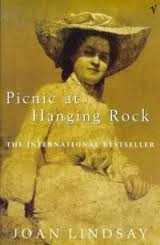
Books Read in 2014 – 44. Picnic at Hanging Rock – Joan Lindsey

picnic

Genre: Thriller, School
Narrative Style: Third person, chronological
Rating 3/5
Published: 1967
Format: Kindle
Synopsis: It was Valentine’s day in 1900 and the girls from Appleyard College for Young Ladies are excited about the picnic at Hanging Rock. The weather was perfect for the annual day out. Unfortunately three girls and one teacher would not return from this trip, the repercussions of which effect the entire town.

I liked the style in which this story was told with almost perfect detachment from the events therein. While some of the events described involve hysteria, the prose is never less than level headed and was very easy to read.
The lead up to the disappearance of the girls is nicely handled and excitement builds slowly but steadily with subtle hints that things aren’t quite right, everyone’s watch stopping at the same time, for example. When it is realised that the girls are missing then panic ensues, panic which is heightened when one of the missing girls comes crashing out of the undergrowth at the bottom of Hanging Rock. At this point, I was anxious to find out what had happened and eager to read on.
However, the novel changes not long after this and becomes less of a mystery story and more of a study in human nature – watching the various character’s reactions to events rather than solving the mystery. This wasn’t badly done but wasn’t what I was expecting. There are still moments of excellence – the hysterical reaction of the school girls to the one girl they manage to find is extremely well described but ultimately, I found the change in direction disappointing.
I also found it difficult to differentiate between some of the teachers and girls. They didn’t stick in my mind and I was constantly checking who was who.
The ending of the novel was unexpected and returned a little more to the mystery style and I did find that enjoyable but overall, this was an uneven read.

Books Read in 2014 – 43. The Witches of Eastwick by John Updike

imagesGenre: supernatural, magic realism

Narrative Style: Third person, chronological

Rating: 4/5

Published: 1984

Format: Hardback

Synopsis: In a quiet Rhode Island town, three divorcees join forces to create a powerful magical force. When Darryl Van Horne arrives in their town, the balance between them is disturbed and all hell breaks loose.

I was surprised to enjoy this quite so much. I wasn’t a big fan of the film although it was a long time ago that I saw it. But I recently inherited a lot of John Updike books and I thought a familiar storyline was a good place to start. Having said that, the story really didn’t ring any bells which might be because I can’t remember it or it may be that the film is completely different.

The story starts with a description of the three witches and their various talents and powers. It is true that their power does seem to rest with their sexuality or with nature – typically feminine forms of power. This was a bit of an irritant but I found that Updike’s rich prose and stunning description kept me reading regardless of any issues I may have had with stereotypical representations of women.

The arrival of Darryl Van Horne in Eastwick has a profound effect on all three of the women and he nurtures their talents as well as inviting them to his house for long sexy baths. He may have been conjured up by their collective longing or he may be the devil come to check on their powers. Either way, he upsets the balance of power between the women and in the town in general and things start to take a darker turn. What is also certain is that his powers are really no match for theirs and when he fails to gain what he wants, he dematerializes as suddenly as he came.

This is a fabulously, abundantly written book with almost too much to take in one every page. Updike never misses an opportunity to satirize small town life and the small ways people try to gain power for themselves. The details are nothing if not convincing even in amongst the supernatural happenings. I will certainly be reading more Updike and I wish I had not waited so long to read my first one.

Books Read in 2014 – 42. Chocky by John Wyndham

download (12)
Genre: Dystopia
Narrative Style: First person, chronological
Rating 4/5
Published: 1970
Format: Kindle
Synopsis: When Matthew starts to communicate with an unseen being named Chocky, his parents are understandably worried. After all, Matthew is too old for an imaginary friend. Furthermore, Matthew is starting to ask questions that seem to have come from somewhere beyond his own mind. As time passes, they grow more and more concerned and involve outside help. This turns out to be a big mistake.

There were a couple of reasons for choosing to read this book. I could vaguely remember the TV series and was curious to read the book behind it. Secondly, I had been meaning to read more Wyndham since reading The Day of the Triffids a few years ago. So I had high hopes for the book and I certainly wasn’t disappointed. This is a really good read and the only thing that stopped it getting five stars is that sometimes it seemed a little old fashioned which is inevitable, I suppose, with this sort of fiction.
The story begins with Matthew’s parents noticing little oddities that are out of place for an eleven year old – like having an imaginary friend. It seems harmless enough and although they are curious, they are not unduly worried, as their son seems happy enough in himself.
However, clues begins to appear that suggest that this is no ordinary imaginary being. Matthew starts to ask questions that are almost beyond his understanding. His teachers complain that he is starting to ask about concepts that are too difficult to explain and he sometimes appeared to be arguing with another being. They decide to seek outside help and it is suggested that Matthew may be possessed by an outside force. Understandably, they find this an unsatisfactory answer and seek help elsewhere.
Events do become more sinister – for example, Matthew rescues his sister from drowning without being able to swim. The press start to become interested and Matthew is sent to an important psychologist who equally has no answers for them.
I must admit that I wished I had no knowledge of the events that were to come as I could remember exactly who Chocky was, However, I could not remember the exact storyline and so when Matthew goes missing near the end of the novel, I was as perplexed as his parents. I also could not remember Chocky’s purpose in using Matthew as a reporter on this world. I was impressed by the ecological reasoning used by Chocky in her disgust at our dependency on fossil fuels that will inevitably disappear. This reads now like a warning still unheeded as we are still desperate for a clean, safe solution to this problem. There was a contrast between Chocky’s altruistic attitude and that of the doctors who want to exploit Matthew’s unusual knowledge.
The narrative is written from the point of view of David, Matthew’s father and was convincing in its curiosity about Chocky and its concern for Matthew. The story is written in a straightforward way but that only made the ending seem more devastating because the reader could believe in its reality. Very enjoyable.

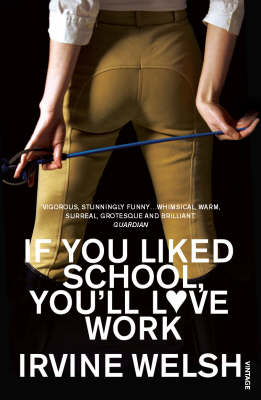
Books read in 2014 – 40. If You Liked School, You’ll Love Work by Irvine Welsh

tumblr_l4q7515v0u1qb6r71o1_400

eclecticchallenge2014_300

Genre: short stories, Scottish fiction

Narrative Style: varies – five stories in collection

Rating: 3/5

Published: 2007

Format: Paperback

Synopsis: Rattlesnakes – three friends drive out into the desert to take drugs and end up stranded with unexpected results. If you liked school, you’ll love work – an expat struggles to juggle all of the women in his life. The DOGS of Lincoln Park – a trendy young woman who loves her dog more than her friends is disturbed by the arrival of a Korean chef in her apartment block. Miss Arizona – a struggling screenwriter meets his match in lonely Miss Arizona. Kingdom of Fife – Jason King and Jenni Cahill struggle with the boredom of living in a small Scottish town.

Book Challenges: Eclectic Reader Challenge – Anthology genre

This collection was a mixed bag. I’m not a massive fan of short stories but Welsh’s previous collections (The Acid House and Ecstasy) were both excellent so I thought I’d give it a go for the anthology genre in this year’s Eclectic Reader Challenge. I’m not sure why they didn’t quite grab me this was fairly typical Welsh fare. All the usual ingredients. But then maybe that was the problem.

Rattlesnakes started well. You know you’re in a Welsh story when someone gets bitten on the penis by a rattlesnake and the only way to avoid death is for his best mate to suck the poison out. However, this story was spoiled by the borderline racist depiction of a psychotic Mexican. When he finds the pair in their tent, the story becomes pointlessly seedy and the main aim seems to be to make the reader as uncomfortable as possible. So far, so Welsh, you may say but there was nothing underneath the shock, no subtext or cleverness, just smut.

If you liked school, you’ll love work seemed like a case of masculine wishful thinking. The narrator takes great pains to say that he isn’t particularly attractive or slim, yet woman love him and despite some close calls, he never does get caught out. Nothing about this character or any of the women rang true. A series of stereotypes in a series of false set pieces.

The DOGS of Lincoln Park. This is where the collection started to pick up. Welsh carefully plays with racial stereotypes as he forces the reader to make certain assumptions about his Korean chef’s eating habits. You are then left with uncomfortable feeling that you believed the racist hype and assumed that the dog had become dinner.

Miss Arizona. This was a little bit Tales of the Unexpected but very enjoyable. The narrator is clearly trapped somewhere when he starts to tell his tale of making a documentary about his favourite director and interviewing his ex-wife who is heavily into taxidermy. It isn’t too hard to work out what has happened but is a good read nonetheless.

Kingdom of Fife. This is the only story set in Scotland and as such rings the most true. Welsh really does have an ear for his native tongue and captures Jason’s voice well. However, his depiction of Jenni Cahill was less successful and I wasn’t really convinced by her or her sudden change of heart about Jason either.

Books Read in 2014 – 34. Nineteen Seventy Four (Red Riding 1) – David Pearce

Genre: Crime

Narrative Style: First Person Narrative659058

Rating 4/5

Format: Paperback

Published: 1999

Synopsis: Ed Dunford is back in Yorkshire with his dream job as a crime correspondent. He begins investigating the horrible death of a little girl and finds himself mired in corruption and violence until he barely knows what is right and what is wrong. 

This book really isn’t for the fainthearted. It is brutal and violent almost from the very first. Ed is thrown into a world he thinks he understands but that really is beyond his very worst imaginings. No one is to be trusted and in the end, Ed feels he has to become like the men he is trying to stop because they are outside of the normal rules of law and order.

Pearce has a lot in common with hard-boiled American writers such as James Ellroy. None of the characters are pleasant, they all double-cross each other. Ed – supposedly the good guy – is just as misogynistic and unpleasant as the rest of them. I have seen complaints about the amount of violence against the female characters in this book and it is true that very few survive the length of the book and those that do are still effected by male violence. However, I feel that given the subject matter of the book and the setting in the seventies, this is to be expected. This is a book about male violence and its consequences. It would seem unrealistic for this violence not to be against women. That said, I’m not sure that Ed needed to be quite so unpleasant towards the women in his life, forcing on into having an abortion, forcing another into anal sex. To me, this was superfluous, an unnecessary addition to the already high levels of misogyny. It added nothing to Ed’s character development.

The narrative voice was convincing throughout – especially as Ed started to unravel. It was interesting to have a hard-boiled novel set in Yorkshire and to have a narrative voice that was so very northern. The pace was perfectly judged with things happening so quickly towards the end it was hard to keep track and no wonder that Ed could barely keep up. I will certainly be reading the next installment.

Books Read in 2014 – 33. The Inheritance of Loss – Kiran Desai

eclecticchallenge2014_3002014tbrbuttonGenre: Indian Literature, Family95186

Narrative Style – Third person, non-chronological

Rating: 3/5

Format: Paperback

Published: 2005

Synopsis: In an old, isolated house a retired judge lives his life in solitude despite those around him, his granddaughter, Sai is in love with her Gurkha tutor and their cook can think only of his son in New York. The son is desperately moving from one dead end kitchen job to another. Around them all hell breaks loose and they are all forced to reconsider their emotions. 

Reading Challenges: Eclectic Reader Challenge (Award Winning), TBR Challenge

Time on Shelf: I rescued this book about two years ago from my father in law when he was having a rare sort out of books for the charity shop. He hadn’t read it but decided he never would (this seems like sacrilege to me but he does have a lot of books).  

I’m still not really sure how I feel about this book. It did make me think. And it opened my eyes to some of the issues that have plagued India in recent years and I realised that I had no idea of the history and the politics and it may be something that I read more about in the future. So for that it was certainly good.

The prose was beautiful; poetic and haunting. It even made the desolation seem magnificent. It was easy to see how this had won the Booker Prize. However, sometimes it seemed like the frosting over not very much and left me feeling a bit empty.

I think my main problem was identifying with some of the characters. The judge was a very difficult character to empathise with and I didn’t really enjoy all the time given to his back story. More interesting was Sai’s relationship with her Ghurka tutor, Gyan, which falls apart when the Ghurka’s start to demand independence. Also, some of the minor characters were more interesting (in my mind) than the Judge and I would have liked to hear more about some of them.

Ultimately, I can see why this book won The Booker Prize and I can appreciate its beauty but in the end, it wasn’t really to my taste.


Books Read in 2014 – 31. The Stepford Wives – Ira Levin

Genre: Horror, Dystopia, Satire

Narrative Style: Third Person from the point of view of one characterdownload (8)

Rating 4/5

Format: Paperback

Published: 1972

Synopsis: Joanna moves to Stepford at the insistence of her husband, Walter and, at first, it seems to good to be true. She soon becomes irritated by the passiveness of the women and their housework obsession. Then the two friends she thought were different start to show the same obsessions and she starts to wonder what exactly is going on in Stepford. I can remember seeing the 1975 film version of this book when I was fifteen so I knew what the basic story was. You might think that this would spoil the story, making it less tense but this was not the case. Levin unfolds Joanna’s story masterfully and knowing what might happen to her only made me more anxious for her to escape the clutches of the men of Stepford. Joanna begins the novel an independent, strong woman who works as a photographer. She does housework when she has to and is used to having strong female friendships. She is sexual and attractive without the need for make-up. However, when she comes to Stepford she finds all the women are eerily similar and coldly distant. They are unable to find a place in their housework schedule to even meet for coffee. They are beautifully coiffed and clothed. She is rightly appalled by this and by her husband leaving every evening to go to the men’s association. Joanna does meet two other like-minded women – both of whom have not lived in Stepford for long – and they try desperately to get some sort of female movement going. However, when one of them suddenly becomes docile like the other women, they start to worry that they’ll be next. Eventually there is only Joanna left and she tries desperately to warn the one woman to move to Stepford after her before the men seal her fate. Levin cleverly does not tell the reader exactly what happens to Joanna. She merely loses narrative perspective. Ruthanne takes over the narrative point of view and she runs into Joanna in the supermarket, noting her coldness, her obsession with housework and how good she looks. As Ruthanne is a writer, it can be assumes that she will be the men’s next victim. The men in the novel respond specifically to their wives’ attempts at politicising themselves. Joanna discovers that the women were once activists or very successful professionals that held feminist meetings. The message that Levin is trying to get across is clear. Men will not just stand back and let women gain power from them. As Chuck Palahniuk notes in the introduction, perhaps more heed should have been taken. The whole beauty industry and the obsession with women’s appearance is one very successful way of keeping them in their place regardless of their professional position.

Books Read in 2014 – 29. Rabbits in the Garden by Jessica McHugh

Genre: Horror, Madness

Narrative Style: Third person chronological10504227

Rating 1/5

Format: Kindle

Published 2011

Synopsis: Life is perfect for Avery – she is in love with her best friend, Paul, and he loves her too. They have just shared a first kiss. However, trouble starts
when Avery’s mother finds out about the liaison and is determined to stop her daughter from taking the wrong path.

It’s not often that I give a book 1 star. Usually because if something is that bad, I don’t finish it. I’ve always hated doing that and even more so now that I add books on Goodreads. I feel obliged to get to the end. Even if, like this novel, it is a real struggle.

I picked this book because I liked the sound of the story and because it has a lot of good reviews. And it did start well with the appearance of Avery’s mother’s madness being quite well executed.

However, it went downhill fast. Events are easy to spot and there were little in the way of surprises. For example, when Natalie meets a handsome stranger, it is obvious that it is Paul. When she mentions that they did not use a condom, it obvious that she will be pregnant. When Avery’s mother appears the next morning, just in time to tell them of their real identities, it all just seems like a bit too big a coincidence. The whole novel is like that. events and characters are bent to the plot with no care as to whether that seems likely or not.

There are pages of unlikely dialogue which slow the action down. The characters often sound like they are spouting platitudes rather than having a conversation. it was like reading a bad made for TV film.

Even the ending was not that satisfying. There was never any doubt that Avery would win in the end. The lack of narrative tension was one reason why I struggled to finish this. Everything moves in Avery’s favour. The police do not find her. She manages to escape. She will live happily ever after. Even though she does suffer setbacks – like the loss of Paul – it never daunts Avery and the reader knows exactly how things will come to pass.


Books Read in 2014 – 27. The Slap by Christos Tsiolkas

Genre: Family, Australian Fiction

Narrative Style – A series of third person perspectives from different characters’ points of view. 

Rating 4/52014tbrbutton

Format: Paperback

Published: 2008

Synopsis: At a barbecue in suburban Australia, a young child is out of control. While others look on in horror, a man who is not his parent slaps the child. The repercussions of this act ripple through the lives of all present that day. 

Challenges: TBR Challenge

Time on Shelf: Only about three years. I meant to read it before it was on TV but then I only managed to watch the first episode (not because it wasn’t good but because I was too busy and/or hopeless) and the urgency fell away. I was quite glad not to have watched it as I really enjoyed not knowing what would happen. 

Before reading this, I was interested to see how the issue of child discipline would be handled. This is a emotive issue. If you are seen to disagree with modern parenting methods then you are perceived as some sort of barbarian. But sometimes it does seem that children are being done no favours by parenting methods that give them a choice article-1304653-0AC0591E000005DC-621_233x353about everything but neglect to teach them that sometimes they won’t get their own way. Tsiolkas handles these issues successfully due to the method of giving each person a chapter and opinion. He shows the multi-faceted nature of the issue at hand.

There is not doubt that Hugo is a little monster, still being breastfed at almost four, refusing to play nice and told by his mother that he is the most important person in the universe. Actually, Rosie, his mother was one of the less convincing characters, she was too cliched an earth mother for me and I found her chapter one of the least fun to read. However, this may be due to the distance between myself and this sort of women. She was the sort of person I would never be friends with.

Harry, the person who slapped Hugo was suitably horrible – racist, sexist, violent. After all, even if you might think that child could do with  a slap, there aren’t many of us who would put that into action. Even so, I was pleased that the court decision went his way. You shouldn’t slap someone else’s child but surely you don’t need to take it to the police either.

I enjoyed reading the different viewpoints and trying to understand how different characters came to their decisions about the incident. The story unfolded cleverly and there was always reason to keep reading. The ending pulled together most of the narrative threads and was largely satisfying. The only thing I might have liked was more from the early characters as hints are dropped about them but you don’t actually get to see how they have changed.

When I rated this on Goodreads, I was surprised by the number of negative reviews. There is s something a little soap opera like about this but I don’t think this is necessarily a bad thing. The issues raised – like those in a soap opera – are pertinent to everyday life. I enjoyed this and will certainly be reading more of TSiolkas’ books.


Books read in 2014 – 25. The City, Not Long After – Pat Murphy

Genre: Dystopia / Utopia

Narrative Style: Third Person, largely chronological

Rating: 3/5

Format: Kindle

Published: 1989

Synopsis: The narrative centres on San Fransisco after a plague. The survivors are all artists or eccentrics and are all peace loving. When a girl comes from outside of the city, warning of war, they realise that they have to $(KGrHqJ,!l!E8EqSozg6BPNuf3zchg~~60_35defend the city somehow.

This is different from other dystopia that I have read, in as much as it doesn’t see the very worst in people. So it may be more apt to call it a utopia. It represents the way that you might hope people would react, the very best that humans can be. Once it occurred to me that this was a utopia, I was able to cope with it a little better.

The characters are all a little bit wacky – a group of dreamers and artists who spend their lives creating works of art rather than struggling to survive. Danny Boy begins a project to paint the Golden Gate Bridge blue. The Machine spends his time creating metal insects and creepy crawlies. Books is trying to write a history of post plague San Fransisco. No one struggles for food.

Jax is guided to the city by an angel (which may have been made by The Machine) and her mother’s ghost. She brings the news that an army is planning to attack. However, the artists are loathe to take her seriously. And even when they do start to prepare, they vow not to kill but scare the army, unnerve them. Even those who have to be dealt with close up are merely sedated.

I understand the points that Murphy is trying to make about warfare and it’s dehumanising effect on the human psyche. She references many historical figures (like Gandhi for example) who used peaceful protest. And the utopian ideas are pertinent. However, I have to admit that I found it a little naive. I couldn’t quite stop my own cynicism from infecting the story. Maybe I’m essentially misanthropic but I find it hard to believe in the best of people. Especially in the area of warfare. At the end of the day, I prefer my post-apocalyptic fiction to be a little harder round the edges. This was too nice by far.