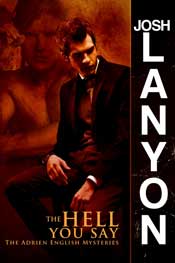
Books Read in 2015. 6. The Hell You Say – Josh Lanyon

Genre: Crime, GLBT

Narrative Style: First Person, Chronologicalhell_you_say_2011
Rating: 4/5

Published: 2006

Format: Kindle

Synopsis: This is the third book in the Adrien English series. Angus, Adrien’s assistant at his bookstore has been receiving threatening phone calls. Adrien foolishly loans him the money to disappear for a while. Foolish because it soon becomes apparent that Angus is involved in some sort of demonic cult and, as usual, Adrien feels compelled to investigate, getting himself into all sorts of trouble as a consequence. Adrien is still sort of involved with closeted cop Jake Riordan. Even Adrien isn’t exactly sure whether to call it a relationship and Jake certainly doesn’t. That word is reserved for the woman he is also involved with.

Although this was a really good read, it has probably been my least favourite so far. The main reason for this is that the romance between Adrien and Jake came to a dead end when Jake announces he had got his girlfriend pregnant. Maybe this is a good thing for Adrien in the long run but I was hoping that it would run the other way and he would realise that Adrien was who he really wanted. Of course, I am sure that Jake will still be involved in future books in the series but it would seem unlikely that his and Adrien’s relationship will ever be anything other than on again, off again which is a bit depressing.

The thriller elements were all in place and, as usual, Lanyon walks between sending up typical genre expectations and using them to fool the reader. There are a suitable number of red herrings and blind alleys and Adrien is always flying of on a whim which makes him an interesting narrator. The tension between the cold unemotional detecting of Jake and the police and Adrien’s more hysterical, intuitive style adds another element of tension to both the mystery and their romance.

Adrien is a sympathetic narrator. His voice is warm and funny as he sends himself up and over-dramatisises. He is easy to relate to and feel concerned for. As well as everything else he has to deal with, his mother announces that she is getting re-married and the descriptions of Adrien’s encounters with his three new step-sisters and ultra masculine new father are extremely amusing.

It was tempting, as always, to go to read the next instalment straightaway but I have a lot of other things to read for challenges. And I don’t want to hurry through them too quickly because then I’ll be at the end of the series. Besides, I need to have some books in reserve that I know are going to be good so that I can turn to them when I’ve read something not so great.

Books Read in 2015 – 4. Wide Sargasso Sea – Jean Rhys

2015tbrbutton

Genre: Post-Colonial, Feminist, Classics

Narrative Structure: Various first person accounts

Rating: 3/5481558

Published: 1966

Format: Paperback

Synopsis: This tells the back story of Bertha Mason in Jane Eyre. It starts with her childhood and her mother’s story and then moves to tell the story from Rochester’s point of view when he meets her and then she resumes the story when they are in England. 

Reading Challenges: TBR Challenge

Time on Shelf: This is one of those books that has been on my metaphorical shelf for a long time. Although I only bought this copy about three years ago, I first heard of Rhys’ novel about twenty years ago when I was doing my first degree. 

I enjoyed this less than I expected to. It wasn’t a bad story but I expected to love it and I just didn’t. Maybe that was the problem.

I didn’t really take to Antoinette as a narrator although she did not narrate the entire novel. The first part is from her point of view and again, certain parts are narrated  by her later in the novel. As a child, she watches her mother’s life ruined by her marriage and the hatred of fellow islanders. The family fall prey to violent attacks, one of which results in a fire that kills Antoinette’s brother and sends her mother into madness. Her husband is unable to understand and instead hides his wife away. This foreshadows Antoinette’s experience with Rochester (although he is never actually named).

Rochester narrates the next part and it is quickly clear that while he is sexually attracted to Antoinette, he does not love her and the marriage has been for money. He does not understand or even try to understand his new wife and she resorts to Obeah ( a sort of voodoo) to try and control him. He falls prey to the gossip of Daniel who claims to be Antoinette’s illegitimate brother who impugns Antoinette’s reputation and demands money to be kept quiet. There is a clear gulf between the two, caused mostly by the patriarchal society in which they live and the fact that Antoinette with her Creole heritage fits in with neither the black Jamaican nor the White Europeans.

At first, I felt a bit sorry for Rochester. He seemed as much a victim of the time as Antoinette but then he began to act more cruelly towards her – openly committing adultery, for example – I realised that while he had been used, he was still the one who was ultimately in control of the situation. He had all the power, Antoinette had to resort to black magic to try and gain some control.

Finally, they arrive in England and Antoinette has control of the narrative again. Now she is clearly unbalanced and her husband adds to this by keeping her locked in the attic. However, she manages to roam around the house at night like a dream reminder of Rochester’s casual cruelty. She dreams of setting fire to the house and the novel ends as she seems about to bring this dream into reality.

The final part was probably the most successful. I’m not sure that Rhys really captured Rochester’s voice or convinced me of his motivations. Antoinette’s narration was most successful when she was maddest and about to exact her revenge. Ultimately I didn’t feel much about the ending or all the way through really. There is no doubt that this is a clever novel but it left me feeling a little cold.

Books Read in 2015 – 3. Farewell, My Lovely – Raymond Chandler

eclecticreader15

Genre: Private Eye, Hard-boiled Detective

Narrative Style: First person, chronologicalUnknown

Rating: 4/5

Published: 1940

Format: Kindle

Synopsis: Moose Malloy is looking for his old love Velma and Marlowe starts to investigate when he is contacted for what seems like a routine case. There would seem to be no link between the two cases but quickly Marlowe finds hostility on all sides and things become a lot more complicated then they seemed. 

Reading Challenges: Eclectic Reader Challenge – Genre: PI Crime

I had intentions of reading more Chandler. I read The Big Sleep and really enjoyed it and was thinking it was about time I read the next one so when I saw that one of the genres for this year’s Eclectic Reader Challenge was PI crime, I didn’t hesitate.

There is no easing into the story here. You are dropped straight into Marlowe’s seedy little world. Every detail counts as the story quickly gets quite convoluted and no one is quite who they seem. The pace is lively and it was difficult to put down.

Marlowe really suffers in this story. He is bashed on the head a large number of times as well as being pumped full of all sorts of horrible drugs. He spends a lot of his time with his head spinning and stomach churning. Not that this stops him, you understand. Marlowe is not the sort of man to be laid low by anything. He just has another whisky and carries on. I like the toughness of the characters – not just Marlowe but all the other men and some of the women too. There is no sentimentality here – this is a hard world and it takes hard people to survive. There is no time for feeling sorry for yourself.

What really makes Chandler’s novel sing is the prose. Marlowe is all bruised one liners and smart retorts. I kept imagining Humphrey Bogart growling out some of the lines. Some of the descriptions are just fabulous – ‘The voice of the hot dog merchant split the dusk like an axe’ for example or ‘She gave me a smile I could feel in my hip pocket’. It’s all so sharp and the prose never wavers for one second. There is very little breathing space for the reader who is always fully immersed in the horror of Marlowe’s world.

I didn’t see the ending coming at all. Maybe a sharper reader could have put it together but to be honest, I’m always quite pleased if I haven’t managed to work it out. It was a good ending, one that tied everything together successfully and was completely satisfying. I will certainly be reading the next one.

Books Read in 2014 – 64. The Face That Must Die – Ramsey Campbell

Genre: Horror

Narrative Style: Third person from various points of viewUnknown

Rating: 3/5

Published: 1979

Format: Kindle

Synopsis: Horridge becomes obsessed with a face that he sees at a window. It haunts him and he comes to realise that it is the face of a killer. He knows what he has to do. that face must be destroyed. 

I used to read a lot of horror when I was first at university and I think if I had read this then I would have loved it. (I’m not sure how I managed not to read any Campbell at that time. I was obsessed with Stephen King and James Herbert.) I hesitate to say my tastes have matured because that sounds snobby. Maybe it’s better to just say they have changed. I’ve read a lot of literary fiction since then and maybe that has spoiled this sort of book for me. Okay, that still sounds really snobby. I suppose what I mean is that I wish I could have enjoyed it more.

Campbell certainly gets into the mind of Horridge who is paranoid, delusional and extremely bigoted. In fact, some of his thoughts are quite hard to deal with – he is sexist, racist and homophobic. All of which fit with his delusional state of mind and are believably written. Horridge has had a tough time and no control over his life. His delusions spring from this lack of control and the way he perceives the system as helping others that he feels don’t deserve it. All of that doesn’t make it any easier to read though.

The plot moves between Horridge’s view point and that of his victims, often switching during their encounters. A good idea, I admit but every encounter followed the same pattern and so it soon became boring and made the novel seem a little clunky.

Perhaps reading this novel in 1979 would have been a lot more shocking. I was expecting it to be more horrible, more gory than it was. I enjoyed (if that is the right word) Horridge’s development as his psychosis worsened but it didn’t particularly shock or surprise me. After all, that sort of thing is ten a penny now. That isn’t the fault of this novel, of course but it did make it seem a bit jaded.


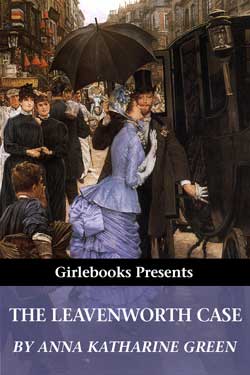
Books Read in 2014 – 59. The Leavenworth Case – Anne Katherine Green

Genre: Detective Fiction, Classics, 

Narrative Style: First person, chronological

Rating: 2.5/5

Published: 1878

Format: Kindle

Synopsis: Horatio Leavenworth is found dead at his writing desk in his library which is locked. He has been shot in the back of the head so suicide is quickly ruled out and a stranger could not have got into the house and no one suspicious was spotted. Eyes turn to the various members of his family and staff. 

I love a locked room mystery and as this was an early example, I expected that I would enjoy it. And in fact, it is not the mystery elements of the novel that caused me to feel irritated with it.

The story started well, with the appearance of Leavenworth’s personal secretary in the office of Everett Raymond, saying that his boss has been shot. Raymond rushes to the spot and along with superb detective Mt Gryce, they conclude that Leavenworth knew his killer as he did not even turn his head when he heard footsteps behind him. Clues point clearly towards one of Leavenworth’s nieces as she refuses to explain how she came into possession of the key to the library. Bryce, however, is unconvinced and sets about trying to out the actual murderer.

There is nothing really wrong with the ideas behind the story. Red herrings abound and even at the end, when Raymond thinks that the mystery has been solved, Gryce proves that he is the superior detective by tricking the real killer out into the open. However, from a modern perspective, schooled as I am in reading and watching detective fiction, it was hard to be surprised. I guess it’s unfair to judge a book in such a way. It is clear why this might have been so influential on writers such as Agatha Christie but it is difficult to read outside of your own time and this seemed a little clunky to me.

Even so, that is not what drove my rating down. That was due to the narrative voice of Mr Raymond which was given to exclamation and went running off up blind alleys. Of course, this was his role, to lead the reader in the wrong direction but because he was so excitable, I never really had any faith in him and assumed that his answer was the wrong one. This is another hangover from reading other detective fiction. No one is to be trusted to tell you the truth or get things right.

Really, I wish I had read this earlier in my reading career as I’m sure I would have liked it more. Unfortunately, it fell victim to the very books, it likely influenced.

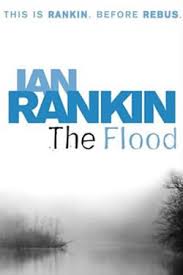
Books Read in 2014 57. The Flood by Ian Rankin

2014tbrbutton

Genre: Literary Fiction, Mystery

Narrative Style: Third Person, Chronologicaldownload (17)

Rating: 2/5

Published:1986

Format: Paperback

Synopsis: As a result of an accident as a child, Mary Miller has always had pure white hair. It has earned her the reputation of being a witch and she is something of an outcast in the Scottish town where she lives. Years later, she and her son Sandy are still on the outskirts of the town and looked on with a mixture of fear and pity by the other town folk.

Challenges: TBR Challenge

Time on Shelf: A good couple of years. I picked it up because I was curious. Rebus is one of my favourite literary characters. I wanted to see if Rankin could do anything else. And then I got a little nervous about whether I would like it or not. 

I was right to be nervous. This did not appeal to me at all. I feel a bit guilty saying this as if I was insulting a close friend. I really like Rankin’s Rebus books and I really wanted to like this but it just didn’t happen.

It wasn’t that it was badly written. If anything it was over-written, trying a bit hard to be literary. It felt as if Rankin was yet to find his voice and sometimes the prose was a bit tortured. Some of the descriptions of the area were reminiscent of the wonderful descriptions of Edinburgh in the Rebus books and some of the characters were ambiguous as to whether they were good or bad, a theme that often crops up in the Rebus books but this wasn’t enough to bring the story to life.

The plot is stretched too thin, I think. The story is interesting enough and there are hints of what is to come but is not enough to keep the reader’s interest. It is a slight story, really, concerning the possible father of Sandy and Sandy’s liaison with a gypsy girl living in the old manor house.

The ending was also disappointing. Although loose ends were wrapped up, it brought no satisfaction. I’m glad that this wasn’t the first Rankin I read as I am certain I would never have read another.


Books Read in 2014 – 49. For the Term of his Natural Life – Marcus Clarke

Genre: Australian Fiction, Prison, Classicsfor the term of his natural life

Narative style: Varies – some third person, some first person extracts from diaries and letters

Rating: 4/5

Published: 1874

Format: Kindle

Synopsis: After discovering the truth of his parentage and promising his mother he will never reveal said truth, Richard Devine leaves home knowing he will never return. He comes across a crime already committed and is taken for the murderer. Unable to save himself, he is shipped off to Australia with the other characters that are to play out his fate with him.

The main reason I picked this up is that I can remember watching it in the eighties when it was televised. I could remember that I enjoyed it but not the details of the story so my expectations were high. I was not disappointed.

As I have mentioned before, I don’t find it easy to read classics as I tend towards modern fiction. Howver, while the language and sentence structure definitely dated the novel, the themes definitely still resonated and the plot was extremely pacy (my usual complaint about classic novels is the lack of action compared to the number of words expended.). This is a long book – 620 pages – but it never once dragged and I was never tempted to abandon it.

Richard Devine – or Rufus Dawes as he becomes – is the noble prisoner and is easy to empathise with. He becomes symbolic of the way that men are destroyed by a barbaric system carried out by bullying men. There is a clear moral here about a system that treats men like animals and then is surprised when animals is what they become. Interestingly, Clarke also hints that too liberal a system would not work either. He offers no solutions to how punishment should be meted out but simply shows that too lax or too strict does not work. I think that this is what makes it palatable – whilst Clarke has a clear point to make, he never moralises but leaves it to the reader to make up their own minds.

There is something a little soap opera-ish about some of the subplots especially as the twists and turns often are based on mistaken identity, loss of memory and coincidence. In the hands of a lesser writer this might have been hard to take but Clarke masterfully switches between the subplots and allows all his characters to become real to the readers – they are never mere devices.

If I have any complaint, it would be the length of time it took to read it. I did sometimes think, I’m sure this could all be set down with less words – Clarke goes into detail about everything including the geography of the prison islands. Howver, it would be hard to know what you could take out as every detail proves crucial in the end – even the geography which figures in the various escapes made by the convicts.

The ending of the novel is devestating and if I’d remembered it from the TV programme, I may not have managed to finish it. However, it is a fitting ending and anything else would have given a romance to the tale and made the reader forget the horror and pain of Rufus Dawes’ life.


Books Read in 2014 – 47. Let the Right One in – John Ajvide Lindqvist

2014tbrbutton

Genre: Horror, Vampires

Narrative Style: Third person chronological

Rating 5/5 

Published: 2009

Format: Paperbackdownload (14)

Synopsis: Oskar a loner, bullied at school and friendless, is over the moon when he meets Eli, the girl who moves into his apartment block. She seems a little strange but then so is Oskar. However, all is not as it seems and with Eli’s arrival comes a series of strange deaths and uncanny events. Oskar knows she has a secret but could not have imagined the full extent of her story.

Reading challenges: TBR challenge

Time of Shelf: I bought this not long after I watched the film which I really enjoyed. But then I was worried it wouldn’t live up to the film (whenever I read a book of a film, I seem to like it less than the film) so I started to avoid reading it. 

I was a bit nervous starting to read this. Not because I thought I might be scared – I rather hoped I would be – but because I had loved the film so much. (The Swedish original not the American remake.) I had high expectations. What if the book couldn’t live up to them? Well, I needed have worried. This book is amazing in its own right and while I enjoyed it more than the film, the film didn’t lose anything as a result. I could still watch it.

It is almost difficult to know where to start. As with all good horror, this is more than a story about vampires. It’s about good and evil and the very basis of what it means to be human. Eli – or Elias as it is later revealed – has to kill in order to survive ( if survive is really the right word) but is less monstrous than the man who helps her by killing young boys and bleeding them. He is eventually caught out by his own desire for young flesh and when  he becomes un-dead, it is this perversion that drives him to almost destroy Eli in one of the most disturbing encounters in the novel. As a vampire, he represents all of society’s great fears about the potential danger of the paedophile.

By contrast, Eli and Oskar’s relationship is almost innocent. They are both on the cusp of adolescence and their relationship slides between childish and adult. Oskar is more disturbed to discover that Eli is actually a boy (although one that has been castrated) than to discover he is a vampire. She gives him the confidence to stand up to the bullies at school and he gives her a much needed friend. They are both outsiders – the details of their difference are less important than the fact of it.

Where this novel really succeeds is the sense of place that  the reader is given. Like in the best of Stephen King’s work, Lindqvist shows the reader the smallness of his characters’ lives. The small town is suffocating, killing its inhabitants as surely as if it was the monster. And for the ones that are left alive at the end, there is no escape. Only back to the grey, dead landscape of their everyday life.

Having said that, the end of this story is not depressing and you can’t help feeling hopeful for Oskar and Eli. They are the ones that get away and even though one of them is hundred of years old and lives of the blood of others, you hope that they will be happy.


Books Read in 2014 – 46. The Rapture – Liz Jensen


2014tbrbuttonGenre: Madness, Dystopia

Narrative Style: First Person, Chronological

Rating:4/5download (13)

Published: 2009

Format: Paperback

Synopsis: When Gabrielle Fox starts work at a secure psychiatric unit for teenagers, her main concern is coming to terms with her paralysis following a horrific accident. She is understandably vulnerable so that when she meets Bethany, a crazed adolescent who killed her own mother and has visions of an apocalyptic nature, she starts to wonder whether the visions could have some truth to them. 

Reading Challanges: The TBR Challenge.

Time on Shelf. Two years. No reason, just kept slipping to the bottom of the pile. 

I love a good thriller and apocalyptic fiction is always good for that. In that respect, this certainly did not disappoint. It was a roller-coaster ride from the very first moment that Bethany and Gabrielle met. Bethany senses an unique audience in Gabrielle, due to her own vulnerabilities and it isn’t long before Gabrielle is taking the girl’s visions seriously.

It was easy to suspend my disbelief and Gabrielle’s own sense of the ridiculousness of believing Bethany is quite acute. As events progress, there is barely time to draw breath, never mind doubt what is happening. Jensen draws parallels between religion and the notion of the Rapture and believing in Bethany’s more disturbing vision of the future and suggests neither is more ridiculous than the other.

The characters were well drawn. Gabrielle as the destroyed woman, grieving for the use of her legs and the man she lost in the accident is full of insecurities that were easy to relate to. Bethany was at times monstrous but at others sympathetic. The romance between Gabrielle and the physicist that she takes Bethany’s drawings to was convincing and sexy. I’ve never been quite so relieved to discover that a man wasn’t cheating as when he revealed that the subterfuge had been for a completely different reason than Gabrielle had assumed.

The ending is brilliant – a clever take on the Rapture that everyone in the novel is waiting for – but it is also depressing. And, of course, this is as it should be. I’d have been disappointed with anything else but at the same time I longed for things to be different for them.

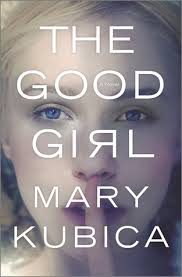
Books Read in 2014 – 45 The Good Girl – Mary Kubica (contains spoliers)

eclecticchallenge2014_300

Genre: Thriller, Romantic Suspense

Narrative Style: Different first person viewpoints, non-chronologicalgood girl

Rating: 2/5

Published: 2014

Format: Kindle

Reading challenges: Eclectic Reader Challenge

Published in 2014

Synopsis: Mia Dennett has disappeared. Her mother is convinced that she has been kidnapped although her husband thinks it is just Mia being Mia. Gabe Hoffman is the cop determined to find Mia and bring her home. However, the case will prove to be less simple than anyone could have imagined.

This was a very disappointing read. This book has been compared to Gone Girl and I now realise exactly how well put together that book was. Compared to this one anyway. I was expecting a thriller and for all Gone Girl’s faults, it certainly was that. This fizzled out pretty quickly. I have problems with romance at the best of times and this was not one of those.

The first problem was the different narratives. They all just seemed the same. Little attempt was made to differentiate the voices or give the characters any sorts of quirks. They were differentiated by their actions not by their voices. I didn’t believe in Colin the kidnapper from the very first and he grew more and more unconvincing as the book went on. Mia was similarly one-dimensional.

The second problem was that the twists and turns were too clearly signposted. Mia is rescued quite early on with severe amnesia and her mother’s description of her daughter’s behaviour and Colin’s narrative intertwine with non too subtle hints being given as to what the next big thing would be. The ending was no surprise and even a little disappointing.

Finally, I think that the balance could have been better between romance and suspense. It was apparent from the first that there was the possibility of romance between Gabe and Mia’s mother. This was just distracting. Furthermore, the romance that blossoms between Colin and Mia doesn’t ring true. There is little in the way of development, just straight from hate to love.

It was pleasing that Mia’s father gets his comeuppance as he was truly unpleasant and one of the few characters who didn’t seem wooden. That this was at the hands of the daughter that he despised was a neat form of justice but unfortunately just too obvious.