Books Read in 2014 – 16. Translated Accounts by James Kelman

Genre: Experimental, Dystopia

Narrative style: a variety of first person accounts from a number of unnamed people.

Rating 2/52014tbrbutton

Format: Paperback

Published: 2001

Synopsis: A series of nameless narrators tell of their life in what seems to be some sort of police state. There are rules and securty forces and the narrators seem concerned about conforming or otherwise. The accounts are supposed to have been translated from the original language by some Government authority and as a result they are somewhat alienating to read. 

Challenges: TBR Pile Challenge

Time on shelf: I bought this in about 2003, not long after I had finished my MPhil, in which I wrote about A Disaffection and How Late it was How Late both of which I really enjoyed. However, I felt the need to read less challenging books for a while after finishing my thesis so this got stuck on the shelf as I knew it was likely to be difficult. 

This was a real slog and it is a long time since I have felt so pleased to have finished a book. In fact, if not for the fact of reading it for the TBR Pile Challenge I might have abandoned it. I knew it wasn’t likely to be an easy read but I had no idea of the problems I was going to have with it.

There are a number of things that make this difficult to read. The first is download (4)that not only are none of the narrators named but neither are any of the characters. They are referred to as woman, wife, mother and so on. This means that there is no continuity and it is even more difficult to tell which narrator is which. It also means that no character stands out and so there is no one for the reader to attach themselves to or be concerned for.

There is very little detail about the society although you can glean that people are frightened and that they’re ruled by some all powerful higher authority but the rules are never really explained and as there is very little action the plot moves very slowly.

Finally, the language is disjointed and does sound a lot like it has been translated from another language. It is as if the fracturing of society has had a fracturing effect on the language of its people. Again, this makes it difficult to read.

I realise that what I’m viewing as problems might very well have been Kelman’s intentions and I understand the points he is trying to make about the way a police state would strip its members of individuality and make it difficult to discuss anything openly. It was an interesting experiment although ulitmately, I think, a failed one.

Books Read in 2014 – 13. The Sociopath Next Door – Martha Stout

Genre: Academic, Psychology
narrative style: first person, case studies and analysis
Rating:3/5
Format: Paperback
Published: 2005

Synopsis: Stout recounts examples of sociopathy from her practice as a psychologist and analyses what the origins of such behaviours are. 

This book was part research, part pleasure. I have always been fascinated by the psychopath or sociopath in fiction and film. As such, in my next book, I have a character who has some features of sociopathy and I have been reading around the subject for a while.

The book opens with a discussion of conscience and the way most of us react in circumstances when we might have to make a sacrifice in order to help others. This is called the seventh sense and according to Stout 96% of us have it. The other 4% are sociopaths. This seems quite a large amount. And it seems that most of us will have come across at least one in our lives. She then describes exactly what she means by living without conscience. This is by far the most interesting part of the book. Stout uses case studies to illustrate the symptoms of sociopathy and they are quite horrific to read. But also, I must admit, fascinating. Perhaps it is the thought of what it would be like to never feel any obligation towards another person – intriguing but almost impossible to imagine.
She also charts the origins of conscience in a few different ways – religious, evolutionary, psychologically – all of which are also interesting. Personally, I am most drawn to evolutionary theories – what’s good for the group is good for the species. After all, as Stout points out, if we all did exactly as we pleased, the whole species would very soon die out.
However, there are irritating things about this book. There is something deeply spiritual about Stout’s version of conscience which, as an atheist, I found quite hard to stomach. One of the later chapters is devoted to religious leaders who have suggested do into others as you would to yourself as a way of life. This is not really what I would have expected from a psychological all study. It all gets a bit subjective.
Stout seems to want to have her cake and eat it. She obviously feels that she can judge sociopaths lacking as they do not have the emotional connections that we good folk with consciences have. Which maybe true. But she also suggests that sociopathy is a mental illness and may be, at least partly, innate. If this is the case, the it is hardly fair to pass moral judgement.
Finally, there is a sense of either you are a sociopath or you are not. It is black or white. I would suggest that, as with most things to do with the mind, it is a lot more complicated than that.

Books read in 2014 – 12. Red Carpets and Other Banana Skins – Rupert Everett

Genre: Autobiography, film, glbt
narrative style: first person, mostly chronological
Rating: 4/5
Format: Paperback
Published: 2006

Synopsis: Everett recounts his life in film and theatre with amusing rupert everett_vividness. This takes the reader from the very beginning to the Hollywood years and beyond. Full of vignettes and asides about various stars and directors.

I’ve been a fan of Rupert Everett since I was a teenager and saw Another Country and Dance with a Stranger in close succession – both of which feature stunning performances from Everett. Even though his career has been patchy – to say the least – when he is good, he is very good. Of course, he is also intensely outspoken (as his recent comments about gay marriage show) and so it could be assumed that this would be an exciting read.

And so it was. Everett is a consummate story teller. His tales are full of vivid detail and are often at his own expense. He spares himself no humiliation in describing his own diva tendencies and ability to choose the wrong script. Where he is most amusing is in his descriptions of the stars that he met and worked with. (Who’d have thought that the cocky arrogance that led to Live Aid was due to Geldof literally having a big one.) There were a number of laugh out loud moments. This was delightfully camp and intelligently witty.

There are also a number of tender moments. Everett’s description of his relationship with Paula Yates, for example, was particularly poignant as was his description of a holiday with his ageing father. Everett certainly knows how to draw the reader in and there were times when this felt like an intimate chat with a good friend.

However, there is a limit. This is very much a Hollywood memoir and it is great as far as that goes. You are left with a feeling that there is more to Everett than this but you aren’t going to get to see it. And maybe that is fair enough. After all, we are only the audience and this is only one more great performance.


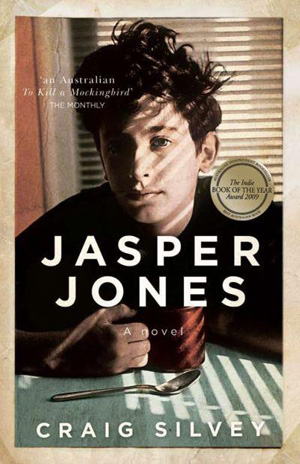
Books Read in 2014 – 10. Jasper Jones by Craig Silvey

Genre: Young Adult, Bildungsroman, Crime

Narrative Style: First person narrative, Straightforward chronological timeline

Rating 4/5jasper-jones-book-cover1

Format: Kindle

Published: 2009

Synopsis: Charlie Bucktin is both alarmed and gratified when Jasper Jones first knocks on his window. However, he soon wishes not to share Jasper’s secret and it weighs heavily on him over the summer. The sleepy town where he grew up, that seemed so safe becomes a place of secrets, violence and prejudice that he desperately wants to escape. 

This book had me from the first. Charlie’s excitement and worry is almost palpable when Jasper Jones, town outcast, first comes to his window to ask for help. Their journey to Jasper’s hideout is agonising. The suffocating weather doesn’t help. You can almost feel the heat. Of course, from the synopsis of the novel, you realise that Jasper has probably discovered a body so that wasn’t really a surprise but the boys decision to cut the body of Laura Wishart down and throw it into the river so that Jasper will not be blamed for her death is a little more shocking.

Events soon start to spiral. Charlie finds it hard to live with his knowledge and that contributes to his disintergrating relationship with his mother. He starts to fall in love with Laura’s sister which makes his secret knowledge all the more uncomfortable. Jasper’s decision to confront who he assumes is the killer reveals town secrets that go back decades. The seemingly innocent town reveals its darker side with a series of racial incidents.

Charlie was a lively and intelligent narrator who read as if his life depended on it. He describes life in the town vividly, as well as his own insecurities and worries. The novel is full of school boy humour through his conversations with his best friend. It was easy to read and compelling enough to want to read on. Jasper Jones, as the town outsider, blamed for everything, was full of pathos but never pathetic.

If I have any complaints, it would be that it was easy to see what the reveals were going to be. There were no surprises although the bad luck that might have saved Laura’s life was well plotted and interesting. Having said that, I always wanted to read on to see how Charlie and Jasper would react to the events as they unfolded.

The issues in this novel were skilfully handled. There was no preaching, just the sense of a young person trying to find their way in an increasingly difficult world.


Books read in 2014 – 9. The Eyre Affair by Jasper Fforde


2014tbrbuttoneclecticchallenge2014_300


Reading Challenges: Eclectic Reader Challenge 2014The TBR Challenge

Genre: Alternate History, Fantasy, Humour

Narrative Style: First person narrative, Straightforward chronological timeline

Rating 3/5
Format: Paperback
Published: 2001

Synopsis: Thursday Next is a literary detective. Her life suddenly becomes more exciting when Arch Villain Acheron Hades starts kidnapping literary characters. Never mind the fact that her personal life is in tatters as the man she loves is about to marry someone else. When Jane Eyre is kidnapped, Thursday must see if she can return her to the book without causing to much damage. 

Time on shelf: About four years. This series has been recommended to me by a couple of people whose views I trust but I’ve always been a little hesitant. 

Part of me thinks I should have loved this book. After all, it’s literary, it’s clever and in places it is very funny. But at the end I just felt like it could have been so much better. There are an awful lot of ideas in this book but not really enough plot and character to sustain them. Perhaps if Fforde had held some of them back, it would have been a bit more satisfying.

Part of the problem is the characters are little more than hangers for various jokes and stereotypes and I didn’t really relate to any of them. Acheron was quite good fun as a villain but even he was a little flat. And by then end of the novel, I was completely fed up with comedy names such as Paige Turner or Millon De Floss. Maybe it’s just me but I’ve always thought that this sort of thing is okay in moderation but very quickly grows tired. It certainly did here.

The best parts of the novel occur when Thursday is stuck in the book of Jane Eyre and she and Rochester conspire with the servants to ensure that Jane’s narrative is undisturbed. In this world, Jane does not end up with Rochester, at least not until there is an almighty fight between Thursday and Acheron and a fire ensues. I think you can see where this is going. Of course, everyone preferred this ending. And understandably so as the alternate ending was quite dreary.

After this, the narrative returns to Thursday’s love life. Despite being hostile to Landen Parke-Laine (Groan!) for a lot of the novel, she suddenly decides to stop him from marrying the wrong woman only to lose her nerve at the last minute. But it’s okay – the lawyers from Jane Eyre step in to accuse his bride of bigamy. I must admit, I found this part of the novel a bit tedious and not as funny or clever as Fforde probably hoped

Don’t get me wrong, this wasn’t a terrible book. It definitely had its moments, just not as many as I might have expected.

Books Read in 2014 5. Preludes and Nocturnes (The Sandman Vol. 1) – Neil Gaiman

eclecticchallenge2014_300Reading Challenges: Eclectic Reader Challenge 2014

Genre: Graphic Novel, Fantasy

Narrative Style: Mix of viewpoints. Generally linear.

Rating 4/5

Format: Paperback

Published: 1988

Synopsis: Crowley like magician, Burgess tries to summon Death, in order to live forever. Instead he gets Dream (or Morpheus or The Sandman). He keeps him prisoner and steals items from him. Eventually, those guarding Dream make the mistake of falling asleep and he escapes, aiming to wreak vengence on those who imprisoned him and to get back the things that belong to them.images

When this genre came up, I knew immediately that I would read one of The Sandman books. I had read a couple of the comic books a long time ago – from the middle of the series but the nature of these stories means they can be read out of sync. I thought it would be nice to see if they stood up to the test of time. I also knew that Gaiman’s subject matter would be pleasing to me and I hoped to enjoy this as much as other things that he has written. So I asked a friend who is a big fan to loan me the first book.

Preludes and Nocturnes was definitely a page turner. I read it quickly and not just because obviously the words per page are less than in a novel. I wanted to know about Dream’s revenge and how he would regain the tools of his trade. The action did not disappoint – from duels with demons in hell to the spectacular nightmares unleashed on the world by John Dee- and I was often surprised at the turn that events took. At the end of the book, I wanted to read on straightaway – which was okay because I have been loaned a copy of the next book as well. I have an awful feeling I’m going to end up buying the rest.

The character of Dream is not really what I would have expected from the character of The Sandman. my impressions of The Sandman before reading any of this series was much more whimsical. I’m sure I’m not alone in having quite a dreamy, sweet picture of the man who brings you dreams at night. Of course, this discounts the idea of nightmares completely. In fact, few dreams are ever straightforwardly lovely – at least in my experience. It makes sense then that Dream should be a harder, more difficult character. And he is one of the Endless along with Death and Desire and that gives him an isolation from the humans whose dreams he crafts. There is something attractive about Dream – perhaps this is as it should be – even though he is not a nice person if that is even an appropriate thing to say about an anthropomorphic personification.

The illustrations are amazing. Vivid and nightmarish, they make the story come alive for the reader. The use of colour is often jarring as if to ensure that this is recognised as being a fantasy world. They are the perfect way to capture the ideas in Gaiman’s imagination.

If there is anything to complain of here, for me, it is the fact that their is less work for my imagination to do. Imagine the prose that would describe some of these drawings. It would be truly amazing to read. That said, there is nothing intellectually lacking about these stories. They stand up to rigourous scrutiny along with the best of fiction. Much recommended.

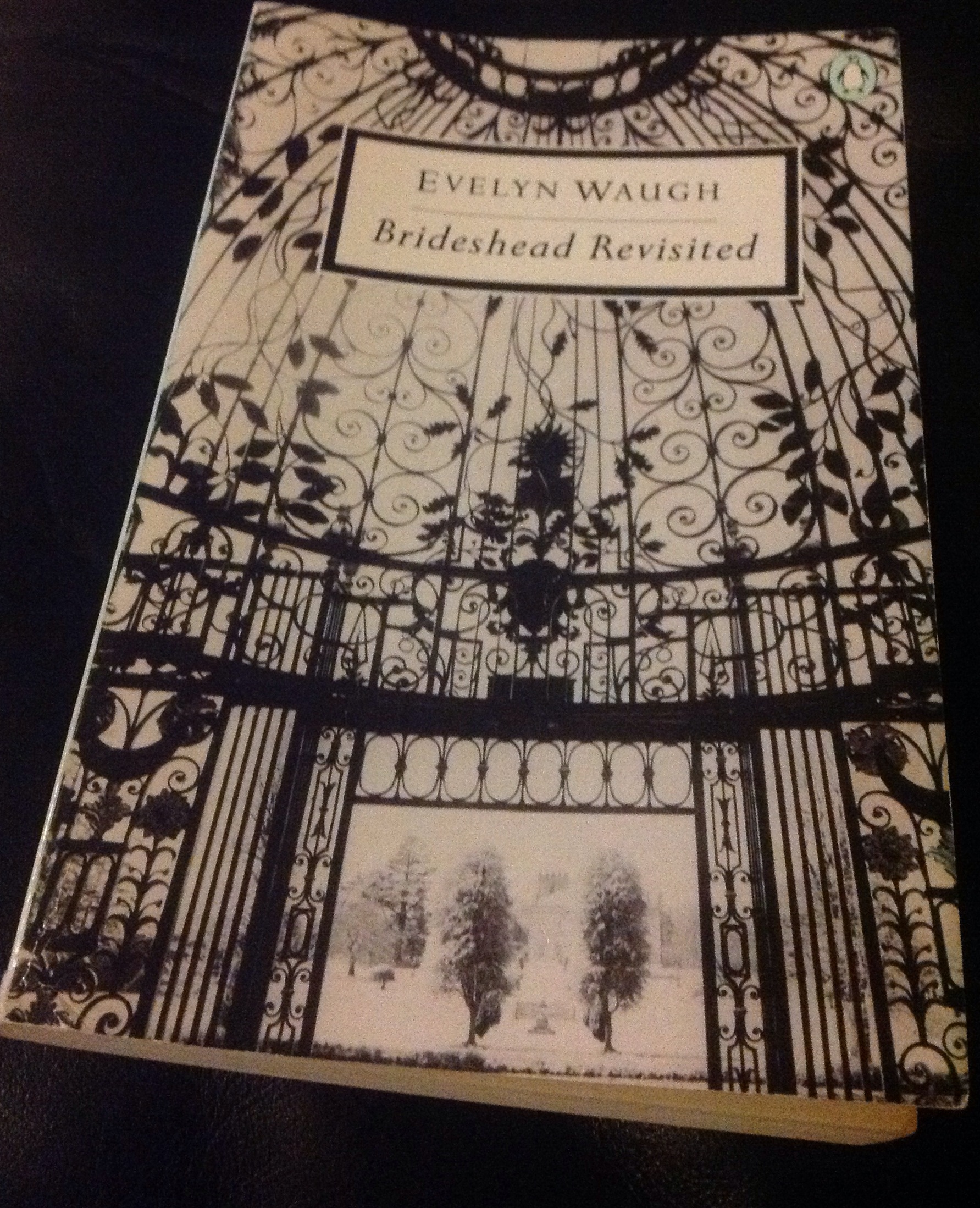
Books Read in 2014 4 – Brideshead Revisited – Evelyn Waugh

Reading Challenges : TBR Challenge2014tbrbutton

Genre: Classics, Family Drama

Narrative Style: First person narrator – Mostly told in flashback, framed by the present day in the prologue and epilogue.

Synposis: Charles Ryder falls in love with the beautiful Sebastian Flyte in his first year at university. He then comes to be fascinated by both his house and his family, eventually becoming involved with his beautiful but distant sister, Julia. photo (21)

Rating: 4/5

Format: Paperback

Published: 1944

Length of time on TBR pile: I have only had a physical copy of this book on my shelf for two years but it has been on the list of things that I feel I should have read by now and which I keep in my head since I finished university. 

I was vaguely aware of the story of this novel. I was too young in the eighties to see the BBC production of it although I did have a very clear image of Sebastian and his teddy bear. I thought I might find it a bit irritating, for a couple of reasons. It was about posh people and that always rubs me up the wrong way and I have a history of not liking books that are considered classics. (Just ask my father in law who thinks I am insane because I don’t like Tess of the D’urbervilles or Middlemarch.) However, in this case I was pleased to be proved wrong.

The early chapters, documenting Charles’ life at university are the most vivid and, in my opinion, contain the best prose. Sebastian is a fabulous character and I was as fascinated as Charles. In fact, I found his absence in the later chapters a little depressing and I longed for whatever news could be found of him, even though it was clearly never going to be good news. It may also be that the university experience was something I could relate to whereas the later chapters were further outside of my realm of experience.

This is a beautifully written novel, with sumptuous description and vivid emotion. In fact, this is much more a novel of feelings than events. Charles is an outsider and Brideshead and even when he is about to marry Julia, remains so. In this, he is the perfect narrator, charting for the reader, the tragedies of the family without really becoming involved with them.

There is a longing for times past in this novel. Not just from Charles who longs for something that the family, with their faith and their societal position, represent for him but on the part of Waugh too. This novel was published in 1945 and it must have seemed as though the world had fallen apart in the aftermath of the war. The need for a calmer, simpler time must have felt immense. Even the structure points towards this, with the prologue and epilogue set in the present of 1945 but the rest of the novel in the Arcadian past of the 1920s and 30s.

I found the ending a little disappointing because I felt sorry for Charles and I didn’t want it to be over. But there really wasn’t any more story to be told.

Books read in 2014 3. – Starter for Ten – David Nicholls

Reading Challenges: Eclectic Reader Challenge 2014eclecticchallenge2014_300

Genre: Romantic Comedy

Narrative Style: First Person Narrative, Chronological Timeline

Format: Kindle

Published: 2003

Synopsis: Working class boy, Brian Jackson goes away to university and makes an utter mess of it. 107896He enrolls for University Challenge in order to impress posh girl, Alice and spends the rest of the novel chasing after her hopelessly. He also finds time to annoy his childhood friends and just about anyone else who has the misfortune to bump into him.

Rating: 3/5

I thought I’d try to get this genre out of the way near the beginning as I have very little patience with the idea of romance even when joined with the more fun genre of comedy. I’d read One Day and The Understudy which were both okay so I thought I’d give Starter for Ten a go.

I thought that I might be able to identify with Brian Jackson, a working class boy going off to university albeit in the 80s and I went in the 90s, however he was very quickly unlikeable and annoying. Of course, Nicholls’ aim was undoubtedly to show a young man’s journey from annoying little boy to mature and sensible man but Brian never seems to learn any lessons and, indeed, at the end he is still making the same stupid mistakes.

While I understand that a working class boy at university might meet a lot of people who were posher than him, most of the characters in this book seem to be stereotypes of one type or another, none of which are very pleasant. This is also true of Jackson’s working class friends from home. I don’t know if Nicholls was trying to make a point about class difference but it was somewhat lost because none of these characters seemed like real people.

The romance with Alice is supposed to be amusing and Brian’s patheticness is a little funny, I guess but mostly I just wished he would wake up and realise that she was stringing him along. Alice is contrasted with Glaswegian socialist worker Rebecca who is angry and tough (Just another stereotype) and much more Brian’s type if only he could see it. I chose this book because I thought I’d find a romance with a male protagonist less annoying. It turns out that this was not true. Reading this reminded me of reading Bridget Jones’ Diary. I wanted to shake him just about all the way through.

The University Challenge storyline is more amusing and (unsurprisingly) I found all the angsty romance a little distracting at times. I do think that there are parts of this story that could have been developed and maybe then Brian’s character would have developed a bit more. Because he viewed Alice as some sort of unattainable beauty queen, as long as he is involved with her, he will always remain a boy.

The end of the book was not a surprise. I won’t spoil it but needless to say Brian has not learned his lesson. Even though he will be starting again at a new university, he has learned nothing and there is potential for the same mistakes being made.

Finally, all the way through this book, Nicholls makes reference to great works of literature – Tender is the Night, Brideshead Revisited, Great Expectations, to name but a few. If you are going to remind people of some of the best works in the English language, it might be a good idea to write a better book. All the many references made me think was, I wish I was reading that instead of this.

Books Read in 2014 – 2. Beautiful Losers – Leonard Cohen

Genre – Erotica, Experimental

Date of Publication – 1966

Narrative Style – stream of consciousness. Non-chronilogical

Format: Paperback

Published: 1966

Synopsis – A three part story about three friends / lovers – the first part is a first person narrative after the death of his wife and his lover, F, the second part is a letter from F to the first narrator and the third part is a thrid person summing up of their stories. 

Rating: 3/5 047533-fc222

I’m a big fan of Leonard Cohens music but I hadn’t read any of his fiction before this one so I was quite excited when I got Beautiful Losers for Christmas. Certainly, I wasn’t expecting to read something quite so erotic and quite so experimental.

One of the things that is immediately apparent about this book is that it is written by a poet. Quite often the language and the rhythm take precedence over meaning which leads to some beautiful imagery but like a lot of poetry, I didn’t always understand what was going on.

This is an intensely erotic book. Indeed, one of the original reviews called it ‘verbal masturbation and another suggested that it was the ‘most revolting book ever written in Canada’. There is more than one love triangle in this book as the three lovers experiment. However, it is never merely sex for the sake of it. Quite often it is described in an oblique way or involves body parts that aren’t necessarily thought of as erotic.

What I found more difficult to deal with were the long passages about the Catherine Tekakwitha and her religiosity. I didn’t find the historic information as interesting as the events in the present day, maybe because I have very little sense of religion myself. Also, I have a low tolerance of miracles and pilgrimages.

There seemed to be a preoccupation with ownership, with occupation of lands and with colonialism – the Indians by the Catholics, the French presence in Montreal, for example. I must admit to a lack of knowledge of the history of Canada but this book did make me think I might like to know more.

Finally, I found it a little unsatisfying. I was reminded of reading Joyce or Amis, maybe. Masters of language and they may be but they left me feeling a little lost and disappointed with myself. I don’t like to feel I may have missed the point.

Eclectic Reader Challenge – Published in 2013 – The Painted Girls – Cathy Marie Buchanan

I wasn’t really sure what to read for this category as, in terms of genre, it could be anything really. The last book I read for this category was Levels of Life by Julian Barnes so I knew I didn’t want it to be a memoir. I came across The Painted Girls on a Goodreads search and decided it was suitably different from everything else I had read for the Eclectic Reader Challenge.

download

It took me a while to read it, partly because it was the summer and I was not travelling to work every day, partly because it took me a while to get into it. The novel tells the story of the van Goethem girls in Belle Epoque Paris. Marie, the middle daughter, models for Degas’ Little Dancer Aged Fourteen in order to gain extra money for a family permanently poverty stricken, while also dancing and aiming for the stars. However, life is not ready to carry her in this direction.

There has been much praise for this novel and it does have some good features. I liked the interspersing of newspaper articles and scientific treaties with the girls’ narratives, along with reviews of the art shows where Little Dancer is shown. This helps to give a period feel and added to the oppressive atmosphere. Also, reference to the ‘science’ of physiognomy – whereby it was judged you could tell what a person was like from their features – that was popular at the time, adds to the narrative as Marie is fearful that her own features make her a potential criminal and helps to contribute to her downfall.

9781594486241_custom-5864569c19efa3014fe4122c5fd149e320b924c9-s6-c30

Less successful, I feel, were depictions of Antoinette’s relationship with Emile Abadie which end with her prostituting herself in order to raise money to follow him when he is shipped off to New Caledonia. Emile is a brute – and a bit of a characiture, if you ask me -and even after he has been implicated in two murders, Antoinette still protests his innocence and dreams of her perfect future. When she does eventually realise the truth, her change of heart was equally unconvincing. 

Some reviews of The Painted Girls on Amazon complained that it was too depressing. Now, I am ready to admit that I am a miserablist and quite enjoy reading things that are considered depressing. Life would have been tough for the sisters and with the mention of Zola and L’Assommoir, the reader is given a clue to the downward trajectory of the girls’ lives. However, Buchanan moves away from the naturalist aspirations of Zola. Marie wonders why the heroine of L’Assommoir is fated by her lowly beginnings and it seems to me that Buchanan wished to give the sisters a different fate. However, for me, the happy ending seems a little too pat, a little unlikely.

Maybe it is just my lack of romance. I know I would have been happier had the ending been less so. In the end, I found that the narrative highs and lows were equally unconvincing. Don’t get me wrong, I didn’t hate this book but I didn’t love it as much as I thought I would. The descriptions of the ballet and of Marie modelling for Degas show exactly how tough the ballet world was and are perhaps my favourite part of this novel. Unfortunately other events were neither as touching or as well-written.