Books Read in 2014 – 39. A Son Called Gabriel – Damian McNicholl

download (10)

Genre: GLBT, Irish Fiction

Narrative Style: First Person Narrative, Chronological

Rating: 5/5

Published: 2004
Format: Kindle

Synopsis: As if it wasn’t hard enough growing up Catholic in Northern Island in the 1970s, Gabriel starts to suspect that he isn’t like other boys. Add to this the pressure of getting into grammar school, a turbulent relationship with his father and the strange secret of Uncle Brendan’s leaving and you have a compelling tale of teenage confusions.

This grabbed me from the very start. Gabriel was a funny and honest narrator who details his life from his first day of school until he is ready for university. From the very first, Gabriel is sensitive and doesn’t like many of the things it is considered normal for boys to like. At school he is bullied, at home his father is always on his back about not being masculine enough. Added to this is the constant presence of the Catholic church and his mother’s horror of what the neighbours might say and you get some impression of the pressure that Gabriel is under.

The conflict between Gabriel’s growing knowledge of his homosexuality and the ideas of the Catholic church is sensitively handled. Gabriel tries desperately to pray his way out of homosexuality and his strategies for dealing with his feelings are both funny and painfully touching.

When Uncle Brendan’s secret was revealed I was surprised although the clues had actually been obvious enough. It was pleasing to have not spotted them though and to be surprised for once. The ending itself was ambiguous in as much that Gabriel tells his mother his homosexual phase is over. However, the reader suspects that this is wishful thinking on his part.

My only complaint about this book is that it had to end. I could happily have gone on reading about Gabriel’s university years. Very enjoyable.

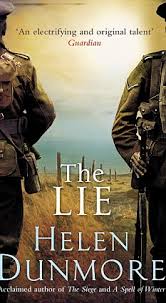
Books Read in 2014 – 38. The Lie by Helen Dunmore

download (9)

Genre: War, Historical Fiction
Narrative Style: First person narrative set in 1920 with flashbacks to the first world war.
Rating: 3/5
Publication: 2013
Format: Kindle
Synopsis: Daniel has survived the First World War and is now back in his hometown, homeless and without family. He is haunted by his experiences in the trenches and by the death of his best friend, Frederick as he tries to make a new life for himself.

I picked this to read because I enjoy reading about the First World War and because it had good reviews but I found that it paled compared to other fiction that I have read about this conflict. I found it neither as emotionally compelling as some (The Absolutist by John Boyne) or as interesting in terms of the themes treated here (Regeneration by Pat Barker, Birdsong by Sebastian Faulks).
The main reason for my discontent was that the plot seemed stretched, little more than a short story’s worth of content strained by its extension to a novel. Daniel is sympathetic and interesting but not a lot happens to him, even during his flashbacks so there is little to move the plot along.
Where Dunmore does succeed is in her descriptions – both of the Cornish coast and the life in the trenches. They are vivd and really give the reader a sense of Daniel’s isolation and horror. Also the descriptions of him re-working Mary Pascoe’s land are an interesting metaphor for his attempts at starting a new life whilst also constantly reminding him of the mud in the trenches.
I also liked the analysis of class and the differences between Daniel and his much richer friend, Frederick are apt and seem realistic. The differences between them become particularly apparent when they are both in the army but in completely different roles.
Unfortunately, this couldn’t make up for the lack of action and also the I found the ending unsatisfying and a little ridiculous.

Books Read in 2014 – 35. Plain Truth – Jodi Picoult

Genre: Chick Lit, Morality

Narrative Style: Third Person chapters alternating with first person

Rating 3/5

Format: Paperback

Published: 2000

Synopsis: A dead baby is found in a barn on an Amish farm. At first, none of the women will even admit to being pregnant. And then there is the mystery of how the baby died. Ellie Hathaway is the streetwise attorney who becomes far too involved in her client’s life. 

I picked this up because I wanted something that would be easy to read while I was marking exams, something that would help me switch off at the end of a day of reading accounts that can’t decide what tense to be in. I certainly didn’t want to be struggling through some heavy piece of literary fiction. This had belonged to my mother (for all you wondering why I would even have a Jodi Picout book on my shelves) and when she died at the start of the year, it made its way onto my shelf. I was also curious. A few years ago I was loaned Change of Heart by a Picoult nut and while I thought it was okay, I wasn’t overwhelmed. I wanted to give her another try.

I must admit that the storyline drew me in quite quickly. Once it became apparent that the eldest daughter of the household, Katie, was the baby’s mother and that she denied giving birth, never mind killing the baby, then my interest was piqued. Picoult had also clearly researched her subject matter thoroughly as the picture given of Amish life was full of detail and seemed (to me anyway) realistic. I was ready to say I was wrong and that this was a very good book.

However, as I read on, things started to jar for me. The first thing was the mention of the ghost of Katie’s little sister. Which was fine when it seemed it was a figment of Katie’s imagination but it soon became apparent that not only could other people see this ghost but Picoult herself seemed to believe in its existence. I find this sort of spirituality quite troubling and it didn’t seem to fit with Katie’s character at all. It did mean, however, that there could be an utterly sickeningly corny image at the end of the book which I personally found completely unnecessary.

Picoult described the Amish as a group of people that lived for the community and the good of the group and who frowned on individuality. And there are some obvious advantages to this way of thinking but also disadvantages. In the novel, two characters have been shunned and had to leave because of decisions that they made and this is given as a possible motivation for the murder of the baby – and indeed, in a round about way, it does have to do with the baby’s death. Some of the difficulties this leads to are described in the beginning. However, by the end of the novel, through the decisions that Katie makes, Picoult seems to be privileging this form of living, as Katie decides to return to the fold, rather than follow her own heart. It may be that I find it too hard to fit in with any groups to be able to understand this sort of thinking but it does seem that at the start of the novel, this way of thinking is criticized but by the end, it is seen as some sort of salvation.

This is also shown in the character development of Ellie which I also found a little unsatisfying. At the beginning, she was a hard bitten attorney who liked to win so much that she had just managed to get a sex offender, she knew was guilty, off scot free. She ends up living with Katie as part of her bail conditions and as a result, begins to understand the faults in her own character. While it is apparent that Ellie had faults to understand, it all seems very easy for her and, in my mind, she doesn’t struggle enough psychologically for her change for the better to ring true.

At the end of the day, I have given this 3/5 because I did want to keep reading and I did feel sympathy for Katie but ultimately it didn’t work for me.

Books Read in 2014 – 32. Bioethics: All That Matters – Donna Dickenson

Genre: Science, Academic

Narrative Style: Academicbioethics

Rating 3/5

Format: Paperback

Published: 2012

Synopsis: Dickenson tackles the main issues in the area of Bioethics such as the patenting of genes by big drug companies, the storage of placenta blood and the exploitation of vulnerable populations by big companies. 

I picked this book up for a number of reasons. First of all, it is an area that I find both interesting and concerning. I have half an idea for a dystopia which would look at some of these concerns so I thought I’d make a start on research. Finally, I thought it seemed like a good introduction to the area which I do not have a close knowledge of, being a arts graduate rather than a science one.

It was a good introduction, working through each issue clearly and in a straightforward manner so that I had no problems understanding it. The examples given were helpful in elucidating her points and it was clearly researched with a lot of follow up reading, web sites and articles which will be helpful to me as I further my research.

Dickenson clearly has a strong moral viewpoint with regard to what science should and shouldn’t be doing. And given some of the dark dealings she mentions in this book (testing vaccines cheaply in third world countries even though there is no intention to use the vaccine in that country, for example) it is unsurprising. A number of times I had to stop reading in order to vent some anger. (Luckily my husband barely even notices my rants, these days) There is no doubt that the pace of research has outpaced our moral reaction in terms of the law.

However, I did find Dickenson’s tone annoying at times. She had the moral highground and boy, did she like it up there. There was an ‘I’m right and anyone who doesn’t agree with me is not only wrong but an idiot’ feel about it, especially towards the end.

Still, I do feel that I learned a lot from reading it. It has given me food for thought and I will be reading more in this area in the future.


Books Read in 2014 26. A Dangerous Thing – Josh Lanyon

Genre: Crime, GLBT

Narrative Style: First person, chronological

Rating: 4/517608680

Format: Kindle

Published: 2002

Synopsis: Fed up with his in the closet, not even sure if he should call him a boyfriend and suffering from writer’s block, Adrien English takes off to his house in the country. On arrival, he almost runs over a dead body which has disappeared into the night by the time the local cops arrive. What has Adrien stumbled into this time.

I was looking forward to reading this as I enjoyed the first in the series and had been tempted to read it straightaway. (I was tempted at the end of this one to read the third straightaway but I am rationing myself because I really don’t want to come to the end of the series.) I wasn’t disappointed and if anything I enjoyed this one more perhaps because I had more invested in the main characters this time.

Lanyon is well aware of the cliches of detective stories and sends up some of the worse excesses of the genre. Adrien is given to ridiculous flights of fancy and always puts himself in danger which could seem cliched if it wasn’t done with such self-deprecating good humour. There are a suitable amount of red herrings to keep the reader guessing and Adrien himself changes his mind about the culprits quite regularly.

As well as the action, there is the romance between Adrien and his closeted policeman friend, Jake. This also was convincing in the details. Both Jake’s unease with his sexuality and Adrien’s frustration with it were well documented. When they eventually manage to get it together, it was well handled and very sexy. However, there is still the fact that Jake casually announced that he plans to get married to a women to keep the reader interested in what happens next between them.

Overall, it was a satisfying read with the answers to the mystery being not too obvious but not too obscure either. The romance was both touching and sexy and I will definitely be reading on.


Books Read in 2014 – 24. Rebecca by Daphne Du Maurier

Genre: Gothic, Suspenseeclecticchallenge2014_300

Narrative style:  First person narration, told from a point in the future. 

Rating: 3/5

Format: Hardback

Published: 1938

Synopsis: An unnamed narrator relates her dream of Manderley and describes how she and her husband Max de Winter can never return to Mandeley. She then relates her story, beginning with her first meeting with her future husband and then their subsequent marriage and return to Manderley where she is haunted by the presence of de Winter’s first wife, Rebecca.

Reading Challenges: Eclectic Reader Challenge 2014: Gothic genre.

Sometimes it is good to have no knowledge of a book. I was keen to rebecca11read this as I am a big fan of the film version which is tense and suspenseful. But I felt the knowledge of the film hampered me when I was reading this and made me impatient.

The nameless narrator – called only Mrs de Winter or the second Mrs de Winter – was an odd character who I could feel very little sympathy for. It was not apparent why Max de Winter might have found her attractive. She was insipid, childish and often lost inside her own head, unable to control her jealous imaginings. I know that some of my impatience with her was to do with my knowledge of the narrative and I felt she should have spotted more signs of future events. When she eventually discovers the truth about Rebecca’s demise, all she can think is that Max had never loved Rebecca and she immediately forgives him.

I often struggle with classics perhaps because I am more used to reading modern fiction. I felt that this took too long to get truly started. Perhaps if the narrator had been more interesting to me I would have found it easier to get to grips with.The pace did eventually pick up and the ending was suspenseful and packed with action. The ending was satisfying and I wished the rest of the book had been as tense.

The one success was the character of Mrs Danvers who is just as sinister in the novel as she was in the film. She was easy to picture in her black uniform, with her skull like appearance, ruling Manderley and yearning for the first Mrs de Winter. However, a lot of the other characters seemed more like types than real people.

Part of me wishes I could have removed the knowledge of the film from my mind and read this fresh. It’s hard to know how much more I might have liked it. I’m not sure that I could ever have taken to the second Mrs de Winter though.

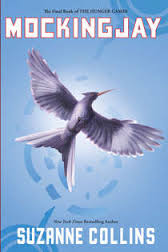
Books Read in 2014 – 23. Mockingjay by Suzanne Collins (Contains Spoilers.)

Genre: Dystopia, Young Adult

Narrative Style: First person narrative, chronologicaldownload (6)

Rating: 2.5/5

Format: Kindle

Published: 2010

Synopsis: Having been pulled from the arena at the end of Catching Fire, Katniss finds herself in the hands of the rebels. She is reluctant to accept the role of Mockingjay but does so when she realises what the Capitol has done to Peeta. The battle for supremacy between the rebels and the Capitol begins in earnest.

This is definitely the weakest book of the trilogy. I was keen to read on at the end of Catching Fire. It wasn’t obvious what would happen to Katniss and I dived in straightaway. It wasn’t long before I felt disappointed though.

There were a number of reasons for this. First of all, Katniss is whinier than ever, determined to take the blame for everything and reluctant to accept her new role. I found her even more irritating than usual. She is naive in her views and the reader is probably supposed to find this innocently refreshing but to me it just seems unrealistic. Gale is much more pragmatic but no less annoying as he seems more a rebel mouthpiece than a real character. The transformation of Peeta to a tool of the Capitol didn’t convince either. He moved between good Peeta and evil Peeta at the mercy of the plot with little thought for his actual character. I didn’t believe in either role. Especially as it started to be apparent that he and Katniss would end up together. There was no tension as to whether his good side would return.

A bigger problem is that of the action, a lot of which happens away from Katniss. The reader is then given a couple of paragraphs about what has happened. (This will be solved in the film, I guess where they will be more able to use multiple viewpoints.) This is particularly troublesome after Katniss shoots Coin and there is a trial happening while Katniss is singing to herself in her cell. But it’s okay because she is found innocent and allowed to go home. Very unsatisfactory.

The ending was equally unsatisfactory. (In fact, about halfway through I realised that there was no way this could end in a way that would please me. I’m glad that Katniss didn’t end up with Gale but the idea that she was able to have a family with Peeta was just as problematic to me.) The epilogue was mawkish and sickening. I felt the same at the end of the last Harry Potter. I’m not sure why it is felt to be necessary. It wasn’t a fairy tale so why end with a happily ever after?

To end on a more positive note, there are some interesting ideas in this novel – the use of propaganda, the nature of warfare, the way power corrupts, for example – I just wish that they had been played out in a different way.


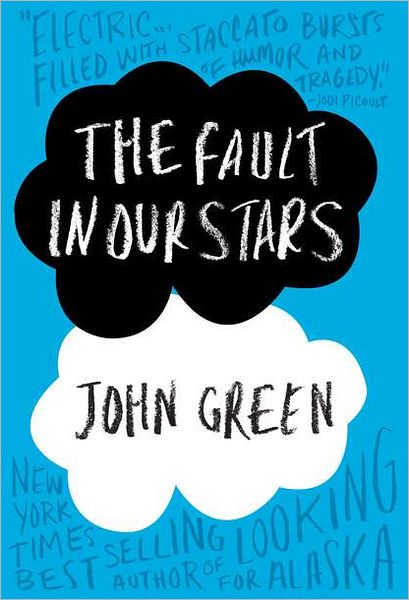
Books Read in 2014 – 21. The Fault in our Stars – John Green

Genre: Young Adult, Illness. Romance

Narrative Style: First Person Narrative, Chronological Timeline The_Fault_in_Our_Stars

Rating: 4/5

Format: Paperback

Published: 2012

Synopsis: Hazel has cancer and even though she is taking a drug to shrink her tumours, her prognosis is still terminal. At a cancer support group, she meets Augustus, seemingly recovered from his cancer, and discovers what life is all about.  

This is an excellent book for debunking myths and showing exactly how difficult it is for teenagers with cancer. It is funny and lively as well as being devastatingly sad. From the moment that Hazel meets Augustus, there is a sense that this cannot end well. (Otherwise what sense in telling the story.) There was always a sense of grabbing happiness while you can and one of the lessons Hazel learns is that you cannot stop people from loving you just so they don’t get hurt and equally you cannot stop yourself from doing the same.

I was impressed with the gallows humour in this book and it always felt right and didn’t step over the mark at all. I was a little wary of reading it, thinking that it might be too upsetting but in fact I found I laughed more than anything. There was one point towards the end when it is obvious what is going to happen and I put the book down, thinking I might not pick it up again. But I did and it was painful but not impossible to read.

One of the reasons I didn’t find it more upsetting, I think, is that it never stopped feeling like a book. The characters were well written and the plot moved well and wasn’t cliched but I never really suspended my disbelief. In the book, Augustus is obsessed with the metaphoric resonance of everything he does and the story often seemed symbolic rather than real as if everything was imbued with too much meaning.

Still, undoubtedly an important book about the importance of living even when you are dying.


Books Read in 2014 – 20. Dissolution by C. J. Sansom

Genre: Historical Fiction, Detective Fiction

Narrative Style: First person recount, largely chronological

Rating: 4/5

Format: Kindle

Published: 2003

Synopsis: Matthew Shardlake is commissioner to Cromwell during the dissolution of the monasteries. He is sent by Cromwell to investigate the death of a previous commissioner at a monastery in Scarnsea. When he arrives it seems that quite a number of monks are potentially guilty and Shardlake has to walk a difficult path to get to the truth. 51xcXRFlN0L

Tudor history is one of my favourite eras to read about and I love a good detective story so this seemed to tick all the boxes. The fact that it was set in a monastery and all the monks had some sin that they are trying to keep secret only added to the fun.

When Shardlake is first sent to Scarnsea and we are introduced to the potential murderers, it seems that any number of people could have murdered the previous commissioner. Clues and red herrings rain down through the plot with an astonishing quickness and Shardlake is quickly out of his depth. When the bodies start to pile up and he starts to feel pressured, he begins to make dubious decisions and mistakes.

The historical detail seems note perfect and I particularly enjoyed the various descriptions of Cromwell. The battle between traditional and new religion is well described and Shardlake is as uncompromising in his views about the new ways as the traditionalists were about theirs. Ultimately (like In The Name of the Rose) this is a story about knowledge and power and who should be allowed to have it.

I did find Shardlake to be an irritating narrator. I’m sure this was intentional but his peevish voice started to grate by the time I got to the end. This, and the fact that I worked out who the murderers were (although not why) before the end, were the reasons for this not being a 5/5 read. Other than that, it was a very enjoyable mixture of historical fact, political intrigue and detective story.


Books Read in 2014 – 17. All the Flowers in Shanghai – Duncan Jepson

Genre: Historical Fiction

Narrative Style: A chronological first person account in the style of a memoir written for her children

Rating: 3/5

Format: Kindle

Published: 2011

Synopsis: The story of Feng, a young Chinese woman who suddenly has to download (5)replace her elder sister in an arranged marriage. The novel begins in the 1930s and moves through to the Cultural Revolution showing the effect on Feng and her family.

This was quite an easy read – straightforwardly chronological and with easy to follow prose. The pace was good and there was enough interest to keep the reader going. At first, it was difficult to pinpoint why I didn’t like it more.

I think my main problem was with the character of Feng. At the beginning of the novel, she is a sweet girl left to her own devices because it is her elder sister who will make the important arranged marriage. She spends most of her time in the gardens with her precious grandfather learning the names of the flowers and trees in Latin. However, when her sister dies, she is forced by tradition to take her place.

She has no idea what lies ahead. Even after the wedding, she still seems like an innocent abroad, lost in among the plots and petty problems of a large family.

However, when she becomes pregnant, she changes. She makes the decision to send the child away if it is a girl and she becomes hardened. While it is likely that she would grow up a bit, this change in personality does not quite ring true. Later still, she runs away from her home, ashamed by how she has behaves and this too seems unconvincing.

Finally, she is able to contact her long lost children with what is, in my mind, a pretty weak plot device. The happy ending that this dreates is, to my mind, a little forced as the other changes had been. It isn’t that Feng’s voice is unconvincing particularly but that she is used by the plot regardless of whether the behaviour fits in with her personality.

At the beginning of the novel, I was a little lost as to when it was set. It wasn’t obvious and I suppose that this is because Feng was sheltered from the real world by her wealth. The end section is much more successful and the way that China was scarred by the Cultural Revolution is well documented. In fact, the way that Feng is constantly ruled by forces out of her  control shows the problems with both the old and the new regime.