Books Read in 2022 – 30. The Princess Bride – William Goldman

Genre: fantasy, children’s literature, adventure

Narrative Style: Third person, chronological with interruptions from the author.

Published: 1973

Rating: 3/5

Synopsis: This is the story of Buttercup, the most beautiful girl in the world and the ups and downs of her romance with Westley. It is also the story of Goldman abridging the tale (written by S. Morgenstern) he heard his father tell him as a boy. This leads to intrusions and asides from the author.

Time on shelf: A couple of years. I haven’t seen the film but a few of my friends really like it so I thought I’d read the book first.

Reading Challenges: TBR Reading Challenge 2022

This was a lot stranger than I thought it was going to be. I was expecting a straightforward adventure romp – and, of course, it is a romp, – but it is anything but straightforward. Goldman claims that the he didn’t write the book but is merely abridging it so that it is as good as when his father read it to him when he was a boy. He is keen to make sure we skip the boring bits.

I really enjoyed aspects of this book. I loved Inigo’s storyline and character. He was definitely my favourite and his sword fight with the man in black was one of the best moments of the book. I also enjoyed Fezzik’s rhyming and the way it was used throughout the narrative. There were some real moments of magic.

Unfortunately, they couldn’t quite overcome my irritation. Westley and Buttercup annoyed me no end. Especially Buttercup. The interruptions of the ‘author’s voice’ broke up the narrative in a way I found irritating. Finally, the ending left me feeling non-plussed. Overall, it was a very odd reading experience.

That said, I can see that this would make a great film so I will definitely be making an effort to see it in the future,

TBR Challenge – Books Read in 2022 – 27. Have You Eaten Grandma? – Gyles Brandreth

Genre: grammar, the English language

Narrative Style: first person, informal

Published: 2018

Rating: 4/5

Format: Hardback

Synopsis: Gyles Brandreth does not like grammar and punctuation mistakes. In this book, he takes on the linguistic horrors of our times. He explains, offers advice and discusses the importance of language and using it well.

Reading Challenges: TBR Challenge 2022

Time on Shelf: I bought this in 2018, not long after it came out.

I love a book about grammar and language usage. It really brings out the English teacher in me. I like the preciseness of it, discussing exact usage and reminding myself of the rules.

Of course, this being Brandreth, this isn’t just a user’s guide to the English language, it’s packed with little asides and amusing anecdotes – all told in his trademark style. This is not a dry language guide. When he is talking about colons, he compares them to binoculars because the colon helps you look ahead. This is a very straightforward way of explaining the colon’s usage. Much easier than a technical explanation.

There is a lot of silliness and some name-dropping, of course. He mentions that the Queen’s comfort breaks are scheduled as ‘opportunity to tidy’ which is quite marvellous. He is also surprisingly modern. For all his Conservative MP status, he is not a stick in the mud language must not change type. He seems to find some joy in online abbreviations and encourages people to look to rappers as well as Jane Austen.

I really enjoyed this book but it’s appeal is probably a bit niche. For all its humour, I imagine most people don’t give much thought to misplaced apostrophes or to why ‘Can I get’ is so annoying and so would probably balk at reading an entire book of grammar advice. Given the amount of badly written PowerPoints I have to sit through in meetings and training, this seems a shame.

Books Read in 2022 – 21. Girl, Woman, Other – Bernardine Evaristo

Genre: LGBT, Feminism, Race

Narrative Style: Third person from the perspective of 12 different, interconnected characters

Rating: 4/5

Published: 2019

Format: Kindle

Synopsis: Girl, Woman, Other describes the lives of 12 women, all of whom are linked in someway to Amma, a theatre director whose play ‘The Last Amazon of Dahomie’ is premiering at the National Theatre.

Time on shelf: I bought this not long after it won the Booker Prize.

At first, I wasn’t sure if I was going to like this book. Amma, the first character we meet, is quite politically driven and I was worried that the polemic might overrule the charactersiation. However, overall, this is not the case. Evaristo gives different political points of view, for a start, and her characters are all more than just their views and opinions.

I also wasn’t sure if I would get used to the style with its lack of punctuation but actually I got used to the free flowing poetic prose very quickly and it definitely suited the voices and lives that Evaristo has chosen to show us. It was easy to read whilst also being emotional and affecting.

The range of characters is interesting and shows the depth and range of black women’s lives. For example, after Amma, we meet her daughter, Yazz and her university friends. We meet Carole who abandons her cultural identity to become a successful business woman, her mother, Bummi and her teacher, Shirley, as well as another teacher in the school, Penelope who is raised white by her adoptive parents. The stories stretch across the centuries and continents.

I did find it a bit dizzying at times, remembering how everyone related to each other. Also, inevitably there were some characters I would have liked to have known for longer. You would read one character, start to get used to their foibles and idiosyncrasies and it would be on to the the next one. Similar to reading Tales of the City, there were times when I wished there were fewer people to deal with.

Despite that, this is a very good read. There were moments when I felt the politics were more polemic but they were few and far between. Sometimes the characters – particularly the men- felt a little stereotypical but for the most part, I was involved and I was keen to read on. Would definitely recommend.

TBR Challenge 2022 – Books Read in 2002 – 20. More Tales of the City – Armistead Maupin

Genre: LGBT, Humour

Narrative Style: Third person from a number of different viewpoints.

Rating: 4/5

Published: 1978

Format: Paperback

Synopsis: The further adventures of Michael Tolliver, Mona Ramsey, Mary Ann Singleton and Anna Madrigal.

Book challenge: TBR Challenge 2022

Time on shelf: I’m not actually sure where this book came from – I don’t remember buying it – but it has been on the shelf for about 6 years.

I was pleased that I reread the first book before reading this as there are a lot of strands that carry on in this book and I definitely wouldn’t have remembered them otherwise. I was keen to read on and I have to say I was not disappointed.

I don’t know if I was just used to the style but I enjoyed this more than the first book. The characters felt more developed (which may just be because it takes a while to develop a character when you are writing such short chapters) and the various strands felt more interconnected. Even Mary Ann stopped annoying me as much.

Maupin is a master of plotting – dropping hints and clues to future events, keeping the reader on tenterhooks. That, along with the short chapters, kept me reading. In fact, a couple of times I almost made myself late by work by reading just another chapter before I left the house.

There are many things going on in this novel – romance, suspense, family reunions, illness, sex – but it never feels cluttered or clumsy. This may be because the landscape expands with Michael and Mary Ann on a cruise and Mona discovering new family in a desert whorehouse. The novel ends with revelations but with plenty of reasons to carry on reading the series which I’m quite keen to do.

Books Read in 2022: 19. House of Glass: The Story and Secrets of a Twentieth Century Jewish Family.

Narrative Style: First person

Genre: Memoir, Biography, History

Rating: 5/5

Published: 2020

Format: Kindle

Synopsis: Long after Hadley Freeman’s grandmother, Sara, died, Freeman found a box of keepsakes and photos tucked away in her grandmother’s closet. The discovery led to Freeman on a quest to discover exactly what happened to her family during the war, something which her family did not talk about.

Time on shelf: Not long. I’m a big fan of Hadley Freeman’s column in The Guardian and I often agree with her opinions so I was looking forward to reading this and finding out more about the Jewish experience during the war.

Freeman begins this memoir with the moment she found her grandmother’s box of keepsakes. She then describes the road that led her to look in her grandmother’s closet in the first place. This road starts with the description of a holiday to France to meet some of her father’s family as a five year old. Freeman was nervous of her paternal grandparents who always seemed to be bickering and she found her grandmother difficult as she always seemed so sad. She had similar difficulties with the old people she met on the holiday in France. Only two of them could speak English and Freeman felt too shy to speak to any of them. She was initially pleased when she saw her grandmother but she kept herself apart from her siblings, crying quietly to herself. Growing up, Freeman had no idea what might be causing her Grandmother’s depression and her parents didn’t explain. As a result, Freeman never became really close to her grandmother and had little information about her and her siblings. Even so, she decided that she wanted to try and write about her grandmother which is what led her to her grandmother’s closet.

Freeman begins the story of the Glass – then Glahs – family in the early 1900s in Chrzanow, an Eastern European Shtetl where Sara was born Sala, along with her siblings, Alex (born Sender), Henri (Jehuda) and Jacques (Jakob). No one talked about their childhood and Freeman turned to historical documents to try and find out some details about their lives. Lucky for Freeman, her Uncle Rich found a memoir written by Alex. He describes a hard early life. The family were poor and their father had very little luck with employment and health. Then came bigger problems as the Polish started to reject the Jewish people within their country and the Glahs family changed their surname to Glass, the first of many changes they would have to make in order to survive.

Freeman follows the siblings when they escape Poland to France, changing their first names now to sound more French. Each tried, with varying levels of success to make a new life for themselves. Sara suffered from ill health and spent time in a sanatorium but despite this she loved living in Paris, having a great interest in fashion and art. She would always keep this love of French style and Freeman mentions that she always seemed completely French rather than Polish. Unfortunately for her, she was not able to stay in the country she so loved.

I was aware of anti-Semitism in Poland and whilst the Glass family’s experiences there were upsetting, they were unsurprising. I had very little knowledge of life in Vichy France and the consequences for France’s Jewish population and was shocked by the lengths that the Vichy government went to, going further than the Nazis commanded them to. The Glass family loved France and were quite settled by the time that the Nazis invaded and the government started to remove their Jewish citizens. It is hard to imagine what it would feel like when the country you had adopted as your home and which had accepted you suddenly turned on them in such a horrible way. They had already been through the Pogroms in Poland and now here they were again, facing the same horrible problem.

They react in a variety of ways. In fact, Freeman suggests that between them, they represented the various paths that European Jews took during this time. Sara is forced to marry an American that she does not love and who takes her to the States where she will be safe. Jacques refused to believe that his adopted country would hurt him, registered as Jewish and consequently was taken to a concentration camp. By contrast, Henri assimilated and managed to survive the war in Paris. Finally, Alex was likely involved in the resistance and was able to survive due to his pragmatic nature.

They are vividly painted before, during and after the war. I quickly became attached to each of them – heartbroken when Jacques and his wife died in a concentration camp and when Sara is forced to leave the love of her life in France when she goes to America; hopeful and then relieved when Alex and Henri survive the war. Freeman doesn’t stop with the end of the war but carries on their stories until their deaths later in the century. This made it a more hopeful narrative and one that gave more than one version of the Jewish experience. I couldn’t put it down.

Books Read in 2022 – 18. Tales of the City – Armistead Maupin

Genre: LGBT, Humour

Narrative Style: Short, third person vignettes from multiple points of view

Rating: 4/5

Published: 1978

Format: Paperback

Synopsis: Mary Ann Singleton has just moved to San Francisco. She is naïve, fresh out of Cleveland when she moves into 28 Barbary Lane run by eccentric landlady, Anna Madrigal. She soon becomes friends with other tenants, Mona, Brian and Michael.

Time on Shelf: I bought this while I was at university so 25+ years ago. I read it not longer after buying it. I decided to re-read it as I’m reading More Tales of the City for the TBR Challenge and I couldn’t remember much about it.

This was a lot more enjoyable than I remembered. Although I didn’t really remember the content, I did remember that I’d been a little disappointed when I read it – disappointed enough to not carry on reading the series, anyway. Probably because I read it on the back of Holleran’s Dancer from the Dance and Bartlett’s Ready to Catch Him Should He Fall and was perhaps expecting something similar. Maupin’s novel is something different. For a start, it isn’t an exclusively gay tale. Maupin’s characters are gay, straight and trans although in the first novel, it seems that the straight characters get more page time than the others. Of course, I didn’t realise that Maupin’s novel had been serialised in the San Francisco Chronicle and Maupin felt that he couldn’t incorporate gay characters until the column had a solid following. One of his editors kept a character chart to ensure that the gay characters didn’t get more page time than the hetero ones. That would explain why the main gay character, Michael is such a fleeting presence in the first novel, compared to Mary Ann, for example.

This was a source of disappointment on first reading. However, I must say that I felt differently this time round and it was good to read a novel where the straight and gay characters live together in perfect harmony. Any prejudice tends to come from outside of their community.

I admit, I found Mary Ann a little annoying on both times of reading. She is uptight and prudish, She claims to want a new start in San Francisco but finds it impossible to let go and completely relax. It is hard to understand why Michael is so keen to be her friend. I did enjoy Michael’s romance with the handsome gynecologist, Jon who he wishes to settle down with. I was sad when it finished when Jon sees Michael in an underwear dance contest.

At the end, I felt glad that I had already planned to read on. I felt that there was more to be learned about the characters and that their tales were not over. Maupin sows the seeds of a lot of stories that have yet to flower. I’m looking forward to the next instalment.

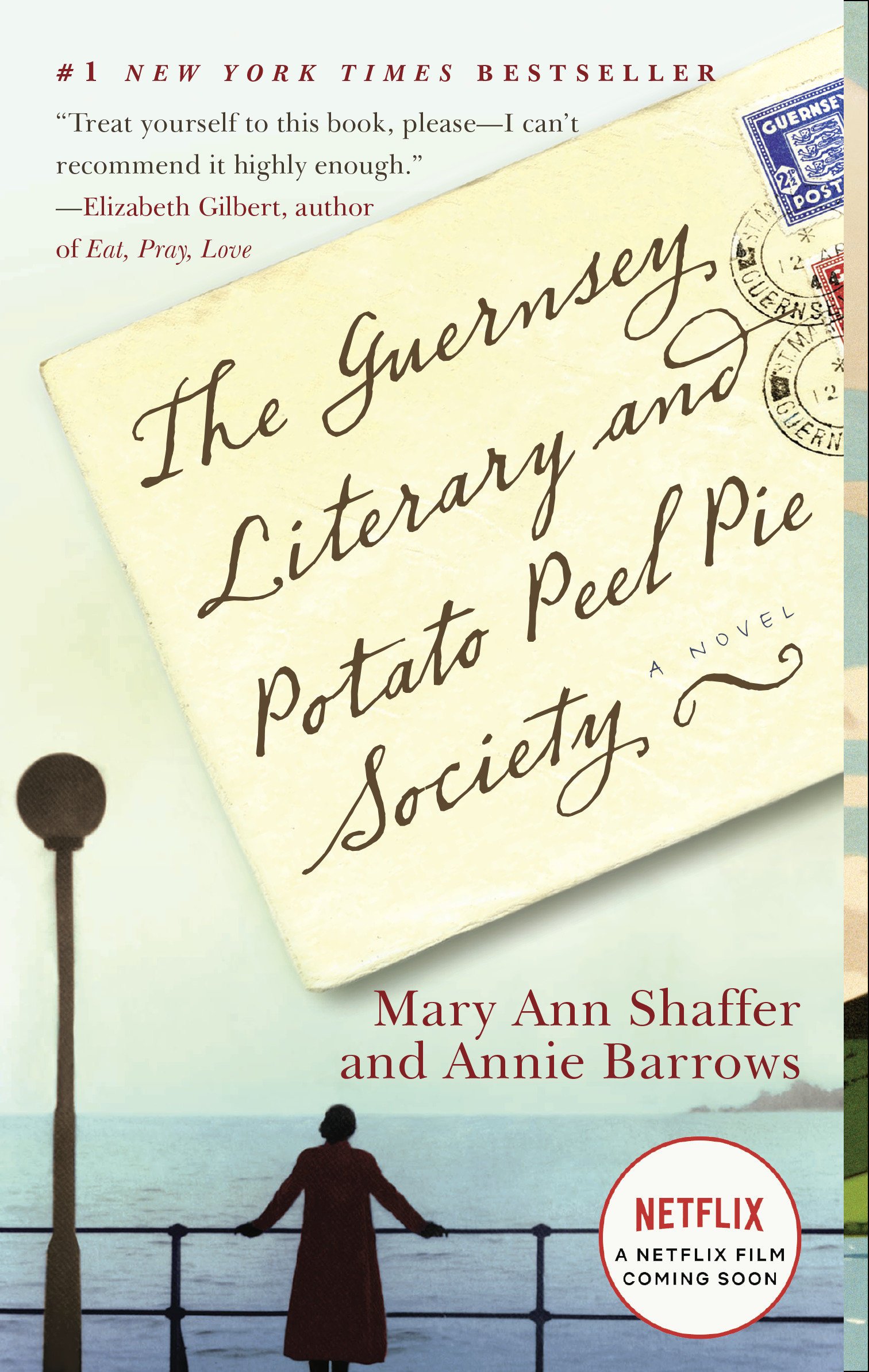
Books Read in 2022 – 17. The Guernsey Literary and Potato Peel Society – Mary Ann Shaffer and Annie Barrows.

Genre: Epistolary, War

Narrative Style: A series of letters between a number of characters.

Rating: 1/5

Published: 2008

Format: Kindle

Synopsis: It is just after the second world war and Juliet Ashton is looking for her next writing project. When she gets a letter from a man she has never met who has found her name in a second hand book, she has no idea of the journey – both personal and professional – she will be taken on when she starts to correspond with him.

Time on shelf: A couple of years. I certainly had the book already when I watched the film during lockdown. I quite enjoyed the film. Having read the book, all I can say is well done to whoever managed to pull that film out of this book.

As ever, I find myself out of step with public opinion on this one. People seem to love this book but I had a real struggle to finish it. It’s a shame because there was some definite historical interest there and some of the stories told by the various people who Juliet corresponds with give a good impression of what life was like for the people of Guernsey under the Nazis.

This is not enough to save it. I quite like an epistolary novel but there a couple of problems with this one that could have been avoided if the author had chosen to tell the story in a different way. The first is that there are a lot of different correspondents here. After her initial contact with Dawsey Adams, she asks that others write to her about the Guernsey Literary and Potato Peel Society and there are then multiple strands of conversation going on. This brings about the second problem. For all their differences in class, gender, education and occupation, all of the voices sound the same. And despite the fact that they barely know Juliet, they are all more than happy telling her all the intimate details of their wartime lives.

There is only one correspondent that does not like Juliet – Adelaide Addison – and she is a ridiculously over the top villain who polices the morals of the islanders. It was hard to take her seriously as she was more stereotype than fully realised character. She is not the only one. Markham V. Reynolds, Juliet’s suitor, is also underdeveloped. He is a brash, rich, won’t take no for an answer American. Juliet has to turn down two proposals before he gets the message.

I would have liked to have more detail about some of the events but due to the sheer number of correspondents, things were often glossed over. By the end, the tales of war had been usurped by a ridiculous subplot about some letters that Isola Pribby has stored in a biscuit tin which it turns out were written by Oscar Wilde which are then almost stolen by a rival publisher.

I was pleased to get to the end of this. I found the format annoying and Juliet incredibly irritating. It’s not often I say this but in this case, the film was infinitely better.

TBR Challenge – Books Read in 2022 – 16. The Long Call – Ann Cleeves

Genre: Detective, LGBT

Narrative Style: Third person from a number of viewpoints

Rating: 3/5

Published: 2019

Format: Paperback

Synopsis: Detective Matthew Venn has built a successful career for himself. He is happily married and starting to be more comfortable with his sexuality. He was brought up in a religious cult that did not approve of his sexuality so he has nothing to do with them. When first, his father dies and later, a case takes him back into the evangelical community, he has to face his mother and his past again.

Time on shelf: I bought this not long after it came out but didn’t get round to reading it. Then I accidentally watched the TV series. I usually like to read the book first so I wanted to leave the book until the TV series wasn’t fresh in my mind.

Reading challenges: TBR Challenge

The Long Call is the start of a new series. I had really enjoyed Cleeves’ Shetland series so I was hoping that this might be the start of a long relationship with Matthew Venn and his colleagues. However, although I enjoyed the plot, I found a lot of the characters a bit flat.

Matthew himself is quite well drawn. He is angry and finds personal relationships difficult. He is less gregarious than his husband, Jonathan and keeps himself to himself. When a man with an albatross on his neck is found dead on the beach, Matthew finds himself at the centre of his first murder case. It was easy empathise with Matthew when he finds the case takes him back into his past and he has to meet with his mother and Dennis, a pastor in the church. It is clear that he finds this difficult and he is often filled with self doubt.

However, I didn’t find the rest of the characters so convincing. DI Jen Raffety was a single mother with an abusive husband in her past who doesn’t trust her colleague, Ross who is arrogant and ambitious. There is Gaby, an artist who is full of secrets and Caroline, religious and rich with a father who feels he has a lot to make up for. They aren’t anymore fleshed out than this. The same goes for members of the church like Dennis and Matthew’s mother.

The plot is more interesting and I did think it was a shame that I had watched it already because Cleeves does set each discovery up well. I don’t think I would have been able to work it out if I hadn’t been able to remember the TV programme. Cleeves touches on domestic abuse, sexual abuse of vulnerable women and the way those in power cover things up whilst also focusing on Matthew’s difficulties in coming to terms with his past. All of which was interesting and compelling.

I’m not sure whether I will read the next books in this series. Whilst I did like Matthew and would be interested in his future, the rest of the characters didn’t appeal at all and I didn’t enjoy the location as much as in the Shetland books but I would consider it.

Top Ten Tuesday – Books I love that were written more than ten years ago

Top Ten Tuesday was created by The Broke and the Bookish in June of 2010 and was moved to That Artsy Reader Girl in January of 2018. It was born of a love of lists, a love of books, and a desire to bring bookish friends together.

This week, the topic is Books I love were written more than ten years ago. As I read more older books than recent ones, this was not a difficult list to write. These are my most recent 5 star reads on Goodreads that are older than 10 years.

  1. The Hand That First Held Mine – Maggie O’Farrell (2009)
  2. The Collector – John Fowles (1963)
  3. Anansi Boys – Neil Gaiman (2005)
  4. Mysterious Skin – Scott Heim (1996)
  5. The Reamins of the Day – Kazuo Ishiguro (1989)
  6. The Lost Language of Cranes – David Leavitt (1986)
  7. The Shipping News – Annie Proulx (1993)
  8. All Quiet on the Western Front – Erich Maria Remarque (1929)
  9. The Plot Against America – Phillip Roth (2004)
  10. The Midwich Cuckoos – John Wyndham (1957)

TBR Challenge – Books Read in 2022 – 15. Homage to Catalonia – George Orwell

Genre: History, politics, war

Narrative style: first person

Rating: 4/5

Published: 1938

Format: Kindle

Synopsis: In 1936, George Orwell travelled to Spain to report on the civil war. Instead, he joined the fight against the fascists. Homage to Catalonia is his account of the fighting.

Time on Shelf: About 3 years. I downloaded this to my kindle because I was keen to read some of Orwell’s non-fiction (I also bought The Road to Wigan Pier). But then I didn’t read either of them.

Reading challenges: TBR Challenge 2022

Homage to Catalonia is Orwell’s personal account of fighting for the POUM militia in 1937. Orwell describes the revolutionary fervour that had taken over Catalonia when he is training for the front. There is a constant shortage of weapons and it is hard to understand how the war is being fought under such circumstances.

He then moves to his experiences in the field in the mountains outside of Barcelona. He doesn’t see much fighting and he describes the mundaneness of hanging around waiting for something to happen. Everything is in short supply. There is very little firewood so they are freezing. As well as food shortages, there is little tobacco – something which really troubles Orwell. Also, should fighting start, they were low on munitions. Again, it was difficult to see how they could fight under these conditions.

Orwell’s tone throughout is one of a proper Englishman. Even when he is shot in the throat, he is stoic and very much a representation of the stiff upper lip. He is also passionately anti-fascist. It is easy to see how Animal Farm and 1984 could have come from his imagination.

It was a little confusing keeping track of all the different elements that are fighting, not only against the fascists but with each other. There were communists, anarchists, and Trotskyists. Orwell carefully details the differences between them and who was allied with who but I admit that it was hard to remember who was who and I spent a lot of time reminding myself of who was who.

Overall, this was a worthwhile read. It gave a snapshot about one part of the Spanish Civil War but I will need to read more to get a full picture of the fighting.