Books Read in 2015 – 12. The Penelopiad by Margaret Atwood

eclecticreader15

Genre: Myth, Feminist

Narrative style: first person with Greek chorus

Rating: 4/5

Published: 2005Unknown

Format: Paperback

Reading Challenges: Eclectic Reader Challenge 2015 – genre rewriting myth

Synopsis: Penelope is left behind when Odysseus goes off to fight in the Trojan Wars. He is then gone for ten years. Penelope has to deal with the rumours about his behaviour and all the suitors who try to convince her he is dead. She cleverly keeps them at bay by sewing and then undoing the shroud she is making. On his return, Odysseus slaughters the suitors and hangs Penelope’s maids, an act which haunts Penelope yet.

I have a fair understanding of The Illiad and know the story of Penelope fairly well. (I researched it when teaching the Carol Ann Duffy poem about Penelope in The World’s Wife, another fab rewriting of the story.) So I was quite excited to see what Atwood would make of it. I was not disappointed.

Atwood’s retelling starts in the fields of Asphodel with Penelope dead and haunted by the death of her maids. She still sees Odysseus (who is still able to trick her into thinking he will stay with her forever) and Helen who she hates. She then begins to tell her story.

Atwood’s Penelope is strong and clever but loses out to the stunning good looks of her cousin Helen. Intelligence in a woman is not appreciated. She has to deal with her mother-in-law who does not approve of her and Odysseus’s nurse, Eurycleia who thinks no one knows Odysseus like her. But she survives through her wit and with the support of her maids.

She sets them to work, like a spy network, to discover what the suitors are really planning. This leads to them being raped by the suitors and Penelope tends them kindly although she does not stop them spying for her. Some of them, she feels, are like her own children. She is closer to them then her son, Telemachus who is little more than a bundle of testosterone and muscle. Ultimately, this is their undoing. As when Odysseus returns he deals with them, second only to the suitors.

The Greek chorus is used to give a different side of the story. Often the chorus is made up of the maids who feel they know the truth of the situation. At one stage, the chorus becomes a modern day court room and Odysseus is put on trial for the crimes of killing the suitors. The maids then appear and demand justice for themselves as well. The scene quickly descends into chaos as the ancient legends mix with a modern court scene.

Finally, it is suggested that Penelope may have been part of a matriarchal goddess cult and so may actually be a lot more powerful than The Iliad gives her credit. Atwood addresses the double standards of the original story – Odysseus is adulterous but expects Penelope to remain pure, for example but the narrative is never merely preachy. Atwood’s women are always complicated and Penelope is not completely innocent, being herself complicit in the deaths of her maids. This is made apparent by her inability to lose them even in death. They follow her around, making forgetting impossible.

Overall, this was funny and clever, typical Atwood in a lot of ways. But really, I wouldn’t have chosen to read this if it was’t Atwood and while it was interesting, Greek myth isn’t really on my list of areas to read about.

Books read in 2015 – 11. Shutter Island – Dennis Lehane (Contains Spoilers)

Genre: Crime, Madness

Narrative Style: Third person51LCaxGm-UL._SY344_BO1,204,203,200_

Rating: 5/5

Published: 2004

Format:Paperback

Synopsis: Teddy Daniels has arrived on Shutter Island with his partner to investigate the disappearance of one of the patients. From the very beginning, things don’t seem quite right to Teddy who already has suspicions about what goes on at the hospital. Things are definitely not as they seem but is it Teddy who is delusional or the hospital that is keeping secrets from him.

I had already seen the film of Shutter Island but it was so affecting that when I realised that it was based on a novel, I was excited to read it even though I knew what the ending was. I do wish that I could have read it blind but I suppose it would be similar to my feelings at the end of the film. Watching the film, I was completely taken in by Teddy and was absolutely shocked when it turns out that he is the lost patient. Reading the book, I was not taken in in the same way but there was a new delight to be had; spotting the clues that Lehane gives to the reader about the true nature of Teddy’s character.

The style of writing was almost typical crime writing with a certain detachment from the subject matter. And at first, Teddy seems like a typical crime fighter – all macho, having seen things in the war that no one should see. However, as the novel progresses, he becomes both more paranoid and more emotional. He starts to lose his grip on reality. If you were reading this without knowledge of the film then it would be perfectly easy to be led along by his decline – to believe that he has stumbled across some great conspiracy. Lehane makes us believe in Teddy that much. Having seen the film, I felt I was a bit less involved than I might have been but this is in no way Lehane’s fault.

The ending is just as affecting even though I knew what was coming. Teddy slowly comes to the realisation that he is the one who has killed his wife and his is the lost patient. The hospital have taken a huge risk – taking him off his medication – in order to try and force him to see the truth. If Teddy cannot face reality then he will be lobotomized – something his doctors do not want. The flicker of hope that the reader feels when Teddy acknowledges his crime is quickly extinguished when in the final chapter, he is back in his delusion and he can see the porters coming to take him away.

The ending of the novel raises the question of how to deal with patients like Teddy. Even though he killed his wife, I felt a great deal of sympathy for him. His elaborate fantasy was due to his inability to accept what he had done, not only to his wife but what he allowed to happen to his children as well. His sense of self was destroyed by the crime. So he could spend the rest of his life in his delusion or he could be lobotomised. Neither option offers much hope.

Books Read in 2015 – 10. The Anniversary Man – R. J. Ellory

2015tbrbutton

Genre: American Crime, Serial Killer

Narrative Style: Third person

Rating 4/5Unknown

Published: 2009

Format: Paperback

Reading Challenges: TBR Challenge 2015

Time on shelf: About four years. I bought it at the same time as A Quiet Vendetta which I read straightaway and really enjoyed. I had no real reason for not reading it except other books got in the way.

Synopsis: John Costello survives an attack by a serial killer which kills his girlfriend. Now, twenty years later, he is the only one in New York to realise that a new spate of murders are in fact linked. They are all copies of old murders, committed on the anniversary of the original. However, contact with the police only brings John into the firing line of the killer. 

I wasn’t entirely sure about the premise of this book at first. I had visions of the film Copycat which I considered to be the definitive narrative of the copycat killer idea. I wasn’t sure what could possibly be added to the idea. However, I was wrong. This a completely different take on the tale.

The novel begins with the attack on John Costello back in 1984 and charts his difficulty with getting on with his life and his obsession with serial killers. He is damaged, not just physically but mentally by the attack and there is certainly something odd about him. Odd enough that when, later in the novel, the police believe he is the killer you begin to doubt yourself as to whether or not he is the guilty party.

The narrative then moves on to a series of murders in different areas of New York which have no stylistic similarities so no one links them until the Chief of Police gets wind of a possible article linking the murders together. This is the work of John Costello and he has realised the link between the deaths and the killer gets his name – The Anniversary Man.

It is at this point that the narrative really takes off and we really get to know the cop in charge of the investigation Ray Irving. He is suitably cynical and completely deprived of resources and time. He and Costello form an interesting team, both lonely and difficult men although in different ways. They face a race against time, trying to work out which murder will be the next enacted and I found that I couldn’t put the book down.

I have to say that I did work out how this would end. However, that is not to say that that it wasn’t enjoyable or that I wasn’t surprised by any of it. The ending was sad but also realistic and I wasn’t at all disappointed.

Books Read in 2015 – 9. How to Fall in Love by Cecelia Ahern

eclecticreader15

Genre: Romance, Chick-lit

Narrative Style: First person, chronological

18161265Rating 3/5

Published: 2013

Format: Kindle

Reading Challenges: Eclectic Reading Challenge – Contemporary Romance

Synopsis: Christine Rose fails to stop a suicidal man from shooting himself which sends her into a tailspin of self-doubt and causes her to end her own marriage. When she sees Adam about to jump off the Ha’Penny Bridge then she knows she has to stop him. 

I thought I’d get this genre out of the way early. As I have said before, I am not a fan of romantic literature. I keep hoping I will find a romance writer I will actually love but it seems it is not to be. I picked Cecelia Ahern because she has a lot of five-star reviews and I wanted to at least know what I was reading was a good example of the genre.

I have no doubt that this is the case, that Ahern is one of the better romance writers around but I still found it a chore to read. There were a number of reasons for this but the main one was there was never any doubt that Christine and Adam would end up together. Not for a moment did it seem that any of the “obstacles” in their way would actually derail the romance. There was no tension at all.

Secondly, I found the characters were all a bit like characters in a romantic movie rather than having any sort of reality. Christine was either ridiculously upbeat or a mess of tears. (This is the second novel I’ve read lately where the lead woman spends most of the time crying. Whatever happened to a strong female lead?) The other characters were just there for her to react to and had no life of their own. Adam’s turn around at the end was not convincing. It was very clearly a work of fiction. That might seem like a stupid thing to say but I felt I could never completely lose myself in Christine”s world because I didn’t believe it could exist.

However, for all my problems with the genre, this wasn’t badly written and I did want to see exactly how it would end so Ahern is clearly doing something right. I won’t be returning to read anymore though.

Books Read in 2015 0 8. Clothes, Clothes, Clothes, Music, Music, Music, Boys, Boys, Boys by Viv Albertine

Genre: Autobiography, Music

Narrative Style: First Person NarrationBlav494CIAA1lWx.jpg-large

Rating: 4/5

Published: 2014

Format: Paperback

Synopsis: Viv Albertine used to be in The Slits. This charts her life before, during and after, looking specifically at the three things mentioned in the title. It is an honest and at times emotional journey through one woman’s life. 

I love The Slits. They are one of my favourite punk bands. So last year, for my birthday, my husband bought tickets to go and hear Viv Albertine read from Clothes, Clothes, Clothes… and then he bought the book for me. Albertine was entertaining and her life has certainly been interesting but I didn’t completely take to her. I felt similarly when I was reading the book. I’m not entirely sure why but I could never completely relate to her.

The book is written with humour and is self-depricating as if all the way through writing, Albertine couldn’t quite believe that anyone would want to read it. She begins with school days, moves through her parents divorce and her entrance into the punk scene then through the domesticity and illness that followed after up to the present day. I found my interest peaked and fell at various points in the book and sometimes I didn’t really want to pick it up at all.

It is best – perhaps obviously – when Albertine is talking about the punk scene and her experience with The Slits. Personal descriptions of the stars  of the scene – Rotten, McLaren, Thunders, Jones, to name but a few – are all entertaining and added to my understanding of the scene and what it was like for a woman at those times. I was less interested in what came after. I guess that makes me pretty shallow but I would happily have read more about those times and less about her family life.

Not that those times didn’t warrant describing. Albertine had early experience of the difficulties of IVF and then discovered she had cancer and her marriage broke down. All of which are described with an emotional honesty it is rare to find. I’m just not very interested in the long fight to have a baby. I have no children and at forty two, it is unlikely I will now. I wouldn’t really choose to read about these experiences if it weren’t for Albertine’s status as punk legend.

For me, my interest picked up again towards the end when Albertine starts to perform and record again despite her crippling anxiety about how good she was. It was rewarding to see her confidence build again and she finally seemed happy with her life.   There is no doubt that Albertine is a strong woman to have come through all she has and also to be able to be so open about what she perceives as her faults but I still felt at the end as if I hadn’t quite got it, as if I still couldn’t really understand her.


Books Read in 2015: 7. Bad Pharma: How Drug Companies Mislead Doctors and Harm Patients – Ben Goldacre

Genre: Science, medicine

Narrative Style: Scientific discourse but with a conversational, informal tone at times. bad pharma

Rating: 4/5

Published: 2013

Format: Kindle

Synopsis: Goldacre explains the problems with modern medicine and posits ways to improve it. He looks at the issue of missing data, biased trials, drug companies concerned with profit not health and suggests ways in which the situation can be changed. 

I went to see Goldacre speak when he was promoting this book back in 2013 so it really is quite disgraceful that it has taken me until now to read it. I got distracted into reading Bad Science first. It had been in the back of my mind for a while so it was good to finally get round to it.

Reading this book was a lot like seeing Goldacre speak. Although some of the concepts he explains are difficult, his clear style and enthusiasm for the subject make it easier to take in. Goldacre is extremely passionate about what he believes needs to be done in medicine – in fact, so much so, I felt a little worried for his sanity if none of the changes he longs for came to pass. It really is refreshing to read the point of view of someone so open and honest about what he believes.

This book didn’t really surprise me – that in itself is a depressing comment on the state of medicine currently – but reading all the different problems that Goldacre outlines made me realise the scale of the problem and the difficulties that are faced when trying to sort it all out. As a patient, you assume that your doctor has the best information at their fingertips. You trust them. It is extremely worrying to think that between them and knowledge, sit the drug companies, hoarding the information like gold hungry dragons. As with so many other areas of modern life, the drug companies are running medicine and the NHS like they are profit making organisations not the means to avoid pain, suffering and death.

I didn’t enjoy this quite as much as Bad Science. The main reason for this was that it was so focused. Of course, I knew it would be but I think I possibly didn’t need all the information that the book contained and I actually felt exhausted at the end. It was pleasing to see that some progress has been made by Goldacre and his supporters although it is impossible to say at this stage what effect these changes might have. Here’s hoping they go some way to fixing the problem.

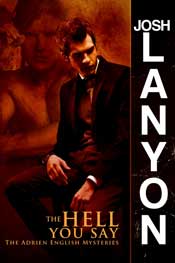
Books Read in 2015. 6. The Hell You Say – Josh Lanyon

Genre: Crime, GLBT

Narrative Style: First Person, Chronologicalhell_you_say_2011

Rating: 4/5

Published: 2006

Format: Kindle

Synopsis: This is the third book in the Adrien English series. Angus, Adrien’s assistant at his bookstore has been receiving threatening phone calls. Adrien foolishly loans him the money to disappear for a while. Foolish because it soon becomes apparent that Angus is involved in some sort of demonic cult and, as usual, Adrien feels compelled to investigate, getting himself into all sorts of trouble as a consequence. Adrien is still sort of involved with closeted cop Jake Riordan. Even Adrien isn’t exactly sure whether to call it a relationship and Jake certainly doesn’t. That word is reserved for the woman he is also involved with.

Although this was a really good read, it has probably been my least favourite so far. The main reason for this is that the romance between Adrien and Jake came to a dead end when Jake announces he had got his girlfriend pregnant. Maybe this is a good thing for Adrien in the long run but I was hoping that it would run the other way and he would realise that Adrien was who he really wanted. Of course, I am sure that Jake will still be involved in future books in the series but it would seem unlikely that his and Adrien’s relationship will ever be anything other than on again, off again which is a bit depressing.

The thriller elements were all in place and, as usual, Lanyon walks between sending up typical genre expectations and using them to fool the reader. There are a suitable number of red herrings and blind alleys and Adrien is always flying of on a whim which makes him an interesting narrator. The tension between the cold unemotional detecting of Jake and the police and Adrien’s more hysterical, intuitive style adds another element of tension to both the mystery and their romance.

Adrien is a sympathetic narrator. His voice is warm and funny as he sends himself up and over-dramatisises. He is easy to relate to and feel concerned for. As well as everything else he has to deal with, his mother announces that she is getting re-married and the descriptions of Adrien’s encounters with his three new step-sisters and ultra masculine new father are extremely amusing.

It was tempting, as always, to go to read the next instalment straightaway but I have a lot of other things to read for challenges. And I don’t want to hurry through them too quickly because then I’ll be at the end of the series. Besides, I need to have some books in reserve that I know are going to be good so that I can turn to them when I’ve read something not so great.

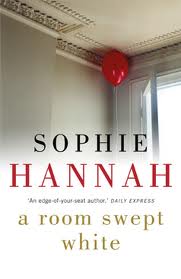
Books Read in 2015 – 5. A Room Swept White – Sophie Hannah

Genre: Chick-lit, Detective

Narrative Style; A mixture of first and third person with extracts from books and Unknownarticles. 

Rating: 2/5

Published: 2010

Format: Paperback

Synopsis: Fliss Benson is sent a card with sixteen numbers on it. She has no idea what they mean. On the same day, she is put in charge of a documentary about miscarriages of justice – specifically women who are thought to have killed their children. Then one of the main focuses of the documentary, Helen Yardley, is found murdered and in her pocket is a card very like the one that Fliss received. 

The premise of this novel was intriguing and emotive. Women who are accused of killing their children often provoke extreme reactions in people and I was curious to see how the subject would be handled. Unfortunately, Hannah allows the narrative to be muddled by too many different narratives and ideas. At first, I thought that the novel would be about Sids and the likelihood of that happening in more than one child from the same family but Hannah throws in high levels of blood salt, babies that appear to have been shaken and babies that reacted adversely to immunisation. To me, this muddied whatever point she was trying to make (and in actual fact, I’m not sure what that point might have been) to the point of incomprehension.

Of course, for all this to work, there had to be an evil doctor. Judith Duffy has given evidence in a number of cases and in Helen Yardley’s case claims that it would be virtually impossible for two babies in the same family to have Sids. This was clearly based on the real life doctor who said that the chances were one in 73 million. Of course, as Ben Goldacre has pointed out, this is erroneous and Hannah does quite a good job of showing us why the doctor was wrong. At least, at the beginning. About half way through, she changes tack and we are meant to view Duffy with some sympathy. And we are also supposed to believe that she becomes friends with one of the women that she helped to jail. This stretched my disbelief to the very limit.

Perhaps the most annoying element of this novel was Fliss Benson. The only narrator to have annoyed me more is Ana from Fifty Shades of Grey. Fliss is a bundle of insecurities, always doubting herself and bursting into tears. Don’t get me wrong, I don’t believe that all female protagonists should be strong or good role models or anything as crass as that but she really was annoying. I wanted to slap her, I really did.

At the beginning of the novel, she is promoted to creative director of the company she works for for no readily apparent reason except that the old creative director Laurie Natrass has found a new job. It is as if Hannah couldn’t imagine a woman being successful except at the whim of a powerful man. Of course, Fliss is in love with Laurie despite the fact that he is exceptionally unloveable which causes a lot of mooning and moaning which I could really have done without.

The most successful elements were definitely the third person descriptions of the police investigation and I know I would have enjoyed this more if it had been a straightforward police procedural. And if I’d been convinced by the ending. In fact, I found the last third of the book really difficult to finish. I only did finish it because I wanted the closure even while I knew it was going to annoy me. It is a while since I’ve been so relieved to finish a book.

Books Read in 2015 – 3. Farewell, My Lovely – Raymond Chandler

eclecticreader15

Genre: Private Eye, Hard-boiled Detective

Narrative Style: First person, chronologicalUnknown

Rating: 4/5

Published: 1940

Format: Kindle

Synopsis: Moose Malloy is looking for his old love Velma and Marlowe starts to investigate when he is contacted for what seems like a routine case. There would seem to be no link between the two cases but quickly Marlowe finds hostility on all sides and things become a lot more complicated then they seemed. 

Reading Challenges: Eclectic Reader Challenge – Genre: PI Crime

I had intentions of reading more Chandler. I read The Big Sleep and really enjoyed it and was thinking it was about time I read the next one so when I saw that one of the genres for this year’s Eclectic Reader Challenge was PI crime, I didn’t hesitate.

There is no easing into the story here. You are dropped straight into Marlowe’s seedy little world. Every detail counts as the story quickly gets quite convoluted and no one is quite who they seem. The pace is lively and it was difficult to put down.

Marlowe really suffers in this story. He is bashed on the head a large number of times as well as being pumped full of all sorts of horrible drugs. He spends a lot of his time with his head spinning and stomach churning. Not that this stops him, you understand. Marlowe is not the sort of man to be laid low by anything. He just has another whisky and carries on. I like the toughness of the characters – not just Marlowe but all the other men and some of the women too. There is no sentimentality here – this is a hard world and it takes hard people to survive. There is no time for feeling sorry for yourself.

What really makes Chandler’s novel sing is the prose. Marlowe is all bruised one liners and smart retorts. I kept imagining Humphrey Bogart growling out some of the lines. Some of the descriptions are just fabulous – ‘The voice of the hot dog merchant split the dusk like an axe’ for example or ‘She gave me a smile I could feel in my hip pocket’. It’s all so sharp and the prose never wavers for one second. There is very little breathing space for the reader who is always fully immersed in the horror of Marlowe’s world.

I didn’t see the ending coming at all. Maybe a sharper reader could have put it together but to be honest, I’m always quite pleased if I haven’t managed to work it out. It was a good ending, one that tied everything together successfully and was completely satisfying. I will certainly be reading the next one.

Books Read in 2014 – 2. Raising Steam – Terry Pratchett

Genre: Humorous fantasy

Narrative Style: Third person from a variety of points of view. The_front_cover_of_the_book_Raising_Steam_by_Terry_Pratchett

Rating: 4/5

Published: 2013

Format: Paperback

Synopsis: A new invention has arrived in Ankh Morpork and it quickly grabs everyone’s attention. Particularly those with anoraks and notebooks. The steam engine has arrived and is definitely hear to stay despite the efforts of those who wish to stop progress whatever its form. It falls to Moist Von Lipwig to try and keep the railway safe which means pleasing Lord Vetinari, nobody’s idea of an easy life. Moist will need all skills as a scoundrel and a few more besides to survive this adventure. 

This was a Christmas present from my husband. It felt like high time that I got round to reading it, having read all the others. Normally, Pratchett’s are purchased the minute they are released but I’m not a big fan of the other books with Moist Von Lipwig so I didn’t rush this time.

It was so long that I’d forgotten what a pleasure it always is to read a Discworld novel. Especially one with such good subject matter. There is no doubt (in my mind, anyway) that there is something fascinating about the steam engine and something elegant that more modern trains just cannot compete with. Pratchett captures this perfectly in his descriptions of Iron Girder and of her creator’s love for her. Simnel, the engineer with the flat cap and the Northern accent, is one of Pratchett’s better recent creations and was totally believable.

Of course, this isn’t just a novel about steam and the men who tinker with it. This is also a novel about discrimination, extremism and politics. Extreme members of the Dwarfish community have been knocking down the Clacks and are now attacking the train. While the low king is away, they take over and try to place their leader on the Stone of Scone. Pratchett is at his best when he writes of such subjects. There is a strong moral at the heart of this novel but it is never preachy. At the very heart of it is a message of tolerance which is impossible to argue with.

It is less successful, I think, when dealing with the gender issues in the Dwarfish community. Dwarfs do not reveal their sex normally but many were starting to break with the tradition and near the end of the novel, the Low King reveals she is in fact a queen and not only that but about to become a mother. I’m not sure what it is about this that rankled but I just didn’t find it convincing.

As for Moist Von Lipwig, he still remains one of my least favourite Pratchett characters but there was so much other stuff going on that he didn’t annoy me as much as he has  done before. The pace is fast with exciting train rides, battles and action aplenty. I could have happily continued reading.