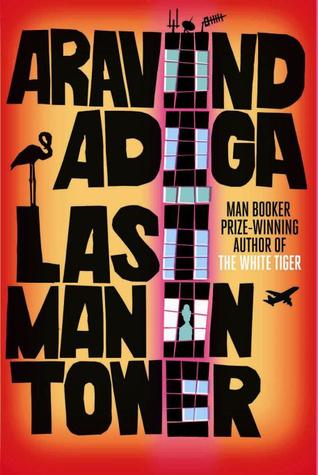
Books Read in 2015 – 29. Last Man in Tower – Aravind Adiga

Genre: Indian Literature, Literary Fiction

Narrative Style: Various third person perspectives10854908
Rating: 3/5

Published: 2011

Rating: 3/5

Synopsis: When they are offered a large amount of money to leave their flats, most of the residents jump at the chance. However, a small number – for various reasons – do not want to leave. They are not interested in the money, at least at first. The developer is a very determined man and he quickly discovers their weaknesses and exploits them. Soon there is just one man left who will not back down.

I loved The White Tiger and, although, it was probably unfair to do so, I was judging Last Man in Tower by that standard and unfortunately it didn’t quite live up to it.

This is a novel about greed. The residents of Tower A and Tower B can barely imagine the amount of money offered to them by charismatic developer Dharmen Shar. It would mean a new life for all of them. Happily, they jump at the chance without considering the ethics of the situation. I was with them – at least at first. We’d all love such an opportunity, I’m sure.

At first, there are four who refuse. Mrs Rego, social worker and possible communist, elderly couple, the Pintos who are worried that Mrs Pinto will not be able to find her way around a new building as she is blind but used to her surroundings and Masterji, a former school teacher who opposes the redevelopment on moral grounds and also emotional ones as his memories of his dead wife and daughter are all in the building.

Eventually, after fair means and foul, they all fall by the wayside and accept an offer apart from Masterji. They cannot move forward unless all residents agree to the redevelopment and Masterji keeps on stubbornly refusing. A noble man, you might think but Adiga doesn’t make it as simple as that. It is almost impossible to be completely on Masterji’s side. Just as it is impossible to sympathise with his neighbours. Especially as they begin to get meaner and meaner in their desperation.

Amiga does show what desperation can do to a person. All the residents can see the money slipping through their fingers and it makes them insane. Shar doesn’t even have to do most of the dirty work himself. They are more than happy to turn on Masterji themselves. The strength of the novel is that, even at the very end, it is easy to believe in the actions of the residents. I never doubted for a moment that seemingly decent people would resort to violence and psychological torture in order to get what they wanted.

There were two things I found problematic. First of all, there are a lot of characters in this book. I found it difficult to remember who was who and where they stood in relation to events. The second was the pace. The first half of this book is very slow. Once Masterji has become the universal enemy of the rest of the tower then things heat up a bit and the end of the novel is much better paced but I very nearly didn’t get that far.

Books Read in 2015 – 28. The Secret History – Donna Tartt (Contains spoilers)

Genre: Thriller

Narrative Style: First person41K7TYBGF4L

Rating: 3/5

Published: 1992

Format: Paperback

Synopsis: A set of misfits at an exclusive college studying classics decide to try and emulate the morality of ancient times. This sees them start to view themselves as being outside current morality and they begin to follow their own rules.

There is no doubt that Donna Tartt can string a sentence together and the strength of her prose is the main reason that I rated this as I did. Richard’s narrative voice is quite powerful and I had a clear idea about the personality of each of the group as he saw them and also of his own feelings on the matter.

However, I did not find the story particularly compelling. It was hard to feel anything for such a bunch of odd, emotionally stilted individuals. When reading about the rich and the privileged I always feel a little like I am viewing some sort of alien species and there was definitely an element of that here. These weren’t people like any I knew. As such, I didn’t care about their petty jealousies or there murderous intentions.

The killing of Bunny is signposted straightaway and the reasons for it were quickly obvious. Bunny himself, was irritating even before he knew that the group had killed someone in a bacchanalian night of excess and I watched detached as they plotted to kill him. It was hard to feel any sort of suspense as I didn’t care whether they carried it out or not.

There is still a lot of the book to go at this stage and I do feel that it could have been shorter but Richard analyses every emotion and every action afterwards as the group fall apart in various different ways. The only one who seems to have any sort of control is Henry who was the main force behind killing Bunny. He is the one who tries to keep the others in control. It was clear that he was meant to be some sort of monster but he just seemed cold and empty and he made me feel sad rather than anything else. When, in the end, he shoots himself, I felt nothing, no shock or emotion at all. It just made me feel pleased that the story was nearly over.


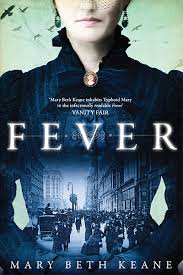
Books Read in 2015 – 27. Fever – Mary Beth Keane

Genre: historical fiction

Narrative Style: third person, chronologicalUnknown

Rating: 4/5

Published: 2013

Format: Kindle

Synopsis: Mary Mallon – also known as Typhoid Mary – has cooked in many big houses in New York. She doesn’t think anything of the fact that often the families contract Typhoid fever. It is prevalent in New York as a whole and many people die from it. However, when a new theory of germs and carriers gains popularity, Mary finds herself held in quarantine while they do tests on her. 

Before reading this, I had no idea that Typhoid Mary was a real person. Of course, I’d heard the phrase used. Now, having read Mary’s story, it seems a shame that this should be her legacy. Imagine that was your contribution to the world, what you were famous for. Very depressing.

The story itself is interesting. At first, Mary could have had no idea that she was spreading the disease. The theories about germs and about healthy carriers were in their infancy and the authorities clearly had no idea what to do about it. Mary is arrested and taken into quarantine but she does not go without a fight. It is this fighting spirit that constantly works against her.

While, undoubtedly, there were real public health issues at stake, there are also issues of class, race and gender. Mary is unlucky enough to be Irish, working class and female – three ways in which she is powerless. Newspaper stories suggest that she had ideas above her station and was infecting the upper class houses on purpose – a disease based class revenge.

Eventually, Mary is allowed back into society on the promise that she will never cook for anyone again. But cooking is the one thing that makes Mary feel alive, the one thing that she is good at. And she still doesn’t really believe that she passed on the fever to others so she starts a job at a bakery. While the modern part of my brain, the part that knew she would start to make people ill again, was appalled at her seeming recklessness, it was also possible to feel sorry for Mary. After the way she was treated, it was unsurprising that she would not want to do what the authorities asked of her.

Keane manages to successfully evoke New York in the early 1900s and the atmosphere is heavy with diseases and potential unrest. I think she also captures Mary well. Of course, as she herself acknowledges in the afterword, there is no way of knowing if that was what Mary was like but she seemed real and of her time and I don’t think that you could do much more than that.

Books Read in 2015 26. Sleepyhead – Mark Billingham

Genre: Detective, Thriller

Narrative Style: Third person from various points of view, first person from the point of9780751531466_Z view of a surviving victim

Rating: 4/5

Published: 2001

Format: Kindle

Synopsis: Three women are found dead, seemingly from strokes, when a pathologist spots that it may be murder. The next victim survives but is unable to communicate with anyone. Enter Tom Thorne, detective, who quickly realises that this victim is the killer’s one success. This is what he was aiming for all along. Equally quickly, he forms an idea of who the killer is and will not let it go even when the evidence is against him. 

I like to read detective fiction but I find I am often disappointed by it. The first series I liked was Ian Rankin’s Rebus books and they set a high standard, one that is rarely lived up to. I was pleased to discover that I loved Tom Thorne almost as much as I loved Rebus and I decided pretty quickly that I would be reading on.

There are a number of similarities. Thorne is equally unpredictable. He ploughed his own furrow and was not afraid of annoying his superiors. When he decided who he thought the killer was, there was no shaking his certainty. Even when this turned into obsession, the reader stayed with him and I desperately wanted him to be right, even while I knew he probably wouldn’t be. Like Rebus, he was a lone wolf and didn’t make friends easily. His relationship with Anne, his love interest in the novel, was equally complicated.

The plot was also strong. The idea of a killer aiming to leave people in a coma as they viewed this as the ultimate in freedom was as interesting as it was disturbing. Thorne’s unpredictability meant that it wasn’t always possible to spot what was going to happen next. And while I certainly put some of the clues together, I didn’t manage to come up with the whole picture which is always good.

The third person sections were written from a number of different viewpoints and often  used ‘he’ instead of immediately naming the character which added suspense and meant that the reader always had to work to understand who was being talked about. The first person sections from the point of view of Alison, the one surviving victim, were poignant and added emotional resonance to the story.

Overall, this kept me reading and I’m pleased to discover another series that I can really get my teeth into.

Books Read in 2015 – 25. A Long Way Down – Nick Hornby

2015tbrbutton

Genre: Humour, Drama, Mental Illness

Narrative Style: First person from four different points of view

Rating: 3/5

Published:2005Unknown

Format: Paperback

Synopsis: JJ, Martin, Jess and Maureen meet on the top of Topper House on New Year’s Eve. They all have the same intention. To jump. Instead, they decide to give it until Valentine’s to see if life is really worth living. 

Reading Challenges: TBR Challenge 2015

Time on Shelf: About 6 years. I loved High Fidelity but since then, I’ve liked each Hornby novel a little less so I avoided reading this one. 

I suppose it’s inevitable that a novel with such a high concept storyline would seem a little unreal at times. Each story emphasised different aspects of depression and reasons why someone might try to kill themselves. However, all four of them together on one roof was a little much and was hard to swallow.

Of course, it was apparent that they wouldn’t jump – otherwise it would have been a very short story indeed – but the narrative tension was in whether they would actually make it back to life. This was where the problems started for me. I wasn’t really drawn in enough by the characters’ stories. They were all a bit too much like characters and not like real people.

Martin was the fallen celebrity who only had his own stupidity to blame, Jess had a missing sister and parents who didn’t seem to really see her, Maureen had a disabled son who she had to care for 24/7 and JJ’s band had split up and he had lost his girlfriend. When it came down to it, the solutions to all their problems were quite simple but of course, when you are depressed, nothing is simple and Hornby does capture that aspect quite well. What was more difficult was liking or empathising with them. I didn’t care enough about them because they didn’t seem real.

I also found the constant switching of viewpoints a little annoying. I’d have been happier if each narrator spoke for longer, I think but as it was, it was hard to get to grips with any of their voices. It was a little like being shouted at by four incredibly needy people. At times I just wanted them to shut up.

Although this is a book about depression, it is at times very funny and Hornby is very good at capturing his characters’ foibles. There are some very funny set pieces which, although they didn’t always ring true, did make me chuckle.

At least there was no pat ending. Hornby realises that there is no straightforward cure for what ails these characters and so although they seem better, they are not cured. But it does seem that they are moving in the right direction. That was satisfying.


Books Read in 2015 – 24. The Giver – Lois Lowry

eclecticreader15

Genre: Young Adult, Dystopia

Narrative Style: Third person from one point of view

Rating 3/5Unknown

Published: 1993

Format: Kindle

Synopsis: Jonas’s world is perfect. No one is ever hurt or upset. Their roles are carefully chosen and everyone fits right in. Even death has become something to celebrate with the ceremony of release for the old. However, as Jonas discovers when he is given the role of Receiver of Memory, underneath the surface there is pain. But there is also love and passion and colour. Jonas has to decide whether the love is worth the pain.

Reading challenges: eclectic-reader-challenge-2015/- genre: Middle grade / Young Adult adventure

This book is interesting rather than exciting. At first, it seems that there is no problem with Jonas’s world. Everyone is happy because no one can remember or process upset or dissatisfaction. Everyone is the same. There are hints of the extent that the society is controlled – for example when Jonas takes an apple home that should have been eaten as a snack – but it isn’t until Jonas receives his new role at age twelve that the reader gets to see exactly what is missing from this society.

Jonas is to be the new Receiver of Memory. He has to visit The Giver who passes on the memories physically to him. Some of the memories are good – they are of family get togethers and having fun in the snow. Others are painful, memories of war or injury. Most interestingly, it transpires that Jonas’s people cannot see colour so that everyone is literally the same. (It isn’t explained how this has come about but I’m going to assume it was some genetic cleverness that somehow bred out the ability to see colour.) Jonas has already had hints that he can see colour and once he can, the world of his community seems terribly dull.

Quickly Jonas learns that nothing is quite what it seems. He discovers exactly what happens when people are released and realises with horror that some people – himself included – are allowed to lie to everybody else about what actually happens in their jobs or when people are released.

I was quite interested up until this point. The importance of memory – be it good or bad – cannot be doubted and when The Giver and Jonas decide to give some memories back to the community, I thought it would be quite exciting. However, the story just fizzles out from this point onwards and I think Lowry squandered what she created. Jonas runs away, taking with him a small child who is about to be released. They obviously quickly run into trouble away from the community as they have very little food and the weather is not controlled, unlike in the community. Jonas’s death seems inevitable although Lowry makes it into a spiritual experience where Jonas remembered one of the more pleasant memories he had been given.

This left me wondering exactly what point Lowry was trying to make. Obviously, Jonas died because he separated himself from the community so was she suggesting that any regime, however horrible, was better than individualism. It would have been more interesting to see the effect that the memories that were released had on everyone in the community but that is never mentioned.

Ultimately, this was an interesting idea that I feel was underdeveloped and left me with a bit of a sour taste. In the end, I just wasn’t sure what Lowry’s message was and that made me feel a bit uncomfortable.

Books Read in 2015 23. I am J – Cris Beam

eclecticreader15Genre: GLBT, Young Adult

Narrative Style: Third person, chronological

Rating: 3/5

Published: 2011

Format: Kindle9780316053617

Synopsis: J may have been born a girl but he has always known that wasn’t who he really was. Now he is seventeen, he realises that he needs to do something to bring his body into line with who he feels he is. However, his parents and friends don’t always find his new identity easy to deal with. 

Reading challenges: Eclectic Reader Challenge – genre diversity.

I always find it a bit of a problem reading accounts from a teenage point of view because the main characters always seem so self centred and difficult. Perhaps it is just too long since I was that age for me to really be able to identify with them. I’m sure that if you were the same age as J then you wouldn’t have this problem.

J is quite difficult to like. While I understand that being trans is difficult and would make you angry, there is little more to J than his anger and his gender. There is little sense of what sort of person he was. Perhaps this is because he is so desperately trying to be like the other boys that he never really develops his own identity. Again, I can see how this might be the case but it still made J difficult to get on with.

There is a lot of gender stereotyping in this book – and I have found this with other trans books I have read. A lot of boys do this, girls do that. This is never really questioned and I found that and J’s homophobia very irritating.

This book was not written by someone who is trans but by someone who has had a lot of dealings with people who are trans and this comes across I think. J is an amalgam of everybody who has ever been in his situation and Beam throws everything at the story – lying mother, distant father, friend who can only think of herself, older wise trans woman and so on.

There is no doubt that it is good that books about being trans are now being written and maybe if I was trans I would find more to identify with here. However, instead, I  felt detached and unable to completely empathise with J and that made me feel a little sad.

Books Read in 2015 22. Before I Go To Sleep – S. J. Watson (Contains Spoilers)

eclecticreader15

Genre: Thriller, Epistolary

Narrative Style: Diary entries, framed by a undated first person narrative

Rating: 2.5/5

Published: 2011Unknown

Format: Paperback

Synopsis: Christine has amnesia. Every morning when she wakes up, she can remember none of her recent life.She has lost nearly twenty years of her life. Every day, her husband, Ben, tells her what has happened to her. When her doctor suggests that she start to keep a journal, she soon discovers that things are not what they seem. 

Reading Challenge: Eclectic Reader Challenge 2015 – Genre epistolary.

I saw the film of this last year and I really enjoyed it so I assumed that I would also like the book. I was wrong. The film was taut and thrilling and for some reason it was easier to suspend my disbelief. However, the book just made me feel annoyed and by the end I couldn’t stop thinking about how many unlikely things had to happen for the outcome Watson gives us.

Like other books I have read that have narrative quirks – The Time Traveller’s Wife, for example – I find that they quickly wear thin and rub me up the wrong way. With Before I Go To Sleep, I kept imagining how long it would take Christine to re-read her ever-lengthening journal everyday. And then in the evening she had to find new ways to hide her writing from Ben. It quickly became repetitive.

Christine herself was annoying. In the film, Nicole Kidman was utterly convincing and also quite sympathetic. Christine in the book was a bit pathetic and her narrative voice spent a long time running round in circles which was also annoying. While it is understandable that she might not trust her memories – especially as her doctor tells her that amnesiacs often fill the gaps with fiction – but after a few times when she doubts everything, I was bored.

Having seen the film, I knew what the twist was and it was entertaining to look for clues about Ben’s real identity. (Actually, this may be responsible for my lack of patience with the narrative. Perhaps I expected her to notice more.) As the ending drew nearer, I hoped for the feelings of suspense that I felt in the film. And it was quite tense when Ben was driving her to the hotel as it is starting to become apparent even to someone who had not seen the film, that all was not what it seemed. However, there is another hiatus when Christine finds the pages that Ben has ripped out of her journal and I just couldn’t believe that she would have time to read them before he reappeared.

Then it was all reliant on Claire, Christine’s friend, who somehow works out where they are and saves the day. Mike is helpfully killed and Ben and Adam reappear. Very neat and tidy. Of course, Christine still doesn’t know if she  will remember what has happened but there are hints that she will as Doctor Nash informs her that they found no physical reason for her amnesia. I’m sure it would have been annoying if she had miraculously got her memory back. Nevertheless, this was an unsatisfactory ending and made me feel that the whole book had been a bit pointless. Overall, a disappointing read.

Books Read in 2015 21. The Casual Vacancy – J. K. Rowling

Genre: Social criticism, tragicomedy

Narrative Style: Third person from a variety of points of viewUnknown

Rating: 3/5

Published: 2012

Format: Kindle

Synopsis: When Barry Fairbrother dies suddenly, he leaves his place on the council unfilled. What follows is the scramble for his position between the other families in Pagford. It becomes a battle about social responsibility and exposes all the secrets that community members have been battling to hide.

After watching the TV programme, I had pretty much decided that I wasn’t going to read this. I didn’t really enjoy the adaptation but my mother in law said the book was so much better so when it came on offer for kindle, I decided to give it a go. Well, she was right, it was better than the BBC adaptation but I still didn’t enjoy it as much as I might have hoped.

There is an enjoyable amount of puncturing small town hypocrisy in this novel. That is the best thing about it without a doubt. The portrayal of Howard and Shirley Mollison is  the most successful in this respect. They are both grotesque examples of a small town England mentality and although their downfall takes a long time, it is worth the wait and was satisfying. It was a shame that other storylines and characters were not so well drawn.

One of the problems for me was Rowling’s almost neurotic need to prove that she is a grown up writer now. She throws everything possible at this novel. There’s drug addicts, child abuse, teenage sex, self harm, extreme poverty and anything else Rowling considers might be a bit shocking. When it transpired that Howard and Shirley’s daughter, Pat, is a lesbian and that is why she doesn’t get on with her parents, it left me feeling a little hollow. it felt like one cliche too far.

And that was the other problem. There are a lot of characters in this novel and they all have their morally troubling secrets and problems but because of sheer numbers some of them go underdeveloped and as a result are unconvincing. Others are stereotypical – like Stu Wall and his teenage rebellion or Terri Weedon whose drug addiction is a result of her own abuse as a child. They feel like stock characters rather than real people.

Still, it is paced well and the various plots come together in a suitably shocking ending. There is no doubt that Rowling can plot well. This is true of her Potter books as well and it goes some way to hide the other problems with her writing. The ending was much better than tthat of the TV version and I can’t help wonder why they changed it. It was hard hitting and exposed the lack of care at the heart of the community, any number of which could have stopped the tragedy happening.


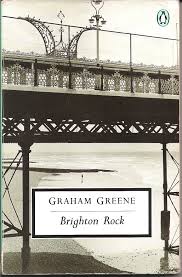
Books Read in 2015 – 20. Brighton Rock – Graham Greene

2015tbrbutton

Genre: Classics, Crime

Narrative Style: Third person from various viewpoints

Rating: 4/5

Published: 1938Unknown-1

Format: Paperback

Synopsis: Hale realises soon after he arrives in Brighton that his life is in danger. He is caught up in Brighton’s gang war. After he has killed Hale, Pinkie believes that he can escape earthly punishment but he didn’t expect the force for good that is Ida Arnold.

Reading challenges: TBR Pile Challenge

Time on Shelf: About 15 years. My husband read it almost straightaway when we bought it but it has taken me this long. 


When the opening line is ‘Hale knew, before he had been in Brighton three hours, that they meant to murder him’, you know that you are onto a winner. This book hooks you in immediately and does not let go. There is not a moment wasted as the plot is intense and taut.

The character of Pinkie was fascinating. He was both vulnerable and dangerous. His own background makes his path into violence seem almost inevitable. He is not much more than a child, trying desperately to mimic the methods of the men he sees around him. He is clever but untamed and has no moral code to speak of. He is the very model of a psychopath but Greene makes it possible for the reader to feel for him and the situation he has got himself into.

On the side of good is Ida Arnold, the woman who was with Hale just before he died. She barely knew him but is determined to discover the truth of his death. She is full of life and laughter, a strong character who will not give up. Thankfully, she is not a saint but an ordinary woman who decides that she must not let this one go. She is motherly and tries to look after Rose (who Pinkie marries to keep her from testifying against him) even when Rose does not want her help.

The character of Rose was the one weak link in the novel. I couldn’t see why she might fall for Pinkie so heavily that she would marry him immediately. She was dangerously naive and I wasn’t really convinced by her. I don’t think she was as well drawn a character as the others. It was hard to feel any sort of empathy with her about her bullheaded belief that Pinkie loved her.

This is very much a novel about earthly retribution versus that of the Catholic church. One of the only things that Pinkie believes in is the fiery depths of hell. He appears to believe that nothing on earth can touch him. I must admit that I do not know a lot about Catholicism or even religion as I have no beliefs and I think some of the finer points of this novel passed me by because of it.

Overall, though this was a fine thriller which kept me interested throughout and although Pinkie’s downfall seems inevitable, the exact nature of it was still a surprise and the ending of the novel is quite devastating. A very enjoyable read and certainly encouragement to read more of Greene’s work.