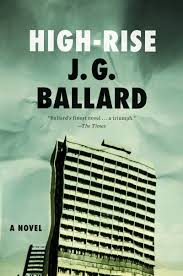
Books Read in 2014 – 60. High-Rise – J. G. Ballard

Genre: Dystopia, anti-heroes

Narrative Style: Third person three different perspectivesUnknown
Rating: 3/5

Published: 1975

Format: Kindle

Synopsis: Robert Laing quickly spots the careful class demarcations when he moves into the high-rise. Whilst ostensibly for the rich, it quickly becomes apparent that some are not as rich as others. These demarcations follow the floors with the lowest on floors one to ten and so on. When the electric start to fail, panic and violence quickly ensue. Before long, everyone has returned to a savage state and society has completely broken down. 

This has what is perhaps my favourite opening line ever – “Later, as he sat on his balcony eating the dog, Dr. Robert Laing reflected on the unusual events that had taken place within this huge apartment building during the previous three months.” This raised my expectations quite highly. The plot then moves through those three months. Unfortunately they don’t quite live up to this powerful opening line.

The story is told from the perspective of three men – one from the lowest ranks, Wilder; one from the middle, Laing; and one from the top, Royal who is one of the architects of the high-rise. Before civilisation starts to break down, there are already petty jealousies and rivalries about who can use which swimming pool and which lift. This seemed realistic enough and it was easy to see how such grudges might escalate into something bigger.

However, I wasn’t convinced by the triggers for the escalation. Very quickly, it seemed, people were no longer leaving the high-rise and hunting in packs for people from the other floors. Once that had happened, there were very few places for the narrative to go. Nothing else really happened and it felt like events levelled out. They didn’t really get any worse and there was clearly no way for them to get better.

That wasn’t the only problem. I couldn’t really decide what point Ballard was trying to make. I suppose that the high-rise was meant to represent a microcosm of society with the three levels representing upper, middle and working class but because these were all from the same class, the point didn’t quite work. At the end. only Laing is left eating his barbecued dog suggesting perhaps that the middle classes are the ones that will survive and then because they wait it out passively. I’m not sure what sort of moral lesson that is supposed to be.

This is as much about masculinity as it is about class and the three men show different ways of being male. Wilder, as his name might suggest, is very much ruled by his sexuality, Laing is more refined, preferring to wait and see what happens and finally Royal is a leader, at least for a while, by virtue of his money and his penthouse apartment. This also relates to stereotypical versions of masculinity and class e.g. the beastlike working class male. The women in this novel are underdeveloped, there to largely be raped or rescued depending on the man in question. That also was disappointing.

Ultimately this was an interesting idea which was well-written but just didn’t quite work for me. This is the second Ballard I’ve read lately that has left me a little cold but I’m sure I will be tempted again as the initial ideas just sound so interesting. They have made a film of this, to be released next year and it maybe that it will work a little better as a film. I’d certainly be keen to see what they do with the material.
Bad Habits Created by Bad Technology

It finally happened. I had to admit, my computer was unusable. If it wasn’t folding in on itself due to having unexpected errors, it was not responding. I’m not sure what made me cling on to it for quite as long as I did. Money, partly but also the thought of having to choose a new machine. Anyway, the upshot is, I now have a marvellous mac mini and I can actually work again.

I hadn’t realised exactly how much I was affected by my computer’s bad behaviour. I find myself unable to concentrate for extended lengths of time as if I was writing then Word would inevitably not respond or it would close down unexpectedly and I would sit with the IPad and play The Sims while I waited for it to recover itself. Now I find myself wanting to break off after I’ve written a couple of paragraphs. I’m having to be really disciplined with myself or I wouldn’t get anything done.

Still, it does mean I’m catching up on some of the editing / re-writing I need to get through with Choose Yr Future. At least part of my reluctance to get on with this was the soul destroying nature of trying to battle with a PC that doesn’t want to co-operate. And hopefully that means beta-readers soon. And then publishing. I’m feeling excited again.

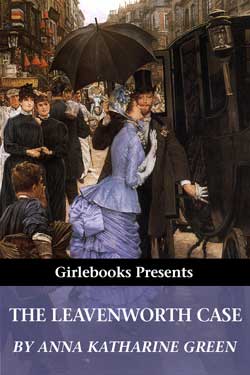
Books Read in 2014 – 59. The Leavenworth Case – Anne Katherine Green

Genre: Detective Fiction, Classics, 

Narrative Style: First person, chronological

Rating: 2.5/5

Published: 1878

Format: Kindle

Synopsis: Horatio Leavenworth is found dead at his writing desk in his library which is locked. He has been shot in the back of the head so suicide is quickly ruled out and a stranger could not have got into the house and no one suspicious was spotted. Eyes turn to the various members of his family and staff. 

I love a locked room mystery and as this was an early example, I expected that I would enjoy it. And in fact, it is not the mystery elements of the novel that caused me to feel irritated with it.

The story started well, with the appearance of Leavenworth’s personal secretary in the office of Everett Raymond, saying that his boss has been shot. Raymond rushes to the spot and along with superb detective Mt Gryce, they conclude that Leavenworth knew his killer as he did not even turn his head when he heard footsteps behind him. Clues point clearly towards one of Leavenworth’s nieces as she refuses to explain how she came into possession of the key to the library. Bryce, however, is unconvinced and sets about trying to out the actual murderer.

There is nothing really wrong with the ideas behind the story. Red herrings abound and even at the end, when Raymond thinks that the mystery has been solved, Gryce proves that he is the superior detective by tricking the real killer out into the open. However, from a modern perspective, schooled as I am in reading and watching detective fiction, it was hard to be surprised. I guess it’s unfair to judge a book in such a way. It is clear why this might have been so influential on writers such as Agatha Christie but it is difficult to read outside of your own time and this seemed a little clunky to me.

Even so, that is not what drove my rating down. That was due to the narrative voice of Mr Raymond which was given to exclamation and went running off up blind alleys. Of course, this was his role, to lead the reader in the wrong direction but because he was so excitable, I never really had any faith in him and assumed that his answer was the wrong one. This is another hangover from reading other detective fiction. No one is to be trusted to tell you the truth or get things right.

Really, I wish I had read this earlier in my reading career as I’m sure I would have liked it more. Unfortunately, it fell victim to the very books, it likely influenced.

Top Ten Tuesday – Top Ten Books on my winter TBR list

7aabb-toptentuesday2Top Ten Tuesday is a meme on The Broke and the Bookish blog. This weeks topic is Top Ten Books on your Winter TBR list. This is a very loose list. This is what I think I will read over the winter months but other books always get in the way. The only one of these I can guarantee I will read is Death Comes for the Archbishop as I have to read that in order to finish the TBR Challenge. That’s next when I finish Gide’s Travels in the Congo.

1. Clothes, Clothes, Clothes, Music, Music, Music, Boys, Boys, Boys – Viv Albertine

2. Maddaddam – Margaret Atwood

3. High Rise – J. G. Ballard

4. Death Comes for the Archbishop – Willa Cather

5. Shutter Island – Dennis Lehane

6. Snow White Must Die – Nele Neuhaus

7. Fight Club – Chuck Palahnuik

8. I Capture the Castle – Dodie Smith

9. The Secret History – Donna Tartt

10. The Heather Blazing – Colm Toibin

Books Read in 2014 – 58. A Kind of Loving – Stan Barstow

Genre: Romance, Masculinity

Narrative Style: First Person, Chronological11816034_f260

Rating 3.5/5

Published: 1960

Format: Kindle

Synopsis: Vic Brown is looking for the right woman and when Ingrid catches his eye, he thinks she may be the one. What starts off romantic quickly becomes lustful and Vic is caught between his longing for sex and his knowledge that he doesn’t like Ingrid that much. Then the worst happens: she gets pregnant and he has to marry her. 

I had seen the film A Kind of Loving about twenty years ago and I really enjoyed it so I was looking forward to reading it. And it was quite enjoyable. There were just a few annoying little things that kept me from giving it a higher rating.

Vic Brown is a typical man of the fifties. He is young, employed and has money in his pocket. His narrative voice is quite charming and flows along nicely. He is cultured and wants to make something of himself. He is on the cusp of manhood, thinking himself to be the only one of his friends who hasn’t had sex (this turns out not to be true) and also wanting a loving wife who would also be a friend.

At the beginning, he adores Ingrid from a distance, thinking himself in love with her. And at first, they get on well enough. However, when Ingrid lets him go a bit further than he expected, he becomes confused as to whether he still likes her or just lusts after her. He vows not to see her but she drags him back in. He finds that although he should behave better towards her, he does not because he is caught by his lust.

There is no doubt that Imogen is shoddily treated by Vic. She is similarly caught in the mores of the day, wanting to discover her own sexuality but also knowing that it wasn’t approved of. One of the difficult things about reading this was not to give her a more modern psyche and make her voice stranger and louder.

When she gets pregnant, Vic agrees to marry her and then has to move in with her and her mother because they haven’t the money to find their own place. It is here that Barstow really gets to criticise the current morality. Ingrid’s mother is monstrous, attempting to control her daughter and determined that it must have been all Vic’s fault. She very nearly destroys any chance they have of making any sort of loving out of their situation.

The ending is quietly optimistic and Barstow buts his faith in the younger generation being able to sort out their own lives without the interference of the older generation. They move out of her mother’s house and into their own space, giving their future at least a fighting chance. But it isn’t a cloying they all lived happily ever after ending either. The moral being if they mess it up at least they’ll know who to blame.

So to the things that stopped it being rated higher. I always find it a bit difficult to read a novel like this because I can’t help hoping for the female character to fight back a bit and Ingrid was a bit of a drip. There were strong women in this book but they both used their strength to control everything and everyone so they weren’t exactly positive. And while I obviously understand that a novel is definitely of its time, that doesn’t necessarily make it any easier to read. The final thing that annoyed me was Vic’s choice of bint as a generic term for all women. I really dislike the word. And while he uses it in much the same way as you might use bird, it still really got on my nerves.

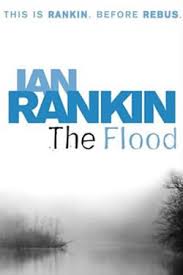
Books Read in 2014 57. The Flood by Ian Rankin

2014tbrbutton

Genre: Literary Fiction, Mystery

Narrative Style: Third Person, Chronologicaldownload (17)

Rating: 2/5

Published:1986

Format: Paperback

Synopsis: As a result of an accident as a child, Mary Miller has always had pure white hair. It has earned her the reputation of being a witch and she is something of an outcast in the Scottish town where she lives. Years later, she and her son Sandy are still on the outskirts of the town and looked on with a mixture of fear and pity by the other town folk.

Challenges: TBR Challenge

Time on Shelf: A good couple of years. I picked it up because I was curious. Rebus is one of my favourite literary characters. I wanted to see if Rankin could do anything else. And then I got a little nervous about whether I would like it or not. 

I was right to be nervous. This did not appeal to me at all. I feel a bit guilty saying this as if I was insulting a close friend. I really like Rankin’s Rebus books and I really wanted to like this but it just didn’t happen.

It wasn’t that it was badly written. If anything it was over-written, trying a bit hard to be literary. It felt as if Rankin was yet to find his voice and sometimes the prose was a bit tortured. Some of the descriptions of the area were reminiscent of the wonderful descriptions of Edinburgh in the Rebus books and some of the characters were ambiguous as to whether they were good or bad, a theme that often crops up in the Rebus books but this wasn’t enough to bring the story to life.

The plot is stretched too thin, I think. The story is interesting enough and there are hints of what is to come but is not enough to keep the reader’s interest. It is a slight story, really, concerning the possible father of Sandy and Sandy’s liaison with a gypsy girl living in the old manor house.

The ending was also disappointing. Although loose ends were wrapped up, it brought no satisfaction. I’m glad that this wasn’t the first Rankin I read as I am certain I would never have read another.


Books Read in 2014 – 56. Barracuda – Christos Tsiolkas

Genre: Australian Fiction, Sport, GLBTbarracuda

Narrative Style: First person moving back through events, third person moving forward through events. 

Rating: 5/5

Published: 2013

Format: Kindle

Synopsis: Danny Kelly has one desire – to win olympic gold. His whole life is focused around swimming, racing and training. When he loses for the first time, he feels the world come crashing down on his head. He almost doesn’t recover. 

At the beginning of the novel, the grown up, present day Danny Kelly is clearly in a bad place in his life. He is out of place – both literally and metaphorically – and unclear where his life is going. You know something has gone badly wrong for him. This is reinforced in the third person sections of the text which describe Danny starting a fee-paying school on a swimming scholarship and his many racing successes. The reader is immediately drawn in. What on earth could have gone wrong?

Clues are slowly revealed such as the fact that Danny has been in prison. The first person narrative moves back in time and presents such a startling contrast to the third person that at times it is hard to believe that this is the same Danny Kelly. The two narratives converge on the same moments in time in roughly the middle of the novel. It was nerve-wracking reading up to this point as it becomes more and more apparent what is going to happen. I wished so hard to be able to stop the inevitable but Danny could not be stopped from hitting the very bottom.

After this, the pace changes, the first person narrative is now the one that is filled with the joy of swimming as it relives Danny’s early years and the third person narrative shows Danny slowly becoming a new person after his spell in prison. There is still a contrast between the two narratives but it is less jarring than in the first half of the book and I began to hope that Danny would find some sort of contentment.

One of the reviews that I read of this book suggested that it was ridiculous that Danny would fall apart after just one race but I think that actually Tsiolkas describes his downfall well. It is all tied up with the fact that Danny is working class in an essentially middle/upper class environment. When he fails, it is only the inevitable catching up with him. Even his father seemed to believe that failure was just there waiting for him. There is no sense in trying again as he there would only be more of the inevitable. Tsiolkas offers a strong commentary on class and the meaning of success in this novel. I particularly enjoyed his critique of the Sydney Olympics which was close to how I felt in 2012.

Danny is gay but this is just an accepted fact and causes him no problems. The problem for Danny is his class not his sexuality. It was very pleasing to read a novel where sexuality was just taken as a given, not as an issue in and of itself. Definitely one of my reads of the year.


642 things to write about – The Bicycle Accident

I’ve been entering a lot of short story competitions lately – to no avail but you’ve got to keep trying – and as a sideline to editing Choose Yr Future I decided to try some writing prompts to see if I could come up with something that I could develop further so I would have a bank of stories. 

You wake up at the side of the road lying next to a bicycle, with no memory and no wallet. What happens next?

When I open my eyes all below me is grey. The surface is cold and I’m stretched out on it. My arms are over my head and I’m nose down. There is pain but it is non-specific. All over. Everything hurts.

First step, raise head. The world is still grey. Clouds meet the road on the horizon. Pushing up further brings about twangs and clicks. Specific pain runs up and down both arms. What have I been doing? Pause before next step while I steel myself for the pain to come. Deep breath. Onto knees. Now legs are joining in with groans of pain and stiffness. The question comes to me from the side, how long have I been here?

A further look around. The road, the hedges, the bridge mean nothing. Low menacing clouds which threaten and suggest I should get home but where was that?

Final step. On feet and scanning properly. My head spins a little as the blood finds itself on high once again. There is a house up ahead. Was that home? It was still a good walk away. But it was a direction to head in. I look behind me, turning slowly which is wise because everything shifts sideways and I wobble. I bend to put my head between my knees and slowly stillness returns. As I’m bent, I see the means of my getting here. Well, I assume. A bicycle. A vision of the air flying past my head and the ground rushing up to me sends me dizzy again. I sit down heavily and each joint and muscle takes its turn in shouting out the pain.

Time passes. I can’t move. My head is too unreliable. I check through my pockets. I could phone someone perhaps. But they are absolutely empty. No phone. No purse. No keys. Nothing. No bag. Not even strapped to the bike. Had I been robbed? Maybe everything had scattered from the bike. But no chance of finding that until I could stop the dizziness.

A car. It is moving fast and I do the same. Foolishly. Darkness grabs me and the next thing I see is a concerned face, quite close to mine. He smiles and a wave of relief comes across his weathered face.

“Thank God.” His voice is soft. He doesn’t want to frighten. “I’ve no idea how to do the kiss of life.”

Books Read in 2014 – 55. The Gods of Gotham by Lyndsay Faye

Genre: Detective Fiction, Historical Fictiondownload (15)

Narrative Structure: First Person Narrative, chronological

Rating: 3/5

Published: 2012

Format: Paperback

Synopsis: New York is overrun with Irish immigrants and bad feelings towards Catholics are running high. Timothy Wilde has lost everything in the Great New York Fire so he reluctantly agrees when his older brother, Valentine, gets him a position as one of New York’s newly appointed police officers. When it appears that someone is murdering Irish children and leaving them with their chest opened like a cross, Timothy is determined to solve the mystery even if it puts his life in danger. 

I’m not sure what is was about Timothy Wilde’s first person narrative but from the very first I found it difficult to get on with. It wasn’t difficult to read and the use of Flash – the criminal slang of the era – gave it authenticity. Maybe I just prefer my detectives a little more hard-boiled and edgy. Timothy just wasn’t a very interesting character while all others around him shone a bit more brightly – particularly his brother.

The story is exciting and that carried me through. In the beginning, Timothy finds Bird Daly, covered in blood and clearly frightened. He begins slowly to unravel her lies and is led to the madam, Silkie Marsh and her child prostitutes. When his investigations lead him to a mass grave of nineteen children, it seems that a serial killer is on the loose. With anti-catholic feeling running high, New York becomes volatile and rioters take to the streets.

Timothy proves himself to be an excellent policeman, sharp eyed and persistent, putting clues together and following leads that no one else has spotted. This contrasts with his stupidity in other areas, particularly his personal life. He completely misunderstands both his brother, Valentine, and his love-interest, Mercy Underhill so much so that he is in danger of ruining Mercy’s life. I’m not entirely sure that I was convinced by the character of Mercy either but she did at least have more than one side to her personality.

The story twists and turns and in the end, nothing is as you might have expected. I liked the ending and the way that it was worked out, using the then new techniques of forensic detective work. The historical detail was believable and helped create a New York that was dark and disturbing. However, I was pleased to be rid of Timothy Wilde, particularly when he is so drippy over Mercy even though it is likely his love will never be returned. It is a shame. I’m sure there is interest to be had in the books that follow but I wouldn’t want to spend another minute in his company.

Books Read in 2014 54. The Werewolf in Paris – Guy Endore

Genre: Horror, Historical FictionWerewolf of Paris

Narrative Style: First and third person

Rating 3/5

Published: 1933

Format: Kindle

Synopsis: An American student in Paris finds an old manuscript which details the story of Bertrand Caillet who is cursed with violent passions that make him change into a wolf. The story is set at the time of the Prussian-Franco war and the Paris Commune and Bertrand’s violence is intermingled with the violence of the time.

Although I love horror – both novels and films – the werewolf is a neglected area for me. I have never read any werewolf fiction and have seen few of the many films out there. As there were claims that this novel was of a similar standing to Dracula, this seemed a good place to start.

The story begins with an American student out late at night in Paris. He buys a mysterious manuscript from some trash-pickers and becomes fascinated with the story within. While he has issue with some of the supernatural elements, he decides to share the story along with some of the history of the times.

The story begins with the story of the rape of Bertrand’s mother by a monk who is a member of the cursed Pitamont clan. He is further cursed by the fact that he is born on Christmas Eve (a particularly unlucky event apparently). The signs of his strangeness quickly fall into place especially if you have any knowledge of werewolf lore. Bertrand has violent dreams where he is a wolf but which he believes are just dreams. His uncle – the author of the manuscript – quickly ascertains that this is not the case. To begin with, he locks Bertrand up and feeds him raw meat. And for a while it seems that he may be cured. However, it is not long before this is not enough.

Endore allows the reader to feel sympathy for Bertrand’s plight and he is never merely a monster. He wishes wholeheartedly not to be a werewolf. As the novel is set at a particularly violent moment in French history, this also allows Endore to compare Bertrand’s violence with that of supposedly normal humans. What is their excuse for the excesses of their behaviour?

However, I did feel that all the historical detail slowed the pace of the book, particularly towards the end of the novel. To be fair, I had very little knowledge of this era of history but I’m not sure it was necessary to have so much written that did not directly relate to the werewolf story. Ultimately, the point that much worse violence is committed during war could have been made with a lot less words being written.

In the end, I did enjoy this and it is a sub-genre I will probably investigate a bit more closely. Like Dracula, it was deeper than mere scares and used the theme of violence to make a greater point about society which, in my mind, is exactly what good horror should do.