TBR Yr 10 – 6. The Golem and the Djinni – Helene Wecker

Genre: Magic realism, historical fiction

Narrative Style: third person from various viewpoints

Published: 2013

Format: Kindle

Rating: 5/5

Synopsis: Chava is a golem, made to obey, whose master dies before he has a chance to issue any instructions. Ahmad is a djinni, born into the Syrian desert and trapped in a lamp by a wizard. Both of them find themselves in New York at the start of the twentieth century.

Reading challenges: TBR challenge Yr 10 – Hosted by Adam Burgess at Roof Beam Reader

Time on shelf: A few years. I bought it because I’m interested in the idea of golems but I put off reading it because it seemed rather long for a what I assumed was essentially a fairy tale.

There are fairy tale elements to this book but I soon discovered it was so much more. The 400+ pages flashed by as I could not put it down. In fact, if I could have gone on reading I would. (I know now there is a sequel so I will be purchasing that soon.)

Chava is created by a disgraced rabbi, back in Poland, as a wife for a rather unpleasant man. He plans to take her to the new world but on the ship across he dies from a burst appendix. Chava is left with no master. As a creature that is made to obey, she struggles to exist without instruction. Even worse, she can hear the desires of everyone she meets and longs to be able to help them all. She knows, however, that to do so would reveal her true nature and put her in great danger.

Ahmad is djinni, trapped in a copper flask by a powerful wizard, who is accidentally released by tinsmith Arbeely when he tries to clean the flask in order to repair it. Ahmad is a creature of fire and struggles to acclimatise in New York’s weather. Arbeely, gives him a job and he soon becomes famous, due to the amazing creations he produces. He is able to melt the metal with his bare hands.

Inevitably, these two supernatural creatures find each other and begin an unlikely friendship as they try to understand the alien world of New York in the early twentieth century. It transpires that their fates are linked as the golem’s creator, Yehuda Schaalman, decides to follow his creation to New York once he realises that she is owner free. As he gets closer to her, it becomes apparent that he also had a hand in Ahmad’s imprisonment in the flask. Will they be able to stand together and defeat this evil that has come into their lives?

So, these are the fairy tale elements of Wecker’s book but this is also a story about the difficulty of the immigrant experience. Both Chava and Ahmad feel alienated and don’t understand the way others behave. They have difficulty fitting in and they don’t understand the rules of polite society. Not only that, but Wecker shows the long hours worked (particularly by Chava in the bakery where she works) and the poverty (in describing the sheltering house for newly arrived Jewish immigrants). The loneliness of the golem and djinni are representative of the loneliness of the immigrant experience, as is their journey from the old world to the new.

Ultimately, this is a book about the human condition and the way society makes life difficult for those who are different. It is heartwarming and exciting in equal measure. As I said earlier, I could definitely have carried on reading and although the book comes to a conclusion, it did not feel like the complete end of the story. So I am glad there is a sequel and I am able to know more of their story.

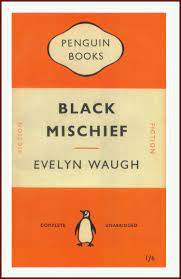
TBR Yr 10 5. Black Mischief – Evelyn Waugh

Genre: Satire, Classics

Narrative Style: Third person, chronological

Rating: 3/5

Published: 1932

Format: Paperback

Synopsis: Black Mischief is set on the fictional island of Azania and follows new emperor, Seth as he tries to set up his government and modernise the country. He is aided by his Oxford friend, Basil Seal who sees plenty of possibilities in the new country.

Reading challenges: TBR Challenge

Time on shelf: At least 10 years. It was in a boxset of classics that I got for Christmas one year. I put off reading it because might not have stood the test of time. But I have read Waugh before and quite enjoyed it so I thought I’d give it a go.

This was a strange and sometimes uncomfortable read. It is supposed to be satirical. Perhaps it was. It’s hard to know what people might have made of it at the time. To me. it felt muddled, unfunny and, at times, racist. It has certainly been my least favourite Waugh.

Of course, it is hard to judge a man outside of his time and I doubt very much that Waugh was saying things that were very different from what a lot of people thought at the time. It can’t be expected that writers will be able to predict exactly what ideas will change and how. Who knows what future generations will make of what current authors have to say and what ways we will be criticised.

So what was good – well, some of the satire did still stick. The way that Seth favoured everything that was modern regardless of its usefulness was amusing. Like the tank he brought to Azania without thinking of the heat. Like the boots he tries to make his army wear. He is constantly coming up with new and ridiculous ideas. He creates new money that is useless. He has no more idea about the country of Azania than any of the white diplomats. His Oxford education has merely widened the gap between him and his people.

All of the white diplomats and their families were ridiculous and incompetent. They were concerned with their own schemes and their own betterment. They didn’t care about the country and they didn’t care about the people who lived there unless it might affect their comfort and safety. All of which felt like it might be true.

But there were bad things. Waugh has no issue with the N word. He also uses ‘darkie’. One character goes by the name of Black Bitch. There is cannibalism. All of which are bad to our eyes but probably weren’t that outlandish at the time of publication. Without a doubt, though, the worse thing is that Waugh can’t imagine a future of self rule for Africa. Seth is out of touch with his own country, more like the white man than his fellow Africans. When he takes over the country, some of the diplomats plan a coup d’etat. They find Seth’s senile uncle, Achon and reinstall him on the throne (presumably because they will be able to control him). He promptly dies and Seth is killed by one of his ministers. The league of nations has to step in and claim the country. I found this the most difficult thing to deal with. I don’t know how big a feat of imagination it might have been for Waugh to picture an Africa ruled competently by Africans but I found the end of this novel rather depressing.

TBR YR 10 – The Moon is a Harsh Mistress – Robert A. Heinlein

Genre: Science fiction, Classics, Politics

Narrative Style: First person, chronological

Rating: 4/5

Published: 1966

Synopsis: The moon (Luna) is a former penal colony for Earth. They provide a lot of grain to Earth and are tied into an almost impossible to escape business structure that keeps Luna inhabitants poor and Earth well fed. The Federated Nations refuse to acknowledge Luna as a real country and release them from servitude. When Mannie Garcia, a computer technician realises that the central computer for Luna is self- aware, he, and his companions Wyoh and The Prof, start to consider the possibilities of rebellion.

Format: Kindle

Time on Shelf: A few years now. I had heard of it and was curious but slightly wary as I hasn’t got on very well with Starship Troopers, the last book I read by Heinlein.

Reading Challenges: TBR Challenge hosted by Roof Beam Reader

I really enjoyed this. I liked the politics – which seemed as apt as when Heinlein wrote it – and the style. The plot is generally quite exciting and for the most part, it moved quite quickly. It does get a bit gummed up in the middle when there are long political interludes during the setting up of the rebel group but by the end, the pace had picked up again.

The novel is written from Mannie’s point of view. His first person narrative is written in pidgin English with words taken from Russian and from Australian slang, for example and using a simplified grammar system. He is suitably cynical and generally easy with working outside of the law. He is the first one to realise that the main computer – which he christens Mike (short for Mycroft Holmes) – is self-aware and trying to make a joke when he attempts to send out a pay check for a ridiculous amount of money. The two quickly become friends and Mannie attempts to teach Mike what humour actually looks like.

Mannie attends a political meeting where he meets Wyoh, a visiting political activist. When the meeting ends in a riot, Mannie hides Wyoh and introduces her, and his mentor, Professor de la Paz to Mike. They begin to discuss the likelihood of rebelling and as Mike is able to calculate the odds of a number of scenarios, they are able to work out there best odds of succeeding.

Mike is an interesting character. He is like a cross between a walking encyclopaedia and a somewhat annoying child. He is able to develop a voice for himself and an image so that he can be the leader of the group – named Adam Selene. He also has a rebellious alter ego called Simon Jester who creates political slogans which are quickly taken up by the populace. It was interesting that I quickly forgot that Mike was a mere machine. There were times when I worried that Mike was not trustworthy – a strange thought to have about a machine – like, for example, when he reveals he has used Mannie’s voice to give orders or when I remembered that he was so interested in what a successful joke might look like.

The final chapter details the war between the Federated Nations and Luna. It is a welcom relief from the political talk and posturing of the previous chapter as there is plenty of action. Even so, the ending felt anticlimactic. Although they win their freedom, the new government soon falls within predictable lines. Disappointingly, Mike is taken offline during the bombardment and cannot be found. Mannie is distraught by this and mourns Mike as he mourns Prof (who dies of heart failure as soon as Luna’s freedom is secured). It is disappointing but maybe that is the way of revolutions.

TBR 10 Yr – Munich – Robert Harris

Genre: Historical Fiction, Espionage

Narrative Style: Third person with viewpoint alternating between two characters. Chronological.

Rating: 4/5

Published: 2017

Format: Kindle

Synopsis: Hitler is determined to start a war and Chamberlain is determined to stop him. Hugh Legat works as one of the prime minister’s private secretaries. His old friend, Paul Hartman is a German diplomat. They haven’t seen each other since 1932. Now there paths are destined to cross in Munich when both leaders arrive in the city to try and reach a historic agreement.

Reading Challenge: TBR Challenge 2023

Time on Shelf: I bought this not long after it came out. I really enjoyed Fatherland and was keen to read more by Harris.

There were a couple of things that attracted me to this book. First of all, it was about a time in history that I hadn’t read much about. Books about world war two tend to focus on later events and on Winston Churchill. Secondly, I was keen to read a straightforward historical novel from Harris after reading Fatherland. Finally, I have mixed feelings about spy fiction but felt that if anyone could do it well, it would be Harris.

The book is set in September 1938. Hitler is threatening to invade Czechoslovakia. He wants possession of the parts of the country that are settled largely by Germans and war will be the result if he doesn’t get them. Chamberlain, along with other leaders are tasked with resolving this. We see the story unfold from the point of view of Legat, first of all and then from the German side, from that of Paul Hartman, both of whom are closely involved with the events.

Legat begins the novel an ordinary civil servant with a unhappy marriage. He is an ordinary man in an extraordinary position. The first thing that happens to him is he attends a meeting between Chamberlain and the heads of the armed forces in which he learns that the Navy are not yet ready for war as they were not expecting this situation to arrive so soon. Immediately after, he is told to destroy his notes, something he finds quite shocking. How close this is to the truth I am unsure but it certainly gives a different slant to the events that follow.

By contrast, Paul Hartmann is confident, almost arrogant. He had initially supported the new regime and so has a position within the foreign office. He is now beginning to feel uneasy with the regime and is part of an underground group that are planning to get rid of Hitler. Their plot involves the army and requires a war to be started. When some material comes into his hands that shows that Hitler is lying when he says that he has no further territorial ambitions and he will not invade anywhere if he gets the Sudetenland, he thinks of his old college friend and sends it to Legat.

At first, the narrative moves between Legat and Hartman in alternate chapters, helping to make the story tense. Of course, we know how the conference between Hitler and Chamberlain turns out but it is still interesting to see the machinations of both governments as they move towards it. As the story progresses and both Legat and Hartman are in Munich, the story switches between their viewpoints more quickly and it is possible to sense the frustration of both men at their own powerlessness in the grand scheme of things.

The characterisation of Chamberlain was interesting. The popular view of him is that he capitulated to Hitler because he was a coward and if not for Churchill we’d all be speaking German now. Harris paints him as an honourable man who is passionately opposed to war at this point in time. He knows his armed forces aren’t ready and he feels that the country will not back him if they went to war over this issue. While it is easy for us to see that the note he comes back with is ridiculous and that Hitler will break his promise, it is also possible to see the honest hope that Chamberlain has in this act.

I did enjoy this book and it is certainly one of the best spy novels I have read, I did feel that these stories always seem to turn on people’s stupidity (for example, Legat leaves secret documents in his room which is then burgled) and also on exceptional good luck. (Legat doesn’t actually lose the documents. Chamberlain’s secretary gets them just in time.) Also, the characters of Legat and Hartman sometimes seemed a little clichéd but overall, it kept me reading and made me think differently about the Munich agreement.

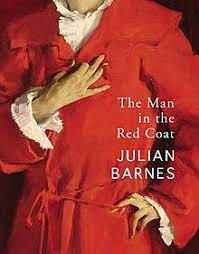
TBR YR 10 – 2. The Man in the Red Coat – Julian Barnes

Genre: Biography, History

Narrative Style: Third person

Published: 2019

Rating 5/5

Format: Hardback

Synopsis: Barnes’ biography of Samuel Pozzi begins with a trip to London by three men – a count, a prince and a commoner – the commoner being Pozzi – and expands to take in the Parisian Belle Epoque. Pozzi is the man in the red coat – one of John Singer Sargent’s greatest portraits. Whilst describing the life of Pozzi, Barnes discusses the ideas of the era and describes some of its liveliest characters including Oscar Wilde and Sarah Bernhardt.

Time on shelf: Not sure why this one lingered for so long. I’m a big fan of Julian Barnes and usually read his books quite quickly after purchase.

Reading challenges: TBR Challenge hosted by Adam at Roof Beam Reader.

This was a joy from start to finish. Barnes has an easy style – like having a fireside chat with a friendly history professor. He describes the life of Samuel Pozzi in the main, but also the other two men who arrive in London with him – Count Robert de Montesquiou and Prince Edmund De Polignac. This is a jumping off point for a wider discussion of the times which takes in duelling, dandys, the Dreyfus affair and the trial of Oscar Wilde. The supporting cast of characters includes Wilde, Sarah Bernhardt, Jean Lorrain and Joris-Karl Huysmans, all of whom are colourful to have been the subjects of this book.

Pozzi is an interesting character. He is an excellent surgeon who transformed working practises and made several operations safer. He was a gynocologist of some renown although he was also known for having affairs with his patients. He was married but had many affairs. He became rich and moved in the same circles as princes and counts. He treated Sarah Bernhardt who called him Dr God.

As A History of the World in 10 and a 1/2 Chapters takes the idea of the novel to the very limits, this explores the limitations of historical biographies. Often, Barnes explains, we cannot know exactly what happened. We are relying on others telling the truth and not being vindictive. We have to have a wider understanding of the age. Barnes writes this almost like a novel, wandering along the timeline and back again. There are recurring motifs such as that of bullets and duelling. At one point, Barnes says if this was a novel we would know this information because the author would make it so but as it is, we cannot know.

Overall, this was enjoyable and informative. Barnes has a clear love for his subject. (He is a renowned Francophile.) He has done a lot of research and the era and characters come alive for the reader. Thoroughly recommended.

TBRYear 10 – 1. The Children of Men by P. D. James

Genre: Dystopia

Narrative style: Chronological, shifts between first and third person.

Rating: 2/5

Published: 1992

Format: Kindle

Synopsis: Babies are no longer being born anywhere around the world. This has been so for over 20 years. Theo Faron is merely getting through his days with no hope for the future – either his own or that of civilisation. Then he meets Julian who is part of an activist group. Theo is immediately attracted to her and agrees – against his better judgement – to help the group out.

Time on shelf: I’ve wanted to read this for a long time. I bought this copy about three or four years ago but I kept overlooking it.

Reading challenges: TBR Challenge

I really wanted to enjoy this. I’m a big fan of dystopias (The Handmaid’s Tale, 1984 and Brave New World are some of my favourite books) but I couldn’t get to grips with this one. It’s a shame as James clearly had some interesting things to say about power and its abuses. The things she describes happening are apt and I could imagine that would be how things would go if such a dreadful thing were to occur. Unfortunately the plot and characterisation didn’t live up to that promise.

My first problem was with Theo’s first person narration – written as diary entries. I know that he was a historian and also bored with his existence but did his voice have to be so dull and plodding? He is also an unpleasant person with barely a thought for anyone else. He accidentally ran over and killed his daughter but shows little feeling for the child or for her mother when she is grieving. Don’t get me wrong, I love a less than perfect hero as much as the next person but Theo was almost impossible to like. There was no way to root for him.

James switches from Theo’s diary entries to third person narration from Theo’s point of view every couple of chapters. I wasn’t really sure why she used this device as it didn’t allow the reader access to anyone else’s thoughts. It did at least save the reader from the tedium of Theo’s first person voice. About halfway through the novel, Theo throws away his diary and the novel from then on is in third person. Fair enough but there were third person chapters before that happened.

The plot is very slow moving. It feels like a long time before anything happens. Even once Theo has met Julian, things don’t speed up. He agrees to help her and the other members of the ‘five fishes’ group after seeing the horror of a ‘quietus’ – the government’s way of dealing with the immense number of elderly people – where the elderly are expected to ‘voluntarily’ commit suicide when they reach a certain age. (This was one of the better parts of the book. Theo is forced to think for himself and to realise that the Government are actually not as good as he thought.) This is further brought home to him when he naively goes to visit Xan, the Warden of England, who also happens to be his cousin and finds he cannot persuade him to change any of his ideals.

I felt that James could have picked any issue to write this dystopia. While there are details of women christening their pets or pushing around dolls in prams because the focus is on Theo (who didn’t even love the child he had) we don’t see much of the emotion of the situation. There is no longing for a younger generation from him. He is only concerned for himself. At the end of the novel, Theo shoots the Warden and takes the ring that symbolises his power. It seems that he will be the next leader of England – especially as he can now introduce the first baby born since 1995 to the world. Given Theo’s lack of feeling for others, it is doubtful he will make a better leader than Xan. The novel ends with him baptising the new baby suggesting his new sense of power and Julian (the baby’s mother) can only look on, pushed aside as surely as she would have been if Xan had still been in charge. James makes a strong point about power and the way men push women aside even when they are needed for the most important job in the world. I just wish that the story that brought us to this point have been better.

TBR Challenge 2023 – Sign up.

Once again, I am going to sign up for the TBR Challenge hosted by Adam at Roof Beam Reader. I haven’t really looked at any other challenges yet but this one is a definite because it means that I will definitely clear some of my TBR pile.

Here is my list:

  1. The Thing Around Your Neck – Chimananda Ngozi Adichie (2008) Finished 21/1/23
  2. Lucky Jim – Kingsley Amis (1954)
  3. The Man in the Red Coat – Julian Barnes (2019) – Finished 28/1/23
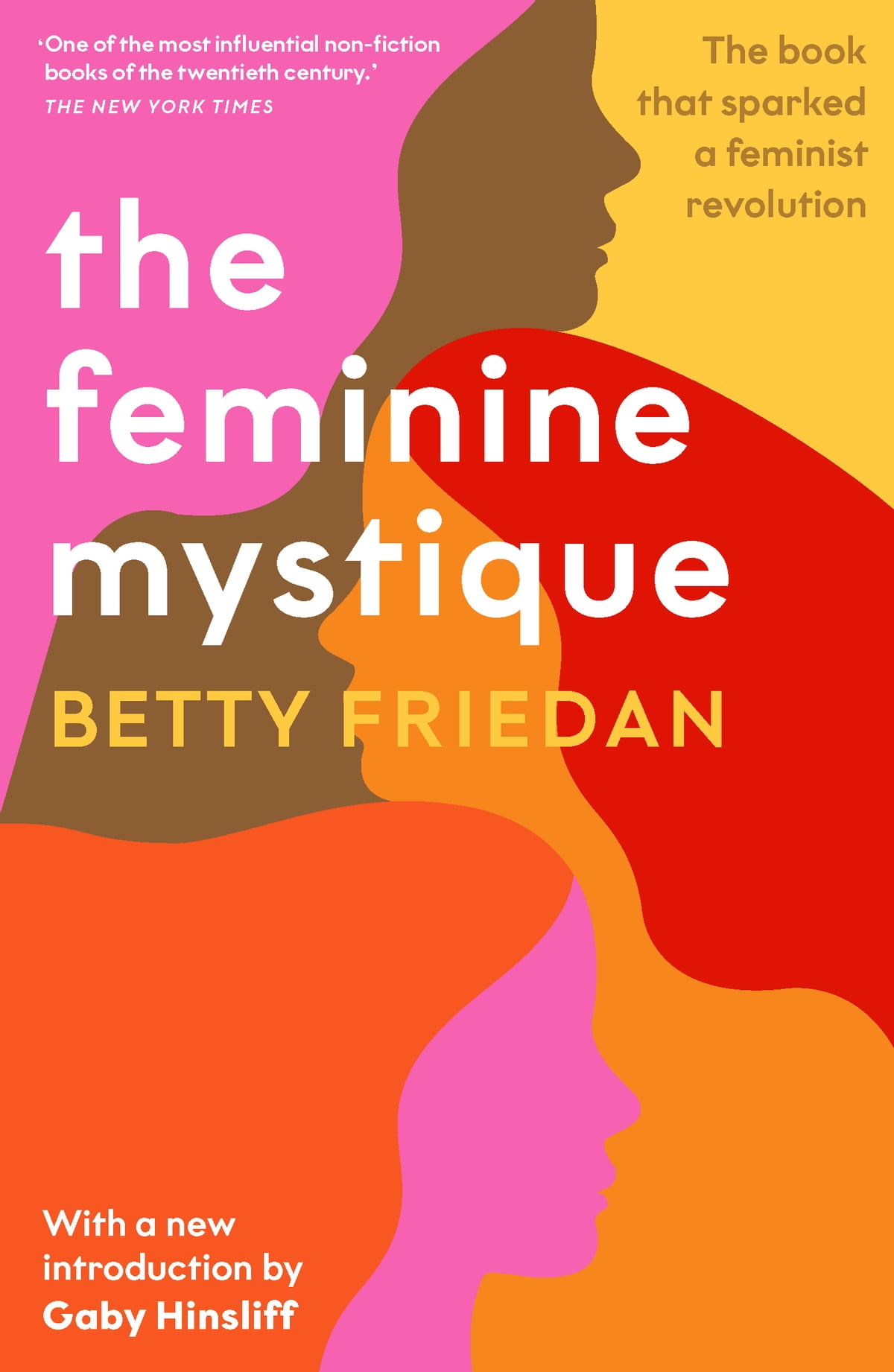
  4. The Feminine Mystique – Betty Friedan (1963) – 2/8/23
  5. Munich – Robert Harris (2017) Finished 7/3/23
  6. The Moon is a Harsh Mistress – Robert A. Heinlein (1966) Finished 17/4/23
  7. The Children of Men – P.D, James (1992) Finished 20/1/23
  8. Me Before You – Jo Jo Moyles (2012) Finished 11/10/23
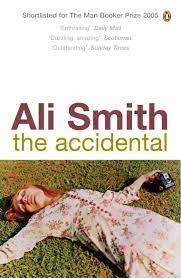
  9. The Accidental – Ali Smith (2005) Finished 31/7/23
  10. No One Here Gets Out Alive – Danny Sugarman and Jerry Hopkins (1980) – Finished 4/7/23
  11. Black Mischief – Evelyn Waugh (1932) – Finished 26/5/23
  12. The Golem and the Djinn – Helene Wecker (2013) – Finished 2/6/23

Alternatives:

  1. I, Claudius – Robert Graves (1934)
  2. All the Pretty Horses – Cormac McCarthy (1992)

Round up of last year

I lost my blogging mojo in the middle of last year. I’m not sure why. I was a little busy but no more than usual. I could have done it but I just couldn’t bring myself to write them. In the end, I wrote the blogs for TBR Challenge 2022 (hosted by Roof Beam Reader) but even then I only just managed to finish by the end of the year. I read the last book – The Princess Bride – by the start of December but didn’t manage to write the review until the end of the month. I’ve been meaning to write this round up for days. I had to make myself sit down and do it.

It isn’t general apathy. I’m reading and writing as much as I can. I haven’t read as many books as previously (33) because I am commuting less and I don’t have a lunch break where I can just sit and read anymore but I’m still enthusiastic about reading. I’m hoping that I’ll get back into it this year as it is something I do enjoy. I’m not going to try to review every book I read – although it is my intention to do the TBR Challenge again because it is enjoyable and helps me read books that have been hanging around on my shelves for ages.

As for reading. it was generally quite a good year. Quite a few of the books I read for the TBR Challenge were very good – Outliers by Malcolm Gladwell, The Lost Language of Cranes by David Leavitt and Ananci Boys by Neil Gaiman were all excellent and I would thoroughly recommend. Other favourites of the year were Shuggie Bain by Douglas Stuart and The Underground Railway by Colson Whitehead. I didn’t manage to finish Crime and Punishment by Fyodor Dostoevsky which was disappointing but I made a decision a few years ago that I wasn’t going to struggle on with a book that was annoying me and I found I had little care about the narrator and his plans. Life’s too short to read a book that isn’t pleasing.

List of what I hope to read this year:

  1. The Thing Around Your Neck – Chimananda Ngozi Adiche – Finished 21/9/23
  2. Lucky Jim – Kingsley Amis Currently reading
  3. The Man in the Red Coat – Julian Barnes – Finished 28/1/23
  4. The Tennant of Wildfell Hall – Anne Bronte
  5. Wuthering Heights – Emily Bronte – 10/3/23
  6. The City and the Stars – Arthur C. CLarke – Finished 8/1/23
  7. Invisible Women – Caroline Craido-Perez
  8. The Feminine Mystique – Betty Friedan – Finished 2/8/23
  9. I, Claudius – Robert Graves
  10. Munich – Robert Harris – Finished 7/3/23
  11. The Moon is a Harsh Mistress – Robert A Heinlein 17/4/23
  12. A Widow for One Year – John Irving – Finished 26/11/23
  13. The Children of Men – P. D. James -Finished 20/1/23
  14. Fludd – Hilary Mantel
  15. No One Writes to the Colonel – Gabriel Garcia Marquez
  16. All the Pretty Horses – Cormac McCarthy
  17. Big Little Lies – Lianne Moriaty
  18. Me Before You – Jojo Moyes -Finished 11/10/23
  19. Hamnet – Maggie O’Farrell – Finished 10/5/23
  20. Dr Zhivago – Boris Pasternak
  21. Tales of Mystery and Imagination – Edgar Allen Poe – 29/4/23
  22. The Ministry of the Future – Kim Stanley Robinson – Finished 2/10/23
  23. Touching the Void – Joe Simpson
  24. The Accidental – Ali Smith – Finished 31/7/23
  25. N-W – Zadie Smith
  26. No one Here Gets Out Alive – Danny Sugarman and Jerry Hopkins – Finished 4/7/23
  27. The Magician – Colm Toibin – Finished 17/3/23
  28. The Return of the King – J R R Tolkien – Currently reading
  29. Black Mischief – Evelyn Waugh 26/5/23
  30. The Golem and the Djinn – Helene Wecker 2/6/23
  31. Harlem Shuffle – Colson Whitehead

Books Read in 2022 – 30. The Princess Bride – William Goldman

Genre: fantasy, children’s literature, adventure

Narrative Style: Third person, chronological with interruptions from the author.

Published: 1973

Rating: 3/5

Synopsis: This is the story of Buttercup, the most beautiful girl in the world and the ups and downs of her romance with Westley. It is also the story of Goldman abridging the tale (written by S. Morgenstern) he heard his father tell him as a boy. This leads to intrusions and asides from the author.

Time on shelf: A couple of years. I haven’t seen the film but a few of my friends really like it so I thought I’d read the book first.

Reading Challenges: TBR Reading Challenge 2022

This was a lot stranger than I thought it was going to be. I was expecting a straightforward adventure romp – and, of course, it is a romp, – but it is anything but straightforward. Goldman claims that the he didn’t write the book but is merely abridging it so that it is as good as when his father read it to him when he was a boy. He is keen to make sure we skip the boring bits.

I really enjoyed aspects of this book. I loved Inigo’s storyline and character. He was definitely my favourite and his sword fight with the man in black was one of the best moments of the book. I also enjoyed Fezzik’s rhyming and the way it was used throughout the narrative. There were some real moments of magic.

Unfortunately, they couldn’t quite overcome my irritation. Westley and Buttercup annoyed me no end. Especially Buttercup. The interruptions of the ‘author’s voice’ broke up the narrative in a way I found irritating. Finally, the ending left me feeling non-plussed. Overall, it was a very odd reading experience.

That said, I can see that this would make a great film so I will definitely be making an effort to see it in the future,

TBR Challenge – Books Read in 2022 – 27. Have You Eaten Grandma? – Gyles Brandreth

Genre: grammar, the English language

Narrative Style: first person, informal

Published: 2018

Rating: 4/5

Format: Hardback

Synopsis: Gyles Brandreth does not like grammar and punctuation mistakes. In this book, he takes on the linguistic horrors of our times. He explains, offers advice and discusses the importance of language and using it well.

Reading Challenges: TBR Challenge 2022

Time on Shelf: I bought this in 2018, not long after it came out.

I love a book about grammar and language usage. It really brings out the English teacher in me. I like the preciseness of it, discussing exact usage and reminding myself of the rules.

Of course, this being Brandreth, this isn’t just a user’s guide to the English language, it’s packed with little asides and amusing anecdotes – all told in his trademark style. This is not a dry language guide. When he is talking about colons, he compares them to binoculars because the colon helps you look ahead. This is a very straightforward way of explaining the colon’s usage. Much easier than a technical explanation.

There is a lot of silliness and some name-dropping, of course. He mentions that the Queen’s comfort breaks are scheduled as ‘opportunity to tidy’ which is quite marvellous. He is also surprisingly modern. For all his Conservative MP status, he is not a stick in the mud language must not change type. He seems to find some joy in online abbreviations and encourages people to look to rappers as well as Jane Austen.

I really enjoyed this book but it’s appeal is probably a bit niche. For all its humour, I imagine most people don’t give much thought to misplaced apostrophes or to why ‘Can I get’ is so annoying and so would probably balk at reading an entire book of grammar advice. Given the amount of badly written PowerPoints I have to sit through in meetings and training, this seems a shame.