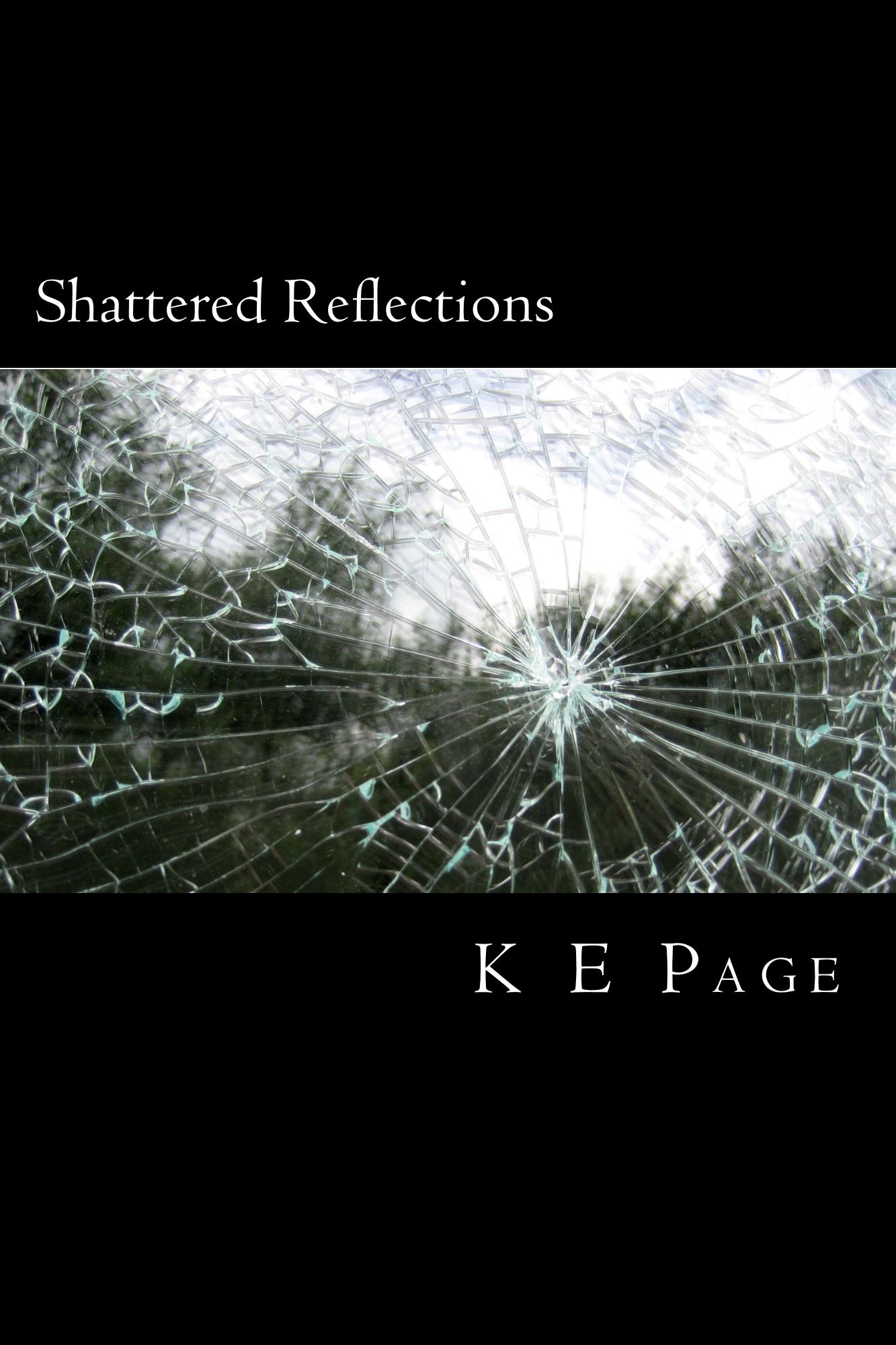
The Real World Keeps Getting in the Way

It has been a month of getting very little done. After a very productive April, I have had a really annoying May. The real world keeps intruding into the world of writing which is just rude, if you ask me.

First of all, I was in Newcastle, helping my mam after a knee operation. This meant ten days without the Internet and without really getting any writing done. This last was due to the fact that I like to write on my own and I never really was. So I maybe achieved an hour at night when I was tired, most of which was rubbish which I immediately changed. Although I did manage to finish reading The Female Malady by Elaine Showalter which is part of my research for Choose Yr Future so that was productive. (It isn’t all just about words on the page, I have to remind myself.)

Then, back at school, we got the call from Ofsted which meant that all spare time was spent preparing for that. An Ofsted inspection is incredibly stressful even if you aren’t seen – which I wasn’t this time – and I spent the weekend after in a haze of tiredness and so again got very little done.

Last week was half term, a time when I usually catch up a little and rest a little. Foolishly, I agreed to do some one to one tutoring over the holidays as extra cash is always welcome.  However, it soon became clear that I would get nothing else but lesson planning done and I regretted my decision. I’ll just have to hope that all the notes I’ve made when I have an idea will still make sense when I eventually get around to writing them in full.

Unfortunately, it will probably be the summer before that happens. From next weekend I will be marking exam papers for the next three weeks and that is incredibly time consuming. Its hard balancing the need to make money with having the time to write and sometimes it feels like the scales are tipped the wrong way constantly. At least I can see a time on the horizon when I can write and when I can catch up with myself a little.

No More Mr Nice Guy

A recent four star review of Shattered Reflections on Amazon said that although a lot of the characters were not nice this made it a better story. This review pleased me as it suggested that he had understood what I was trying to do. Making characters likeable is not something I have ever been concerned about.

It is certainly true thatShattered_Reflection_Cover_for_Kindle even the more appealing characters in Shattered Reflections have a nastier side. Jamie Hartnell, one of the main characters, begins the novel as a studious, sensible character. If he had remained that way throughout the novel, he would have been pretty one dimensional and no one would have cared about him. However, when it is discovered at school that he is gay and his so-called friend George starts to make his life a misery, I felt it was realistic to show the changes in his personality as he became more defensive and so very angry. His relationship with his mother also deteriorates, something he feels particularly angry about. He could not remain the same, no one could go through that and still be the same person.

At the same time, I do not believe that having characters that are irredeemably evil is any better or any less one dimensional. George could be seen as the villain of the piece but he was struggling with issues of his own relating to his sexuality and I wanted to make it apparent that this was the reason for his violence. Even the most terrible of characters – Patrick Bateman springs to mind – have to have something to keep the reader interested. For example, while obviously Bateman is not likeable, it is possible to feel concern for him and understand that he is trapped in a system that alienates people so much that they consider murder the only way they can be noticed.

Finally, I wanted to write a novel that was quite psychological and while it is written in third person, it is always from the various characters’ points of view. I think that if you could genuinely see inside other people’s heads you would find that most people have a less than likeable side. Most of us think things that we would never share and part of being a nice person is not sharing them with others. However, when you are writing from a character’s point of view, you cannot afford to leave such thoughts out. It would be dishonest and you would be left with those nice, one-dimensional characters that make for such bad fiction.


80000 words so far.

Over the last week, I have been reading over the 80000 words that I have so far written of Choose Yr Future. I decided to read through even though it is not finished because I felt, on the one hand, I was getting lost, and on other, my ideas were spiralling out of control. Getting to grips with my original ideas seemed like a good idea. Some of this was written quite a while ago when I was editing Shattered Reflections so I wanted to see if it all still fitted together.

I don’t work in a linear fashion. (That’d be too easy, right?) It has always been the same for me, whatever I have written, essays, lesson plans; I just don’t seem to be able to work in a straight line. Now, don’t get me wrong, I know where this is going and I do have a plan of events and also other things that I wish to include. But the story will be told from different viewpoints so if I get going with one of the characters I might write all of the events that they are going to narrate, rather than the events in chronological order.

As you can imagine there are endless possibilities for confusion with this method. But I am satisfied that it will all come together in the end. It always does. And it is good, I think to remind yourself of what you have done and where it is going.

It is interesting that some of the oldest bits of this writing are definitely the worst. They explain straight off to the reader what I have expressed more subtlely in other places. It will involve more re-writing then I might have envisaged at this stage. Ultimately though I am pleased to have done it, to see which ideas work and which don’t means I can focus my attention now instead of waiting until the very end.

So, a lot of work still to be done but this is the part that is the most enjoyable so I don’t really mind.

Writing Letters Home – a story set in the trenches

I first read poetry from the first world war when I was in sixth form (more than 20 years ago now). I still remember reading some reading some of the poems for the first time and being impressed by how vividly they had captured the atmosphere of the horrific nature of trench warfare. Lines have  stuck with me –  ‘You are too young to fall asleep forever, and when you sleep you remind me of the dead’ from The Dug Out by Siegfried Sassoon, for example, is a poignant reminder of how close the soldiers were to death on a daily basis. My favourite Owen poem was Strange Meeting which has the soldier meeting the enemy he has killed in hell with the famous line ‘I am the enemy you killed, my friend’, although I loved all the Owen poems that we studied.

The era has held its fascination for me and I have read some of the classic literature set in that time, Strange Meeting, Birdsong, The Regeneration trilogy, for example. So when recently my A Level class had to write a story based on a war of their choosing, I decided that I would also try to write a story and I would set it in the first world war. They had to first of all find style models and read as much from their chosen era as possible, in order to gain an idea of context. They had to keep a diary of what they read and what they gained from it.

It was interesting to work so rigorously through the steps of research into writing and producing. I must admit that my normal habits were a lot less organised. I made lists. I made notes. A habit I have tried to keep to although there is still part of me that thinks that I should just be able to keep it all in my head. I read more poetry, more novels. I knew exactly where I was going.

The resulting short story – Letters Home –  owes a lot to the poetry of Owen and I tried to uses some strong imagery to describe the daily horror of life in the trenches. It also owes a debt to Strange Meeting by Susan Hill which is one of my favourite novels. The novel is about the friendship between two contrasting men in the trenches which ends with one of them missing in action. This was the inspiration for the relationship between Mark and James in my story, one of whom is open and friendly, the other more reserved, finding all relationships difficult. I decided to take this a step further than Hill and have one of my characters be unsure about his sexuality. In fact, it isn’t even as conscious as that. He is unable to acknowledge any of the feelings he has for James but also does not wish to return home to the girl who is waiting there for him.

In the end, what this exercise taught me is that influence and inspiration can come from two places – from factual knowledge of a given time and from reading fiction of a similar style or set in the same era as what you are trying to write.

Letters Home is up on my website under short fiction if you would like to read it and give me your opinion.

Keeping it small

I’ve never been very good at writing short stories. The smallness of the idea never seems to last. Choose your future started life as a fairly simple idea about a woman having a melt down in a supermarket because she couldn’t cope with the perfection of the genetically modified tomatoes. Once I started to write it though, it very quickly grew to the current 60000 words of a novel. The universe very quickly expanded outwards – like universes tend to do, I suppose. Because it is set in the future, I suppose there are details and ideas that I wouldn’t have to deal with if this was set in the normal reality of everyday life and this is pushing up the word count.

Now I am concerned that I have too many ideas. I’m already thinking that my first edit will be a drastic one, hacking away all the ideas and characters that do not work or are unnecessary. At the minute though, I am willing to let it expand. It might sound ridiculous  that I would let it grow to untold size in order to crop it at some point in the future. All I can say is I cannot tell at the minute which branches it will be that are culled and which will be allowed to stay. I have to let it sprout with absolute freedom. Only when I have seen the whole will I know about the various parts.


Choose Your Future – New Project Excitement

Blimey, it has been busy these last few days. What with exam papers to mark and supply work going haywire, I seem to have been nowhere near my computer lately. At the same time, I am enthusiastically scribbling chapters of a new novel at any spare moment – on the tram or train, before I go to sleep and over breakfast. No moment can go to waste.

As I mentioned in an earlier blog, this will be a different genre and style from Shattered Reflections although some of the concerns are the same – sexuality, gender, power and violence – but also adding in other of my pet concerns such as the nanny state, reality TV and the class system. It will be set about 150 years in the future which is fun as it allows me to create a whole new world. In fact, as I am grumpy and given to moaning about everything, it is definitely not an issue finding things to write about. In fact, it is more difficult trying to rein myself and keep to the subjects that I have so far planned for.

I am toying with the name Choose Your Future but this has already changed a couple of times and will probably again. (I didn’t settle on Shattered Reflections until quite near the end of the writing process.) Certainly, it will be a title about choice as that is a major theme. I have written about 40000 words so far (more, actually, as that is the total from what I have had time to type up. There are notebooks waiting for that privilege).  At the current rate, it shouldn’t be too long before I have a first draft although that is just the first step in a long process of editing and reading, it is still quite exciting.

New Challenge Needed

Well, the 30 day book challenge is finally over. A sigh of relief then, definitely. But also the certain knowledge that I would like to keep up the blogging pace and I would now have to think of my own subject matter. No fun, this having to think lark.

So I would like to say two things in this blog. The first is a great big thanks to all of you who have liked my posts and those who have started to follow me during this last month. It is incredibly flattering and always a surprise when people like my posts and I never really expect it. I can’t imagine why anyone would want to see the inside of my head on the page. Sometimes I don’t even like it in there all that much. So, thank you all.

The second thing is I am looking for a new blogging challenge. Something similar to the 30 day book challenge which was good because it wasn’t reliant on my finishing a book under a time scale. If you know of anything like this, please let me know and I will consider doing it.

Time is on my side…

Time management is not an easy skill to acquire. Everyone feels they need more time. My husband, no matter how much he does at work, always laments the one thing he didn’t get done. There are never enough hours for him.

i used to be terrible at managing my time but organising a teaching schedule everyday is a lesson in the value of prioritising. It’s a lesson you learn quickly if you don’t want to drown in a sea of lesson plans. The other lesson you learn pretty quickly is that you never get to the end of the to do list. The to do list is a process rather than a thing. It grows and changes but it never goes away. There are only so many hours in the day and only so many that should be devoted to work. Everything gets done eventually. Nothing is ever as urgent as it seems. No job is worth having no spare time for. Live to work or work to live has always seemed a fairly obvious choice.

It’s a little different with writing. I’d much rather write than do promotion. Making time for promotion is difficult because I almost never want to do it but I always want to write. I’d rather write than plan lessons or even worse, deal with some ridiculous piece of bureaucratic nonsense that teachers seem to spend far too much time having to do.

The real world will insist on interrupting and at the minute it is the world of working supply. This means that I don’t always know what I’m doing from one day to the next but it also means that I have no planning. Knowing that there are only certain times in the day when you can write is very focusing. It means I definitely have to do it and I have to do it now. I don’t spend three hours playing Sims because I think I have all day. I’m used to having to write when I can find the time. I still try to make sure I do it every day, even if that means writing on the train. That way, I feel I have achieved something, even if it is very small compared to wasting time days because I think I have all the time in the world.

The Pen is mightier than the IPad

Despite the fact that I have an IPad, a macbook and a PC in my house, I still find myself writing first drafts on paper. It may be my age (I know that is starting to sound like a dubious catchphrase) but I definitely view writing work up on a computer as a second stage, as some sort of best version. By the time I write anything on the PC it has already been re-worked a few times on paper. (A sign that it is my age: until recently the English exam board demanded that one piece of coursework be handwritten. The students wrote their work on the computer and then copied it out in their best handwriting. I didn’t see why the PC needed to be involved at all.)

Part of the problem with writing straight on to the computer – for me anyway – is that getting ideas down can often feel quite urgent and isn’t always perfect. The ideas are key and need to be expressed. However, often you know straight away that the wording will need to be changed or perhaps you find that you’ve used the same word a few times. But the idea, that is pressing and you need to concentrate on that or potentially lose its immediacy. On paper, it is very easy to indicate what may need to be changed later with circling, underlining and with arrows and footnotes. Not so much electronically.

And once the idea is born, it is very easy to feed it with detail as you type it up so that the version on the PC is fleshed out and stronger than the first. I suppose it is a case of old habits die hard as I first started writing when I was a student 20 years ago when all I had was a word processor which was less than user friendly and now it’s just the way I work. Even though I love my IPad unreservedly (unlike my kindle which I still sort of view as a wolf in sheep’s clothing as if one day it will bite my hand off) I can’t see this process changing.

Constant Contact

It’s been a weird couple of months. For various real life reasons – my own illness and my mother being in and out of hospital – I haven’t been able to have much of an online presence. As a result, I have been running up and down the road between my home in Sheffield and hers in Newcastle. Book promotion and blogging have been the furthest things from my mind. And even if I had been able to think about such things, she has no internet so it would have been impossible anyway.

It is astonishing how out of touch I felt. And how deprived I felt when I was there. It has quickly become second nature to be constantly connected. I don’t just mean in terms of social networking either. The idea that the knowledge of the world is at your fingertips is an easy one to get used to. Why bother racking your brains trying to remember something when you could just look it up? Especially when to takes such a long time to get my brain into gear some days.

It wasn’t that long ago, when the Internet was a mere babe, that we had to put up with a dial up connection. (OK, so it was about ten to fifteen years ago but that isn’t that long in the grand scheme of things.) It was a chore to use the Internet then; the tying up of the phone line, the constant loss of signal, the slowness of pages loading, the fact that downloading was nigh on impossible. All these things seem chronically old fashioned now. Now that we are used to being able to hop onto the web wherever and whenever we are.

It was interesting to note that when my mother came home from hospital, her main mode of conversation was the phone – the land-line not her mobile. She talks to people all the time and wouldn’t think of anything else. She does have a mobile from which she sends rambling texts which are signed off love mam. But she only does that as a last resort, when, for whatever reason, I am not able to speak to her.

By contrast, I can’t think of the last time I picked up my land-line and phoned some one from it. In fact, I could probably get rid of it if not for the insistence of my mother and my in-laws that this is the way we should communicate. If I want to speak to friends I use Facebook, I text. If I have to actually speak to them, I phone using my mobile. (It should be obvious to you that I absolutely hate it when people say I’ll message you or Facebook me even when that person is me. But then I was suitably pedantic when people first started to use text as a verb.)

It is quick and convenient to text or use Facebook. The recipient can choose when to reply and you don’t have to worry that they will be bathing the kids or sitting down to dinner or whatever. It is also incredibly lazy. Why waste the energy that having a real conversation would take when you can send a one sentence text? Convenience and quickness have become the baseline of our communication.

The other thing I have noticed lately – and I am guilty of it myself – is that no one is ever bored any more  Everyone feels the need to be constantly entertained. Just look at the commuters on the average train and you will see them staring at screens of various sizes, doing things that seem crucially important but probably aren’t. All are lost in their own little worlds. Even in the pub you often see groups of people or couples who are not talking but messing with their phones. Virtual communication 1, Real communication 0.

Obviously, this could have a huge effect on everyone’s social skills. Especially now that younger and younger kids seem to have phones. Furthermore, what would happen if no one daydreamed any more  If every second was taken up with some form of electronic attention. Would all the great – and currently hypothetical – novels of the future remain unwritten? No more great discoveries would be made. (If Newton had been sitting under the tree playing on his IPhone when the apple landed on his head, would he have been able to draw himself away from Angry birds for long enough to hypothesise about gravity?) No more exciting leaps into the future. Sometimes you have to just be sitting staring out of the window, watching the world turn, to see the one thing that would make the world just a little bit better. Or sitting under a tree.