Eclectic Reading Challenge – New Adult – The Hunger Games by Suzanne Collins

I’d not heard of the New Adult genre before I signed up to do the Eclectic Reader Challenge – although I suspect that it means books for teenagers that adults would like to read – but I looked it up on Goodreads and The Hunger Games was one of the first books I noticed and I’d been meaning to read it for a while.

I really enjoyed this book. It had everything really – action, strong characters, a serious point to make and it was exciting enough to keep you turning the pages. In fact, I could not put it down. IMG_0030
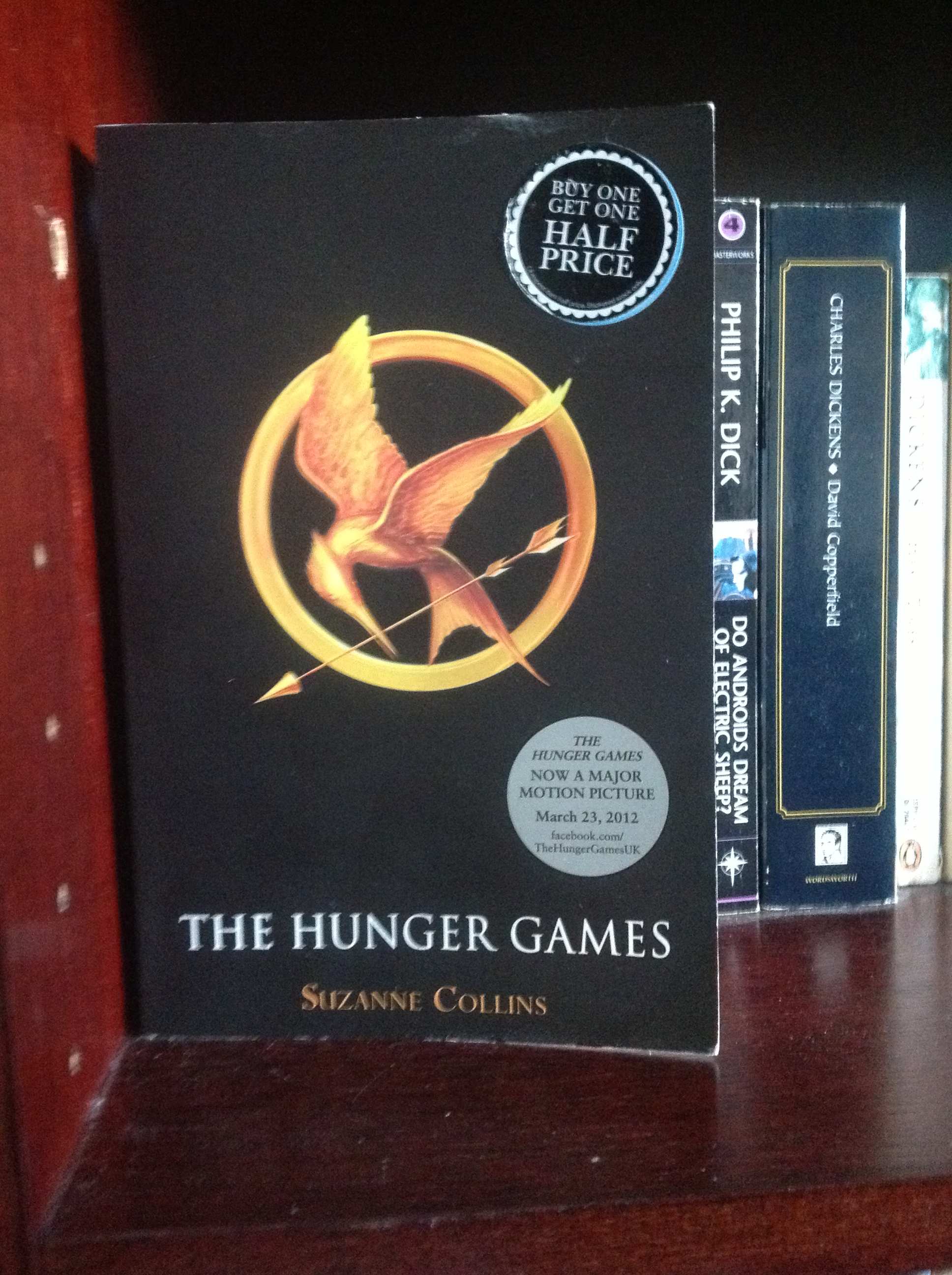
The character of Katniss and her relationship with fellow tribute, Peeta was compelling and I think teenagers particularly would be drawn into their potential romance. I do think this is clearly aimed at a teenage audience but that didn’t stop it from being an excellent read.

The idea of the hunger games is completely apt and believable. I could imagine Channel Four commissioning it. And people would watch it and vote for different ways for the contestants to die without a seconds thought. Well, hopefully not but it certainly wasn’t beyond the realms of possibility. And to me, that is the definition of what good science fiction should do – take some aspect of the current reality and magnify it, show what would happen if we took it to its logical extreme.

If I had to make a complaint about this book, I would say that I thought some of the plotting was a little heavy handed – for example the changes to the games rules annoyed me a little. But this in no way spoiled my enjoyment of this book. And while I haven’t rushed to the shop to buy the next one, I know I will read it. Perhaps when I’ve got through a few more of my to read list.

DAY 25. – The most surprising plot twist or ending.

My first choice here is The Life of Pi. It should be obvious that the story of Pi and Richard Parker cannot possibly be true. A boy in a boat with a Bengal tiger, obviously it could not happen. But the skill of Martel’s writing means that you are completely drawn into the situation. You never doubt it for a moment and in fact, if you are like me, you want to believe in the story that Pi spins even when you know the truth.

As this is a story about faith and belief, it is fitting that belief wins over the rational, logical version of events. For me, before this book, I never really understood the impulse towards religion but this book suggested how it was a solace in difficult times and how it helped people cope with terrible events. I wouldn’t say that I am now religious but I at least understand why you might be.

My second choice is The Wasp Factory by Iain Banks. This is a disturbing book with one of the most unsympathetic narrators I think I have ever come across. This is a bildungsroman like no other, although you could say it follows in the tradition of books such as The Catcher in the Rye and A Clockwork Orange. The violence is gruesomely inventive and unlike anything else I have ever read. Even the horrors of the book could not prepare me for the ending. I won’t spoil it for those who haven’t read it but it is cruel, humurous and wonderfully inventive. It puts the rest of the story in another light.

Eclectic Reader Challenge – Translated Literature – The Prague Cemetery – Umberto Eco.

Read for the Eclectic Reader Challenge.

I really wanted to love this book. I’ve read Eco before – The Name of the Rose and Foucault’s Pendulum – and really enjoyed his work. I was expecting to feel the same about this book.

I’m not even really sure what I found less enjoyable about it. It certainly isn’t as densely written as Foucault’s Pendulum and it covers some of the same sort of ground – conspiracies, fakes, the Masons – I just couldn’t get excited about it. In fact, at one point I was ready to abandon it altogether. I hate to not finish a book and besides I’d already said I would review it for this challenge. So I plodded onwards.

In actual fact, about half way through, the narrative suddenly caught

IMG_0026

me and I was intrigued to see where it would all end up. In terms of historical accuracy, Eco claims that all the events and characters existed in real life which is a little unnerving as this book is about anti-semitism and the faking of documents that suggested a Jewish global conspiracy that is said to have influenced Hitler. That gave the book a rather disturbing air.

One of the more convincing elements of this book was the description of the mind of Simonini, a man full of hatred and who was willing to kill anyone who got in the way of his grand plans. He becomes so disturbed that he actually takes on the persona of one of the many people that he kills. He was very effectively written and genuinely unsettling.

Ultimately, I think that I would have enjoyed this book more if it had started about halfway through and avoided all the detail about Garibaldi. And then perhaps it could have continued a bit longer as I felt I was just beginning to enjoy it when it actually ended.

Day 22 – A plot device that annoyed you – Atonement and The Time Traveller’s Wife

I’ve changed the title of today’s blog a little as I couldn’t think of any plot devices that had annoyed me over and over. I don’t read many series or books that are really similar to each other so instead I have chosen to look at two plot devices that I found so annoying they really spoiled my enjoyment of the books.

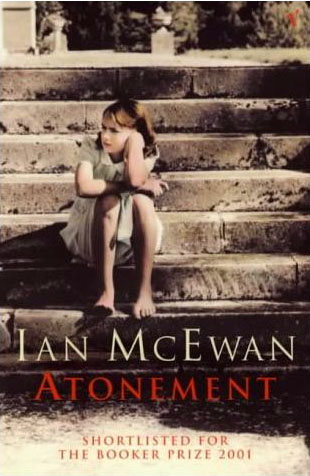
I really did enjoy reading Atonement by Ian McEwan. From the opening of the novel in Cambridgeshire, to the scenes of fighting and the horrors of working as a nurse in the second world war, I was convinced by the characters and the way their lives interwove. I think it is the fact that I had been so taken with the novel and its supposed resolution that annoyed me so much when I finally got to the end.

ian-mcewan-atonement

In the final section, it is revealed that the previous chapters were a novel written by Briony and in fact tragic lovers Robbie and Cecilia were not reunited in ‘real life’ but in a fiction within a fiction. Writing the novel was Briony’s atonement for the fact that she accused Robbie of rape and ruined any chances the pair might have had of actual romance. I admit that I felt a little cheated by this and I still feel it is akin to the sort of ending children write all the time, a more sophisticated version of ‘and then I woke up.’ The story is not the story you thought it was. Briony claimed that she did not want to give readers a hopeless ending but in actual fact the ending was much worse for giving hope and then saying that they could only have it within a fiction. Very disappointing.

My second choice is The Time Traveller’s Wife by Audrey Niffenegger. I found this book interesting and annoying in just about equal measure.

IMG_0027

The concept was exciting and Henry was a good romantic lead. The idea of the time travel wasn’t that hard to swallow once the story got going and I liked the muddled chronology of their romance.

However, what did annoy me was the way that despite the fact that Henry supposedly has no control over when he will travel and where to, he manages to get winning lottery numbers so that Clare will be able to carry on with her art without having to worry. I felt that this was a narrative cheat. Either Henry could control his travel or he couldn’t, but not control when it suited him and Niffenegger.

Incidentally, as this doesn’t directly fit with the title of today’s blog, it goes without saying that I found the end of this novel really irritating. The idea of a women waiting all those years because she knows she will have one more glimpse of the man she loved seems a little too like a fairy tale for my taste. It did not seem romantic, just out-moded and a little depressing. Most of the women I worked with at the time loved it so, hey, what do I know.

DAY 21. – Book you tell people you’ve read, but haven’t (or haven’t actually finished).

There are a few of candidates here. Books that I have made it known that I don’t like despite not having finished them. It doesn’t happen often because I am quite careful to choose things I am fairly sure I will like.

The first is On The Road by Jack Kerouac which I would probably never have picked of my own accord but it was for a class on my MA. Obviously for the purpose of the course I claimed to have finished it and I started to believe myself. It was only recently I remembered that I hadn’t actually finished it.

What was it about this book that meant I didn’t finish it? I found the tone irritating and the style worse. It gained the rare honour of having been thrown across my living room the most times due to the dubious attitude towards women shown. Ultimately I didn’t feel compelled to find out what happened. I just didn’t care.

Similarly, I read (or started to read) Hemmingway’s The Old Man and The Sea when it was on the GCSE syllabus as I realised that I might have to teach it. (How to put teenagers off reading in one easy lesson.) Part of the problem was I already knew how it ended and when I got bogged down in the narrative, it just didn’t seem worth it. I quickly realised there was no way I could possibly teach this book as I could barely summon up the enthusiasm to pick it up, never mind try to get the point across to others. Thankfully, I have never worked in a school where they have taught it. Maybe it’s not just me!

Finally, in a doomed attempt at reading more classics (something I keep trying despite the evidence that I will probably never enjoy them), I decided to try The Scarlet Letter by Nathaniel Hawthorne. I picked it because the subject matter sounded interesting. However, I soon found myself ignoring the book in favour of something with less dense prose and it was abandoned on my bedside table for a while before eventually winging its way back onto the downstairs bookshelves. Probably I should give it to charity as I will never pick it up again.

DAY 20. – Favourite childhood book.

This is a little difficult as it seems a long time since I was a child. And also I wasn’t sure whether to try and think of one book to cover the whole of my childhood or to think of different ones to cover different parts of childhood. In the end, I have chosen three different books, simply because if I had to, I’d be happy to read them now.

The first is Charlie and the Chocolate factory by Roald Dahl. Neither of the film adaptations for me really live up to the sheer inventiveness of this book. The ridiculousness of some of Wonka’s inventions is just amazing.

At the start of the book, you have the tension of whether Charlie will actually manage to get a ticket and the reader routes for him from the start. He has to rely on luck and kindness to get his ticket while the other winners can employ more underhand methods.

For me though, the best thing about this book is the sly morality that dispatches each of the other kids. Everyone can appreciate that they got what they deserved until only the deserving Charlie was left. Having since taught this book to pupils of different ages, it is good to know that it is still appreciated.

My second choice is Anne of Green Gables by L. M. Montgomery. Anne was another of those boisterous tomboyish girls who just wouldn’t fit in. She was determined and independent and always in trouble in one way or another. I thought she was fantastic. Not only that but she was intelligent and ambitious.

Of course, it was obvious that eventually she would forgive Gilbert for pulling her pigtails but the ups and downs of their relationship are well told and never predictable. I went on to read the whole series of books.

Finally, and in a similar vein, is Little Women by Louisa May Alcott. I loved Jo for similar reasons to Anne (see a theme developing here, by any chance. I was a tomboy and I would rather climb trees than play with dolls.) She was independent and easily my favourite of the four girls.

The story of Beth’s illness is incredibly touching and was probably the first time that a book made me cry. I felt bereft, as if she really was my friend. I read this book over and over as a child and I never got bored of it. Again, I read all the books in the series but Little Women was undoubtedly my favourite.

DAY 19. – A favourite author – Margaret Atwood

I did not have to ponder very long to decide who to write this post about. There were some other candidates (Terry Pratchett, Ian Rankin, Angela Carter.) but the reason that Atwood remains my favourite author is that I cannot think of a novel of hers that I did not like and I also feel that her novels have been there as I was growing up and have helped me become the person I am today.

The first Atwood novel that I met was Surfacing, over 20 years ago now, It was for my BA and it really opened my eyes. (Interestingly a lot of my favourite novels stem from this time: Ready to Catch Him Should He Fall, The Master and Margarita, The Magic Toyshop. Maybe because I had no idea that such books existed.) What I liked about it are the same things I like about all of Atwood’s novels. Her narrators / characters find life difficult in ways that make sense to me. Their relationships are difficult. And they are not always likeable or straightforward or even easy to understand. But they are always interesting, always compelling and always convincing.

It’s hard to say which of Atwood’s novels is my favourite. How could you possibly pick? I do have a soft spot for Surfacing because it was the first but then what about Life Before Man or The Blind Assassin. And what about the wonderful dystopian vision of The Handmaid’s Tale or Oryx and Crake. Impossible. I love them all. And if I could only read her books for the rest of my life, I know I would never be disappointed.

Day 18 – A book you wish you could live in – Jonathan Strange and Mr Norrell

I suppose, as with a lot of people, when I saw today’s subject I first thought of Harry Potter and the magical world where he resides. However, at the end of the day, the main setting in the stories is Hogwarts. I see enough of schools in my day job so I do not particularly want to imagine myself there in my spare time. After all, a magical school is still a school. In fact it would, in some ways, be worse. Think of all the trouble that could be caused by classroom full of fourteen year olds and then add in magic. No thanks!

I am sticking with magic though. What I loved about Suzanna Clarke’s Jonathan Strange and Mr Norrell was the way it mixed magic into the real history of the start of 1800s. It reads like a genuine history of the times, complete with footnotes like any academic book and makes reference to other biographies of Strange and Norrell. Imagine if the during the Napoleonic war, the French were really frightened off by ghost ships

IMG_0024sent to scare them. How much more thrilling than any actual history of this war!

For me, one thing in the Potter books that did not sit well was the use of magic in a modern world with cars and buses and so on. In my head, magic belongs in an earlier time with horses and candlelight and no technology to speak of. The nineteenth century seemed to be more likely a setting for magic than the twentieth. And then there is the dashing, handsome figure of Jonathan Strange who is daring – indeed reckless might be nearer the mark – and will see no limits to his power. I felt strangely sad at the end of the book when he and Norrell disappear into the darkness. As if England were really bereft without the only men who could save it.

Day 17 – Author I wish people would read more – A. L. Kennedy and Patrick McGrath

I want to point out again at the beginning of this post that I really do not know what people read and what they don’t. So, I am only going on my own experience when I mention authors among my friends who read and claim not to know who I am talking about. Also, I could have easily spent the post describing how much I love James Kelman but as I have already written about him when I was talking about underrated books, I decided to choose two other authors. Although it goes without saying that you should read him as well.

My first choice is A. L. Kennedy. My favourite novel by her is Looking

IMG_0023

for the Possible Dance which is about being

female and being Scottish. It discusses all the pressures that are on women, marriage, relationships, children. It has its funny moments – like when she discusses the ways in which she does not fit in on her ‘English, English Literature course’ but is most successful, I think in charting Margaret’s psychological state and her difficulties with fitting into society.

This book also contains one of my favourite images from a book “She remembers seeing waxwings searching the grass when she was at university and suddenly feeling homesick because they were not Scottish birds. There was something a little impossible about them. And that was all it took to make you miss things, a mild impossibility, a slight difference of birds.” It seems a perfect description of homesickness which can sneak up on you at the most unlikely times and for reasons as small as this.

Secondly, I have chosen Patrick McGrath. What I like about his narratives is the ambiguity of his narrators who are always in some ways suspect. They are superbly unreliable and even as you know this, you are drawn into their world, only to discover that you have been duped once again.

My favourite McGrath book is Asylum. It seems an obvious set up; a psychiatrist with a beautiful wife takes over the running of a hospital for the criminally insane. When she befriends a patient, it seems we can see the way that things will go. However, McGrath, while leading us in one direction, is actually taking a very different road and the horror and terror do

IMG_0020not come from the direction you would expect.

The narrator of the story is the one of the doctors Peter Cleave. He opens his narration with the line ‘The catastrophic love affair characterised by sexual obsession has been a professional interest of mine for many years.’ This perfectly sets the scene for the story to come and the reader is given just enough information to come to the wrong conclusion. This is a masterful psychological thriller that plays with the readers’ expectations in a cunning and clever way.

Day 15 – A character who you can relate to the most – Little Women and The Robber Bride

This gave me food for thought as a lot of the books I read include narrators / characters that are not the sort of people that you would want to identify yourself with – Patrick Bateman, for example or Vernon God Little, any of McEwan or Amis’ impossibly difficult narrators. Also, I felt that didn’t identify with any narrators who are mentally ill in The Bell Jar, Surfacing, Catcher in the Rye or One Flew Over the Cuckoos nest, for example.

The first character that I can remember really appealing to me was Jo in Little Women. In fact, I went on to read the rest of that series of books many times because I liked her character so much. One of the first things that Jo does in Little Women is cut off her beautiful long hair and she is frequently found to be doing things that were considered slightly unsuitable for her sex. This appealed to me at age 12 when I first read it as I was a tomboy and really didn’t see the point in make-up, dolls, jewellery or any of the other things that nearly teenage girls seem to be obsessed with. It was good to find a kindred spirit.

It is surprising that I have managed to get this far in this challenge without mentioning Margaret Atwood who is one of my favourite authors and one of the few writers where I have enjoyed all that I have read by her. Her female characters often seem to find life difficult in similar ways to me. The character I have chosen is Tony from The Robber Bride. I related to her straight away as she is left handed (as am I) and as a result of this learns how to write backwards. (This is a logical conclusion. If you have ever watched anyone left handed write, you will see how awkward it is. It would make much more sense to write backwards.) Furthermore, she is constantly reversing words in her head and sometimes out loud in conversation. It often feels as if the world is entirely the wrong way round when you are left handed. It seems that this has even effected Tony’s thought patterns and language use. Often the backwards words were exotic looking, forming a new language that only Tony could understand. It made me wish for the ability myself.