GLBT – Eclectic Reader Challenge 2013 – Rent Boy – Gary Indiana

I read Resentment by Gary Indiana when I finished my MPhil in 2001. I really enjoyed it and I vowed to read more of his stuff. So here I am, 12 years later, finally getting round to it by reading Rent Boy for the Eclectic Reader Challenge.

The narrator, Danny, is a rent boy, as you might expect but also a waiter and an architecture student. He also goes under a number of different names. Danny is the name he goes by in the series of letters that make up the novel. The narrative voice is very entertaining – Danny is intelligent and funny, both about his clients, the other rent boys he knows and the social situations he finds himself in .

As you might expect, there is a lot of sex in this book and a lot of it is quite explicit. It isn’t, however, all that sexy. Danny’s world is not a glamorous one and he does not spare the reader some of the seedier details.

When Danny gets involved with a scheme to rob rich people of the kidneys they are not using, you just know that things are not going to go well for him and fairly soon he is up to his neck in trouble and having to leave New York at an urgent pace.298753

In the end, he gives two possible endings to this scenario, both of which involve him on the run. It is difficult to say which is true. We also discover that Danny isn’t his real name either. The final lines of the novel are devastating and poignant. Danny says “I have no real name. I live where nothing has a name, and the rest is silence.” The person he is writing to is never revealed but it seems they are no wiser than the reader as to who Danny actually is.

I really enjoyed this. It was funny, full of biting social comment and gritty descriptions of the underbelly of New York. I’ll try and make it less than twelve years before I read another Gary Indiana novel.
No More Mr Nice Guy

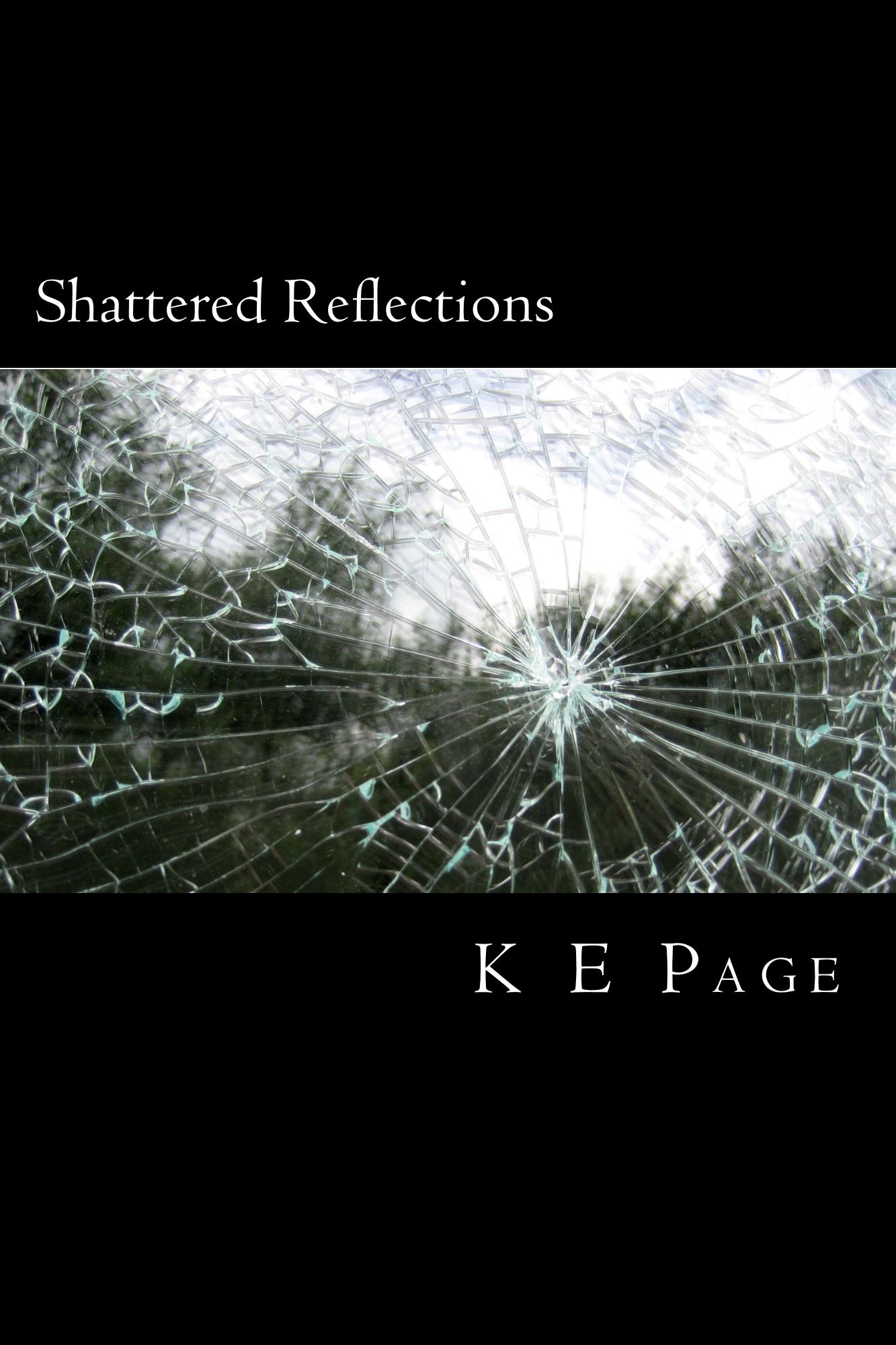
A recent four star review of Shattered Reflections on Amazon said that although a lot of the characters were not nice this made it a better story. This review pleased me as it suggested that he had understood what I was trying to do. Making characters likeable is not something I have ever been concerned about.

It is certainly true thatShattered_Reflection_Cover_for_Kindle even the more appealing characters in Shattered Reflections have a nastier side. Jamie Hartnell, one of the main characters, begins the novel as a studious, sensible character. If he had remained that way throughout the novel, he would have been pretty one dimensional and no one would have cared about him. However, when it is discovered at school that he is gay and his so-called friend George starts to make his life a misery, I felt it was realistic to show the changes in his personality as he became more defensive and so very angry. His relationship with his mother also deteriorates, something he feels particularly angry about. He could not remain the same, no one could go through that and still be the same person.

At the same time, I do not believe that having characters that are irredeemably evil is any better or any less one dimensional. George could be seen as the villain of the piece but he was struggling with issues of his own relating to his sexuality and I wanted to make it apparent that this was the reason for his violence. Even the most terrible of characters – Patrick Bateman springs to mind – have to have something to keep the reader interested. For example, while obviously Bateman is not likeable, it is possible to feel concern for him and understand that he is trapped in a system that alienates people so much that they consider murder the only way they can be noticed.

Finally, I wanted to write a novel that was quite psychological and while it is written in third person, it is always from the various characters’ points of view. I think that if you could genuinely see inside other people’s heads you would find that most people have a less than likeable side. Most of us think things that we would never share and part of being a nice person is not sharing them with others. However, when you are writing from a character’s point of view, you cannot afford to leave such thoughts out. It would be dishonest and you would be left with those nice, one-dimensional characters that make for such bad fiction.


Writing Letters Home – a story set in the trenches

I first read poetry from the first world war when I was in sixth form (more than 20 years ago now). I still remember reading some reading some of the poems for the first time and being impressed by how vividly they had captured the atmosphere of the horrific nature of trench warfare. Lines have  stuck with me –  ‘You are too young to fall asleep forever, and when you sleep you remind me of the dead’ from The Dug Out by Siegfried Sassoon, for example, is a poignant reminder of how close the soldiers were to death on a daily basis. My favourite Owen poem was Strange Meeting which has the soldier meeting the enemy he has killed in hell with the famous line ‘I am the enemy you killed, my friend’, although I loved all the Owen poems that we studied.

The era has held its fascination for me and I have read some of the classic literature set in that time, Strange Meeting, Birdsong, The Regeneration trilogy, for example. So when recently my A Level class had to write a story based on a war of their choosing, I decided that I would also try to write a story and I would set it in the first world war. They had to first of all find style models and read as much from their chosen era as possible, in order to gain an idea of context. They had to keep a diary of what they read and what they gained from it.

It was interesting to work so rigorously through the steps of research into writing and producing. I must admit that my normal habits were a lot less organised. I made lists. I made notes. A habit I have tried to keep to although there is still part of me that thinks that I should just be able to keep it all in my head. I read more poetry, more novels. I knew exactly where I was going.

The resulting short story – Letters Home –  owes a lot to the poetry of Owen and I tried to uses some strong imagery to describe the daily horror of life in the trenches. It also owes a debt to Strange Meeting by Susan Hill which is one of my favourite novels. The novel is about the friendship between two contrasting men in the trenches which ends with one of them missing in action. This was the inspiration for the relationship between Mark and James in my story, one of whom is open and friendly, the other more reserved, finding all relationships difficult. I decided to take this a step further than Hill and have one of my characters be unsure about his sexuality. In fact, it isn’t even as conscious as that. He is unable to acknowledge any of the feelings he has for James but also does not wish to return home to the girl who is waiting there for him.

In the end, what this exercise taught me is that influence and inspiration can come from two places – from factual knowledge of a given time and from reading fiction of a similar style or set in the same era as what you are trying to write.

Letters Home is up on my website under short fiction if you would like to read it and give me your opinion.

Eclectic Reader Challenge – LGBT – The City and The Pillar by Gore Vidal

photo-1This book has been on my to read list for a long time, I’ve been meaning to read it for far too long. I’m not sure why it kept getting passed over, I always knew that I would enjoy it. So, I decided to read it as part of the Eclectic Reading Challenge to ensure that this was the year I actually read it.

Straightaway I was drawn in. The opening description of Jim, clearly devastated, in a bar getting drunker, detached from all around him was masterful and intriguing. I wanted to know what had brought him to such a low point. Although it was immediately clear that it related to his school friend, Bob, I had no idea exactly how devastating the ending was going to be.

I can see how this novel would have been so shocking at the time. While it is not explicit, it is unflinching in its description of the life of a gay man in the 1940s. It tells of Hollywood affairs, of the secrecy and sham marriages, of the underground bars, a complete other world. From a modern perspective, it’s effect was twofold. In some ways, it seems like this story should be centuries old, such a lot of things have changed. At the same time, some things haven’t. The question of whether or not a celebrity should come out or not would not be such a loaded one if we truly had left all those old opinions behind.

In the preface to this novel, Gore says that he felt that he was at a crossroads just before he decided to published this book. He’d already published two novels and had a certain amount of acclaim. He knew that once he published The City and the Pillar, this would change. In one direction, a glorious future, Gore describes it as the ‘holy Delphi’. Instead he chose to publish and ‘end up accursed in Thebes’. One can only imagine the level of bravery and honesty that this must have taken.

This is one of the best books I have read in a long time. I was genuinely upset at the end, not only because the ending was so awful but because it was finished and I was not still reading it. An absolute classic.