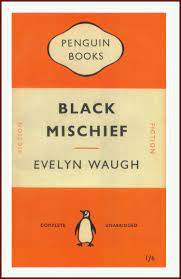
TBR Yr 10 5. Black Mischief – Evelyn Waugh

Genre: Satire, Classics

Narrative Style: Third person, chronological

Rating: 3/5

Published: 1932

Format: Paperback

Synopsis: Black Mischief is set on the fictional island of Azania and follows new emperor, Seth as he tries to set up his government and modernise the country. He is aided by his Oxford friend, Basil Seal who sees plenty of possibilities in the new country.

Reading challenges: TBR Challenge

Time on shelf: At least 10 years. It was in a boxset of classics that I got for Christmas one year. I put off reading it because might not have stood the test of time. But I have read Waugh before and quite enjoyed it so I thought I’d give it a go.

This was a strange and sometimes uncomfortable read. It is supposed to be satirical. Perhaps it was. It’s hard to know what people might have made of it at the time. To me. it felt muddled, unfunny and, at times, racist. It has certainly been my least favourite Waugh.

Of course, it is hard to judge a man outside of his time and I doubt very much that Waugh was saying things that were very different from what a lot of people thought at the time. It can’t be expected that writers will be able to predict exactly what ideas will change and how. Who knows what future generations will make of what current authors have to say and what ways we will be criticised.

So what was good – well, some of the satire did still stick. The way that Seth favoured everything that was modern regardless of its usefulness was amusing. Like the tank he brought to Azania without thinking of the heat. Like the boots he tries to make his army wear. He is constantly coming up with new and ridiculous ideas. He creates new money that is useless. He has no more idea about the country of Azania than any of the white diplomats. His Oxford education has merely widened the gap between him and his people.

All of the white diplomats and their families were ridiculous and incompetent. They were concerned with their own schemes and their own betterment. They didn’t care about the country and they didn’t care about the people who lived there unless it might affect their comfort and safety. All of which felt like it might be true.

But there were bad things. Waugh has no issue with the N word. He also uses ‘darkie’. One character goes by the name of Black Bitch. There is cannibalism. All of which are bad to our eyes but probably weren’t that outlandish at the time of publication. Without a doubt, though, the worse thing is that Waugh can’t imagine a future of self rule for Africa. Seth is out of touch with his own country, more like the white man than his fellow Africans. When he takes over the country, some of the diplomats plan a coup d’etat. They find Seth’s senile uncle, Achon and reinstall him on the throne (presumably because they will be able to control him). He promptly dies and Seth is killed by one of his ministers. The league of nations has to step in and claim the country. I found this the most difficult thing to deal with. I don’t know how big a feat of imagination it might have been for Waugh to picture an Africa ruled competently by Africans but I found the end of this novel rather depressing.

TBR Challenge 2019 – Decline and Fall – Evelyn Waugh


Genre: Classics, satire

Narrative style: third person narrative

Rating: 4/5

Published: 1928

Format: paperback

Synopsis: When Paul Pennyfeather is expelled from Oxford for indecent behaviour, his life spirals downwards. He begins his new life at a boys school and ends it in jail. Non of it is Paul’s fault. Events happen to him as he wanders through his life. Paul is an innocent abroad and Waugh uses his journey as an opportunity to satirise the 1920s society. 

Reading challenges: TBR Challenge

Time on shelf: I inherited this book in 2014 when my husband’s aunt died. 

This was an entertaining read. It was quite different from the only other Waugh I have read – Brideshead Revisited – but was very amusing nonetheless. Paul Pennyfeather is a useful character, wandering oblivious through Waugh’s satirical landscape. He has little will of his own, making nothing happen and, it seems, never truly understanding what is happening to him.

The novel is littered with eccentric characters such as Prendy an ex-vicar plagued by religious doubts or Captain Grimes who is always in the soup. Paul’s first port of call after being sent down from Oxford (after accidentally wandering into the drunken exploits of the Bollinger Club) is a Welsh public school. Here he meets Prendy and Grimes as well as Solomon Philbrick who has told at least three different stories of how he came to be at the school and is one the run from the police.

When Paul falls in love with the mother of one of his charges, his life really starts to take off. Margot Beste-Chestwynde agrees to marry him and immediately sends him off to deliver some women to South America. Paul, of course, has no idea that Margot’s money comes from prostitution and is incredibly surprised when he is arrested on the morning of his wedding for human trafficking.

The novel is very amusing and cleverly mocking of the mores of the time without ever explicitly saying anything. Paul eventually ends up exactly where he started, back at Oxford where nobody recognises him and his life returns to some sort of normality. There is no sense of character development or lessons learned – this is not a bildungsroman. In fact, there is little emotional interest for the reader. Waugh’s satire is clever and funny but I couldn’t help wishing for more emotional depth.

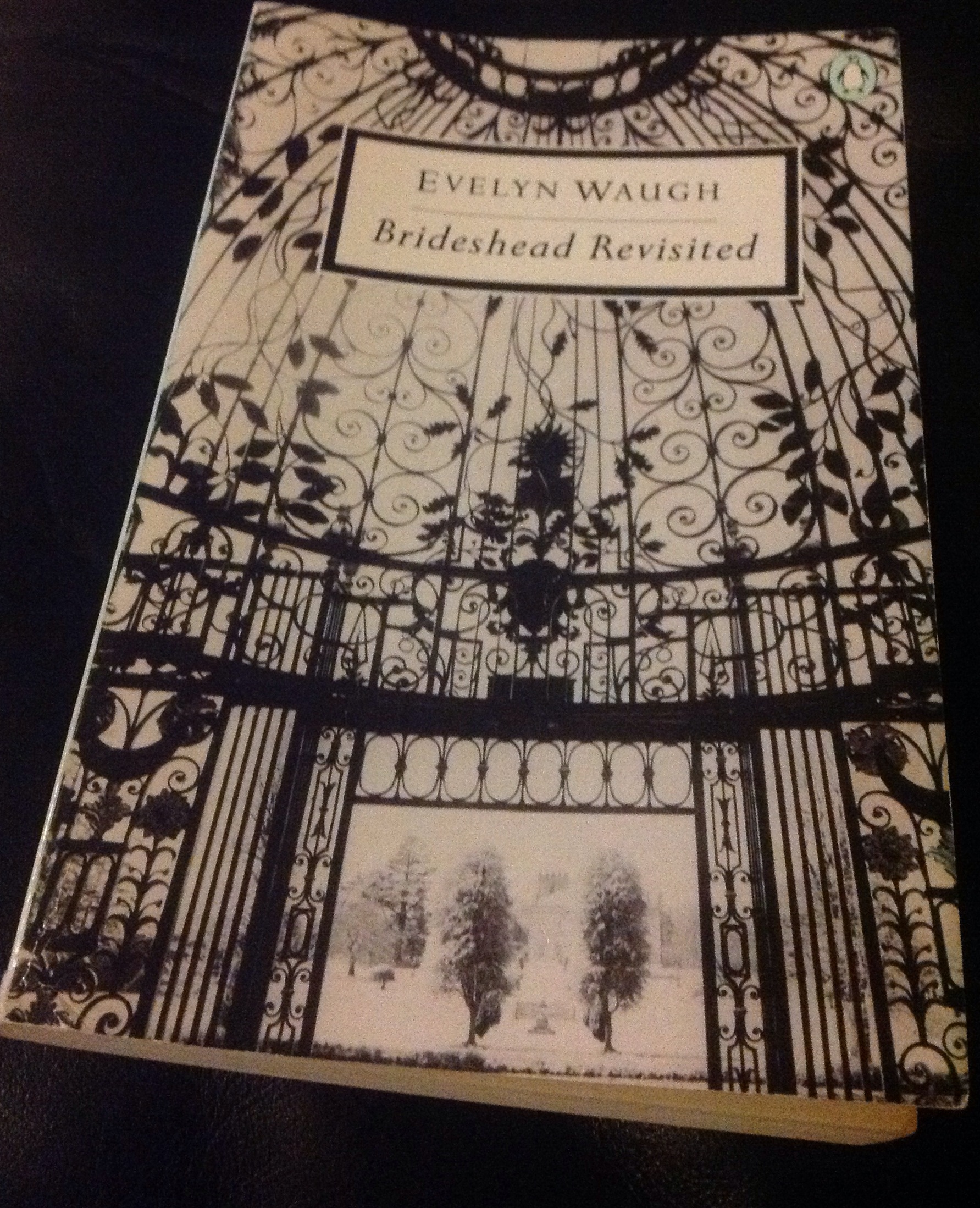
Books Read in 2014 4 – Brideshead Revisited – Evelyn Waugh

Reading Challenges : TBR Challenge2014tbrbutton

Genre: Classics, Family Drama

Narrative Style: First person narrator – Mostly told in flashback, framed by the present day in the prologue and epilogue.

Synposis: Charles Ryder falls in love with the beautiful Sebastian Flyte in his first year at university. He then comes to be fascinated by both his house and his family, eventually becoming involved with his beautiful but distant sister, Julia. photo (21)

Rating: 4/5

Format: Paperback

Published: 1944

Length of time on TBR pile: I have only had a physical copy of this book on my shelf for two years but it has been on the list of things that I feel I should have read by now and which I keep in my head since I finished university. 

I was vaguely aware of the story of this novel. I was too young in the eighties to see the BBC production of it although I did have a very clear image of Sebastian and his teddy bear. I thought I might find it a bit irritating, for a couple of reasons. It was about posh people and that always rubs me up the wrong way and I have a history of not liking books that are considered classics. (Just ask my father in law who thinks I am insane because I don’t like Tess of the D’urbervilles or Middlemarch.) However, in this case I was pleased to be proved wrong.

The early chapters, documenting Charles’ life at university are the most vivid and, in my opinion, contain the best prose. Sebastian is a fabulous character and I was as fascinated as Charles. In fact, I found his absence in the later chapters a little depressing and I longed for whatever news could be found of him, even though it was clearly never going to be good news. It may also be that the university experience was something I could relate to whereas the later chapters were further outside of my realm of experience.

This is a beautifully written novel, with sumptuous description and vivid emotion. In fact, this is much more a novel of feelings than events. Charles is an outsider and Brideshead and even when he is about to marry Julia, remains so. In this, he is the perfect narrator, charting for the reader, the tragedies of the family without really becoming involved with them.

There is a longing for times past in this novel. Not just from Charles who longs for something that the family, with their faith and their societal position, represent for him but on the part of Waugh too. This novel was published in 1945 and it must have seemed as though the world had fallen apart in the aftermath of the war. The need for a calmer, simpler time must have felt immense. Even the structure points towards this, with the prologue and epilogue set in the present of 1945 but the rest of the novel in the Arcadian past of the 1920s and 30s.

I found the ending a little disappointing because I felt sorry for Charles and I didn’t want it to be over. But there really wasn’t any more story to be told.