Eclectic Reader Challenge – Urban Fantasy – Something Wicked This Way Comes – Ray Bradbury

So despite having finished the Eclectic Reader Challenge, here I am posting reviews again. I’m not sure yet whether I will plan the next eleven books I read to fit with the challenge but I am certainly going to post a review when I read a book that fits.

This is one from my to be read pile. When Ray Bradbury died last year, I realised I had not read very much of his writing at all. Fahrenheit 451, a couple of short stories – a mere drop in the ocean of Bradbury’s extensive bibliography. So I went out and bought Something Wicked This Way Comes. It then took me a year to get round to reading it. Boy, am I glad I picked it up.

This book is creepy from the very first. It is set the week before Halloween. One of the boys is called Jim Nightshade. A lightening rod salesman called Tom Fury gives the boys a rod ahead of the coming storm. The scene was definitely set.

An archetypal battle between good and evil ensues. Jim and his friend Will are on the cusp of manhood, are desperate to be older, to be different and the carnival owner Mr Dark knows exactly how to give them that future. At a price, of course, there is always a price to be paid.

IMG_0048

Bradbury does not miss an opportunity to sent chills up the readers spine. The descriptions of the fairground rides and of the various circus freaks are some of the most blood-curdling I have come across. Of course, I already had some belief in the creepiness, the evilness of the carnival. Bradbury plays on those childhood fears throughout.

The ending of this book – the triumph in the end of good – felt like a merciful relief. I genuinely felt worry that Will and Jim would not survive their boyhood. I won’t spoil the ending but the way in which good triumphs is truly a joy to behold and it certainly made me feel warm again after all the chills.

Bradbury claimed that his own fears of the carnival started at age four and it seems never really left him. I hope that after writing this book, he was able to be a little bit freer from them.

No More Mr Nice Guy

A recent four star review of Shattered Reflections on Amazon said that although a lot of the characters were not nice this made it a better story. This review pleased me as it suggested that he had understood what I was trying to do. Making characters likeable is not something I have ever been concerned about.

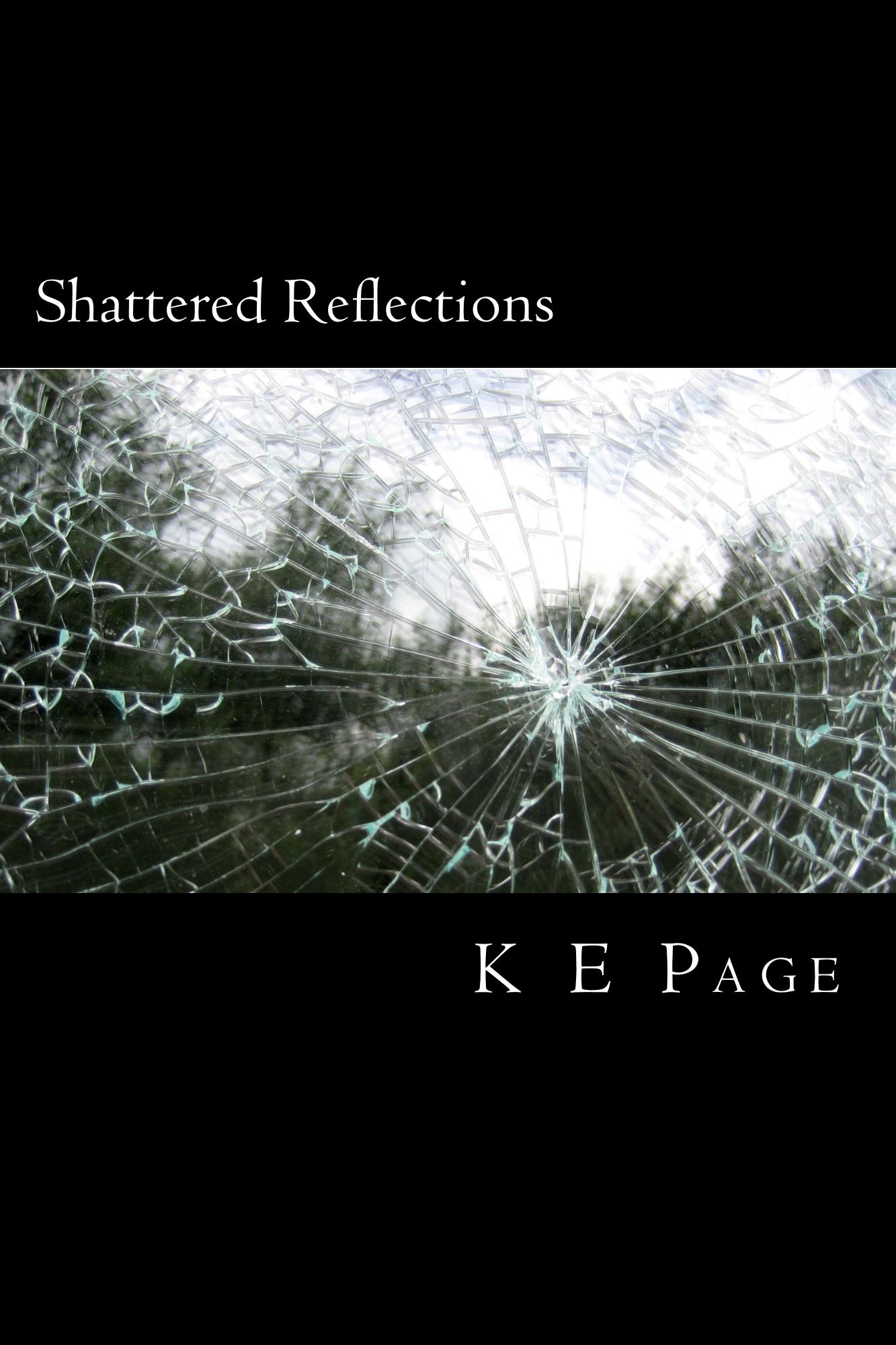
It is certainly true thatShattered_Reflection_Cover_for_Kindle even the more appealing characters in Shattered Reflections have a nastier side. Jamie Hartnell, one of the main characters, begins the novel as a studious, sensible character. If he had remained that way throughout the novel, he would have been pretty one dimensional and no one would have cared about him. However, when it is discovered at school that he is gay and his so-called friend George starts to make his life a misery, I felt it was realistic to show the changes in his personality as he became more defensive and so very angry. His relationship with his mother also deteriorates, something he feels particularly angry about. He could not remain the same, no one could go through that and still be the same person.

At the same time, I do not believe that having characters that are irredeemably evil is any better or any less one dimensional. George could be seen as the villain of the piece but he was struggling with issues of his own relating to his sexuality and I wanted to make it apparent that this was the reason for his violence. Even the most terrible of characters – Patrick Bateman springs to mind – have to have something to keep the reader interested. For example, while obviously Bateman is not likeable, it is possible to feel concern for him and understand that he is trapped in a system that alienates people so much that they consider murder the only way they can be noticed.

Finally, I wanted to write a novel that was quite psychological and while it is written in third person, it is always from the various characters’ points of view. I think that if you could genuinely see inside other people’s heads you would find that most people have a less than likeable side. Most of us think things that we would never share and part of being a nice person is not sharing them with others. However, when you are writing from a character’s point of view, you cannot afford to leave such thoughts out. It would be dishonest and you would be left with those nice, one-dimensional characters that make for such bad fiction.


The End of The Eclectic Reader Challenge

I started the Eclectic Reader Challenge in January and I was really looking forward to trying some new genres and to focusing my reading. I have really enjoyed knowing what my next book is going to be. In recent years, I have become a little pedestrian in my reading choices, choosing authors I knew I would like because I have read them before, reading a lot of detective fiction because that is a genre that I like. The Eclectic Reader Challenge has helped me to broaden my horizons again.

I didn’t expect to be finished it by now. And I must admit I am going to miss it a little bit. Someone suggested that maybe I should do it twice and maybe I will but at the minute I am actually relishing having a free choice of which books I read next. Also some genres I liked better than others and maybe I just chose the wrong books but I’m not sure I want to read anything from those genres again.

It has been a very positive reading year so far. I have read 21 books including the ones from the challenge when I only managed to read 32 in the whole of last year. At least part of that has been because of the challenge. But also, last year I was unemployed for a bit and while that may sound like a perfect opportunity for reading more when you have all the time in the world, it doesn’t always lend itself to getting a lot done.

Now that I am back at work, I am back on public transport and so I’m back to having a book at home and a book on the tram. The kindle has been great for this and I’m actually getting used to using it now. It is also a chance to get away from my bookshelves (with that immense to-read pile) and go for something new. It also pleases me that my books no longer get bashed by being carried around in my bag.

It isn’t only in terms of numbers either. 12 of these books were from new authors. In the course of doing the challenge, I discovered Josh Lanyon, Jeffrey Eugenides, Wilkie Collins, Gore Vidal, Jane Rodgers, Suzanna Keysen and Suzanne Collins. As well as that I have read Patrick McCabe, and Michael Faber on the kindle. All of which I will read again.

I didn’t realise that I had lost some enthusiasm for reading. I always read. It would seem weird not to. But I wasn’t trying very hard. I was going for the tried and tested, whereas now I am excited by each choice that I make.

Eclectic Reader Challenge – Published in 2013 – Levels of Life – Julian Barnes

In an earlier book, (The History of the World in 10 and a half chapters, a book dedicated to Pat Kavanagh) Julian Barnes made in clear how much he loved his wife. He recounted, with a sense of wonder, the moment in sleep when she moves her hair from the back of her neck so that he can snuggle in closely to her. For Barnes, this is a moment that every night proves the bond between them. (Incidentally, it is an image I think of almost nightly as I move my own hair from the back of my neck so that my husband can snuggle closer to me.) I had already associated the word uxorious with him, a word I am nearly certain I came across in one of his books although I cannot prove this without looking back through them all to find it. His once close friend, Martin Amis, called him uxorious (perhaps suggesting that Barnes was henpecked) when he moved from Kavanagh’s publishing company and Barnes severed all ties with him. This was a man that really loved his wife. So when I decided to read Levels of Life for the Eclectic Reader Challenge and I realised it was, at least in part, a meditation on grief at the loss of his wife I knew that it was going to be an emotional ride.

And it certainly was. The final chapter – The Loss of Depth – felt almost intrusive in its honesty about how he felt. It was like reading a diary entry or even an extended suicide note. Barnes has laid his soul bare for the reader to judge. I wonder if it has helped him to write it as he seems even at the end to be confused and lost, wondering if anything will ever change from the moment he is in now.

When I was reading the earlier chapters, I was wondering how this could possibly fit with what I the book to be about. But it soon became clear that they were joined by an extended metaphor photo (7)about flying, about freedom and about love, all of which Barnes feels he has now lost. All of this is exquisitely written. (Maybe I’m biased, Barnes is one of my favourite voices but it is always clear that he has a love of language and he writes in a very precise way which I enjoy.) But is in the final chapter that the writing has real emotional resonance. I felt devastated on his behalf as if he was someone I knew, not just an author I love. In the way of the un-bereaved, in the face of real grief, I longed to be able to do something. All I could do was make myself a cup of tea and shed a few tears for a woman I didn’t know who had such a profound effect on the life of one man.

Eclectic Reader Challenge – Humour – A Walk in the Woods – Bill Bryson

This was the category it took me the longest to decide on for the eclectic reader challenge. It almost seemed too obvious to pick Pratchett, Adams, Bryson, Collins, Maconie, all writers that had made me laugh out loud. At the same time, it seemed a bit risky to pick an author that I wasn’t sure of – maybe their humour wouldn’t appeal – so I decided to go for the tried and tested. Really, all of this was simply a justification for reading another wonderful Bill Bryson book.

I picked A Walk in the Woods because although I have never hiked the Appalachian Trail, I do like to hike and have done a long distance walk before so I thought I would have some empathy with what he went through.photo-3

As with all of the Bryson books that I have read, this was like being reunited with a particularly talkative old friend. The tone of the book is warm and friendly as if you were one of the fellow hikers that Bryson meets and chats to after a long days hike. Bryson is always engaging even when passing on historical detail which could be boring in a lesser writer’s hands.

Bryson, and his friend Stephen Katz, face many challenges on this walk, not least of which is their own lack of fitness at the beginning. They hit snowstorms, are assailed by insects, have maps that are dangerous in their uselessness and meet a fellow hiker so annoying that I would certainly have understood if they had murdered her in the middle of the night. In the end, they abandon her and go to spend the night in a motel.

Even when Bryson feels he is facing certain death – be it by bear, snow, sun or dehydration – he never loses his sense of humour and is quite happy to describe his own idiocy in as much detail as he describes Katz’s. He knows he is a little bit hopeless and that helps the reader to warm to him.

In the end, they do not hike the whole trail – the hundred mile wilderness at the end proves too much for them. And I must confess I was disappointed. Not because I felt that they should tried harder but because it meant the end of my journey with them, a little bit sooner than expected. A superb read for anyone who has ever donned a pair of walking boots.

Eclectic Reader Challenge – Memoir – Girl Interrupted – Susanna Kaysen

I have always been interested in reading about madness so when I signed up to do the Eclectic Reader Challenge, I decided to use Girl Interrupted for the memoir category as I had been meaning to read it for a bit. I had re-read The Bell Jar not so long ago and was interested to see what comparisons there would be in Kaysen’s memoir of the same hospital, in roughly the same era.

And there were some similarities. Both Plath and Kaysen seem distanced IMG_0045from life, unable to envisage the future or find joy in the things that were supposed to be joyful for girls their age. The difference came in the fact that Kaysen’s life outside of the asylum is not shown, simply the time she spent in hospital and, of course, in the fact that Kaysen survived to be able to look back on this period of her life.

Kaysen does not seem particularly insane. A lot of the time, her voice is reasonable with the odd descent into hysteria. Even then, like when she demands to know how long she has been unconscious during a tooth extraction and no one will tell her, there is something understandable about it. Maybe you or I wouldn’t continue to obsess about it but it was surely a reasonable request.

The ward is described in unrelenting detail and it is possible to imagine the horror of it. Every minute of their lives are accounted for. But what really comes across is the relationships between the women and the way they help each other. There are casualties along the way but there is no time to mourn and perhaps dwelling on it would be too difficult.

Towards the end of the book, Kaysen includes the description of her diagnosis – Borderline Personality – from the Diagnostic and Statistical Manual of Mental Disorders III and reflects on whether it was apt and whether she has recovered. For me, this was the most interesting part of the book. She is finally allowed to leave the hospital, not because she is cured, but because she has a marriage proposal. It does seem that a lot of the problem was to do with the narrow opportunities for women at that time. One of the symptoms of Borderline Personality is social contrariness which seems to point to social causes rather than medical ones. The fact that she is released in order to get married reinforces this fact.

Kaysen’s conclusions about her own madness reflect how I imagine a lot of people feel about themselves, a constant checking to make sure that we are not that crazy, an internal questioning and striving for normality that may evade us to a greater or lesser extent. She didn’t seem out and out crazy, more like there but for the grace of god type crazy. The sort of crazy you could imagine going.

Why is it so hard to pick a favourite?

I was recently asked about my favourite book. I don’t know why but this question always makes me feel a little uncomfortable. Part of me really believes that it is unfair to pick a favourite – as if the books were going to be offended when they weren’t picked. But it isn’t only that. It depends on the questioner. For example, if a pupil asks should I say something they are likely to have heard of or stick with what has become my stock answer, The Master and Margarita by Mikhail Bulgakov. If I say that, do people think that I’m just trying to one-up them by picking something not particularly well-known and Russian.

When I say this has become my stock answer, I do not mean that I do not love this book. I do. And I would recommend it to anyone. I have read it a number of times but the last time was at least ten years ago. Has there really been nothing in the last ten years of reading to knock it off the top spot?

In fact, I haven’t really thought about this at all. Most of the things I would say are my favourite things are from a long time ago, when I suppose we were more likely to be sitting in the pub and debating the relative merits of It’s a Wonderful Life (my favourite film) and Casablanca (My husband’s favourite). More likely that someone would say top ten albums from Manchester or whatever. (Obviously The Stone Roses debut would come top of that list and there would be no Oasis.)

As a result I have a top ten novels list which is as follows:

  1. The Master and Margarita – Mikhail Bulkagov.
  2. Cat’s Eye – Margaret Atwood.
  3. The History of the World in 10 and a half Chapters – Julian Barnes.
  4. Trainspotting – Irvine Welsh.
  5. Nights at the Circus – Angela Carter.
  6. Dancer from the Dance – Andrew Holleran.
  7. A Disaffection – James Kelman.
  8. Strange Meeting – Susan Hill.
  9. The Catcher in the Rye – J D Salinger.
  10. The Life of Pi – Yann Martell.

All of these novels I have read more than once and some I have studied or taught. I can think of a number of books that I could place on this list that I have read more recently (The City and the Pillar – Gore Vidal, The Virgin Suicides – Jeffrey Eugenides, The Book Thief – Marcus Zusak, for example). Putting aside the issue of what would come off the list, if these books were added could I be sure they would stand the test of time? I must admit I don’t tend to re-read books as often as I used to but there is little more annoying then returning to a book or film that you really enjoyed at the time to discover it isn’t how you remember it. (Recently, Pretty in Pink played at our local cinema – one of my favourite films when I was a teenager. I think I made the right decision in not going to see it although I was tempted. I would hate to be disappointed in it. It would be like losing an old friend.) Of course, I am over thinking it and perhaps having a favourite book really isn’t that important. Still, I know I make judgements based on these things. And if it does come up in the pub or the classroom, I want to have the answer ready.

The other thing that I notice now, is the lack of genre fiction. No detective fiction. No science fiction. No fantasy. Although plenty of magic realism. Part of this is due to reading series of books. Which Discworld novel would you pick out of what is a thoroughly excellent series? Which Rebus novel? Which from Douglas Adams? Or George R. R. Martin. But it is also true that I read detective fiction and fantasy particularly as a break from literary fiction. It wasn’t intentional to not include them and perhaps it was unconscious snobbery that caused me to not include any.

So has this got me any nearer to answering the question? Not really. I tend to hedge my bets. Maybe give the top three books. Ponder briefly what impression I’ve just given of myself. Hope it is vaguely similar to the impression that I hoped to give.

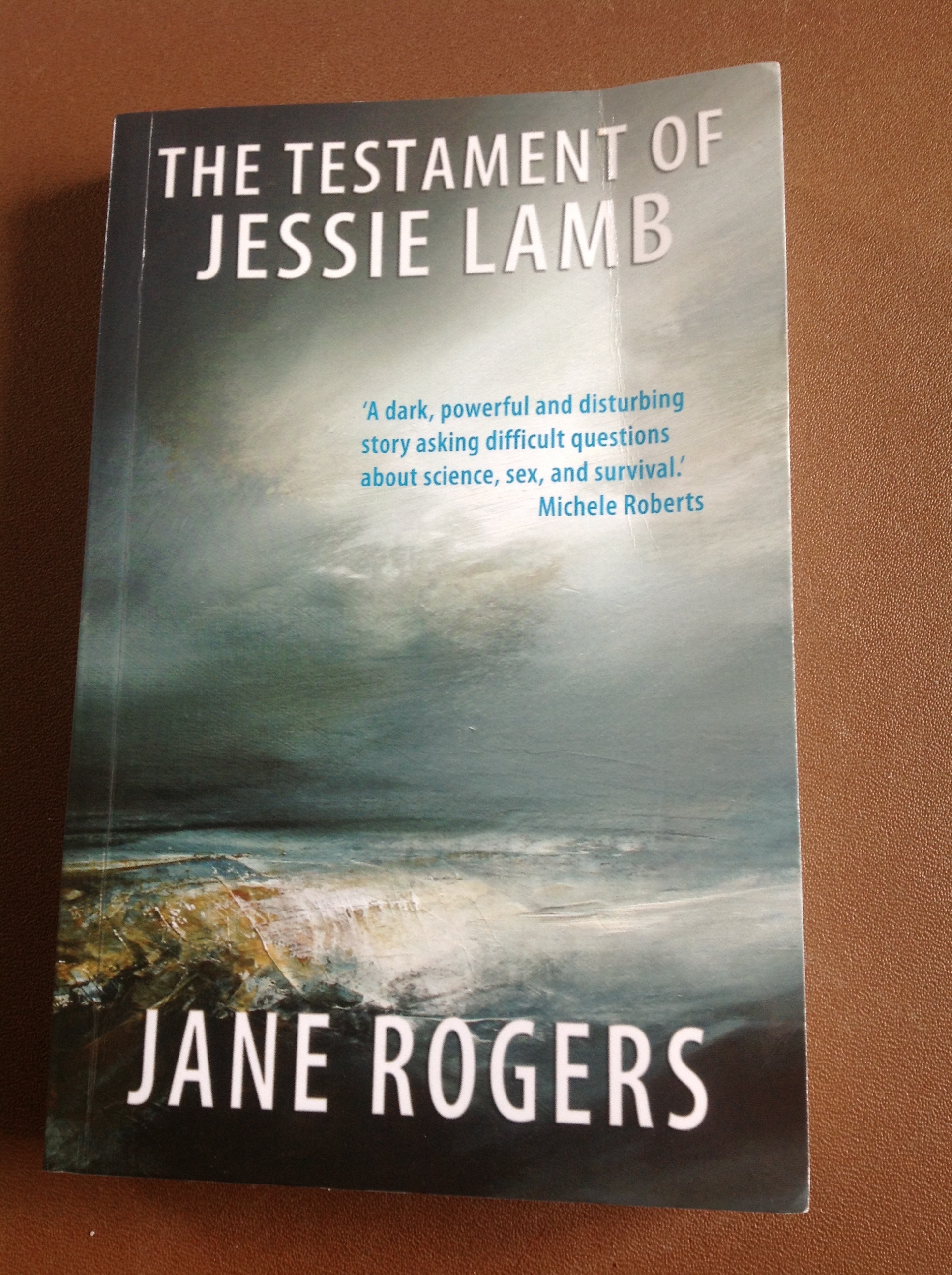
Eclectic Reader Challenge – Dystopian – The Testament of Jessie Lamb by Jane Rogers

Dystopian fiction is always interesting to read so I was pleased that it was one of the categories for the Eclectic Reader Challenge. A vision of the future, based on the problems in ours, maybe offering solutions, maybe only disasters. I am always curious to see what it is that makes other people angry and worried. So the premise of this novel interested me straightaway. The idea of women dying in their millions as soon as they become pregnant and the response of the scientists and governments to this problem was certainly intriguing (although you might say it is not a completely new idea) and I was expecting to enjoy it a lot.

In fact, I did enjoy it. Particularly the ideas about protest and what the proper response should be to the state that our world is in. There are groups that protest violently, some peacefully, some who turn to religion, some who are willing to sacrifice themselves and the novel turns on the relative success of the different types of protest. Unfortunately, the heroine Jessie turns to noble self-sacrifice as her chosen method and I found it quite hard to get behind her after that. In fact, her actions seemed typical of a teenager, assuming that she was right, that she alone could change the world. I couldn’t be sure whether this was the point- that such self sacrifice was an immature response – or whether this form of protest was privileged because the author believed in this method.photo

The symbolism in this novel is not very subtle. Jessie’s surname is Lamb and apart from the connotations with innocence and sacrifice, I think this represents the Lamb of God – i.e. Jesus Christ, further linking her to the idea of noble sacrifice. There were suggestions that the future was with the youth, rather than the older generation who clearly ruined everything. Which is fine expect then we are returned to the idea of youth sacrificing itself for the future of the world and that does not seem like a valid solution.

This book made me think about protest, about feminism and about science and religion so it was enjoyable in that sense. But in the end, I felt that the way the story unfolded was not what I would have expected and did not really sit well with me.

Eclectic Reader Challenge – Urban Fantasy – Stardust by Neil Gaiman

A long time ago, I read Neil Gaiman’s series of Sandman graphic novels. I was introduced to them by a friend and it was against my better judgement that I started to read them. Making an early start on my career as an intellectual snob, I reckoned they weren’t going to be up to much. Boy was I wrong! I really enjoyed the stories, the characters and the clear and shining light that is Gaiman’s imagination. As a result, I had been meaning to read one of Gaiman’s novels for quite some time now.

So when looking at the genre of Urban Fantasy for The Eclectic Reader Challenge on Goodreads and I realised that I was able to choose a Gaiman, I was really pleased. I chose the one that I already had on my shelf, Stardust.

This book is quite different from what I would normally read, taking the form, as it does, of an adult fairy tale. It is a simple story but it also has depth and as with all good fairy tales it contains lessons and, of course, a happy ending.

There is a pleasantly old fashioned feel to the book. It is set in Victorian times and the folklore and mythology that is referred to seem apt for this setting. The theme of going on a quest for your heart’s desire, only to discover that it is something different from what you thought is also a tale that has been told for a long time. Yet Gaiman manages to give it a new and interesting twist.

IMG_0004

What I really enjoyed about this novel was Gaiman’s style and the to

ne of the writing which was perfect for the telling of a fairy tale. It is like sitting down around a campfire and being told a tale that you could al

most half believe in, by that friendly fellow traveller who looks like he might have lived out the story he is telling. In fact, you leave this novel longing for a

place such as faerie to exist – how the inhabit

ants of Wall manage to exist knowing that the faerie lands are right next door is beyond me.

Having said all that, this is not a genre I am particularly fond of and while this was a fun read, I’m not sure that I would be interested in reading much more like it. I prefer my fairy tales to be darker, if truth be told and I’m not very good with happy endings either. As this is a fairy tale, the characters are quite simple and while that obviously fits with the genre, I prefer my heroes to be, at the very least, ambiguous. 

Eclectic Reading Challenge – The Virgin Suicides – Book that was made into a film.

Read as part of the Eclectic Reading Challenge.

I wasn’t sure what to expect from this book. I had an idea of what it was about and I was certainly curious. I haven’t seen the film although I would now like to see how it was done. I expected to find a narrative that was punctuated by the girls’photo-2 suicides, at regular intervals, keeping the reader involved. However, this book is much cleverer than that.

The narrative voice is one of the most interesting I have come across. It is ostensibly first person although ‘I’ is never used. It is written from the perspective of a ‘we’, the group of adolescent boys who are so fascinated by the Lisbon girls. This gives the voice a strange anonymity. Although lots of boys are named, give opinions and interact with the Lisbon girls, the narrator is not named. The voice is collective. This gives the story an universal feel. As if the boys represent all boys who are understandably fascinated by the teenage girls in their social circle. While the suicides are extreme, the lack of understanding between the boys and the Lisbon girls comes to represent the difficulties of communication between the sexes at this awkward time of life.

The first suicide occurs early in the novel and to my mind is the most devastating. The suspense that follows is even greater than if there had been a suicide every few chapters. I will not give away the ending but I could not have predicted how it would go. All the narrative is directed towards understanding the suicides of the Lisbon girls. However, the reader does not yet have the details of the rest of the suicides and so they are trying to understand something ephemeral, not quite real.

To my mind, the novel is about the painful transition from adolescence into adulthood. In this way, the deaths of the girls represent the death of childhood. Many of the boys who are visited twenty years on are past their prime, having had their best moments early in life. The girls have avoided the disappointment of life by taking control early on and killing themselves. They do not have to see the inevitable decay that begins to destroy the archive of their stuff that the boys keep. They escape the ageing process and instead remain forever beautiful and mysterious.

The reader is placed in the voyeuristic position of the boys who watch and note and obsess. The Lisbon girls are the unreadable difficult novel that they cannot understand. The girls are unknowable and the ordinariness of their deaths is baffling. Even with all the clues at their fingertips, understanding is not possible. This is perhaps the real tragedy. Not simply the girls suicides but the fact that whatever message they intended to send was lost in translation.