Books Read in 2021 – 4. The Nickel Boys by Colson Whitehead

Genre: African-American, Masculinity, Historical Fiction

Narrative Style: Third person Omniscient Narrator. Moves between 1960s and 2010s.

Rating: 5/5

Published: 2019

Format: Kindle

Synopsis: Archeologists find a secret graveyard behind an old reform school. They soon realise that they have the bones of many boys. The story then moves to tell the story of Elwood Curtis, a boy who is sent to the Nickel School for Boys for the sheer bad luck of hitchhiking and being picked up by a black man in a stolen pick up. Life for all boys at Nickel is hard but it is considerably worse for the black boys as Elwood is soon to discover.

Time on shelf: Another fairly recent purchase. As lockdown has seen me unable to potter around second hand book shops like I would normally do, I’ve been getting my book buying kicks from Amazon for my kindle. This has seen me buy a lot more recent novels than I would normally.

This is a raw angry book that never lets up. The prose is pared down and details are given in an almost factual manner. It is a tragic story but also one of hope as we are given some post-Nickel story for one of the boys. It isn’t merely an account of the abuses that Elwood and the boys face at Nickel but is also about why it seems that for all the progress made, we are still seeing horrific racist abuses on the news today.

The novel begins with the modern day archeologists finding the secret graveyard at the back of Nickel Academy, a reform school in Florida. This is based on the finds at the Dozier School for Boys n 2014, also in Florida. The fatality count from the digs at Dozier has reached eighty but could easily be much much higher. While this is clearly horrific, Whitehead gives the tragedy a very human face.

The action then moves to the life of Elwood Curtis, in Jim Crow era Florida. Elwood is a serious, sensible boy who listens to Martin Luther King’s speeches and works in the kitchen at the same hotel as his grandmother. There seems to be a gap between what King says in his speeches and what Elwood feels in his life. His parents left him with her when he was six. It is the small details of Elwood’s history that are particularly painful. One of his grandfathers died in jail after a white women accused him of not getting out of the way on the street, the other was killed in a bar brawl with some white men over who was next on the pool table. His father had been in the army but when he came home, he found white men lynching black men in uniform so he and Elwood’s mother runaway, leaving Elwood without a word. Because these details are passed on in such a matter of fact way, you know that these are not facts that are unique to Elwood’s life but common to many.

Elwood is aiming high. He starts to go to protests, inspired by a new teacher at his high school. He works in a neighbourhood shop but refuses to let other boys shoplift. (This earns him a beating.) On the morning he is arrested, he is trying to make his way to college where it has been arranged that he will take some classes. He waits for a black driver and is sat in the passenger seat when the police stop them for being in a stolen car.

The rest of the novel deals with the brutality of Nickel. The school is terrible to all the boys but the black boys fair worse than the white. So many of them, like Elwood, have no parents, there is no one to care should they disappear. Elwood learns early on the horrors of perceived disobedience when he is taken to the Ice Cream Factory and beaten brutally. This is what keeps the boys in line – the threat of violence. There is also sexual abuse. Whitehead doesn’t go into details. He doesn’t need to. The mention of Lover’s Lane is horror enough.

And there are deaths and disappearances, for example when one of the boys, Griff,, the champion of the black dorms, put up to fight against the best white boy. He is asked to take a fall in the third by the supervisor who has bet on the match. When he doesn’t – he claimed to have muddled what round it was – he quickly disappeared. Supposedly he has run away but, of course, we know this is not the turth. Griff has been a bully, an unpleasant character but no one deserves his fate.

One of the things that Whitehead portrays very well is the friendships that develop between some of the boys – particularly between Elwood and Turner who get to do some work off the grounds – usually labouring in various ways for important white people, presumably to keep them on side so they don’t investigate Nickel too closely. The friendship with Turner is the one positive thing to come out of Nickel.

We are also given Elwood’s life in the future. He has managed to set up his own business. He is doing well – within a certain definition of doing well. But he can’t quite move beyond Nickel in his mind. And having your own removal company comes nowhere near the future that Elwood should have had. Through this, Whitehead shows us the continuing effect of trauma and the way it stops lives in their tracks.

At the end of the novel, Elwood finally agrees to meet with other Nickel boys, something he has always refused to do. He has things he needs to tell, and there are some twists which I don’t want to reveal but which I would never have seen coming. Like the bodies being removed from the ground, Elwood needs to bring some things out into the open from the deeper reaches of his mind. Similarly, Whitehead suggests, we as a society need to look at these traumatic events head on and deal with them. Maybe then we can stop repeated these terrible, traumatic patterns.
Books Read in 2021 3. Autumn – Ali Smith

Genre: Literary fiction.

Narrative Style: Third person from a number of points of view. Non linear.

Rating: 3/5

Published: 2016

Format: Kindle

Synopsis: It’s 2016. The UK has just voted to leave the EU. Daniel is 101 years old and lying asleep in a care home bed. Elisabeth, who was his next door neighbour when she was a teenager, visits him. The novels shows Daniel’s past and Elizabeth’s present.

Time on shelf: About a year. I bought it because I was curious to read a novel that was such a quick response to Brexit.

I’m genuinely not sure what to make of this novel. On the one hand, it is a realistic rendering of Elisabeth’s life after Brexit. It also gives some details of Elisabeth’s and Daniel’s conversations. On the other, it is an account of Daniel’s memories and dreams that are often absurd and non linear. I found it hard to pull these two very different styles together.

The novel begins with a dream like chapter where Daniel believes that he has died. He is naked and his body returns to its younger state and he seems to be in some sort of woodland with some other naked people. It isn’t made clear what is happening. The action then switches to Elisabeth who is trying to renew her passport and has opted to have the post office check it before she sends it off. This leads to a frustrating and very funny episode where Elisabeth’s photos, and consequently her whole head, are deemed wrong.

The whole novel shifts around like this and there are also chapters dealing with Christine Keeler and the artist Pauline Boty who Elisabeth writes about for her dissertation. It is a bit disorientating and pretty far from a traditional narrative. Not that this is a problem necessarily but it didn’t seem to add up to much.

I’m guessing it’s about time and the different ways we experience it. Daniel’s dreams are as real as any of Elisabeth’s experiences. He sleeps – the care home assistants say that he is near to death – and who can say that his sense of time is less accurate that Elisabeth’s as she sits reading to him. But again, I found it hard to see the overall point that Smith was trying to make or what pulled the whole thing together.

Maybe you need to read the whole series for it to completely make sense but after being so nonplussed with this one, I can’t imagine I will bother.

Books Read in 2021 – 2. The Plot Against America – Philip Roth

Genre: Alternate History

Narrative Style: First person, chronological

Rating: 5/5

Published: 2005

Format: Kindle

Synopsis: In Roth’s alternative America, Roosevelt doesn’t win his unprecedented third term in 1940, instead heroic aviator and rampant isolationist Charles Lindbergh wins and immediately signs an understanding with Adolf Hitler and refuses to get involved with the war in Europe. He then embarks on a program of policies which will change the future for America’s Jews. The Roth family live in New Jersey in a Jewish neighbourhood and they immediately find themselves on the sharp end of a new wave of anti-Semitic persecution.

Time on Shelf: I’ve been meaning to read some Roth for a while. He has been on the long list of greats that I need to read for a long time. I watched the mini-series of The Plot Against America last year and really enjoyed it so when it came up on my kindle deals email I jumped at the chance to read it.

This is the fourth alternate history book based on the second world war in some way that I’ve read and it is easily the best, probably because it was the most believable. Unlike the others, this isn’t a story of spies or policemen (like Fatherland by Robert Harris or Dominion by C. J. Sansom) but the story of an ordinary family trying to cope with the changes to their world. You could say The Man in the High Castle by Philip K. Dick is about ordinary people but it is too strange to be a realistic read. It also helped me to understand why this is a topic that novelists – and readers – seem drawn to. The ultimate in what if questions, it helps us to understand what might have happened in order to ensure that we never let it happen again.

The novel starts slowly. We get to know the Roths and their life. They are expectant of a Roosevelt win. Their elder son is a keen artist and has many drawings of Lindbergh of whom he is a great admirer. Philip, the younger son, is a keen collector of stamps. They are living a fairly ordinary life. They are not rich, they work hard but they have a small amount of happiness. The way this changes is slow and sometime subtle but no less sinister for that. In fact, it allows Lindbergh’s supporters to ignore the complaints and continue in their support of the president.

The master class policy in this case is the setting up of the “Just Folks” scheme, a part of the Office of American Absorption which sees Jewish children sent away to stay with Christian families for “Apprenticeships”. The Roth family view this as a sinister attempt by the government to drive Jewish families apart but some view it – including the powerful Rabbi, Bengelsdorf – as a positive way for middle America to learn that Jewish people are just like them. It is this duality that I found particularly disturbing – that the clear discrimination of the Jewish people was turned around by the government and its supporters as nothing of the sort. It was like two roads which had been running next to each other and which start to move further and further away from each other until the two viewpoints are poles apart and completely irreconcilable. And it works. When Sandy is sent away for the summer to work on a tobacco farm, he returns having absorbed the Christian values of the family he was sent to and is quickly in conflict with the rest of his family.

The novel is written from the point of view of “Philip Roth” a Jewish boy growing up in New Jersey, no doubt with some of Roth’s actual childhood memories (when he and a friend follow Christians home on the bus for example). This gives it a sense of realism that it may not have had was it was narrated through an adult’s eyes. Philip watches these events but he does not always understand them, a feeling that is somewhat shared by the reader. Finally, that Philip is narrating these events from some point in the future gives hope that this will not be forever.

At the novels end, the Roths are in pieces, all still alive but much damaged by events. There has been rioting, violence and they have lived in fear of their lives. Lindbergh has disappeared and the country is in a state of martial law. Although things look grim for them, we know from the news story style of the previous chapter that their ordeal will soon start to be over. Although, as has been seen in current America, things do not immediately change just because a new person has been elected into the White House.

Finally, reading this book at this point in time made it very easy to imagine this happening. It didn’t seem impossible that it might happen in the US because it was happening in the US. A reality star who was popular for all the wrong reasons, who constantly shouted about fake news, who had a very clear list of whom he viewed as Un-American; the parallels couldn’t be clearer. And while the US now has hope for the future, in the shape of Joe Biden, the story is far from over. We just have to hope that it will start to get better when he is inaugurated, in a few days time.

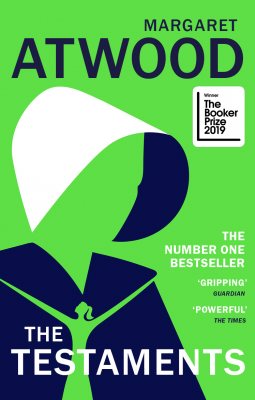
Books Read in 2021 – 1 The Testaments by Margaret Atwood. (Contains spoilers.)

Genre: Dystopia, Feminist.

Narrative Structure: First person from three separate points of view

Published: 2019

Ratings: 4/5

Format: Paperback

Synopsis: More than fifteen years after then end of The Handmaid’s Tale, Atwood takes up the story of Gilead once more. Three narrative voices move the story forward – Aunt Lydia, secretly writing an explosive narrative that will help bring Gilead down, Daisy, a teenager living in Canada with her adoptive parents and Agnes, a child living within Gilead and brought up to never question its truths. This novel answers the questions left open at the end of the Handmaid’s Tale.

Time on Shelf: I bought this with an Amazon voucher I got got my birthday this year in November so not very long. I was keen to read it as the Handmaid’s Tale is one of my favourite books and Atwood is one of my favourite authors .

I did enjoy this book. Let’s start by saying that. Atwood is a masterful storyteller and the three narratives hang together nicely. It was interesting to see Gilead from the inside – Agnes’ narrative showing what it was like to be brought up within Gilead’s value system added interesting detail to Offred’s earlier narrative. Aunt Lydia’s narrative – the most interesting and convincing of the three – gave an alternative origin story for the start of Gilead and how she came to be in such a position of power. After she is brutalised into confirming Gilead’s regime, she vows to herself that she will revenge this treatment, no matter how long it takes and no matter what she has to do. In the end, she has to become a monster and wait a long time for this to happen. I’m not sure whether I liked that she becomes more ambiguous – does it justify what she did? True, it makes you think about the nature of power and what you might do yourself in such a situation. Would you choose death over having to be a part of the regime like Lydia’s friend, Anita or would you take a role? Important questions, of course, but I think I preferred it when she was an out and out foe.

I found Daisy’s narrative less convincing. As with the recent TV series, being able to see Gilead from the outside, knowing that the outside world existed, somehow made it less believable for me. I’m not sure why. All the way through, this narrative seemed contrived – from the death of her adoptive parents, to her being picked up by Gilead’s Pearl Girls., to her (possibly hallucinated) vision of her mother at the end. And at the end of the day, she didn’t need to be the real baby Nicole. They could have tattooed anyone and sent them in.

It was a nice touch to have both Agnes and Daisy be the daughters of June / Offred but if this was meant to be a big twist, it certainly wasn’t. It was apparent who the girls were right from the start. Maybe that was intentional. It was a very effective way of answering the questions about what happened next. Offred is like a shadow throughout. Her survival is implied by the fact that Daisy was brought up outside of Gilead.

Atwood has said that this book was meant to answer all of the questions that readers have asked her over the years. The Handmaid’s Tale ends ambiguously and I can understand that people want some sort of closure over that. However, one of the main things that I like that about Atwood is the open ended nature of her endings. Of course, you have questions but the reader is free to answer them however they feel. So the ending can be hopeful or otherwise. It leaves the options open. And I like that because it encompasses both – the reader can hope for the best even while they know it may not be. Once it is laid down a certain way, all ambiguity disappears.

Finally, it all just seems a little easy. It comes together seamlessly. Agnes (now Aunt Victoria) and Daisy (now Nicole) make it into Canada with very little trouble. Gilead starts to fall in a less than convincing way. (Really was that all it took?) But maybe Atwood wants an end to it. I’m honestly not sure I would read on if there were any more.

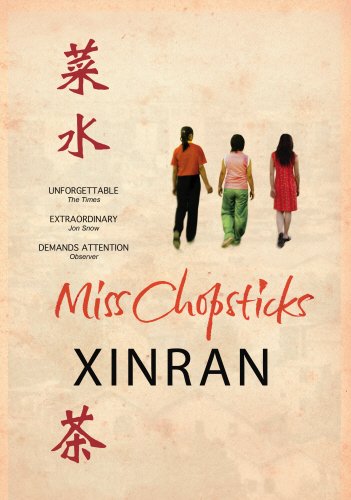
Alphabet Soup – Author Edition – Miss Chopsticks by Xinran

Genre: Historical Fiction, Bildungsroman

Narrative Style: Third person from three different points of views.

Rating: 4/5

Published: 2007

Format: Kindle

Synopsis: Three, Five and Six are country girls who move to Nanjing to try and get jobs in order to help their family and to prove that girls can be more than mere chopsticks. The novel details their difficulties in coming to terms with the different ways of the city and the various jobs they end up doing.

Reading Challenges: Alphabet Soup – Author Edition

The Li Sisters are from a poor rural area of China where girls are not valued. They are considered chopsticks – abundant and not that strong or important – compared to boys who are room beams – able to hold up the world. As such, they do not even have proper names, being called Three, Five and Six. Their father is a failure as he has only daughters. Apart from six, they do not have much education as the family could not afford it. They go to Nanjing to try and get jobs, to help their families and prove that girls can be important.

This novel was set in the early 2000s and based on interviews that Xinran conducted with various country girls working in Nanjing. I kept having to remind myself that it was so recent. It seems hard to credit that China was so cut off from the rest of the world and only just seeming to be coming to terms with technology and capitalism. The difference between the cities and the country is enormous. Probably the last time there was such a big difference in the UK was before the industrial revolution.

The three girls all end up with jobs that seem to represent the possibilities of the new China – one working in a restaurant which is aiming to take on the the American giants Kentucky Fried Chicken, one in a bookstore serving tea to intellectuals and foreigners and one in a Chinese water therapy centre. The girls are astonishingly naïve which is to be expected, given that they have never been further than their village but again gave the novel a much older feel.

Xinran tells their story simply and without melodrama. The girls are charming and their experiences are interesting. They learn to deal with the city, with the ways that Chinese society is changing and their story seems emblematic of the new society. It seems a largely hopeful picture.

The story ends with the girls triumphant return to their village, full of the knowledge that they have made friends and made a life for themselves. Their uncle was picked up by the police for sleeping in a doorway when he came to find them to take them home and all the new friends and associates the girls have made pull together to try and get him out. Although, in the end, it is sheer luck that he is released rather than anything that they do.

In her afterword, Xinran explains the inspiration for the stories and what happened when she tried to trace the three girls that the story is based on. It seems that the future wasn’t quite so rosy. For example, the bookshop that Six worked in had been closed down for selling banned books and it was unknown whether her dreams of education came to fruition. China’s progress towards freedom of thought and action has clearly not been straightforward and while I knew that already, I found that I had been caught up in the gentle optimism of the three girls and their successes.

Alphabet Soup Author Edition – Rabbit, Run – John Updike.

Genre: American, Anti-heroes,

Narrative Style: Chronological, third person from various points of view

Rating: 4/5

Published: 1960

Format: Hardback

Synopsis: Harry ‘Rabbit’ Angstrom’s best days are behind him. He was the star basketball player when he was at school. Since then, he has married and has a child. His wife is pregnant again. But he doesn’t love his wife and he hates his job demonstrating a gadget in a store. He is dissatisfied and fed up so, on impulse, he deserts his wife and son and embarks on a journey to find something more satisfying.

Writing Challenges: Alphabet Soup – Author Challenge.

This was a hard book to read. Not because of the prose. Updike’s style is easy enough to read. It was the characters. I expected that I would probably have difficulty with Rabbit Angstrom. And he was unpleasantly sure of himself, always convinced he was on the right path simply because he had chosen it. But I had expected that there would have been some way of empathising with him. This was not the case. Nor was it any easier to empathise with his wife who was also an unpleasant drunk. I have no doubt that this is an accurate representation of a certain type of American masculinity and the havoc it can wreak but I didn’t feel drawn into the story. I was like an observer watching the decay of society from a distance.

At first, Rabbit just drives off, wanting to be far away from his wife and son. He gets lost and ends up driving back to his hometown. He doesn’t want to go home and admit defeat so he goes to see his old basketball coach who is full of Rabbit’s past glories – perhaps the only person to still see Harry as if he was a sporting hero. They go to dinner and Rabbit meets Ruth, a part time prostitute.

Rabbit forces himself into her life. He has soon set up a alternative domestic arrangement for himself. Out of everyone, Ruth is perhaps the easiest to have some sympathy for. She tries not to let Rabbit into her life but he just doesn’t give up. He is unable to see her as anything other than a means to sex. Rabbit is obsessed with sex perhpas because he thinks he is good at it and so it gives him the same sense of worth that BAsketball used to. Indeed, his sexual obsession is a facet of his relationship with his wife also. When he returns to her, after their second child is born, he is unable to leave her alone even though she has so recently given birth. When she refuses him, he walks out the door again.

This is also a book about religion. Rabbit is unable to completely escape his marriage as he meets priest, Jack Eccles who sees it as his duty to bring Rabbit and his wife back together. Rabbit’s conversations with Jack prove how far he is from God. Like his marriage, Rabbit finds the current framework of religious beliefs unsatisfactory. He is looking for something more, something spiritual but he doesn’t have the intelligence to really understand what it is.

This novel has a tragic ending. When Rabbit deserts his wife for the second time, she gets drunk and accidentally drowns their baby while trying to clean her up in the bath. This was the only time I felt any real emotions during the reading of this book. I couldn’t quite believe Updike was going to let it happen. It was heartbreaking, both for the reader and for Rabbit and his wife. However, any sympathy for Rabbit quickly disappears as he is soon back to his old tricks and is off out the door again.

I’m in two minds as to whether I will read anymore of this series. I’m not really sure that there could be anything new to say really. A part of me is curious to see where Updike will take the narrative but perhaps that isn’t enough to carry on with a series that will undoubtedly be a bit of a slog.

Alphabet Soup Author Edition – Music and Silence – Rose Tremain

Genre: Historical Fiction

Narrative Style: Various third person and first person points of view.

Rating:3/5

Published: 1999

Format: Hardback

Synopsis: When Peter Clare is sent to be lutenist to King Christian of Denmark, he doesn’t realise exactly how much his life – and the lives of those around him are going to change.

Reading Challenges: 2020 Alphabet Soup – Author Edition.

This book has been on my shelf for a long time. I’ve read one other Rose Tremain – Sacred Country – and I didn’t love it. I probably wouldn’t have bought any others but this was offered for a couple of pounds because I’d spent so much and I’m a sucker for those sorts of offers. As a result, it has sat on my shelf for 20 years. Not helped by the fact that it is a hardback and I can’t say I particularly enjoy reading those. It seemed a good idea to make myself read it by putting it on this challenge.

This isn’t a bad book. I wavered between three and four stars all the way through. There are a number of different storylines which gradually come closer and closer together. The relationship between King Christian and Peter Clare was interesting as was the story of the King’s childhood friendship with Bror Brorson. I was less interested in the King’s self interested wife, Kirsten Munk and her sexual exploits. Also, the love story between Emilia and Peter Clare was – in my opinion – unduly romantic and sentimental. I’d rather have learned more about the King and his problems.

Whilst there is a lot of historical detail in this novel and you get a good feel for the nature of the Danish Court, I feel Tremain is less successful when she has conjured characters – such as Emilia and Marcus Tilsen – from her own imagination. Often there is the tone of the fairy tale and there are elements of magical realism – in the characters of Marcus and his stepmother, Magdalena, particularly. While, in general, I do enjoy magical realism, I found that it didn’t fully fit with the other stories that were more like straight historical fiction.

The ending was based on out of character changes of heart and lucky deaths which I found a little lazy. When even the character is saying I don’t understand where this change of heart has come from, perhaps the writer should take a different path. Everything was wrapped up a bit too neatly for my tastes.

2020 Alphabet Soup Challenge – Author Edition – Stoner by John Williams

Genre: Literary fiction, Classic, College

Narrative Style: Third person, chronological

Rating: 3/5

Published: 1965

Format: Paperback

Synopsis: Stoner tells the life story of William Stoner from the moment he starts agricultural college to his death some fifty years later. It covers his marriage, the birth of his first child, his affair and his sometimes painful relationships with his fellow lecturers. 

Reading Challenges: 2020 Alphabet Soup – Author Edition

This was a reasonable read. It is certainly well-written. A lesser writer probably couldn’t have pulled off writing such an ordinary story. But for all that, I didn’t always find the life of William Stoner captivating. Like most lives, there were ups and downs, times of excitement and times of quiet, so the story wasn’t always that interesting.

Stoner wasn’t exactly captivating either. He was a hard character to love. He was reserved, finding little in the way of joy in anything other than his work as a teacher. His marriage is difficult and his wife outright unpleasant. Although he clearly loves his daughter, Grace, and spending time with her, he finds himself constantly out-maneuvered by his wife so much so that he gets to spend little quality time with Grace. He rarely fights back and I found myself wishing he would stand up for himself more.

There were a couple of moments when I found the novel more compelling. When Stoner fails a student with some physical disabilities because he has failed to do any of the work, he clashes with one of his fellow lecturers, Hollis Lomax, who also has physical disabilities. Stoner finds things he has said and done come back to bite him and make him seem like he wanted the student to fail because he was disabled when really Stoner was holding him to the same standards that he held all his students. This leads to lifelong hatred between the two professors which was never less than interesting to read about.

Also, some of the most beautiful prose comes about when Stoner has an affair with a younger teacher at the university. This feels like the one true moment of happiness for Stoner – perhaps the life he should have had if he hadn’t been so hasty in his marriage. Of course, this relationship does not last, largely due to Lomax and his need for revenge on Stoner. Even then, Stoner does not fight for the relationship but lets it slip from his grasp.

Ultimately, this is a novel about the fulfilment of work and literature. In fact, Stoner’s love of literature and of teaching would seem to be the things that lift his life beyond the ordinary. Everything else in his life ends up being a failure.

I can understand why this has had a resurgence in popularity recently. It is beautifully written and it really isn’t anything like a modern novel with its simple tale of one man’s journey through life but, in the end, it just didn’t quite thrill me enough.


2020 Alphabet Challenge – Author Edition – The Hand that First Held Mine – Maggie O’Farrell

Genre: Literary Fiction, Family

Narrative Style: Two third person linked narratives. 

Rating: 5/5

Published: 2009

Format: Paperback

Synopsis: Lexie Sinclair feels suffocated by her parents simple lifestyle. When she meets magazine editor, Innes Kent, she stiffens her resolve to move to London and do something with her life. Ted and his wife, Elina have just had a baby. Elina is an artist and is struggling to recover from the birth which saw her nearly die. Ted is starting to be plagued by memories that he can’t place. How are the two stories – some thirty years apart – connected and will it help Ted sort out who he really is? 

Reading Challenges – 2020 Alphabet Soup: Author Edition

I really enjoyed this book. I was intrigued from the first moment until the last. Even though I figured some things out, others were still a mystery to me. O’Farrell dropped clues subtly throughout so there was always some new bit of information to mull over.

I was immediately drawn to the character of Lexie. She was larger than life, held back by the social conventions of fifties England. At the beginning of the novel, she is at home in Devon, having been sent down from Oxford for going through a door marked men only. This could be solved with an apology which Lexie refuses to give. Her family only want to see her married. She knows she has to escape so when she meets Innes Kent, whose car has broken down outside Lexi’s house, she makes up her mind to move to London. He leaves her his card and soon the pair are involved in an unconventional relationship.

The other narrative strand is set in a more modern London and tells the story of Ted and his wife, Elina who are new parents. Elina nearly died during the birth and initially cannot even remember it. Ted is equally off kilter, unable to recover from the sight of his wife during the birth. When he starts to have odd episodes, it seems at first, that it relates to this traumatic event. However, it soon becomes clear that there is something strange about Ted’s childhood that his parents are not telling him about.

To say anything more about the plot would mean giving away spoilers but needless to say, I found it compelling. There are subtle clues as to what the link between the two storylines will be – such as the fact that Lexie will not live to be old – that intrigue the reader without giving too much away. Ted works as a film editor, moving scenes to fit into a narrative and that is what the reader must do here, try to form separate memories into a coherent narrative.

Both women were portrayed as being unconventional. Lexie, in particular was a vivid, colourful character who refused to compromise, in her personal and professional life. Elina was an artist, working through the night, refusing to even adapt to society’s ideas of when you should sleep and when you should work. Both women have children out of wedlock and Elina and Ted decide to give the baby Elina’s surname.

Towards the end of the novel, it grows more obvious what the link between the two storylines is and I started to really feel for Ted. He starts to have strange memories that he can’t place which culminate when they visit Lyme Regis and he has a panic attack that lands him in hospital. The revelations are heartbreaking for all concerned.

From about halfway through, when I started to have inklings about what the end result was going to be, I could not put this down. O’Farrell’s writing is poetic in its description but also managed to keep the tension going. No mean feat.


2020 Alphabet Soup Challenge – Author Edition – Testament of Youth – Vera Brittain

Genre: Autobiography / Memoir, War

Narrative Structure: Chronological, First Person

Rating: 2/5

Published: 1933

Format: Kindle

Synopsis: Brittain was just about to go to Oxford when the first world war broke out and interrupted her and her friends lives. This memoir details her life before, during and after the war, describing the losses to her personally and to the country as a whole. 

Reading Challenges: 2020 Alphabet Soup – Author Edition

I remember when the film of this memoir came out a few years ago and I saw the trailer and I decided there was no way I would watch it because they all just seemed so unbearably posh. I would have done well to remember this before I started to read this. All the way through this, Brittain’s sense of her own worth and the privileges she felt she was losing because of the war were incredibly annoying. Her tone of voice grated on me from the very first. I admit, I found this a real slog.

I was fairly keen to read it as I have read a lot of narratives of the first world war that focus on the soldiers but very little about the nurses experience. And if this memoir had focused solely on this, then I probably would have coped with the tone – and the long and twisting sentences that snaked away from me, causing me to have to start the sentence from the beginning again – but there is actually only about a third of this that focuses on her nursing. In fact, I was quite despairing of even making it to the outbreak of war because I didn’t find Brittain’s life beforehand all that interesting.

Brittain does suffer some terrible losses during the war – including her brother Edward , her fiance, Roland and two other close friends. However, I was so irritated with her style by then that I found sympathy hard to come by. She was very young, I suppose, and I found her way of dealing with her grief had to relate to.  I found it more touching when she visited the graves of Edward and Roland, particularly the Italian grave of her brother.

As for finding out about nursing during the war, about a third of the book was about her experiences. This was the most interesting part of the book although even then I would have preferred more close detail and less focus on Brittain’s emotions. What did come across was the physical and emotional cost of nursing on Brittain and other women of her generation.

The memoir finished five years after the war and details Brittain’s brewing romance with a man she names G and her early attempts at getting published. Again, the main thing that came across was the luck of her privileged position. She could afford to concentrate on her writing. She had helpful connections. I didn’t find it all that exciting. It was good to learn though that her scars did heal and she was able to find love with someone new.