Books Read in 2015 – 25. A Long Way Down – Nick Hornby

2015tbrbutton

Genre: Humour, Drama, Mental Illness

Narrative Style: First person from four different points of view

Rating: 3/5

Published:2005Unknown

Format: Paperback

Synopsis: JJ, Martin, Jess and Maureen meet on the top of Topper House on New Year’s Eve. They all have the same intention. To jump. Instead, they decide to give it until Valentine’s to see if life is really worth living. 

Reading Challenges: TBR Challenge 2015

Time on Shelf: About 6 years. I loved High Fidelity but since then, I’ve liked each Hornby novel a little less so I avoided reading this one. 

I suppose it’s inevitable that a novel with such a high concept storyline would seem a little unreal at times. Each story emphasised different aspects of depression and reasons why someone might try to kill themselves. However, all four of them together on one roof was a little much and was hard to swallow.

Of course, it was apparent that they wouldn’t jump – otherwise it would have been a very short story indeed – but the narrative tension was in whether they would actually make it back to life. This was where the problems started for me. I wasn’t really drawn in enough by the characters’ stories. They were all a bit too much like characters and not like real people.

Martin was the fallen celebrity who only had his own stupidity to blame, Jess had a missing sister and parents who didn’t seem to really see her, Maureen had a disabled son who she had to care for 24/7 and JJ’s band had split up and he had lost his girlfriend. When it came down to it, the solutions to all their problems were quite simple but of course, when you are depressed, nothing is simple and Hornby does capture that aspect quite well. What was more difficult was liking or empathising with them. I didn’t care enough about them because they didn’t seem real.

I also found the constant switching of viewpoints a little annoying. I’d have been happier if each narrator spoke for longer, I think but as it was, it was hard to get to grips with any of their voices. It was a little like being shouted at by four incredibly needy people. At times I just wanted them to shut up.

Although this is a book about depression, it is at times very funny and Hornby is very good at capturing his characters’ foibles. There are some very funny set pieces which, although they didn’t always ring true, did make me chuckle.

At least there was no pat ending. Hornby realises that there is no straightforward cure for what ails these characters and so although they seem better, they are not cured. But it does seem that they are moving in the right direction. That was satisfying.


Books Read in 2015 23. I am J – Cris Beam

eclecticreader15Genre: GLBT, Young Adult

Narrative Style: Third person, chronological

Rating: 3/5

Published: 2011

Format: Kindle9780316053617

Synopsis: J may have been born a girl but he has always known that wasn’t who he really was. Now he is seventeen, he realises that he needs to do something to bring his body into line with who he feels he is. However, his parents and friends don’t always find his new identity easy to deal with. 

Reading challenges: Eclectic Reader Challenge – genre diversity.

I always find it a bit of a problem reading accounts from a teenage point of view because the main characters always seem so self centred and difficult. Perhaps it is just too long since I was that age for me to really be able to identify with them. I’m sure that if you were the same age as J then you wouldn’t have this problem.

J is quite difficult to like. While I understand that being trans is difficult and would make you angry, there is little more to J than his anger and his gender. There is little sense of what sort of person he was. Perhaps this is because he is so desperately trying to be like the other boys that he never really develops his own identity. Again, I can see how this might be the case but it still made J difficult to get on with.

There is a lot of gender stereotyping in this book – and I have found this with other trans books I have read. A lot of boys do this, girls do that. This is never really questioned and I found that and J’s homophobia very irritating.

This book was not written by someone who is trans but by someone who has had a lot of dealings with people who are trans and this comes across I think. J is an amalgam of everybody who has ever been in his situation and Beam throws everything at the story – lying mother, distant father, friend who can only think of herself, older wise trans woman and so on.

There is no doubt that it is good that books about being trans are now being written and maybe if I was trans I would find more to identify with here. However, instead, I  felt detached and unable to completely empathise with J and that made me feel a little sad.

Books Read in 2015 22. Before I Go To Sleep – S. J. Watson (Contains Spoilers)

eclecticreader15

Genre: Thriller, Epistolary

Narrative Style: Diary entries, framed by a undated first person narrative

Rating: 2.5/5

Published: 2011Unknown

Format: Paperback

Synopsis: Christine has amnesia. Every morning when she wakes up, she can remember none of her recent life.She has lost nearly twenty years of her life. Every day, her husband, Ben, tells her what has happened to her. When her doctor suggests that she start to keep a journal, she soon discovers that things are not what they seem. 

Reading Challenge: Eclectic Reader Challenge 2015 – Genre epistolary.

I saw the film of this last year and I really enjoyed it so I assumed that I would also like the book. I was wrong. The film was taut and thrilling and for some reason it was easier to suspend my disbelief. However, the book just made me feel annoyed and by the end I couldn’t stop thinking about how many unlikely things had to happen for the outcome Watson gives us.

Like other books I have read that have narrative quirks – The Time Traveller’s Wife, for example – I find that they quickly wear thin and rub me up the wrong way. With Before I Go To Sleep, I kept imagining how long it would take Christine to re-read her ever-lengthening journal everyday. And then in the evening she had to find new ways to hide her writing from Ben. It quickly became repetitive.

Christine herself was annoying. In the film, Nicole Kidman was utterly convincing and also quite sympathetic. Christine in the book was a bit pathetic and her narrative voice spent a long time running round in circles which was also annoying. While it is understandable that she might not trust her memories – especially as her doctor tells her that amnesiacs often fill the gaps with fiction – but after a few times when she doubts everything, I was bored.

Having seen the film, I knew what the twist was and it was entertaining to look for clues about Ben’s real identity. (Actually, this may be responsible for my lack of patience with the narrative. Perhaps I expected her to notice more.) As the ending drew nearer, I hoped for the feelings of suspense that I felt in the film. And it was quite tense when Ben was driving her to the hotel as it is starting to become apparent even to someone who had not seen the film, that all was not what it seemed. However, there is another hiatus when Christine finds the pages that Ben has ripped out of her journal and I just couldn’t believe that she would have time to read them before he reappeared.

Then it was all reliant on Claire, Christine’s friend, who somehow works out where they are and saves the day. Mike is helpfully killed and Ben and Adam reappear. Very neat and tidy. Of course, Christine still doesn’t know if she  will remember what has happened but there are hints that she will as Doctor Nash informs her that they found no physical reason for her amnesia. I’m sure it would have been annoying if she had miraculously got her memory back. Nevertheless, this was an unsatisfactory ending and made me feel that the whole book had been a bit pointless. Overall, a disappointing read.

Books Read in 2015 21. The Casual Vacancy – J. K. Rowling

Genre: Social criticism, tragicomedy

Narrative Style: Third person from a variety of points of viewUnknown

Rating: 3/5

Published: 2012

Format: Kindle

Synopsis: When Barry Fairbrother dies suddenly, he leaves his place on the council unfilled. What follows is the scramble for his position between the other families in Pagford. It becomes a battle about social responsibility and exposes all the secrets that community members have been battling to hide.

After watching the TV programme, I had pretty much decided that I wasn’t going to read this. I didn’t really enjoy the adaptation but my mother in law said the book was so much better so when it came on offer for kindle, I decided to give it a go. Well, she was right, it was better than the BBC adaptation but I still didn’t enjoy it as much as I might have hoped.

There is an enjoyable amount of puncturing small town hypocrisy in this novel. That is the best thing about it without a doubt. The portrayal of Howard and Shirley Mollison is  the most successful in this respect. They are both grotesque examples of a small town England mentality and although their downfall takes a long time, it is worth the wait and was satisfying. It was a shame that other storylines and characters were not so well drawn.

One of the problems for me was Rowling’s almost neurotic need to prove that she is a grown up writer now. She throws everything possible at this novel. There’s drug addicts, child abuse, teenage sex, self harm, extreme poverty and anything else Rowling considers might be a bit shocking. When it transpired that Howard and Shirley’s daughter, Pat, is a lesbian and that is why she doesn’t get on with her parents, it left me feeling a little hollow. it felt like one cliche too far.

And that was the other problem. There are a lot of characters in this novel and they all have their morally troubling secrets and problems but because of sheer numbers some of them go underdeveloped and as a result are unconvincing. Others are stereotypical – like Stu Wall and his teenage rebellion or Terri Weedon whose drug addiction is a result of her own abuse as a child. They feel like stock characters rather than real people.

Still, it is paced well and the various plots come together in a suitably shocking ending. There is no doubt that Rowling can plot well. This is true of her Potter books as well and it goes some way to hide the other problems with her writing. The ending was much better than tthat of the TV version and I can’t help wonder why they changed it. It was hard hitting and exposed the lack of care at the heart of the community, any number of which could have stopped the tragedy happening.


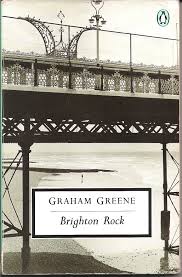
Books Read in 2015 – 20. Brighton Rock – Graham Greene

2015tbrbutton

Genre: Classics, Crime

Narrative Style: Third person from various viewpoints

Rating: 4/5

Published: 1938Unknown-1

Format: Paperback

Synopsis: Hale realises soon after he arrives in Brighton that his life is in danger. He is caught up in Brighton’s gang war. After he has killed Hale, Pinkie believes that he can escape earthly punishment but he didn’t expect the force for good that is Ida Arnold.

Reading challenges: TBR Pile Challenge

Time on Shelf: About 15 years. My husband read it almost straightaway when we bought it but it has taken me this long. 


When the opening line is ‘Hale knew, before he had been in Brighton three hours, that they meant to murder him’, you know that you are onto a winner. This book hooks you in immediately and does not let go. There is not a moment wasted as the plot is intense and taut.

The character of Pinkie was fascinating. He was both vulnerable and dangerous. His own background makes his path into violence seem almost inevitable. He is not much more than a child, trying desperately to mimic the methods of the men he sees around him. He is clever but untamed and has no moral code to speak of. He is the very model of a psychopath but Greene makes it possible for the reader to feel for him and the situation he has got himself into.

On the side of good is Ida Arnold, the woman who was with Hale just before he died. She barely knew him but is determined to discover the truth of his death. She is full of life and laughter, a strong character who will not give up. Thankfully, she is not a saint but an ordinary woman who decides that she must not let this one go. She is motherly and tries to look after Rose (who Pinkie marries to keep her from testifying against him) even when Rose does not want her help.

The character of Rose was the one weak link in the novel. I couldn’t see why she might fall for Pinkie so heavily that she would marry him immediately. She was dangerously naive and I wasn’t really convinced by her. I don’t think she was as well drawn a character as the others. It was hard to feel any sort of empathy with her about her bullheaded belief that Pinkie loved her.

This is very much a novel about earthly retribution versus that of the Catholic church. One of the only things that Pinkie believes in is the fiery depths of hell. He appears to believe that nothing on earth can touch him. I must admit that I do not know a lot about Catholicism or even religion as I have no beliefs and I think some of the finer points of this novel passed me by because of it.

Overall, though this was a fine thriller which kept me interested throughout and although Pinkie’s downfall seems inevitable, the exact nature of it was still a surprise and the ending of the novel is quite devastating. A very enjoyable read and certainly encouragement to read more of Greene’s work.


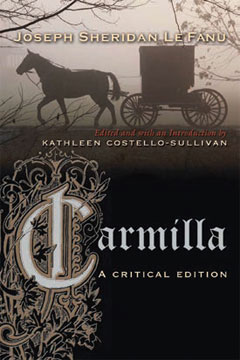
Books Read in 2015 – 17. Carmilla by Joseph Sheridan Le Fanu

eclecticreader15 Genre: Horror, Classics, Vampires Narrative Style: First person. Introduced as if part of a doctor’s case-notes Rating 3/5carmilla-240 Published: 1871 Format: Kindle Reading challenges: Eclectic reader challenge 2015 – genre: A story written before I was born. Synopsis: Laura and her father live in a solitary castle in Austria. One night, they witness a terrible coach crash and are persuaded to look after the victims daughter as she is considered too ill to carry on. Strange night time occurrences and appearances begin to bother Laura although she doesn’t immediately associate them with their new guest.  This early vampire story – which pre-dates Dracula by some 26 years – seems quite old-fashioned now. It is a story that has seeped into popular culture. Unfortunately when you then read the original version, it is hard not to feel it is a little predictable. This only shows the extent of the influence of Le Fanu’s story. I particularly enjoyed the opening with its creepy descriptions of the surrounding area and the hints of empty villages and deserted castles. The scene was very effectively set for what was to come. When a friend of the family’s daughter dies in mysterious circumstances just as she was about to visit Laura and the equally mysterious Carmilla appears just days later, the reader knows that something is not quite right. Equally, I found the build up of tension between Laura and Carmilla convincing and interesting. Laura is both attracted and repulsed by her guest and cannot put her finger on why. Carmilla is prone to strange romantic longings with Laura as their focus. These episodes are unsettling to Laura and probably would have been to readers at the time. However, momentum does not quite hold up and the revealing of Carmilla’s vampire status is a bit of an anticlimax. The General – the friend whose daughter died – recounts his own experience with Carmilla in a nearby ruined village. When Carmilla appears, he attempts to attack her but she is too strong for him, thus proving that she is indeed a vampire. At just the right moment, a vampire expert and hunter appears who just happened to know where the hidden tomb of Carmilla is. This ending seems a little rushed and underdeveloped. It’s a shame because I had enjoyed it up until that point.

Books Read in 2015 – 14. The Miniaturist – Jessie Burton (contains spoilers)

Genre: Historical Fiction

Narrative Style: third person, chronologicalUnknown

Rating: 2.5/5

Published: 2014

Format: Kindle

Synopsis: Nella Oortman arrives in Amsterdam to begin her new life as wife to wealthy merchant, Johannes Brandt. Immediately, she notices that things are not what they should be. Johannes is distant and does not come to her bed. His sister is difficult and she and Nella are locked in battle almost immediately. But it is when Johannes buys his wife a cabinet version of their house, to be filled with miniature furniture and figures that things start to fall apart. 

The story at the heart of The Miniaturist is an interesting one and the atmosphere of Amsterdam in the late 1600s is convincingly suffocating, however, I found that I had little interest in reading on and it was a real struggle at times to get it finished.

The story focuses on Nella and her attempts to understand the secrets of those around her. She is young and a country girl and she often misinterprets events. As such, the reader has to try and work out the actual truth, separating it from Nella and her servant, Cornelia’s imaginings. This was quite an easy task and was one of the reasons I felt the novel lacked tension. There were no real surprises.

When the miniaturist starts to send unasked for models that seem to predict events, Nella becomes unsettled. This was interesting and suitably creepy. It was hard to tell whether it was all just in Nella’s head or if the miniaturist really was some sort of witch. This wasn’t resolved which I found a little disappointing.

Finally, the characters were stereotypical and unconvincing. I was intrigued by the story of Johannes and Jack but as the details unfolded it seemed just a bit too familiar. Johannes, the rich merchant with his unholy (at the time) passion for other men and Jack, the whore who would sell out anybody for money were two-dimensional and I felt little for either of them. When Nella first sees Johannes and Jack together, she faints and then wants to report him. But in no time at all, she is supportive of him and so very understanding. There is little sense of why she might have had such a profound change of heart and again it felt a little unconvincing. Similarly, the relationship between Marin, Johannes sister and the negro servant seems too much like a cliche to really involve the reader.

So, for me, the whole thing fell a little flat. Maybe it would have been more interesting if there was more of the other character’s perspectives. Perhaps then they would have been fleshed out a bit more. It left me feeling more than a little empty.

Books Read in 2015 – 13. A Kiss Before Dying – Ira Levin

Genre: American Crime

Narrative Style: 3rd person narration from multiple viewpointsUnknown-1

Rating: 5/5

Published: 1953

Format: Paperback

Synopsis: The future had looked so rosy but then Dorothy announced she was pregnant and all his plans came crashing down. He knows he has to something – indeed he will do anything – to ensure his plans come to fruition. He is a man of ambition and his goal is the millions of wealthy copper ore family, the Kingships. He will stop at nothing, not even murder, to get what he feels he deserves. 

I was familiar with the plot of this story, having seen the film with Matt Dillon in the early 90s so I was eager to see what the book was like. As with other books by Levin, I was impressed to see that the book was even better than the film versions. Levin really was a master of suspense and he certainly kept me reading on.

The novel starts with an unnamed male narrator discovering that his girlfriend, Dorothy Kingship is pregnant. This does not please him but it soon comes clear he feels there is more at stake than merely the loss of his freedom. He has been courting Dorothy with the hope of marrying her and gaining access to her family’s money. If her father discovers the pregnancy, she will be cut off. At first, he tries to make her take pills that will make her miscarry and then, when that doesn’t work, his thoughts take an even darker turn. He cons Dorothy into thinking he will marry her and then lures her on to the roof of the building before pushing her off, making it look like suicide. I must admit, I felt little sympathy for Dorothy and I was more concerned with how he might overcome the obstacles that fate presented for him. It was fascinating to watch the thought processes of a psychopath unfurl. Especially one who thinks he may be getting away with the perfect crime.

In the second part, we are presented with Dorothy’s sister, Ellen who is unconvinced by her sister’s supposed suicide. She has some information about a boy who was seeing Dorothy and she is determined that he had something to do with her death. She meets two men, both of which fit the bill. As the man from the first part is never named, the reader is also in the dark about his identity. I was genuinely surprised when his identity was revealed.

The final part concerns the final sister, recovering slowly from one sister’s suicide and the next one’s murder. She seems to have found the perfect man. He likes all the things she likes. He is a gentleman although he is poor. Now the reader is fully aware that this is the same man from the start and the tension is now whether he will indeed get away with it. The ending was intense and immensely satisfying. It was also a relief. The tension before the end is almost unbearable. An excellent read.

Books Read in 2015 – 12. The Penelopiad by Margaret Atwood

eclecticreader15

Genre: Myth, Feminist

Narrative style: first person with Greek chorus

Rating: 4/5

Published: 2005Unknown

Format: Paperback

Reading Challenges: Eclectic Reader Challenge 2015 – genre rewriting myth

Synopsis: Penelope is left behind when Odysseus goes off to fight in the Trojan Wars. He is then gone for ten years. Penelope has to deal with the rumours about his behaviour and all the suitors who try to convince her he is dead. She cleverly keeps them at bay by sewing and then undoing the shroud she is making. On his return, Odysseus slaughters the suitors and hangs Penelope’s maids, an act which haunts Penelope yet.

I have a fair understanding of The Illiad and know the story of Penelope fairly well. (I researched it when teaching the Carol Ann Duffy poem about Penelope in The World’s Wife, another fab rewriting of the story.) So I was quite excited to see what Atwood would make of it. I was not disappointed.

Atwood’s retelling starts in the fields of Asphodel with Penelope dead and haunted by the death of her maids. She still sees Odysseus (who is still able to trick her into thinking he will stay with her forever) and Helen who she hates. She then begins to tell her story.

Atwood’s Penelope is strong and clever but loses out to the stunning good looks of her cousin Helen. Intelligence in a woman is not appreciated. She has to deal with her mother-in-law who does not approve of her and Odysseus’s nurse, Eurycleia who thinks no one knows Odysseus like her. But she survives through her wit and with the support of her maids.

She sets them to work, like a spy network, to discover what the suitors are really planning. This leads to them being raped by the suitors and Penelope tends them kindly although she does not stop them spying for her. Some of them, she feels, are like her own children. She is closer to them then her son, Telemachus who is little more than a bundle of testosterone and muscle. Ultimately, this is their undoing. As when Odysseus returns he deals with them, second only to the suitors.

The Greek chorus is used to give a different side of the story. Often the chorus is made up of the maids who feel they know the truth of the situation. At one stage, the chorus becomes a modern day court room and Odysseus is put on trial for the crimes of killing the suitors. The maids then appear and demand justice for themselves as well. The scene quickly descends into chaos as the ancient legends mix with a modern court scene.

Finally, it is suggested that Penelope may have been part of a matriarchal goddess cult and so may actually be a lot more powerful than The Iliad gives her credit. Atwood addresses the double standards of the original story – Odysseus is adulterous but expects Penelope to remain pure, for example but the narrative is never merely preachy. Atwood’s women are always complicated and Penelope is not completely innocent, being herself complicit in the deaths of her maids. This is made apparent by her inability to lose them even in death. They follow her around, making forgetting impossible.

Overall, this was funny and clever, typical Atwood in a lot of ways. But really, I wouldn’t have chosen to read this if it was’t Atwood and while it was interesting, Greek myth isn’t really on my list of areas to read about.

Books Read in 2015 – 10. The Anniversary Man – R. J. Ellory

2015tbrbutton

Genre: American Crime, Serial Killer

Narrative Style: Third person

Rating 4/5Unknown

Published: 2009

Format: Paperback

Reading Challenges: TBR Challenge 2015

Time on shelf: About four years. I bought it at the same time as A Quiet Vendetta which I read straightaway and really enjoyed. I had no real reason for not reading it except other books got in the way.

Synopsis: John Costello survives an attack by a serial killer which kills his girlfriend. Now, twenty years later, he is the only one in New York to realise that a new spate of murders are in fact linked. They are all copies of old murders, committed on the anniversary of the original. However, contact with the police only brings John into the firing line of the killer. 

I wasn’t entirely sure about the premise of this book at first. I had visions of the film Copycat which I considered to be the definitive narrative of the copycat killer idea. I wasn’t sure what could possibly be added to the idea. However, I was wrong. This a completely different take on the tale.

The novel begins with the attack on John Costello back in 1984 and charts his difficulty with getting on with his life and his obsession with serial killers. He is damaged, not just physically but mentally by the attack and there is certainly something odd about him. Odd enough that when, later in the novel, the police believe he is the killer you begin to doubt yourself as to whether or not he is the guilty party.

The narrative then moves on to a series of murders in different areas of New York which have no stylistic similarities so no one links them until the Chief of Police gets wind of a possible article linking the murders together. This is the work of John Costello and he has realised the link between the deaths and the killer gets his name – The Anniversary Man.

It is at this point that the narrative really takes off and we really get to know the cop in charge of the investigation Ray Irving. He is suitably cynical and completely deprived of resources and time. He and Costello form an interesting team, both lonely and difficult men although in different ways. They face a race against time, trying to work out which murder will be the next enacted and I found that I couldn’t put the book down.

I have to say that I did work out how this would end. However, that is not to say that that it wasn’t enjoyable or that I wasn’t surprised by any of it. The ending was sad but also realistic and I wasn’t at all disappointed.