Books Read in 2015 – 54. The 100 Year Flood – Matthew Salesses

Genre: Literary Fiction, Magic Realism51HTxer-rdL._SX331_BO1,204,203,200_

Narrative Style: Third Person from different perspectives, non-chronological

Rating: 4/5

Published: 2015

Format: Kindle

Synopsis: Tee is living in Prague when the floods come. He is trying to find a new identity for himself and a new home. When he is asked to model for artist, Pavel, his life begins to change. Little does he realise exactly how much of his identity will be washed away when the floods come and he finds himself back in America.

It has to be said that Prague is the perfect setting for a story that is full of magic and legends. The city is beautiful and has an air of wonder about it that I have never experienced in any other city. Salasses certainly does justice to the setting with this tale of love, identity and wonder. The city is almost like another character, adding its own personal touch to the story.

The action shifts between Tee in America in hospital with no memory and his life in Prague after he meets Pavel, the artist and his beautiful wife, Katka. Tee immediately falls in love with the older woman and soon they are having an affair. Katka seems almost magical herself, spinning stories of her childhood and of the legends of the city.

As they only meet when it is raining, it makes sense that when she finally leaves Pavel, it should be at the start of the flood. However, when the pair ignore the warnings about evacuating, things start to take a darker tone.

This was one of those books where I wanted to start it over again immediately so I could try and recapture some of the magic and wonder that was destroyed by the horror of the ending. I could not put this down and felt bereft at the end, a sign of how powerful the characters and the story were. An excellent debut.

Books Read in 2015 52. The Woman in Black – Susan Hill

Genre: Supernatural Thriller, Historical Fiction

Narrative Style: First person, flashback framed by a story telling session on Christmas Eve51cxm9AmChL._SY344_BO1,204,203,200_

Rating: 3/5

Published: 2001

Format: Kindle

Synopsis: It’s Christmas Eve and the Kipps family have settled down for the traditional telling of ghost stories. Arthur Kipps is reminded of his own supernatural experience, something that is has taken him years to recover from. He then tells the tale of Eel Marsh House and the Woman in Black that haunts it. 

I’d been meaning to read this for a long time – from before the release of the film. I love a good ghost story and this had a lot of promise. And indeed, the beginning of the tale sets the scene quite successfully. Kipps is reluctant to tell his story and the descriptions of Eel Marsh House also seem to suggest that there is a terrible tale to be told.

And at first, it is suitably creepy. The locals warn him against staying at the house but everybody clams up when the probed too closely. However, Kipps is young and determined to prove his bravery so he does not take heed. It isn’t long before things start to go bump in the night and Kipps nerves (like those of the reader) are in shreds.

However, this early tension is wasted and the story fizzles out. Although Kipps finds evidence of who the Woman is Black is and why she is haunting the area and even though she exacts a final revenge, I was left oddly untouched. It seemed hurried and so the scares were not as effective as they could have been.

It may be another case of better read before the movie is viewed. Or maybe it is just that film as a medium is so much better able to scare. Whatever the reason, I felt let down by this in a way I didn’t by the film.


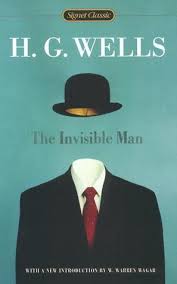
Books Read in 2015 50. The Invisible Man – H.G. Wells

Genre: Science Fiction, Horror, Madness

Narrative Style: Third person, reported with details from witnesses Unknown

Rating: 5/5

Published: 1897

Format: Kindle

Synopsis: A stranger arrives at a village pub and brings with him all manner of strangeness. At first, the visitor is merely surly and unfriendly but it soon becomes clear that all is not quite right with him and the chaos begins. 

It is one of those things that people are thought to wish for – to be invisible, even for just a day. It is always considered to be a fun concept, one which involves all the mischief you could possibly imagine. It is this idea that Wells explores in The Invisible Man. It quickly becomes apparent that not all of the consequences are pleasant.

The novel begins with the arrival of the Invisible Man at a pub where he means to lodge. He is wrapped up to the eyeballs with scarf, hat and coat hiding the truth of his state. For the reader, there is never any doubt about his identity. The audience is in a position of knowledge compared with the characters and they wonder how the truth will be revealed. Wells slowly peels back the layers from the character until his true state is understood. Chaos ensues and it quickly becomes apparent just how difficult it is to capture what you cannot actually see.

What follows is essentially an extended chase albeit with a pause for the Invisible Man – his name is Griffin, it transpires – to tell his tale. The science of the process is plausible enough and the pause heightens the tension as it begins to seem that being invisible is sending Griffin mad. Wanting to see what the consequences of this madness will be are what keep the reader’s interest.

As with all good horror and science fiction, this is actually a philosophical discussion of what it means to be human. When Griffin becomes invisible he begins to lose what grounds him and attached him to other humans. He descends into megalomania and no rules or laws can hold him. Wells asks the question how far would you go if you had such power and who is to say that we wouldn’t all react in the same way if we had the chance.

There is a moral aspect to this tale as well. Not only is there the idea of absolute power corrupting but also it becomes clear that Griffin was an albino before he became invisible. In becoming invisible, he escapes the unfriendly gaze of those who view him as different and becomes much more powerful than them. A sad story, then of the revenge of one who feels himself bullied.

I really enjoyed this. It is pacy and the narrative voice is like that of a friend passing on the latest urban myth. Did you hear about that invisible man…. This is easily as enjoyable as the excellent 1933 film version if not better.

Books Read in 2015 – 49. The Fight by Norman Mailer

eclecticreader15

Genre: Boxing, 

Narrative Style: Third person – Norman features as a character in his own reporting.

Rating: 4/5

Published: 1975Unknown

Format: Paperback

Synopsis: Norman Mailer is one of many journalists invited to Kinshasa to see the Rumble in  the Jungle between Mohammad Ali and George Foreman. He documents the many characters on both sides and in the process takes sports’ writing to a new level. 

Reading Challenges: Eclectic Reader Challenge 2015 – Genre: sport

I’m  not entirely sure how I came to be in possession of this book but as I had been wanting to read some Norman Mailler for a while, it came into my head straightaway for this challenge. And while I don’t really watch boxing, there is no doubt that it has produced some of sports’ biggest personalities, Muhammad Ali being a case in point.

In a lot of ways, this is a psychological study, not only of Ali and Foreman but of Mailer himself. Throughout the text, Mailer refers to himself in the third person as if he is just another character in this narrative. He tries to unpick his own magical thinking and attempts to ensure that Ali will be the winner and his racial attitudes come under scrutiny as well.

The run up to the fight is described first along with the training methods of two very different men and all the attendant hangers on that they both inspired. Neither Foreman or Ali seemed particularly likeable in a straight forward sense. But then that is scarcely the point. It was whoever was braver, stronger, more arrogant that was going to win this contest and these are the traits that they both showcase.

If you didn’t know the outcome, you might not expect the winner to be Ali. This is one reason that “Norman” is so worried early in the text. Ali is curiously disinterested in the beginning while Foreman shows no fear whatsoever. In fact, I found myself questioning my knowledge of the outcome. Had I really got it right? That was until the fight itself started.

I’m not the biggest fan of boxing but Mailer’s praise made it seem a noble pursuit, almost as delicate as a dance rather than a brutal fight. Certainly, he takes sports’ journalism to a new level, to where it is poetic rather than merely descriptive. It was a joy to read the in depth account of each round. I felt like cheering when Ali eventually won whilst also feeling a great deal of sympathy for Foreman who at first seemed under the impression that he had won.

I don’t read a lot of sports’ writing but based on this, I would certainly read more of Mailer’s work.

Books Read in 2015 – 48. burners by Bob Mayer

Genre: dystopia

Narrative style: third person, chronologicalUnknown

Rating: 2 and a half / 5

Published: 2015

Format: Kindle

I received a copy of burners through Librarything’s Early Reviewers program.
burners is a dystopia, set after The Chaos when humans and cyborgs fought to the near destruction of the planet. Now humanity is separated into burners, people, middlemores and evermores, according to how long they live for. The world is run by dealer who decides, according to DNA, who will live in each group.
I was quite interested in this story at first. It begins with Grace and Millay, twin sisters who have managed to swap places between burner and people. The action begins straightaway as they fail to meet up and both are nearly captured. However, the pace was not sustained and the twists and turns started to seem less convincing particularly the sudden appearance of Ruth, the cyborg, just in time to save someone from death.
At first, I was intrigued by the different sections of society, what they meant and how they had come into being. There are a lot of references to poker and to the hand you have been dealt which were interesting but could have been expanded into something more. Again as the novel progresses, I became less convinced. The explanation of how the categories came into being was a bit too simplistic and left me with questions that the novel did not answer.
Each chapter is separated into sections from the various’ characters points of view. This did add to the tension but I also found it a little frustrating as some of the sections were quite short and then you were off again to another character.
The ending was sudden but I guess that is how you make someone read the next book in the series. I would have liked a bit more closure as I had a lot of questions, however, I don’t think I will be reading on. While this is an interesting idea, I felt it could have been better executed.

Books Read in 2015 47. Gorky Park – Martin Cruz Smith

Genre: Spy, thriller, politics

Narrative Style: Third person mostly from Arkady’s point of view762806

Rating: 3/5

Published: 1982

Format: Kindle

Synopsis: When three bodies are found in Gorky Park, minus any identifying features (e.g. fingertips and faces), Arkady Renko is called in to investigate. Renko knows from the very first that there is more to this crime than anyone is letting on and when his investigations lead him to wealthy American John Osbourne, he soon finds his own life is in danger.

I have seen the film of this book and so was quite excited when this appeared in my weekly kindle e-mail. Unfortunately the book didn’t live up to my memories of the film for a number of reasons.

It started well and at first I was gripped by Renko’s investigations and the inevitable clashes with the power structures in Russia. Renko is an outsider who has failed in life due to his inability to play the party game and as such has little to lose. I liked him almost instantly for the same reasons that I love Inspector Rebus in Rankin’s books. No one was above the law for Renko. He was not about to let the KGB get away with murder.

The story is certainly full of twists – at least at first. In fact, I found myself sometimes getting a little lost and having to look back through the book. That is fine, I’d rather that than the stodgy plot towards the end. The ending goes on for far too long and with not really that much happening. I thought the ending was generally disappointing although I was definitely glad to get to it.

I wasn’t particularly convinced by the love story between Renko and Irina Asanova and felt that whenever they were together, the plot slowed right down. There was no real explanation why Asanova suddenly changes her mind about Renko and decides not only to help him but to sleep with him as well.

Finally, the Americans in this book are stereotypical – as, I suppose, is the portrayal of Renko. There is the Irish New York cop who is out to revenge his brother’s death and there is Osbourne himself, the very living embodiment of capitalism, willing to sacrifice anything for his precious furs. Neither of them are really developed beyond the obvious.

So, in the end, the film was better than the book. The plot was interesting at first. By the time it got to the end, I really just wanted it to be over and I had stopped caring about the characters.

Books Read in 2015 45. Consider Phlebus – Iain M. Banks

eclecticreader15

Genre: Science fiction, Adventure

Narrative Style: Third person

Rating: 3/5

Published: 1987

Format: Paperback8935689

Reading Challenges: Eclectic Reader Challenge – Genre: Science fiction set in space.

Synopsis: Horza is charged by the Idirans with finding one of the Culture’s minds which, while escaping from its ship, has taken refuge on Schar’s World, a planet that Horza knows well. Nominally on the side of the Idirans, Horza starts the mission optimistically but even his journey to the planet is not straightforward and once he arrives, he realises that finding the mind is the least of his problems. 

There is no doubt that Iain M. Banks has quite an imagination. The space within which this story takes place is exciting and interesting and Banks is clearly fascinated with where technology might take us as a race and how that will effect our humanity. This is most apparent in his descriptions of the Culture, the most advanced race in the book, and in Horza’s objections to them.

The story is action packed and races along like an out of control racing car, leaving the reader little time for breath or even thought. And while I did want to see if they were going to succeed in their mission, it left little space for character development or emotion of any kind.

That was my problem with it. There was little in the way of depth. Horza, a changer, could have been a fascinating character but you never really find out that much about him or his inner life. Even as his relationship with one of his fellow mercenaries develops and she announces that she is pregnant, there is little in the way of emotion developed between them.

There are some grisly moments in this book and that is where some of the best writing is. As in Iain M. Banks other fiction, his warped imagination takes the reader into some very dark places. It was a bit disappointing that in the end, this became merely a gun battle with all the usual cliches.

In the end, I felt about this the way I feel about a lot of big budget science fiction. It looks amazing but it is all surface. It left me feeling a little cold and  empty.

Books Read in 2015 – 44. A Scanner Darkly – Philip K. Dick

Genre: Dystopia

Narrative Style: Third person from various points of viewUnknown

Rating: 5/5

Published: 1977

Format: Kindle

Synopsis: Bob Arctor is an undercover agent trying to find the source of a batch of Substance D, an extremely addictive narcotic. He has to report back on his friends and housemates who are also being watched by the powers that be. As a part of being undercover, he too has to take the drug. As it takes hold of him, he becomes more and more divorced from himself and more and more dependant on the drug. 

It is hard to know how to put this novel into words. At its centre is Arctor’s swirl downwards into addiction. His paranoia and inability to recognise himself increase with his addiction and it is hard for the reader to tell what is real and what is not.

At the start, we are informed that Arctor has a scramble suit that he wears so his superiors cannot recognise him and with that is the name ‘Fred’ which he uses when he reports back on the household that he lives in. It is during one of these reports, he learns that Bob Arctor is under suspicion and another layer of surveillance is added when his superiors start to watch the house as well.

It all starts to get a bit messy inside of Arctor’s head. Watching the videos, he has to report on himself and his housemates. He watches in a safe house, in his scramble suit, with other scrambled individuals, watching other houses. It could easily be one of his housemates in the suit and he would never know. As he watches and continues to take the drug, he starts to not recognise himself on the TV and begins to refer to Arctor in the third person. He gets more and more paranoid and his superiors think that he may be losing it. He is put through a series of absurd tests by men in lab coats that talk in riddles. Eventually, they decide he needs to go into rehab because the drugs have finally broken him.

The novel is a difficult read. Dick says that the instances of drug taking, psychosis and withdrawal were all true and it certainly is unflinching in its description of the horrors of drugs. Dick also says that he does not consider it to be novel with a moral and if he means in terms of his attitude towards the addicts in the novel, that is probably true. There is no judgement. These people just are who they are, having come to a point in their lives where they can do no other than take drugs.

However, I do think that there a sense of morality with regard to the way that addicts are treated and the way the powers that be try to solve the ‘problem’ of addiction. This is shown in a couple of ways. First of all, once Arctor is no longer useful as an informant (and they admit that they used him to get to Barris, one of his housemates) they quickly remove him, not forgetting to charge him for becoming an addict while undercover. He is removed to a facility to withdraw but it is clear he will never be the same again.

Dick suggests that the facility – which is in need of addicts to get funding – may actually be the source of Substance D that Arctor was supposed to investigate. They create the addicts by growing and selling the drug which then secures their future as a clinic. This is suggested by two colleagues who have tried to control Arctor’s descent into addiction so that when he withdrew, he might be able to investigate. Unfortunately, he is too destroyed to do so.

At the end, I was relieved to have finished reading because the narrative was making my head hurt a little. There is a small ray of hope at the end, when Bruce (who it may be assumed is Arctor) sees the Substance D plant growing and picks one for his friends. But whether this will lead to anything other than more addiction, it is difficult to say.

Books Read in 2015 42. July’s People – Nadine Gordimer

eclecticreader15

Genre: Political fiction, African Literature

Narrative Style: Third person from various points of view

Rating: 4/5

Published: 1981

Format: PaperbackUnknown-1

Synopsis: Violence has broken out in South Africa and this time the rebels have planes and bombs at their disposal. Bam and Maureen Smales and their children are rescued by their servant, July, who takes them to his village. This changes their relationship in ways that they could not have envisaged and inevitably leads to tension between the servant and his former masters. 

Reading Challenges: Eclectic Reader Challenge – genre: Set in a country beginning with S – South Africa

I must admit that I do not know a lot about the history of South Africa. At the point when this novel is set, I was nine years old. I was aware of the situation in the same way that I was aware of the Irish problems of those years. There was often violence on the TV  but I didn’t really understand the reasons behind it or who I should have sympathy for.

In this novel, it is easy to have sympathy for both sides. The Smales are liberal whites who have tried their hardest to be fair to their servant and treat him with respect. So much so that he decides to rescue them. However, they are still on the side of privilege and they really understand little of July’s life outside of serving them.

This is brought into clear relief when they are brought to his village. They are no longer in charge of him or their lives. They are placed in the position of the blacks in South Africa. They are displaced and have no control and they do not like it.

It is equally difficult for July and his family to cope with the Smales’ presence. July’s wife and mother do not trust them and they reject Maureen’s attempts to try to help and laugh at her because she does not have their skills at picking the right plants or cooking them properly. July is caught in the awkward position of having more power than the people he has been serving, something they all find difficult to deal with.

This was a clever look at power and relationships within a racist society and it shows that it is anything but simple to resolve. The only complaint I would have is that I sometimes found it difficult to follow Gordimer’s prose. It was sometimes hard to know who’s point of view was being given or who was speaking. Other than that, this was an excellent dissection of a harmful power structure.

Books Read in 2015 41. The Ocean at the end of the Lane by Neil Gaiman

Genre: Fantasy, bildungsroman 

Narrative Style: First person, flashback framed at both ends by the present day.

Rating: 4/5Unknown

Published: 2013

Format: Kindle

Synopsis: A middle aged man returns to his childhood home after a funeral.  He ventures to the house down the lane and remembers long forgotten and sinister events from his childhood. 

The nameless narrator of this novel returns to the place where his childhood home used to be. Seemingly compelled to investigate, he starts down the lane to see if the farm and the “ocean” that used to be there still exist. Once there, he sits down by the pond and begins to remember Lettie Hempstock, the little girl who used to say that the pond was an ocean.

With memories of Lettie, come memories of a chilling nature. Events start with the suicide of a man who has stolen money from his friends. This awakens a supernatural force which tries to give money to people. One of the most creepy parts of this book is when the nameless narrator wakes from a dream in which he is choking to discover he really has got a coin stuck in his throat. This really touched on one of my deeper fears.

Events quickly take a fantastical turn, with monsters in human form and creatures from a realm beyond our understanding. The governess Ursula Monkton enthrals all except the narrator who sees her as the personification of evil especially as she seems to have a strong hold over his father. The narrator’s perception of her as a monster is like a child’s explanation of adult events that are beyond his understanding and the forgetting of these events as the child ages.

The darkness in this story – personified by Ursula Monkton and the Hunger Birds – is pretty unsettling especially when the Hunger Birds start to eat away at the universe. But the images of friendship and sacrifice – personified by the Hempstock family – are equally powerful. I liked the idea that the universe is being protected from the worse of evil by three generations of strong women.

Perhaps because this was the story of a young boy who didn’t entirely understand events all of the time anyway, there is never any room for disbelief. The story was utterly convincing. It transpires that the man has visited the farm a few times in his adult life although he cannot remember doing so. By the time he leaves the farmhouse, the reader realises that he will not remember this visit either. This made me think of the way that difficult childhood memories can have such a powerful hold even if you cannot remember them fully.

Reading this was a little like reading a modern fairy tale. You could take it at face value, a scary story about death, friendship and sacrifice or you could look at it as an allegory about good and evil, childhood and growing up. Like the pond, that was really an ocean, this is a novel with unexpected depth.