Reading last year and this.

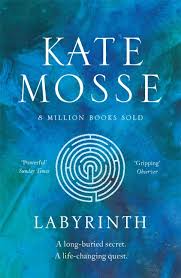
I didn’t set out to make this the year I read more female authors although every year when I look at what I read, I think that I should. Nonetheless, that is what has happened. 13 out of the 20 books I’ve read this year have been by female authors. This is a lot more than I would normally read. I’m not sure why I tend to be drawn more to male authors. I tell myself that I don’t think about the gender of the writer but there must be something that directs my attention in that way. Perhaps it is the genres that male and female authors stereotypically write in. I’m certainly no fan of romance (and yes I know, some men write romance. I’ve never read Nicholas Spark and I really don’t like David Nicholls. One Day is one of my least favourite books.) Anyway, for whatever reason, there were more women this year. Mostly, it was a good thing with some very enjoyable reads such as Labyrinth by Kate Mosse and Blue Lightening by Ann Cleeves. The only real disappointment was The Almost Moon by Alice Sebold. It’s a long time since I read The Lovely Bones but I really enjoyed it. The Almost Moon was nowhere near as good. Given the difficult mother daughter relationship at its heart, it should have been exciting and interesting but it was sluggish and I was bored by it.

I wanted to have a more relaxed reading year after years of doing reading challenges. The aim was to read some of the big thick books that were on my shelves and that I’d been avoiding. I only read 20 books but some of them took a while. (Also I no longer have a long commute or a lunch break when I get to sit and just read.) I felt like I was reading Wolf Hall for most of the year. Not that it wasn’t enjoyable but it was a slog at times. I enjoyed the beginning and the end but almost abandoned it in the middle. I’m not sure if I’m going to read the others.

Highlights of the Year

1. Labrynth – Kate Mosse

2. Mother’s Boy – Patrick Gale

3. Between Shades of Grey – Ruta Sepetys

Top Ten Tuesday – 10 Books with flowers in the title.

Top Ten Tuesday was created by The Broke and the Bookish in June of 2010 and was moved to That Artsy Reader Girl in January of 2018. It was born of a love of lists, a love of books, and a desire to bring bookish friends together.

This weeks prompt could be anything to do with flowers so I’ve chosen to list books with flowers in the title.

  1. Purple Hibiscus – Chimamanda Ngozi Adichie (2003) – An excellent story about the difficulties of growing up when your country is in turmoil and your family life is equally difficult.
  2. Flowers in the Attic – V. C. Andrews (1979) – A woman hides her children in the attic in order to gain an inheritance. I read this as a teenager (when everyone at school seemed to be reading it). I’m not sure what I’d think of it if I read it now.
  3. The Perks of Being a Wallflower – Stephen Chbosky (1999) – A powerful coming of age story about trying to live your life when you don’t understand your impulses or the world around you.
  4. The Name of the Rose – Umberto Eco (1980) – A convoluted mystery set in a medieval monastery with a cast of strange monks to add to the creepiness.
  5. The Black Dahlia – James Ellroy (1987) – A dark and disturbing story about the murder of a beautiful women in LA. This was my first Ellroy and one of the most enjoyable.
  6. The Virgin’s Lover – Philippa Gregory (2004) – The romance between Elizabeth 1 and Robert Dudley portrayed like a Carry On film. Not one of my favourites.
  7. All the Flowers in Shanghai – Duncan Jepson (2011) – An okay story set in 1930s Shanghai and showing the horrors of arranged marriages and the pressure to produce a male heir.
  8. Flowers for Algernon – Daniel Keyes (1966) – A thought experiment looking at the way we treat others based on how intelligent we perceive them to be. One of my favourite science fiction books.
  9. Odour of Chrysanthemums – D. H. Lawrence – A short stories about a woman waiting for her husband to return from the mine, unaware that he was killed in an accident earlier that day.
  10. The Day of the Triffids – John Wyndham (1951) – Okay more of a tree than a flower probably but nonetheless a well written look at the aftermath of a disaster.

Top Ten Tuesday – Books I DNF

Top Ten Tuesday was created by The Broke and the Bookish in June of 2010 and was moved to That Artsy Reader Girl in January of 2018. It was born of a love of lists, a love of books, and a desire to bring bookish friends together.

This weeks list is top ten books I did not finish. It isn’t often that I DNF a book. I’m not sure what I think will happen if I abandon a book but I tend to struggle on. The ones on this list really annoyed me.

  1. Whatever Love Means – David Baddiel – Tedious exploration of masculinity and sex which is neither exciting or clever.
  2. Lorna Doone – R. D. Blackmore – I had seen an adaptation of this and really enjoyed it but the novel was slow and lacking in tension.
  3. The Unusual Life of Tristan Smith – Peter Carey – This was a very strange book. The style was hard to read, the events made no sense and I didn’t care for the characters.
  4. Crime and Punishment – Fyodor Dostoevsky – I really wanted to enjoy this but I didn’t really get that far. The protagonist was annoying and the narrative was stodgy.
  5. The Virgin’s Lover – Philippa Gregory – This was about Elizabeth I and Robert Dudley and reads a bit like Carry on Tudors. Ridiculously bawdy.
  6. The Scarlet Letter – Nathaniel Hawthorne. The prose style was unreadable.
  7. On the Road – Jack Kerouac – Sexist nonsense. Perhaps he should have taken longer than three weeks to complete the first draft.
  8. Atonement – Ian McEwan – I finished this but I genuinely wished I hadn’t bothered. I won’t spoil it but to me it felt like McEwan had said ‘and then they woke up’ at the end. It felt lazy and annoying.
  9. The Time Traveller’s Wife. – Audrey Niffenegger I did in fact finish this but only because the thing that annoyed me was right at the end. To be fair, I was already a little irritated but when I realised Clare waited to see Henry one more time, it tipped me over the edge. I know it’s supposed to be romantic but if I’d realised that was the end, I’d definitely have stopped earlier.
  10. The Guernsey Literary and Potato Peel Pie Society – Mary Ann Schaffer – Another time the film was a lot better than the book. Very disappointing.

It’s been a while…

I decided this year not to do any reading challenges or make any lists of what I was going to read. I finished the TBR challenge last year but I didn’t finish the blogs so I decided no more challenges. My only plan was to read some of the fatter books on my shelf. I didn’t even sign up to the Goodreads challenge as I find that stressful if I get too far behind – which I would if read some long books. I didn’t realise the impact this would have on my blogging but suddenly it is April and I haven’t written a single one. Not good.

It is a little weird not to have a plan. For the last five years, I have always known roughly what books would read and it is weird that everything is now open to me. My only thoughts at the moment are I will probably read Wolf Hall, The Green Mile and A Prayer for Owen Meany as they have been on my shelf for a while but I am currently reading The Origins of Totalitarianism by Hannah Arendt on my kindle and I suspect that is going to take a while so I don’t want to read another long fiction book until I finish that. As such, I am reading The Ten Thousand Doors of January by Alix E Harrow at the minute which is a bit lighter.

So far this year I have read the following:

  1. Between Shades of Grey – Ruta Sepetys (2011) 4/5 I was given this for Christmas and I really enjoyed it. It tells the story of Lina a Lithuanian teenager who is suddenly removed from her home by Russian soldiers and sent ultimately to the Arctic Circle. This was a bleak, difficult story about an area of history I was unaware of and it was definitely worth a read.
  2. Big Little Lies – Lianne Moriarty (2014) 3/5 This had been on my kindle for a while. It was okay chick lit with some heavier themes than I was expecting. I did see the twist coming though.
  3. The Evil Seed – Joanne Harris (1992) 4/5 I bought this not realising that it was Harris’ debut novel and had been out of print for a while. It was quite different from the other of her novels that I’ve read as it is a vampire tale but it was still well written with parallel stories and a good amount of tension.
  4. The Sellout – Paul Beatty (2015) 5/5 This has also been on my kindle for a couple of years. It won the Man Booker Prize in 2016 and I can see why. It is a biting satire on the state of race relations in the US, looking at slavery, segregation, celebrity, sociology and stereotypes. First 5 star read of the year.
  5. Tigana – Guy Gavriel Kay (1990) 4/5 (The first of the tomes at 676 pages) I had been meaning to read this for a while but I admit I found its length a bit off putting. I had made an attempt at it while I was at university in the nineties but didn’t manage to finish it even though I remembered enjoying it. Although it took a long time to get through, I’m glad I read it. It was a beautifully written fantasy with action, romance and interesting characters.
  6. Mother’s Boy – Patrick Gale(2022) 5/5 I picked this up about a month ago in a charity shop (much to the annoyance of my husband as I’m not supposed to be buying books). It is a fictional telling of the life of Charles Causley. Not that I knew anything about Causley but Gale is one of my favourite authors so I wanted to read it quickly. It is written from the points of view of Causley and his mother who had a complicated relationship and describes his life as a signalman in the navy. Thoroughly recommended.

TBR 10 Yr – You Before Me – Jojo Moyes

Genre: Chick lit, romance, disability

Narrative Style: First person from a number of different people, chronological

Rating: 2/5

Published: 2012

Format: Kindle

Synopsis: Louisa Clark is in need of a new job. The job centre sends her to be carer to quadriplegic, Will Traynor. Will is rude and miserable and at first refuses to acknowledge Louisa. She hates it but perseveres and soon, Will’s happiness begins to mean a lot to her. Then she discovers that Will has given his parents six months before he goes to Dignitas and ends his life and she tries many schemes to make him change his mind.

Reading Challenges: TBR 10 Yr Challenge hosted by Roof Beam Reader

Time on shelf: I bought this when the film came out. It was 99p on Kindle so I bought it but very quickly I decided I probably wouldn’t like it so it sat on the shelf.

I don’t know why I do it to myself. Whenever there is a book that is really popular and I decide to read it, I always hate it. (Where the Crawdads Sing, The Thursday Murder Club, The Time Traveller’s Wife to name but three.) I put off reading this for that very reason, not to mention that when the film came out, disability activists were up in arms. I wasn’t sure I wanted to ever read it. Putting it on this list meant that I had to read it.

It didn’t take long for me to be irritated. The characters were immediately stereotypical. Lou Clark was a quirky, working class heroine. Will was upper class, used to having his own way and sullen because he felt he was no longer in control of his life. I found the stereotyping offensive even without the disability angle. (Salt of the earth, working class heroine reminds buttoned up upper class hero what it means to love. How tedious.) Lou’s family seem to have stepped out of a dickens novel about poverty – sister Treena is a single mom, dad makes furniture and gets laid off halfway through( but luckily is saved by Will and given a job working for his dad!), mum spends all her time looking after Lou’s grandfather who has had a stroke. They all live in the same house and there is never enough money to go round. All of them seemed like “characters” rather than actual people.

I was also unconvinced by Lou’s relationship with her boyfriend, Patrick – a man obsessed with running and training and eating the right thing. Although Lou says that he was different when they first got together, it was very difficult to see how they had managed to have a relationship last for seven years. I certainly didn’t see why Lou still put up with him. He was unpleasant and only seemed to see a version of Lou that he would prefer – one that would train with him, for example. Lou, then, was ripe for falling in love and Will came into the picture at just the right time.

Of course, at first Will is singularly unpleasant and Lou wants to quit but money troubles mean that she can’t. Slowly, Will becomes more communicative especially after a visit from his ex girlfriend Alicia who is getting married to his best friend Rupert, both of whom are horrible. Then Louisa hears Mrs Traynor and Will’s sister, Georgina, talking about the fact that they had six months to convince Will he wanted to live. If they couldn’t do it, then he would end his life at Dignitas in Switzerland. Lou finds this hard to understand and so she decides that she will try to make the future as exciting as possible for Will as she feels that he should want to live, that she can make things more exciting for him and if she just tries hard enough, he will realise that actually life is good. It seemed obvious to me that Will would not change his mind.

I feel like there is no good way to end this narrative. First of all, there is the way it actually ends. Will, despite the fact that he loves Louisa, still goes to Switzerland. This is what angered the disability rights groups so much. Will has the money to pay for whatever he needs. He could live a reasonable life. He has people who love him. But still, he decides to kill himself. I understand that people could see this as meaning disabled people have no role in society but I do not think that this is what Moyes intended to say. In fact, I think that Will’s decision had more to do with the fact that he is unused to having to take anything into account when he decides to do something. Before his accident, he had money and he travelled extensively. He hiked and climbed mountains. After the accident, he has to think about his disability all the time and if it doesn’t stop him from doing something, it puts huge obstacles in the way. Louisa (and her mother) fail to understand this because they have to think carefully about every decision they make because they have no money and no spare time. Also, everyone, apart from Will, opposes the idea of going to Dignitas There are many moral arguments given against this decision in the novel. If Moyes’ felt that disabled people have no meaning within society, I think she may have chosen to play this a little differently.

So what about a different ending? I feel, although all those readers who say they cried may feel differently, that if Will had changed his mind, it would have been no better. In fact, as I neared the end of the novel, I was unsure what to wish for. I didn’t particularly want Will to kill himself but I was also offended by the idea that the love of a quirky working class girl might be enough to save the day. Neither Louisa nor her mother really think about what Will is going through. They think about the fact that they will miss him and they call him selfish for all the hurt that he will cause but they do not think about what he might feel, when he has yet another bout of pneumonia or when he gets an infection he can’t shake off. It seemed to me that Will wanted to have control over his death, to have a good death and be able to say goodbye to people. A fair enough wish, I would think.

Finally, I found the class politics of this novel annoying. Pre-accident, Will has money, a job in the city and is able to travel all over the world. Lou, by contrast, is working in a café enjoying the eccentricities of the customers. Their paths would not have crossed of not for Will’s accident. That’s one hell of a plot device. And then there is the fact that Will leaves her a lot of money so she can go to university and live a life she would not have managed otherwise. Suitable compensation for not having his company? I certainly didn’t feel it was the romantic ending that everyone else seemed to. Ultimately, she learns to be a better person through her contact with Will and then she gets to live a better life through the money he leaves her. Both of these left a sour taste in my mouth.

TBR 10 Yr – 10. The Thing Around Your Neck – Chimamanda Ngozi Adichie

Genre: Short Stories, African literature

Narrative style: Varies

Published: 2008

Rating 4/5

Format: Hardback

Synopsis: Adichie tells the stories of Nigerians, in Africa and the USA. They are tales of sorrow and longing, about the clash of cultures and the struggle to reconcile them.

Time on Shelf: I inherited this from my husband’s aunt in 2014 so a long time. I’m not a huge fan of short stories so that put me off reading it sooner.

Reading challenges: TBR Challenge Yr 10 – hosted by Roof Beam Reader

I really enjoyed the stories in this collection. As always, my struggle with short stories is I always want more and Adichie’s characters are well drawn and vivid, their situations compelling. Any of them could have been a novel I would have happily read. It may seem harsh to not give five stars but every time I finished a story, I felt a sense of loss that I wasn’t going to be able to read more.

Adichie’s stories look at the lives of Nigerians, both in Africa and in the US. They look at tradition, at prejudice, at relationships and culture. The stories are compassionate, emotional without being sentimental and look closely at human nature. The best stories are those that look at the clash between cultures, be it between races, between the sexes or between the generations.

‘Jumping Monkey Hill’ is perhaps my favourite story. A young writer goes to a retreat in Cape Town with other African writers. The retreat is run by a white British man who feels he knows best about what the young Africans should be writing about and how. He is incredibly patronising to the narrator and has preconceived ideas about her. He is only interested in writing that fits with his Western ideas of what African writers should be like.

Other highlights are ‘The American Embassy’ about a women trying to apply for asylum after the murder of her son, ‘The Arrangers of Marriage’ where a woman joins her husband in America and is disappointed when she finds her new husband has abandoned his Nigerian roots and ‘The Headstrong Historian’ where a woman believes her husband was killed by her cousins to get her land and sends her son to be educated by missionaries in an attempt to get it back.

I really enjoyed this collection and will certainly be reading Americanah soon.

TBR Yr 10 – The Feminine Mystique – Betty Friedan

Genre: Feminism, Academic

Narrative Style: Academic

Published: 1963

Rating: 3/5

Format: Kindle

Synopsis: When Friedan does a survey of her old college classmates, she finds most of them are not using their education and she wonders why. She starts to speak to more women and realises that they have put motherhood and having a family first and many of them feel dissatisfied and don’t know why. She calls this ‘the problem with no name’. She comes to realise that the way American society frames femininity has forced women back into the home. These assumptions that women should be fulfilled merely from housework and children, she calls The Feminine Mystique.

Time on shelf: I bought this during lockdown (2020) after watching the TV series Mrs America.

Reading Challenges: TBR Challenge hosted by Adam Burgess at Roof Beam Reader.

I vowed to do more academic reading this year – I used to read a lot of academic works when I was studying for my MPhil and I really enjoyed it but I’ve got out of the habit lately. Friedan seemed a good place to start as she is such an important name from that era of feminism.

Friedan has an straightforward, anecdotal style which helped put across the sometimes complex ideas that she was using to support her idea that American women were pushed into being wives and mothers, rather than focusing on their careers. Even women who had been to college. She then outlined the factors that she feels hold women in this place.

I enjoyed reading this book. The beginning, particularly, still seemed apt today. There are still a lot of girls that can only imagine themselves as wives and mothers, still a lot of advertising that makes it clear that this is women’s role. You certainly never hear boys say that all they want in the world is to be someone’s father.

Friedan uses her own experience – describing how she chose marriage and motherhood over her career in psychology – to show how women felt frightened to wait too long to get married or get too educated. She discusses how men make all the decisions about what read in magazines (all the editors are men), about what advertising is directed at them (all the ad executives are men) and so they feel they have no choice but to become this infantilised version of a woman that these men have created. All of which fits with what I felt I knew of women’s role in the 1950s.

But as I read on, I found it harder and harder to be completely on Friedan’s side. Obviously, I don’t know what it was like to be a fifties housewife, trapped in a marriage, the only outlet for her energies her children but Friedan chooses to use the concentration camps as a metaphor for this which made me feel very uncomfortable. She says ‘In a sense that is not as far-fetched as it sounds, the women who “adjust” as housewives, who grow up wanting to be “just a housewife,” are in as much danger as the millions who walked to their own death in the concentration camps—and the millions more who refused to believe that the concentration camps existed’ and calls it the ‘comfortable concentration camp’ throughout this chapter. This is clearly an exaggeration and feels somewhat self indulgent. It trivialises the holocaust and makes Friedan’s rhetoric a little ridiculous. Friedan has since said that she feels ashamed of making such an analogy but that doesn’t make it any easier to read.

Friedan does a very good job of debunking Freud and his ideas about women which were very popular at the time when Friedan was writing. However, she is unable to escape his influence when she talks about homosexuality which she believes is due to bad mothering that she feels is softening the nation’s men. She calls homosexuality a ‘murky smog’ which is spreading over America. This is downright homophobic. It is obviously difficult to separate a writer from their time and thinking about homosexuality at the time was probably closer to Friedan’s ideas then ours in 2023 and Friedan has acknowledged her error in not supporting LGBT rights. Even so, it would be nice to think that Friedan would see that it was not just women that were harmed by the patriarchal society.

Having said that, Friedan does not acknowledge any women who are not like her – there is nothing of women of colour or working class women here – not even an acknowledgement that things might be different for them. The problem with no name’ is only a problem for those with the money and leisure to be bored. Those who wanted ‘more’ meaning furthering their education or starting a career, would presumably have the money to have a nanny or a maid. She also cannot imagine a woman without a man or a woman without children. This book is a solution to a problem that only a select group of women had.

Finally, as the book carries on, listing one thing after another, it becomes hard to imagine how any woman might break free of it. Indeed, if it so all encompassing that Friedan compares living in a white suburban home to the concentration camps, how has she managed to break free of it in order to point the way to other women? Is she some kind of super woman to have realised what the issue is and pass on her advice to other women who are like her?

Overall, I’m glad to have read this and I see why it was important. but I think I need to follow it up with reading some writing by women from the groups she doesn’t mention, starting with bell hooks From the Margin to the Center.

TBR 10 Yr – The Accidental – Ali Smith

Genre: literary fiction, family, experimental

Narrative style: Stream of consciousness from a number of different viewpoints.

Rating: 3/5

Published: 2005

Format: Paperback

Synopsis: Eve Smart and her family are on holiday in Norfolk when Amber appears at their door. Eve believes she is a student of her womanising husband, Michael. He believes that she has come to interview Eve. Amber is accepted into the family and lies to and manipulates every member of the household.

Time on shelf: Quite a while, I think. I’ve certainly had it as a alternative in earlier versions of this challenge. I have mixed experiences reading Smith and the last one I read – Autumn – left me disappointed so I put off reading this one.

Reading Challenges: TBR Yr 10 Challenge – Hosted by Adam Burgess at Roof Beam Reader.

I enjoyed the start of this book. I liked the different voices. I was interested in the characters and when Amber started to disrupt their lives, I wanted to see what would happen. I thought that there might be some explanation as to Amber’s appearance and was enjoying trying to work out what her relation to the family might be. Somewhere around halfway through, it started to get less enjoyable.

Smith writes in stream of consciousness for each character and it was this that first started to irritate me. The first time we hear Eve’s voice, it is the in the form of questions and answers which mimicked the style of Eve’s fiction which is styled as interviews with characters who died in World War 2. I found it irksome although it was undeniably clever. Later, when Amber has been with the family sometime, Michael, Eve’s husband starts to break down and so does the prose of his section, abandoning the formalities of a novel and becoming poetic, lacking punctuation and showing clearly that Michael is not the creative genius he imagines himself to be. Again, this was a clever way to show Michael’s inner turmoil but I found it irritating and it didn’t do much to further the plot.

In fact, plot seemed a minor consideration here. Amber has no relation to the other characters and no motive for disrupting their lives. She appears and disappears with no explanation. I admit I found this annoying but maybe I’m missing the point. I wanted closure and explanation and it isn’t really Smith’s style to give it. The other characters do change and move forward. Michael is suspended by his university for his behaviour towards his female students and has to take a more fatherly role to his two step children. Eve decides she needs get away from her family and from her writer’s block so she travels to the USA to discover he father’s other family. At the end, she is about to invade a family in the way that Amber invaded hers.

This is a novel about ideas, about boundaries and about the slipperiness of meaning. It’s about how the past affects the present and then the future. She is full of ideas. At the end, the family come home to find their home has been completely stripped of contents even down to the doorknobs. This felt like a step to far, another meaningless event that Smith is not going to explain.

This isn’t a terrible read. It’s better then I’ve made it sound because it is clever and because Smith can definitely turn a phrase but I wasn’t attached to any of the characters and at the end I felt nothing.

TBR Yr 10 7. No One Here Gets Out Live – Jerry Hopkins and Danny Sugarman

Genre: Music, Biography

Narrative Style: Third person, chronological

Rating: 4/5

Published: 1980

Format: Paperback

Synopsis: Jim Morrison, as frontman of The Doors, is instantly recognisable as the creator of a dark and compelling music. His dark good looks pushed him into the role of heartthrob where he would have preferred to be recognised as a poet, a contradiction he never quite managed to overcome. Morrison was a difficult character. He abused alcohol and drugs to the extreme. He was unpredictable and difficult to manage. But he was also charming and funny and managed to persuade people to forgive him time and time again.

Reading Challenges: TBR Challenge hosted by Roof Beam Reader

Time on Shelf: More than 20 years. My husband brought this book into our relationship when we moved in together. He has read it. I’ve never been a huge fan of The Doors. I like them but no more than that. However, when I asked him if he had any recommendations for music biography, he suggested this so I thought I’d give it a go.

This was an interesting read. Starting from the beginning, in his childhood, it is apparent that Morrison doesn’t really fit anywhere even with his own family. In fact, the early chapters of this made me think of the biographies of serial killers where they behave in a completely off kilter fashion. Morrison’s sense of humour even then was odd and unkind. He certainly seemed to lack empathy.

As The Doors rise to fame, Morrison enjoys the attention at first. He moves from being a shy performer, singing with his back to the audience, to the moody yet sexy performer that we are familiar with. Quickly, the band become famous and then notorious. Equally quickly, Morrison becomes dependant on drink and drugs. As he does, he becomes more and more unreliable and treats the people close to him appallingly.

There are frustrations for Morrison. He quickly gets fed up with being seen as a heart throb. He wants to be taken seriously. He releases volumes of poetry that he wishes to be released separately but the record company can only think about profit and release it as part of The Doors catalogue. There is talk of him wanting to escape towards the end, to get away from fame and fortune. Instead, he is found dead in a bathtub in Paris. Reading this book, it felt like there was no other way for this to end. As much as the author might like to fantasise that Morrison managed to walk away from it all, it seems highly unlikely. Morrison was always fascinated by risk taking. It could never end any other way.

For all this was an interesting read, it left me cold at times. The authors obviously knew Morrison well and cared for him. This results in them sometimes coming across as fanboys. Morrison treated everyone but particularly women terribly but there is little direct criticism. I found that hard to take. It did renew my appreciation of The Doors’ music but Morrison was too difficult and disturbed for me to really take to him.

TBR Yr 10 – 6. The Golem and the Djinni – Helene Wecker

Genre: Magic realism, historical fiction

Narrative Style: third person from various viewpoints

Published: 2013

Format: Kindle

Rating: 5/5

Synopsis: Chava is a golem, made to obey, whose master dies before he has a chance to issue any instructions. Ahmad is a djinni, born into the Syrian desert and trapped in a lamp by a wizard. Both of them find themselves in New York at the start of the twentieth century.

Reading challenges: TBR challenge Yr 10 – Hosted by Adam Burgess at Roof Beam Reader

Time on shelf: A few years. I bought it because I’m interested in the idea of golems but I put off reading it because it seemed rather long for a what I assumed was essentially a fairy tale.

There are fairy tale elements to this book but I soon discovered it was so much more. The 400+ pages flashed by as I could not put it down. In fact, if I could have gone on reading I would. (I know now there is a sequel so I will be purchasing that soon.)

Chava is created by a disgraced rabbi, back in Poland, as a wife for a rather unpleasant man. He plans to take her to the new world but on the ship across he dies from a burst appendix. Chava is left with no master. As a creature that is made to obey, she struggles to exist without instruction. Even worse, she can hear the desires of everyone she meets and longs to be able to help them all. She knows, however, that to do so would reveal her true nature and put her in great danger.

Ahmad is djinni, trapped in a copper flask by a powerful wizard, who is accidentally released by tinsmith Arbeely when he tries to clean the flask in order to repair it. Ahmad is a creature of fire and struggles to acclimatise in New York’s weather. Arbeely, gives him a job and he soon becomes famous, due to the amazing creations he produces. He is able to melt the metal with his bare hands.

Inevitably, these two supernatural creatures find each other and begin an unlikely friendship as they try to understand the alien world of New York in the early twentieth century. It transpires that their fates are linked as the golem’s creator, Yehuda Schaalman, decides to follow his creation to New York once he realises that she is owner free. As he gets closer to her, it becomes apparent that he also had a hand in Ahmad’s imprisonment in the flask. Will they be able to stand together and defeat this evil that has come into their lives?

So, these are the fairy tale elements of Wecker’s book but this is also a story about the difficulty of the immigrant experience. Both Chava and Ahmad feel alienated and don’t understand the way others behave. They have difficulty fitting in and they don’t understand the rules of polite society. Not only that, but Wecker shows the long hours worked (particularly by Chava in the bakery where she works) and the poverty (in describing the sheltering house for newly arrived Jewish immigrants). The loneliness of the golem and djinni are representative of the loneliness of the immigrant experience, as is their journey from the old world to the new.

Ultimately, this is a book about the human condition and the way society makes life difficult for those who are different. It is heartwarming and exciting in equal measure. As I said earlier, I could definitely have carried on reading and although the book comes to a conclusion, it did not feel like the complete end of the story. So I am glad there is a sequel and I am able to know more of their story.