Books Read in 2021 – All Quiet on the Western Front – Erich Maria Remarque

Genre: War

Narrative Style: First person, chronological

Rating: 5/5

Published: 1929

Format: Kindle

Synopsis: Paul and his classmates are goaded by their teacher to join up and they are quickly shipped off to the front. Paul is able to stay with some of his classmates and he also meets Kat, an older soldier who becomes a mentor like figure to him. The battles are brutal and affect the soldiers mentally as well as physically. They are still young and the only life they have experienced is that of the front.

Time on Shelf: This has been on my list of things to read for a long time but I only recently acquired a copy.

This is a book I’ve been wanting to read for a while. I’ve read a lot of World War One literature (the Regeneration Trilogy, Strange Meeting by Susan Hill and The Absolutist by John Boyne being some of the best) and Wilfred Owen is one of my favourite poets, It was high up on the list of books I needed to acquire. Just before Christmas, it came up on my Kindle Daily Deal and I knew it wouldn’t be long before I read it.

As soon as I started to read it, I knew I was going to enjoy it. Paul’s narrative voice was compelling. He describes the battles and his thoughts and feelings with the same careful detail. It is impossible not to feel for him. He is only nineteen. He has known no life apart from the front. Unlike Kat, and the older soldiers, the boys have no knowledge of the outside world apart from their time at school. They have no wives or girlfriends waiting for them. One of Paul’s friends tries to cling to the idea of education, even going so far as to still be muttering formula when they are under fire. He can imagine an after the war which Paul cannot. It does him no good. He dies from a wound from a flare gun. Later on, on the death of another classmates, Paul says, “What use is it to him now that he was such a good mathematician in school?”

They were thrown into an intolerable situation. They had no knowledge of strategy (if indeed there was any) and none of the battles are named. Paul comments that they aren’t fighting the enemy but both sides are fighting death. They kill the enemy merely because if they don’t, they themselves will be killed, not because of any nationalistic fervour. I was often reminded of Owen’s poetry and particularly Dulce et Decorum Est. It is nowhere near fine and fitting to die for one’s country. It is painful, brutal and unnecessary. Towards the end, Paul says ‘Our hands are earth, our bodies mud and our eyes puddles of rain. We no longer know whether we are still alive or not.’ The soldiers are no longer completely human. They are weapons. They are the war itself.

There are lighter moments. Much is made of the camaraderie of Paul, Kat and the school friends. Kat is described as having a sixth sense when it comes to finding the things that they need. When they need straw for their mattresses, he finds some, also bringing horsemeat, fat and a pan to cook it in. Another time, Paul and Kat find and kill two geese, taking the meat to other of their party who were being punished for insubordination. One day, they are swimming in the river when they see some girls and they arrange to meet later. As the soldiers were not allowed on the girls’ side of the river, they have to take their uniforms off and swim naked to them, carrying their gifts of food above their heads.

All this just makes it more tragic when, one by one, Paul’s friends are killed off – each in a slightly different way. There is an infinite variety of ways to die on the front. Baum is blinded. He is thought to be dead but the next day he is seen wandering around no man’s land. He is shot before he can be rescued. Mueller is shot in the stomach. Westhaus is shot in the back and Paul can see his lungs as he breathes. Even soldiers that seem out of the war are not safe from death. Detering deserts but is picked up by the military police and is never seen again. Kropp is injured and he and Paul spend time in hospital together. Kropp ends up having his leg amputated. He vows to kill himself but when Paul leaves the hospital he hasn’t because of the camaraderie and the lack of a gun. However, it is strongly implied that he will.

It might sound like hyperbole but this is one of the few times that I’ve thought that this is one of those books that everyone should read. It is deeply affecting and shows the true horrors of warfare, the sacrifice of mere boys for a country’s political ambitions and the emptiness of blind nationalism. A must read.

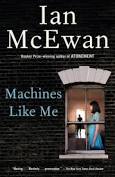
Books Read in 2021 – 13. Machines Like Me – Ian McEwan (Contains spoilers)

Genre: Alternative History, Literary Fiction

Narrative Style: First person, chronological

Published: 2019

Rating: 2/5

Format: Kindle

Synopsis: Charlie Friend lives in an alternative 1982 where Britain lost the Falkland War, Tony Benn is leader of the Labour party and Alan Turing is still alive. He has just purchased an Adam, one of the first batches of Adams and Eves to be produced, artificial humans made thanks to Turing’s work. He enlists the help of Miranda, his younger neighbour, who he is in love with. Together they decide on Adam’s personality and begin to introduce him to the world.

Time on Shelf: Not very long. Maybe six months.

Before I start this review, I feel I ought to confess that I have mixed feelings about Ian McEwan. I wrote a chapter of my MPhil on McEwan and Martin Amis and so had to read a lot of his novels in close succession. I have really liked some of his novels – The Child in Time, Atonement, The Cement Garden, for example – and really hated some of them – Solar, Amsterdam, Enduring Love, to name but three. In fact, after Solar I vowed I’d never read McEwan again. However, Machines Like Me sounded interesting so I relented. I wish I hadn’t bothered.

First of all, the alternative 1982 is irrelevant. The main plotline of Charlie and Miranda falling in love and adopting a poorly treated working class boy could have happened at any point in time. Charlie informs us of events in large and tedious pages of exposition but these events don’t actually touch the characters or affect their daily lives. It’s hard to see what point McEwan was trying to make. When Britain loses the Falkland War, Margaret Thatcher loses the next election and Tony Benn’s Labour party sweep to power. This seems like a nice little bit of wish fulfilment until it is revealed that he wishes to take Britain out of the European Union. Not that he gets to do that. Because he is now prime minister, he is killed in the IRA bomb that Thatcher survived. I’m not quite sure what point McEwan was trying to make with this. Maybe to make people consider their reactions to Thatcher’s near miss. Denis Healey is then made acting prime minister and the country quickly slides into chaos. Again, I wasn’t sure what to make of this. Normally when you read an alternative history it is to make you think of what might have happened. For example, the pinch point of JFK being shot is examined in 11/22/ 63 by Stephen King and the future if he is not shot is worse so we understand that events had to happen the way they did. Is this what McEwan is trying to do? Are we to be grateful this didn’t happen and we had Maggie instead? It made me a little uncomfortable to read it. A lot of the small details seem to be merely for Mcewan’s amusement such as John Lennon not being shot and The Beatles reforming. It serves no purpose except to make you think well, that might have been nice.

Of course, McEwan needs things to be slightly different so he can introduce his human machines. He needs technology to be in a different place than it actually was in 1982. (Although this begs the question, why not set just it in the future.) He also needs Alan Turing to still be alive. All the way through I was thinking, how is Turing alive. What is the detail of this world that differs from ours that means he didn’t feel the need to kill himself in 1954? I thought it might not be explained but in the last chapter, we are finally told. What it comes down to is Turing decides to take jail time rather than probation on the condition that he is chemically castrated. That it comes down to an individual’s decision suggests that McEwan merely needed to save Turing for the purposes of his narrative and felt no need to suggest something that might have improved life for all gay men. That was disappointing.

Charlie Friend is an annoying narrator given to spewing large amounts of detail about society and history into his narration. At one point, Miranda’s father mistakes him for the robot and I wasn’t surprised. He was tedious. He and Miranda got to choose Adam’s personality and although it is not clearly stated, it seems that Charlie must have made him in his own image because he too has a tendency towards boring people to tears. Part of the problem is a problem that I always have with McEwan’s writing. There is always a smug, I’m so clever tone that I find particularly annoying and Charlie had that in spades. It made me cringe in places. For example, while in the bath, Charlie says, ‘My penis, capsized above its submerged reef of hair, winked encouragement with a cocky single eye. So it should.’ I honestly think this is one of the worst sentences I have ever read. There is genuinely no need for it.

The most interesting thing about this novel – the reason why I decided to read it – was the ideas about artificial intelligence. The Adams and Eves start to commit suicide in various interesting ways. They cannot deal with the imperfections of the human way of thinking and cannot fully understand the reliance on emotion. I would have happily had this as the sole focus of the book but instead we get Miranda and her story of revenge on her friend’s rapist and Charlie and Miranda’s middle class rescue of a poor working class boy. The revenge story is the more interesting. Morally, we should side with Miranda because she made sure her friend’s rapist served time. Legally, of course, she has broken the law and so should be punished. It is this dilemma that finally pushes Adam over the edge and he sends the information he has to the police knowing that Miranda will be punished. He cannot understand the emotions of the situation. It also leads Charlie to bash his head in with a hammer. An event Turing suggests should be seen as murder.

It has to be said that McEwan clearly knows little about science fiction. He may be very well read on machine learning and mathematics but that is not the same as being able to craft a plausible machine that seems both human enough and machine like. Adam really convinces as neither. Mind you, neither does Charlie.

Books Read in 2021 – 12. The Problem with Men: When is International Men’s Day? (And Why It Matters)

Genre: Comedy, Cultural comment

Narrative Style: Essay interspersed with personal anecdotes

Rating: 4/5

Format: Kindle

Published: 2021

Synopsis: On International Women’s Day, for the last few years, Richard Herring has taken it upon himself to deal with all the men on Twitter who want to know why there is no International Men’s Day. This book is the result of those interactions. He discusses why International Men’s Day is important, why men choose to ask about it on March 8th and what the wider political ramifications might be. In a humorous way, of course.

Time on Shelf: Not very long. I bought this earlier this year when it was on sale on Kindle for 0.99.

I like Richard Herring. He’s funny. I went to see his show, Talking Cock, in 2003 and it is one of the best comedy shows I’ve seen. I’ve always appreciated his efforts on International Women’s Day with all the annoying men who are only concerned with making the day about them. This book takes that one step further – looking at the reasons why these men insist on inserting themselves into International Women’s Day and what the wider ramifications are.

This is a simple book. It has one line of argument and it sounds very much like Richard Herring’s comedy style. And that is fine. It analyses the reasons why some men only want to know about International Men’s Day on International Women’s Day something which has always irritated me.

There are a number of levels at which this behaviour is problematic. First of all, there is the sheer arrogance of it. I don’t need to Google it, I know I’m right. Then there is the fact that these men are not interested enough in the answer to actually take on board when it is. The google statistics show that searches of this question peak on March 8th. It is some perceived injustice that drives them, a need to insert themselves into the narrative. Herring shares a story of himself as a young child having meltdown at another child’s birthday basically because it was not his birthday which sums these men up pretty well, I think.

Of course, as Herring points out, there is a more serious point to be made. These men are representative of a larger political movement that has gained ground over the last few years. When Herring first started advising the men who can’t use Google as to when International Men’s Day was we were yet to witness All Lives Matter and Straight Pride to name but two idiotic and dangerous responses to genuine abuse and injustice. It’s a symptom of the idea that if it’s not about me, it’s not important mindset. Cleverly, the right wing press has pointed white male anger towards oppressed groups rather than towards the oppressors who look so much like them. Herring has one chapter which asks is female equality the same as male equality and the answer is a single word. Yes. This is what these men need to learn.

This was worth reading, definitely as it’s very funny. It’s not very deep but it is successful in getting it’s message across.

Books Read in 2021 11. Tinker Tailor Soldier Spy – John Le Carre (Contains spoilers)

Genre: Spy Fiction

Narrative Style: Third person from multiple viewpoints. Non-chronological.

Rating: 4/5

Published: 1974

Format: Kindle

Synopsis: There is a mole in the upper levels of the British intelligence service. It is clear that it is one of a small group of men, currently in charge of the Circus (MI6). But which one. George Smiley, recently retired and so outside of the service, is given the job of investigating.

Time on shelf: Not long. I bought this not long after Le Carre died. I haven’t read much spy fiction and what I had read I didn’t love. (The Trinity Six by Charles Cumming and The Swimmer by Joakim Zander, for example.) They seemed to turn on acts of immense stupidity or the opposite – the narrator having so much knowledge that it is almost superhuman. Neither option is much fun. However, Le Carre is described as a master of the art so I thought if I was ever going to like this genre, this was a good place to start.

From the start of this novel, Le Carre’s skill as a writer is apparent. The opening line (The truth is, if old Major Dover hadn’t dropped dead at Taunton races Jim would never have come to Thursgood’s at all.) throws you straight into the story. You are in the middle of something that is already in full flow and you have no idea what is going on. The narrative continues at pace and for quite a while, I was completely at sea, trying to make links, pull together events.

George Smiley has recently been retired when the novel starts. Control, the old head of The Circus has died and quite a few of George’s contemporaries have also been purged as the Circus is taken over by a close knit group of spies who are running an intelligence operation called Witchcraft. This is an intensely secretive operation which is producing suspiciously good information. One day, Smiley comes home to find Peter Guillam waiting in his living room and he is whisked off to permanent secretary, Lacon’s house to meet Rikki Tarr, a field agent with important information. So begin Smiley’s investigations and the reader’s confusion and excitement at the events that follow.

Tarr tells his tale in an extended flashback. Smiley takes quiet note asking astute questions. Afterwards, he is set up in a hotel with Control’s information and begins to work through it methodically, interviewing people as he goes. Smiley is a methodical, careful man. Loyal too, even to the wife who has cheated on him many times, even with close friend and fellow spy, Bill Haydon. Le Carre gives hints and clues to who the mole is and what is actually happening. He does it in just the right amounts and at just the right speed to keep the reader interested. The pacing is perfect.

Le Carre uses a lot of jargon – lamplighters, the Circus, pavement artists, to name but three – which gives the novel an authentic feel. Le Carre worked as a spy and it is evident that he knows what he is talking about. The events, the characters, the style of the narrative voice all have a legitimacy. I thought that this jargon was from his days as a spy but it transpires that Le Carre invented a lot of it and it has then been taken up by actual intelligence agencies. Some, such as mole, have fallen into common usage. It is unclear how widely used this word was in intelligence work before this novel.

There are somethings that made me uncomfortable. It starts to become clear that Bill Haydon is the least trustworthy of the four suspects. This is established in a number of ways. He has a lot of liaisons including with George’s wife. He is described as ‘dashing’ and being like Lawrence of Arabia. It is also suggested that he and Jim Prideaux were more than friends. Jim was ‘always so thick with Bill’. Bill is very keen to have Jim repatriated and threatens to resign when The Circus won’t pay the price. When Bill recruits Jim, Smiley remembers the description of Jim’s physicality that Bill sends and it is intensely homo-erotic. In the logic of the novel, all this adds to Bill’s untrustworthiness and is equal to the way that he is playing on both teams in his professional life as well. At one point someone says ‘they said he went both ways’ and while it is clear they mean sexually, when it transpires he is the mole, the full meaning of it becomes clear.

This is obviously a tired, not to mention offensive, trope. I don’t want to be too hard on Le Carre. He didn’t invent the link between being gay and being untrustworthy. Gay spies were considered to be at a bigger risk of being blackmailed especially when homosexuality was illegal. The novel was written in 1974 and is set in 1973, only six years after the Sexual Offences Act. Not only that but Le Carre would have been working in intelligence in the fifties when Donald Maclean and Guy Burgess suddenly fled to the Soviet Union after sharing secrets throughout the war. Burgess was gay and Maclean was bisexual. It probably seemed logical to Le Carre to frame Bill Haydon in this way but for me it spoiled the reading of what otherwise was a very enjoyable book.

Overall, I think I would read Le Carre again. I enjoyed his style and I enjoyed piecing the puzzle together. I’m still not entirely sure about the genre as a whole though. Now that I’ve read a master at the game, I’m not sure what else could live up to it.

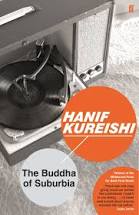
Books Read in 2021 – 10. The Buddha of Suburbia – Hanif Kureishi

Genre: Bildungsroman, Indian Literature

Narrative Style: First person, chronological

Rating: 4/5

Published: 1990

Format: Paperback

Synopsis: Karim Amir lives with his English mother and Indian father. He is looking for adventure – preferably sexual but any sort of adventure will do. When his father starts to give lessons in mysticism and meditation, Karim is thrown into a new world of punks, creatives and he starts to move away from his childhood world.

Time on shelf: I’ve wanted to read this from the early nineties when I watched it on the telly. So although I have only recently acquired a physical copy, it has been on the list for a long time.

I like it when you start to read a book and from the very first lines, you know that you are going to enjoy it. That was the case with this one. Karim’s narration is lively and funny from the very first. It is pacy and exciting. It is never quite certain what will happen to him next. It’s a definite page turner.

Karim is on the cusp of adulthood. His identity is still quite fluid. He is English and Indian and he likes boys and girls so he doesn’t fit into any group fully although he tries really hard to do so. This makes him an interesting character as you can see his efforts to try to be what others want him to be. He is confidante to many but has to try to work out his own issues on his own.

Karim mostly sleeps with women but his great love is Charlie, the son of his father’s mistress, Eva. Charlie is attractive but vapid. He easily follows trends as he has no real opinions of his own. He is not worthy of Karim’s adoration which is unshakeable for most of the novel. Finding punk in its early days, Charlie changes his band to fit in with this exciting new movement and is successful without having any talent or caring particularly about anything. He wants fame and he finds it in America. He seems to represent the selling out of the punk ideal or the idea of capitalism as a destructive force. At least, finally Karim realises that he is not worth his time and comes back to take up an acting job in a soap opera.

Karim doesn’t just tell his own story – there are many others given as he describes the lives around him. There is his father, Haroon who leaves his English wife for a more glamourous version where he gives talks about meditation and mingles with the white middle classes who lap up his spiritual musings and Jamilla, Karim’s cousin whose father arranges for a husband to be sent to England from India. When she refuses, he goes on hunger strike. To name but two. There are a lot of minor characters as well. Sometimes Karim seems a little lost in amongst all this chaos and excitement as if his story is being drowned out by all these other voices and people.

The novel talks about race, class, sexuality and is an astute observation of the late seventies. Because of the energy of Karim’s narrative, this never seems political or heavy going. It uses Karim’s issues with finding his identity to highlight some of the issues in British society. It is easy to feel for Karim and hope for him and I was so relieved when he finally realised that Charlie was no good. At the end, he has certainly fulfilled his wish of moving away from his childhood home and he is surrounded by friends and family and appears happy. The main thing, however that is driving this happiness, is the fact he has money which suggests that this happiness may be short lived. I was hopeful for Karim at the end of the novel but I couldn’t say whether he would continue to be happy.

Books Read in 2021. 9. Where the Crawdads Sing – Delia Owens (contains spoilers)

Genre: Mystery, Historical Fiction, Romance

Narrative Style: Third person, changes between two time frames

Published: 2018

Rating: 2/5

Format: Kindle

Synopsis: The locals of Barkley Cove call Kya the Marsh Girl. She has lived there alone, abandoned by her family, one by one. She is an outsider and they do not trust her so when local man, Chase Andrews, is murdered all eyes turn to her. Owens gives us two parallel time lines – the story of Kya’s abandonment starting in 1952 and the police investigation in 1969-70.

Time on shelf: Not very long. I saw that a lot of people seemed to be reading this and liking it so when it came up on my Kindle daily deal email in November, I bought it.

I started out quite liking this book. The early chapters describing Kya’s childhood were touching. The novel starts with Kya’s mother walking away from their shack in the marshes. Kya never understands why her mother has left and cannot believe that she will not come back. Next, her brother Jodie leaves, leaving Kya with her alcoholic, aggressive father. It was compelling and I couldn’t help but worry about what might happen to her.

The love story between Tate and Kya was also touching. It started with Tate leaving feathers for her. He has to slowly build Kya’s trust. It is sweet and innocent. The writing was often quite beautiful here. The descriptions of nature and of life in the marsh were the best part of this book. Tate encourages Kya’s love of nature and teaches her to read. Later, he helps her find a publisher for her drawings and descriptions of the the wildlife and nature of the swamp. I wasn’t 100% convinced by this part of the storyline but I liked the idea of Kya being self-taught and independent. It fitted with her character.

Tate goes away to study and, although he loves Kya, he believes she will never leave the marsh and they will never be able to have a normal life so he too abandons her. Enter Chase Andrews, a more worldly man – clearly meant to be a direct contrast with Tate’s sweetness – who persuades Kya to trust him with wild promises he has no intention of keeping. He keeps seeing other women, indeed he plans to get married, while he is seeing Kya. When Kya finds out that he is engaged to someone else, she refuses to see him. He does not take this well and he attacks Kya, attempting to rape her. She manages to get away but she knows that he will not rest until he has exerted his will over her. As these details are revealed, they give the reader just enough reasonable doubt about Kya to wonder whether or not she did it. And, of course, there were other questions as well – did she do it in self self defence for example.

If all the novel had been like this, it would be fine but the parallel narrative of the police investigation in 1969/70 was not so convincing. The two detectives – sheriff Ed Jackson and his deputy, Joe – weren’t very well written. They were little more than their jobs for a start. They don’t stand out as characters in their own right. They don’t even have to do too much policing as people keep arriving to tell them things rather than them having to investigate. They, and the townspeople, are quite keen for Kya to have killed Chase so if any evidence suggested that she didn’t do it – such as when they realise that Kya was out of town on the night of the murder – they very quickly found a reason for her to still be a suspect.

The evidence builds and Kya is the only suspect so, after some difficulty, they arrest her. We then have the court case which presented evidence that is new to the reader. Some of this evidence seems patently ridiculous. The prosecution contend that Kya came back from Greenville, where she was meeting her publisher, by a late night bus, disguised as a boy, killed Chase and then got the bus back, this time disguised as an old woman. There were other equally preposterous details and I really thought I couldn’t believe that they were being put up as evidence. It was absurd. The bus was late. She didn’t have time to commit the crime. But still the police were still determined she did it. It was ridiculous.

She is found innocent. Of course. And she carries on with her life. Tate has come back into her life and they get together, both working in the marshes into their old age. No one ever found out who killed Chase. There were no other suspects. It was a mystery. And that was irritating. I thought we might never find out. However, after her death, Tate finds some of Kya’s things under the floorboards in their shack. He finds poems that Kya has written under the name of Amanda Hamilton (which, irritatingly, Kya has recited often throughout the novel), one of which describes Chase’s murder. He also finds Chase’s necklace, which Kya had given him, and which was missing from the body. So all those ridiculous things, the barely convincing evidence was true. I found this ending incredibly annoying and it tainted the whole book for me.

This could have been a powerful lesson about prejudice but as Kya was actually guilty of the crime, I’m not sure what point the writer was trying to make. Very disappointing.

Books Read in 2021. 8. Middlemarch – George Eliot

Genre: Romance, Classics

Narrative Style: Omniscient Third Person Narrator, Chronological

Rating: 3.5/5

Published: 1871

Format: Paperback

Synopsis: Middlemarch is a slice of Victorian provincial life. It examines the inter-related lives of Dorothea Brooke, Fred Vincy, Tertius Lydgate, Will Ladislaw and Nicholas Bulstrode. Eliot touches on love, politics, money and the nature of marriage in her description of life in Middlemarch.

Time on Shelf: A long time. We bought this in the early nineties when classic novels were being sold for £1. This is where most of my classics came from. I have made a couple of attempts at reading this before but have never got further than 100 pages. This was added to my reading list after me and my husband watched a nation’s favourite books style programme and this was one that I hadn’t read. I was determined to finish it this time. Not least because he was breathing down my neck all the time.

Okay, so I made it through this time. And I’m glad I did. It was worth it. It was a struggle in the beginning to keep reading. Eliot’s style isn’t particularly hard to read but it isn’t a style I particularly enjoy. Everything is so very long winded. I’m sure this could have been told in less pages with less words per sentence but then I’m very much a modern girl in that sense. Eliot’s long, so long, sentences meant I wasn’t getting very many pages read at a time. Not helped by the fact that my copy was only 682 pages rather than the 800+ of a lot of editions. The print was tiny and as I’m now of an age to need reading glasses, it was hard to read for extended amounts of time.

But persevere I did and it started to flow for me. After about half way through, I started to enjoy it. I wouldn’t say I couldn’t put it down but I was interested to see how things would work out. There are a lot of plot strands but it is not hard to follow. Having said that, I did sometimes lose track of all the incidental characters. They were like the characters you might find gossiping in the Rover’s Return on Coronation Street who you might recognise on screen but struggle to name.

Part of the problem for me with the start of the novel is that I really didn’t take to Dorothea. I admired her decision to marry Mr Casaubon but it seemed absurd to me. And once Will Ladislaw appeared on the scene, it was fairly apparent how things would go. Obviously, there were obstacles but they were always going to get there in the end. I found other plot lines more entertaining.

There was a lot of comedy to be found. More than I was expecting anyway. Dorothea’s uncle, Mr. Brooke, was particularly amusing with his bumbling attempts at politics. The romance between Mary Garth and Fred Vincy was also sweetly amusing as she would not accept him until he made something of himself. Eliot mixes the lighter moments with more serious events such as the death of Mr Casaubon and Fred’s disappointment when he does not inherit his Uncle’s land as expected.

It was good to witness the downfall of Bulstrode and Eliot does not stint from punishing him for his past ills, showing how his piousness is a cover for a very dubious past and how he is undone by his desperation to hide it. I wasn’t totally convinced by the character of Raffles who turned up at various points to extract money from Bulstrode. He seemed a little like a caricature. Nonetheless, he sends Bulstrode into a tailspin as he tries to stop people finding out about his past. It was very satisfying to observe.

There are some clever twists and turns to the plotting. There is no doubt that Eliot was a master of her craft. The characterisation is vivid. You really get a feel for Middlemarch and its inhabitants. Even so, I didn’t love it and I doubt I’ll rush to read any other Eliot. At least not for a while.

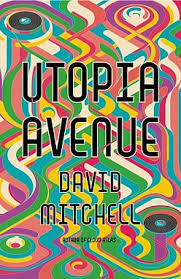
Books Read in 2021 7. Utopia Avenue – David Mitchell

Genre: Music, Historical Fiction, Literary Fiction

Narrative Style: Third person from a variety of points of view.

Rating: 2/5

Published: 2020

Format: Kindle

Synopsis: Utopia Avenue are a band put together by Levon Frankland. They are an unlikely bunch, mixing folk, psychedelic, rock and jazz influences. The novel follows their rise to fame and how they deal with their personal issues.

Time on shelf: Not very long. I’ve read four Mitchell novels before so I was excited to read this one.

Well, this was a disappointment. From very early on, it was clear that this was not going to be the usual Mitchell tour de force that I normally enjoy so much. The first character we are introduced to is Dean Moss, a gullible, uneducated bass player whose life is falling apart. Cue entrance of Levon Frankland who is putting a band together. They then proceed to pull together the other members of the band, all of whom are at crisis points in their musical careers. So far so predictable. The band suffer the usual setbacks in the start of their career – bad gigs, sinking singles and so on. Until, of course, things start to go well.

There isn’t much in the way of overarching story here. There is the story of the band and each of the members have a personal crisis. Dean had a troubled childhood with an abusive father, Elf Holloway thinks she may be gay but is unable to accept it (at least at first) and Jasper de Zoet has mental health issues. However, none of these things really have any momentum. There is no pace. In one chapter (the only one he gets) drummer, Griff is in a car crash which kills his brother. He doesn’t want to stay in the band. And then suddenly he is back in the band again. Because he gets no other chapters, we do not know his motivation. (Incidentally, Griff was a badly drawn stereotype of a Yorkshireman whose one trait was to say fook all the time. It made me question whether Mitchell had ever met someone from the North.)

The most interesting – and the most Mitchell like – of these storylines is Jasper’s. He has an interloper in his head who wants control of his body and briefly gains it. This is more like the Mitchell we all know and love and is the sole reason this didn’t get one star. Jasper is cured by horology, one of Mitchell’s trademark ideas. This is the only part of the story that isn’t straightforwardly realistic. I could have stood a bit more of it.

It isn’t only the plot that is problematic, however. It is the constant cameos of dead pop stars. Okay, so a band in London in the 1960s would meet some other pop stars, of course but these appearances are so frequent and are so blandly written that they quickly become tedious. Mitchell seems to think that the insertion of the name is enough and so does little to flesh out Brian Jones, Keith Moon or David Bowie (to name but three). They get there full name every time they are mentioned as if the reader is going to be as tickled by their appearance as Mitchell clearly is. I was familiar with some of these people but not all of them. A little more work at characterisation might have been helpful.

The one time Mitchell does expand his powers of description, it is quite successful. In a chapter set in the Chelsea Hotel, Elf fails to recognise Leonard Cohen so Mitchell has to describe him properly so the reader can work it out. Leonard comes across as wittily flirtatious, urbane and charming. Much as you might imagine really. By comparison, the other cameos felt lazy and self-indulgent. In fact, the one chapter from Levon’s point of view seems to have been included solely so that Mitchell could include an extended (and completely cringey) cameo from Francis Bacon which made me question which came first, the story or the star turns.

So overall, a disappointing read which saw me begin to anticipate the cameos rather than what might happen in the plot. A chapter in the Chelsea Hotel, I guess we’ll be meeting Leonard Cohen and Janis Joplin then. It was tedious and didn’t feel like it had been written by a writer as good as Mitchell. What a shame.

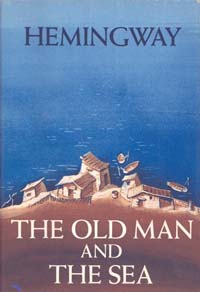
Books Read in 2021 6. The Old Man and the Sea – Ernest Hemingway.

Genre: Classics, Masculinity, Adventure

Narrative Style: Third person, Chronological

Rating: 2/5

Published: 1952

Format: Hardback

Synopsis: The Old Man and the Sea tells the story of Santiago, an aged fisherman who is having the worst run of luck of his life. It is eighty four days since he has caught a fish. On the eighty fifth day, he catches a huge marlin which pulls him out to sea.

Time on shelf: A long time. I’m not sure where this one came from. I think it may have been my husband’s and so it arrived when we moved in together some 20+ years ago. I have made one attempt to read this – in about 2005 – as it was one the GCSE syllabus – but I failed to finish it. As it is not a long book, this should give you some indication of how much I was enjoying it.

This was one of the first books my husband mentioned when he suggested that he would come up with a reading list for me. He has read it and he really enjoyed it. He wasn’t impressed that I didn’t finish it last time I decided to read it early in the year so that it was out of the way.

So what to say about this book. My main problem is that I wasn’t interested in the story. Partly, I suppose, because the plot of the novel is so well known there wasn’t much tension. I knew he wasn’t going to get the fish home. So there was very little tension. Not that Hemingway can be blamed for this.

I quite enjoyed Hemingway’s pared down style. There is nothing excessive about it. nothing extraneous to the plot. So I think I would like to read another Hemingway novel even though this story didn’t particularly grab me. I also enjoyed the relationship between Santiago and the fish he has caught. He is fully aware of the fish’s power and beauty and as such, treats it with a level of respect you might reserve for another human.

I understand that this is an allegory. The sea represents life. The battle with the fish represents life’s ultimate futility. And so on. Very clever and all but it didn’t make it a more interesting story for me.

Books Read in 2021 5. Take Nothing With You – Patrick Gale (Contains Spoilers)

Genre: LGBT, Bildungsroman, romance

Narrative Style: Third Person, Moves from present day to childhood

Rating: 5/5

Published: 2018

Format: Paperback

Synopsis: Fifty something Eustace is facing a number of potential changes to his life. He is beginning a new romance and has just discovered he has to have treatment for cancer. Time in hospital gives him time to think about the past and his childhood in particular.

Time on shelf: I bought this at the same time as The Testaments with birthday vouchers in November. I’ve read four other of Gale’s novels and loved them all particularly A Place Called Winter. This was never going to sit on the shelf for long.

This was an absolute joy to read. Gale’s style flows beautifully and the characters, right down to the smallest, are well rounded and convincing. The plot trots along at a nice pace and I couldn’t put it down. In fact, I could have carried on.

The novel starts with Eustace in his fifties and just beginning a new romance albeit online rather than in real life. The exchanges between Eustace and Theo, a younger man in the army are tender and sweet. Eustace is cautious having recently had been involved in a difficult relationship but he starts to let his defences down. Then he discovers that he has cancer and he has to go into hospital to be treated with a large dose of radiotherapy. In fact, he has to stay in a lead lined room while it destroys his tumour. This gives Eustace the chance to think back over his childhood and past relationships.

Eustace is a bit of an odd child who doesn’t really fit in at home – where his parents run an old people’s home – or at school where he stands apart from the noise and chaos of the other boys. As he grows, he starts to understand some of the things that make him different – his developing knowledge of his sexuality and also his love of music.

The descriptions of Eustace learning to play the cello are a particular joy. Gale clearly has a real love for music and for playing an instrument. His cello teacher, Carla Gold, is unconventional and opens Eustace’s eyes to a whole new way of living. Especially when he starts to visit her at her flat in Bristol which she shares with a gay couple. He comments that he isn’t just getting cello lessons but also lessons in being gay as well.

Carla not only changes Eustace’s life but also that of his mother. Eustace watches her come out of her shell when she starts to go out for lunch and spend more time with Carla. Eustace never really understands the exact nature of this relationship and it is never made explicit but it is clear that his mother has fallen in love with Carla.

I felt a bit sorry for Eustace’s mother. His father is old-fashioned and they are ill-matched. When Carla appears, she falls head over heels for her. However, she is not allowed any real joy as when she and Carla run away together, their car crashes and his mother ends up in a coma. When she comes round, she has had a religious experience and she slowly transforms into the villain of the piece.

All this is seen through Eustace’s eyes and as he doesn’t completely understand what has happened, the reader has to piece it together. At the same time, we also see his first experiences with other boys, something else he doesn’t always fully understand. Gale moves easily between comedy and sadness. His descriptions of Eustace’s experiences are heartfelt and authentic.

Eustace’s childhood builds to a dramatic conclusion and then we move back to the present day and his return home, ready for his new romance and the first real life meeting with Theo. I could have happily read more about this relationship but it was a good place to stop, on such a hopeful note. Any further and we’d be into the reality of whether the cancer treatment has worked and whether or not his relationship will actually work. Instead, we are left with the pair of them desperate to go to bed but unable because Eustace is still radioactive. A lovely ending to a lovely book.