Books Read in 2021 – 26. Here We Are – Graham Swift (contains spoilers)

Genre: Historical fiction, Literary fiction

Narrative Style: Non-chronological, third person from multiple viewpoints.

Rating: 3/5

Published: 2020

Format: Kindle

Synopsis: Ronnie, Evie and Jack are all performers and in the summer of 1959, they are all in Brighton performing on the pier. Ronnie is a magician, Evie is his assistant and also his fiancee. Jack is the compere and an all round entertainer. That is, until, at the end of the season when Ronnie disappears after a spectacular trick, never to be seen again.

Time on Shelf: This was a special offer Kindle purchase, probably at the end of last year so not very long.

I liked the start of this book more than the end. It begins with Jack Robinson standing in the wings, wondering how he was ever going to make himself overcome his ‘panic, vertigo, revulsion’ and actually get on to the stage. It is an interesting opening, capturing Jack’s frame of mind as he is distracted by the thought of his mother who had pushed him onto the stage, his mind moving through memories before Swift returns us to the present, explaining how Jack came to be there, waiting in the wings. I was immediately taken.

It felt like the focus was to be on Jack and his life, with Ronnie and Evie as secondary characters but the narrative suddenly jumps to telling Ronnie’s story, particularly focusing on his time as a child. We learn that his father, a sailor, brings him back a parrot but when he goes back to sea, his mother sells it without regard for Ronnie’s feelings. She tells Ronnie’s father that it flew away. When the war starts Ronnie is evacuated to Oxford. This section was well written and successfully evoked the era. Ronnie is sent away from working class London to what he views as a grand house in Oxford to stay with a family who genuinely love him and look after him. His mother is distant and seemingly unemotional. His father is an intermittent presence but Eric and Penny have been unable to have children of their own and so are desperate for someone to love. Eric passes on to Ronnie his love of magic.

It is when the narrative switches to Evie and the present day that I found my attention starting to wane. Evie is seventy five in the present day, Jack having died the year before. They were married and he had found fame as an actor of some renown and Evie was the manager of his production company. At the heart of this was Ronnie’s disappearance. Evie had originally been engaged to Ronnie but, inevitably, Evie was drawn to Jack who was a bit of a ladies’ man. And it does seem inevitable. There is nothing unusual or exciting about this part of the narrative. Swift captures her grief at Jack’s death well but I didn’t find her narrative as interesting as either of the men.

The action switches now between Evie’s day in the present and action in the past as she remembers the last weeks with Ronnie, the death of his mother and the first time that she sleeps with Jack. It was fairly obvious what would happen when Ronnie went to see his mother. It was predictable especially given that we know about Ronnie’s disappearance from the beginning.

I felt sorry for Ronnie but we don’t get to know how he feels except at one remove. Evie hypothesises that he knew straight away what she had done and as he disappears not long after then it is may be true. As Evie is the only one left alive, she gets to give the definitive version of these final events.

The disappearance itself is quite dramatic. Swift makes us wait to see what the great new trick was that Ronnie had planned. It may be that he had already decided to disappear and it actually had nothing to do with Evie’s guilt for sleeping with Jack. He has been performing a trick where he makes a rainbow appear across the stage and then a white dove would fly out. On the last night, it is a parrot that appears from under the rainbow and then Ronnie himself disappears.

After that, the actual end of the book felt a little anti-climactic. Evie returns from having lunch with Jack’s agent. She is tired and she goes to bed, thinking that she felt the familiar warmth of Jack’s body beside her. There is something in Swift’s prose that suggests she may be about to die as well. Obviously, I suppose, we never discover the whereabouts of Ronnie who like his parrot, might be dead or alive. It wasn’t that that made the ending feel a little flat. It felt a little like Swift had run out of steam and he couldn’t imagine a life for Evie without either of the men. That was disappointing because she had seemed quite a independent character earlier on.

So a good start but a disappointing end. Swift’s prose meant that this was readable throughout but I felt the plot let it down.
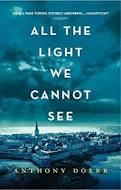
Books Read in 2021 – 24. All The Light We Cannot See – Anthony Doerr

Genre: War, Historical Fiction, Literary Fiction

Narrative Style: Non-chronological, third person from a few different viewpoints.

Published: 2014

Rating: 4/5

Format: Kindle

Synopsis: Marie-Laure lives in Paris. At a young age, she goes blind and her father, a locksmith, creates elaborate puzzles for her to solve. He creates a model of the Paris streets so she can find her way around. Werner lives in Germany in a mining village. He is an orphan with few prospects other than the mine until he discovers an old radio. Then the war begins.

Time on Shelf: About a year.

There is something magical about this book. It is written in an almost fairy tale style. There is the subplot of a diamond that may have magical properties. The description is vivid and atmospheric. The two main protagonists are children at the start of the novel. Both are abandoned by or have lost their parents. They are alone in a world they do not fully understand. This made it easy to read even though the subject matter was not always easy.

The novel is largely set in World War 2. When the war breaks out, we have already got to know Werner and Marie-Laure and we watch how their lives change. Marie-Laure and her father flee to Saint-Malo from Paris, her father carrying an impressive diamond from the museum with him.

Werner has already seen the beginnings of the Hitler Youth when he is accepted at the National Political Institute of Education – an organisation as interested in Werner’s heritage and physical features as it is his abilities. His sister, Jutta, warns him that he should not go but he doesn’t see the true purpose.

The plot moves between Werner and Marie-Laure’s stories and between different times frames. It becomes clear that their stories will come together towards the end of the war. Doerr drops hints as to how this might happen and it becomes very tense as Werner has to make a decision that directly threatens Marie-Laure.

The chapter’s are short and this adds to the fairy tale style of the story. It moves quickly between the two main characters whilst also taking in other minor characters such as the perfumer, Claude Levitte and Sergeant Major Reinhold von Rumpel who is chasing after the diamond that Marie-Laure’s father was tasked with looking after. The plot is well paced but does not sacrifice character or atmosphere in the protest.

Like The Book Thief, this novel looks at familiar themes in a new way and as it is largely from the points of view of children, it shows the absurdness of war. I found it affecting and compelling. Would definitely recommend.

Books Read in 2021 – 23. Far From the Madding Crowd by Thomas Hardy.

Genre: Romance, Classic

Narrative Style: Third person, chronological

Rating: 3/5

Published: 1874

Format: Paperback

Synopsis: Bathsheba Everdene is independent and determined to run the farm she has inherited from her uncle her way. She quickly comes to the attention of three very different suitors – Gabriel Oak, a kind and sensible man, whose circumstances are much reduced since he proposed to her originally, William Boldwood, a gentleman farmer who soon becomes completely obsessed with Bathsheba and a charming but shallow soldier, Sergeant Francis Troy. Each man would have an influence on Bathsheba’s, unsettling her life and destroying her independence.

Time on Shelf: This was a loan from my father in law. Hardy is his favourite author and he suggested that I read it after we watched the 2015 film and I didn’t take him up on it until now. My only other experience of Hardy was reading Tess when I was in sixth form and absolutely hating it. I vowed never to read another Hardy ever again.

I would like to start by saying that I enjoyed this more than I expected to. It isn’t such a doom fest as Tess of the D’urbervilles. Having said that, it is still a classic and a romance to boot, neither of which are genres I love. After I watched the film, I said that now I didn’t need to read it because the plot was the best part and I wouldn’t have to trudge through sludgy paragraphs of description. Well, it wasn’t as bad as that. Hardy’s prose was very readable although I did feel that sometimes the description slowed things down too much.

It is clear from the start that Gabriel Oak is Hardy’s chosen one. He is at one with the rural setting which Hardy felt was under threat. He is good and kind and patient. He is able to put his love for Bathsheba to one side and treat her like a human being. He helps her out, often puts her interests ahead of his own and the reader starts to hope that he will be given a second chance romantically. He has to wait, though, for Bathsheba to go through the horror of her relationship with Troy first.

Both Boldwood and Troy do not think of Bathsheba as a separate person who is capable of having needs and emotions that do not relate to them. They think only of their own longing. To be fair, Bathsheba was foolish to send the valentine to Boldwood and her surprise when he took it seriously was annoying but she couldn’t have envisioned the way his passion would drive him completely mad. Troy was even worse because at least Boldwood was a decent person who would have loved and looked after Bathsheba well. It is apparent from the start that he will be trouble.

Of course, Bathsheba doesn’t know about Troy and Fanny. The reader has that knowledge and worries for Bathsheba. It is obvious that Bathsheba will fall for him and equally obvious that it will not go well. Troy thinks of no one but himself and he all but destroys Bathsheba when they marry. I found it hard to sympathise with Bathsheba – perhaps if I hadn’t seen the film, I wouldn’t have been so against Troy right from the start – I felt she should have been able to see through his superficial charm. Of course, Bathsheba is her own woman and so if free to make bad decisions but even so it irritated me.

Overall, I enjoyed it as much as I ever enjoy a classic or a romance. I felt my usual impatience with the first suitor being the best suitor and sometimes I felt bogged down in the descriptions of rural life and scenery but I wouldn’t rule out reading another Hardy and that really is progress.

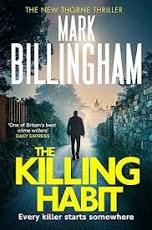
Books Read in 2021 – 22 The Killing Habit – Mark Billingham.

Genre: Detective, thriller

Narrative Style: Third person from various viewpoints, chronological

Rating: 4/5

Published: 2018

Format: Kindle

Synopsis: When Tom Thorne is given a series of cat killings to investigate, he doesn’t take it too seriously at first. Until he realises that it may be the work of serial killer between kills. Nicola Tanner is investigating what seems like a straight forward shooting. All the evidence points at one man. One man who is isn’t acting quite like she would expect for one who is so clearly guilty.

Time on Shelf: Not very long. I read the first one of this series a long time ago. I enjoyed it and I meant to carry on reading them. This did not happen. This one is much more recent but I bought it when it came up on Kindle daily deals with the intention of deciding if it was worth trying to read the series. After all, these books tend to stand well on their own – I read Rankin’s Rebus books in completely random order, starting somewhere in the middle and that seemed fine.

First of all, Tom Thorne is definitely my kind of detective. He does not always follow the rules. He is often in disagreement with those higher up the pay scale. He ploughs his own furrow. These are all the reasons that I like John Rebus quite so much. Added into that are interesting personal relationships with his girlfriend, Helen, and her sister who seems to hate him and his best mate, pathologist, Phil Hendricks who loves to wind everybody up. It might have helped to know a little more about Helen and what had happened in her past – the sort of details that move from book to book in such series – but I don’t think it was really a hindrance.

Both storylines were satisfying. Based on the location of the cat murders, Tom and his team find several unsolved murders of women. They find that they were all registered at the same dating agency and, in fact, had all been on dates the night before their murders. It unfolds nicely with a couple of satisfying red herrings along the way. I didn’t spot the killer although the clues were there if you were sharp enough and that was also good.

The other storyline – which sees Nicola Tanner taking on an extremely powerful drug ring – was also interesting if less intriguing. Andrew Evans comes out of prison hoping to turn his life around but the drugs he took in prison need paying for and soon he is doing jobs in order to pay of his debts. When he is found guilty of a murder he had no part in, he is taken into protective custody and Tanner tries everything she can to try and get at the gang.

This trots along at a nice pace and the prose is largely good. Occasionally, the dialogue feels a bit forced but for the most part Tom Thorne is convincing. I would certainly read more of this series and maybe I will endeavour to do it in the right order.

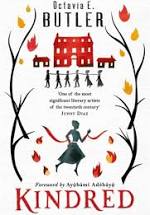
Books Read in 2021 – 21 Kindred by Octavia E. Butler

Genre: Fantasy, Science Fiction, Historical Fiction

Narrative Style: First person, Moves between past and present

Rating: 3/5

Published: 1979

Format: Paperback

Synopsis: Dana lives in California in 1976. Just after her 26th birthday, she is pulled back to the time of slavery to save the life of Rufus, a white boy who is drowning. Over the next few weeks, she is dragged back in time again and again, always to save his life. It transpires that Rufus is her ancestor and she must keep him alive in order for her ancestral line to be created.

Time on shelf: I was given this for Christmas by a friend who had just read it. It is a book I was aware of but hadn’t got round to purchasing myself.

I really thought I’d enjoy this more. In some ways, I feel I should give it two ratings as it felt almost like reading two books. First of all, I would give 5 out of 5 for the idea of the time travel and the way that Butler put across the way that the trauma of slavery still affects black people in the present day. However, I did not enjoy the execution of the idea and I found it hard to suspend my disbelief.

First the good, then. Dana learns a lot about her ancestry over the course of her visits back to save Rufus’ life. She hadn’t known that she had any white ancestors as her family bible with all the names of her ancestors in it didn’t go back that far. It becomes apparent that Rufus has raped the woman that will become Dana’s ancestor. This is uncomfortable for Dana as her existence is based on the rape of another women and she becomes complicit in arranging for Rufus and Alice to be together. It is also uncomfortable for the reader to realise that this repressed trauma is at the centre of African American experience. It brings to the fore things that America would rather forget, forcing the reader to confront uncomfortable truths about slavery and Black experience.

There is an interesting parallel between Dana’s relationship with her white husband, Kevin in the present day and the relationships between master and slave in the past. In the present day, Dana has chosen her husband, enjoys having sex with him and he has rejected his racist family in order to be with her. When they are both pulled into the past, their dynamic changes. They have to play the role of master and slave as they were not allowed to be married. The difference in their treatment on the plantation brings home the difference in their status compared to the modern day where they view themselves as equals.

In some ways, to complain about this book at all seems like petty nitpicking but, for me, it was nowhere near perfect. I found the way Rufus and the slaves accepted the appearance and disappearance of Dana quite ridiculous. It irritated me all the way through. In truth, I’m not sure what Butler could have done that would have solved this problem but it did spoil my reading somewhat.

I didn’t really take to Dana or Kevin. Not that there is that much character development. The focus here is on history and its effects and maybe that is fair enough given the issues that Butler is trying to address. Still, I found it unfulfilling as a novel or a story. It is much better as an exploration of the ways race, gender and power intersect and the way that history doesn’t stay in the past but still effects our daily lives.

Books Read in 2021 – 20. Giovanni’s Room by James Baldwin

Genre: LGBT, Romance, Literary fiction

Narrative Style: First person, non-chronological

Rating: 4/5

Published: 1956

Format: Kindle

Synopsis: David is about to board a train to Paris but he is paralysed by memories of his relationship with Giovanni who, it transpires, is about to be executed. David thinks back over their relationship and his relationship with his girlfriend, Hella who has now returned to the US, trying to understand how he and Giovanni came to have such a tragic story.

Time on shelf: I’ve wanted to read this since I was at university some thirty years ago but I only purchased a copy in the last six months.

Maybe I waited too long to read this book because I didn’t enjoy it as much as I thought I would. I spent most of the time feeling irritated by David and wishing he would sort himself out which was hardly fair. I felt a lot of sympathy for Giovanni and his tragic end but ultimately I didn’t connect with this story as much as I thought I would.

It is beautifully written. Baldwin’s prose slowly and surefootedly explores David’s history and his psyche. We learn of his early experiences with a fellow teenager called Joe which shake him up so badly that he is unable to acknowledge such feelings within himself when he meets Giovanni some years later. He starts running away from himself at this point and never really catches up.

The description of David’s difficulties in coming to terms with his sexuality are painful to read. It is so difficult to see him refuse to be drawn into loving Giovanni even though it is clear that he feels something for him. At one point Giovanni says ‘You do, sometimes, remind me of the kind of man who is tempted to put himself in prison in order to avoid being hit by a car’ which accurately sums David’s behaviour up. He hides himself away in preparation for the hurt he feels will come.

Hella comes back from Spain and David abandons Giovanni. He makes himself take the socially acceptable route, still running away from what he feels are the unacceptable aspects of his sexuality. He begins to notice what he calls ‘fairy’ mannerisms in Giovanni when they meet up, a manifestation of his uncomfortableness with his past relationship with him. Hella and David move to the south of France as they are now to be married but it starts to feel inevitable that David will realise that he cannot marry her and that it will be too late for Giovanni.

The ending was tragic but it didn’t upset me as much as I thought it might. I’m not sure why. Maybe I’m getting too old to have much patience with the sort of willful stupidity that David displays in his refusal of Giovanni. Nonetheless, it is an important novel putting sexuality, gender, alienation and nationality under the lens and examining them without mercy.

Books Read in 2021 – 19. The Chrysalids by John Wyndham

Genre: Post-Apocalyptic, Dystopia,

Narrative Style: First person, chronological

Published: 1955

Rating: 4/5

Format: Paperback

Synopsis: After some sort of nuclear war, the world is living in fear of genetic mutations. When David discovers he has his own mutation – he can communicate telepathically – he has to try and keep it secret so he won’t be rooted out as an abomination.

Time on shelf: This was a loan. When we were putting this list together, we watched Britain’s Favourite Novel on Channel 5. The Day of the Triffids was on the list but I had already read that and all the other John Wyndham we have (Chocky and The Kraken Wakes) so I asked my in-laws to loan me this one.

This was very enjoyable. Wyndham doesn’t give any details about what happened because David is a child at the beginning and so doesn’t really understand what might have happened. He just knows that his community worship the perfect image as being holy and anything that deviates is sinful. There is some talk about the ‘old people’ but no one really knows much about them.

We see what happens to those who are different when it is discovered that his friend, Sophie, has six toes. David has been keeping this secret for while. He doesn’t really understand why it’s such an issue. It seems like such a small thing but when another boy realises and tells the authorities, her family have to leave immediately for fear she will be killed.

David has his own secret to keep. He is able to communicates telepathically with a small group of other children including his half-cousin, Rosalind, who he later falls in love with. They keep their secret well until one of the group decides to get married. She is unable to keep the secret from her husband but before he can do anything, he is murdered.

David’s sister, Petra grows up to be an incredibly strong telepath, so much so that when she is in trouble, she is able to call the others to her. When this raises suspicions, two of the group are captured and tortured and the rest of them go on the run. Petra becomes able to detect other telepaths in country called Zealand which is very far away. She asks the Zealanders to rescue them.

Zealand is a country where telepathy is the norm. They ‘think together’. There the non-telepathic are shunned and the telepaths see themselves as the future. They come and rescue David and his friends, killing a lot of innocent people in the process. Something they don’t seem too concerned about.

As is the way with The Day of the Triffids, although David is safe at the end, there are issues with the Zealanders. They happily kill many while helping David, Petra and the others escape, they think they are the ultimate in evolution and have no sympathy for those they consider to be lesser. They are no different from David’s parents in some ways, so sure they are the only true form.

This was perhaps the strangest of Wyndham’s books that I have read so far. It was further removed from reality than the others have been in its setting and I didn’t find it as gripping as some of the others but the questions it brought up and the things it made me think about made it a worthwhile read.

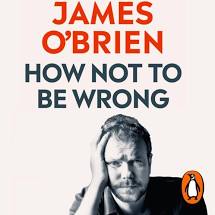
Books Read in 2021 – 18. How Not To Be Wrong: The Art of Changing Your Mind – James O’Brien.

Genre: cultural comment, autobiography / memoir

Narrative style: first person essay

Rating: 5/5

Published: 2020

Format: Kindle

Synopsis: O’Brien takes the reader through his own process of changing his mind in a deeply personal analysis of the current political situation.

Time on Shelf: About three months.

My relationship with James O’Brien has changed over the years. When I first came across him, he seemed to epitomise the very angry right wing pundits he is so fond of destroying these days. He was clearly a very angry man and angry in a way that was hurtful and mean. I didn’t take a lot of notice of him if truth be told. Then at some point around Brexit, I noticed I was agreeing with him more and more. It didn’t seem that odd. The world had gone insane. James O’Brien becoming the voice of reason was just one more proof of it. I had no idea that he had been through such an intensely personal change of mind. That is what he outlines in this book.

There is no doubt that there are a lot of people in society, in the media, on social media, that are very reluctant to change their minds. You can see it in the people who keep supporting Trump and Johnson even though they have not delivered on their promises and they are clearly prejudiced. It is not just the right either. There are any number of people who still adore Jeremy Corbyn even though he presided over the worst labour loss in the party’s history. The sort of people who when faced with accusations of anti-Semitism in the labour party say but what about islamophobia in the Tory party. As if the one cancelled out the other. You have to examine your own ideas and opinions. It isn’t weakness. It’s the very definition of growth.

O’Brien takes the reader through his own personal journey of learning how to change his mind. He analyses his old opinions and tries to work out where they have come from. It is important, he suggests, to consider, not only the ideas but where they have come from. What is there emotional resonance of this opinion? Does this have anything to do with why people are holding on so tightly to these opinions?

O’Brien lays himself open here. He shares transcripts of old radio conversations from when earlier in his career which are quite hard to read. He takes them apart as if he is one of his own callers. He is willing for the reader to see his weaknesses but also to understand the importance of the process of his personal growth and how examining our opinions could help to change the current, deeply divided world we live in. An excellent read for anyone concerned about the current cultural situation.

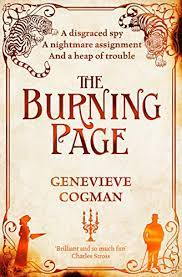
Books Read in 2021-17. The Burning Page – Genevieve Cogman

Genre: Fantasy, Steampunk

Narrative Style: Third person from Irene’s point of view

Published: 2016

Rating: 3/5

Format: Kindle

Synopsis: Gates back to the library start to malfunction by bursting into flames. Irene receives a message from Alberich about the future of the library. Vale has started to hit the opium in order to combat the dose of chaos he received in Venice. Irene thinks someone is trying to kill her. When another friend from Venice appears and is need of help, Irene isn’t sure what to do or who to trust.

Time on shelf: About a month.

Part of me isn’t sure why I keep reading this series. They are always okay but never more than that. The premise of the linked giant library and librarians collecting unique books from multiple universes is appealing but the actual books do not quite live up to it. I think I keep hoping the next one will be better.

One of the problems for me is a prime example of the idea of something outweighing its execution. As a librarian, Irene is able to use the language. This enables her to be able to control things by communicating to them in the language. This means that doors unlock for her and walls tumble down, to name but two examples. Great – and very clever – but for me, it quickly led to a lack of tension. Oh Irene’s in trouble but it’s okay she can use the language to get out of it. Okay, so there is some fun to be had in exactly how she uses it or how she will get of trouble if, for one reason or another, she can’t use the language but not enough. And, anyway, that is where Kai comes in.

In the first novel, we discover that Kai is a dragon who can take human form. Among his skills is his ability to control water. He can also manifest in his dragon from. So if Irene can’t save the day, you can bet Kai can. Most of the action in this book was from Irene’s point of view and she was intent on not accepting help from her friends. She runs headlong into a fight with archenemy, Alberich. Of course, Kai and Vale appear just in time to help rescue Irene. An alternate plot line from their point of view would have made this feel a bit less clumsy.

I know that one of the reasons I keep reading is the hope of some romance – either between Kai and Irene or between Vale and Irene. Cogman drops hints and she even allowed Vale and Irene a kiss this time (although it came to nothing) but there is never anything firm. I understand that it keeps readers interested but this is the third book and there is still nothing. I’m not sure I will find it necessary to carry on.

Overall, then, a reasonable adventure. The ideas, as always, are quite clever. But no overall tension. I never for one minute thought that Irene might perish. I would also like to see more of Kai and Vale as they are both as interesting as Irene. At the minute, I am unsure if I will continue. After enough time, I will probably think, well, maybe it will be better this time.

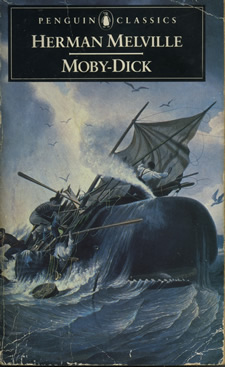
Books Read in 2021 – 16. Moby Dick – Herman Melville

Genre: Adventure, Classics, Madness

Narrative Style: First person but with soliloquies, encyclopedic entries and stage plays.

Rating: 3/5

Published: 1851

Format: Paperback

Synopsis: Ishmael is looking to join the crew of a whaling ship. When he agrees to join the crew of the Pequod, he is warned by the strange and slightly scary Elijah that he may be making a mistake. Ishmael ignores this warning and sails away under Captain Ahab who is obsessed with capturing the great white whale, Moby Dick.

Time on Shelf: This is one of the books we seem to have had forever. I’m not sure whether my husband bought it or if I did. Certainly, it has been there every time we’ve moved house suggesting it’s been with us for about twenty years.

This was a strange book. In some ways, it was exactly as you might expect – an adventure where a focused to the point of insanity captain takes his crew on a chase across the oceans hoping to gain revenge on the whale that took his leg. However, if it was only that, it would be a much shorter book. There are also long chapters on the nature of whales, on their biology and psychology, there are chapters written as scenes and soliloquies from a play. This is anything but a straight forward boys own adventure.

For a start, it is a good way in before Ishmael even gets on the ship. First of all, he arrives in New Bedford, needing a room for the night. The inn is overcrowded and he ends up spending the night with Queequeg, a tattooed cannibal who declares the next day that he and Ishmael are no married as they have spent the night together. There are a lot of detailed descriptions of Queequeg and his tattoos, as well as the other men at the inn, that seem full of longing. At first, Ishmael is nervous of Queequeg but he soon decides that it is better to ‘sleep with a sober cannibal than a drunken Christian’ and they decide to sail together. Once they have decided to sail on the Pequod, they are followed by Elijah who warns them against sailing with Captain Ahab, a warning they do not heed.

Captain Ahab proves to be focused on one thing only: revenge. Although they catch other whales – and we get in depth descriptions of the process – the real purpose of the voyage is to catch Moby Dick. Along the way, the Pequod meets nine other ships, all of which either add to the tension of trying to find Moby Dick or show some facet of Ahab’s personality. For example, they meet a captain who has lost his arm to the whale as Ahab has lost his leg. Later, they meet a ship whose captain is desperately trying to find his son who was in one of the whaling boats and is now missing. Ahab refuses to stop and help so focused is he on the search for the whale. This was a clever structural device, keeping the reader interested and showing Ahab’s growing mania.

Personally, I could have done without the descriptions of types of whales and the processes of whaling. As when I read 20000 Leagues Under The Sea, I felt they broke up the narrative and slowed down the pace. Not that they weren’t well written, they were and they give rise to questions such as what is a whale and indeed attempt to answer that question from different perspectives such as the whaleman, the philosopher and the scientist but they were still not really what I wanted from a work of fiction.

There is much to like about Moby Dick. It was easy to read and when there was action, it was well paced and exciting. The characters were suitably strange and intriguing and Ahab was completely monstrous. It described a range of different races, generally living in harmony, which was surely unusual in a book of that time. The ending was apt given Ahab’s insanity and determination to get the whale. I’m glad I read it but it will certainly be a while before I even think about whales again.