Pratchett Reread 5. Sourcery

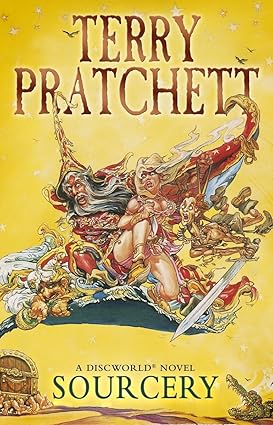
I wasn’t sure how much I was going to enjoy this one. My memory was that it was okay but not the best. As such, it’s not one that I have reread very often. however, I was pleasantly surprised. It was much better than I remember. And like Mort, it is so much more than a story about a boy who is the seventh son of a seventh son who becomes a sourcerer.

This is a tale about power – who should wield it and how it should be wielded. Quite an unwieldy subject but Pratchett makes it so you barely notice. There is no heavy handed moralising here. Just a comic tale of what might happen if the power of magic should fall into the wrong hands.

We have Rincewind, reluctant hero whose first thought is to runaway (along with the rats and the gargoyles from Unseen University). As ever, his attempts to get away from the action only pull him in further. His adventures bring him into contact with Conina, the daughter of Cohen the Barbarian, Nijel, a desperately unlikely hero and Creosote, the richest man in the world. There is also a much bigger role for the Librarian who hides all the magical books from Coin, the sourcerer. The Librarian is also responsible for looking after the Patrician – who has been turned into a lizard.

There is plenty of comic business. Nijel is the worst hero ever although he does try very hard. Conina just wants to be a hairdresser although she has a barbarian’s instincts. And of course, Rincewind, despite being the worst wizard, is full of knowledge about what he thinks wizardry should represent and how magic should be used. He is not taken in by Coin, when most of the other wizards see only the possibility for gaining power.

The novel ends with Rincewind saving the day but in the dungeon dimensions. So while the world is saved, Rincewind is missing in action The rest of the world returns to normal with little thought for the reluctant hero. It was mostly a satisfying read and much better than I remember.

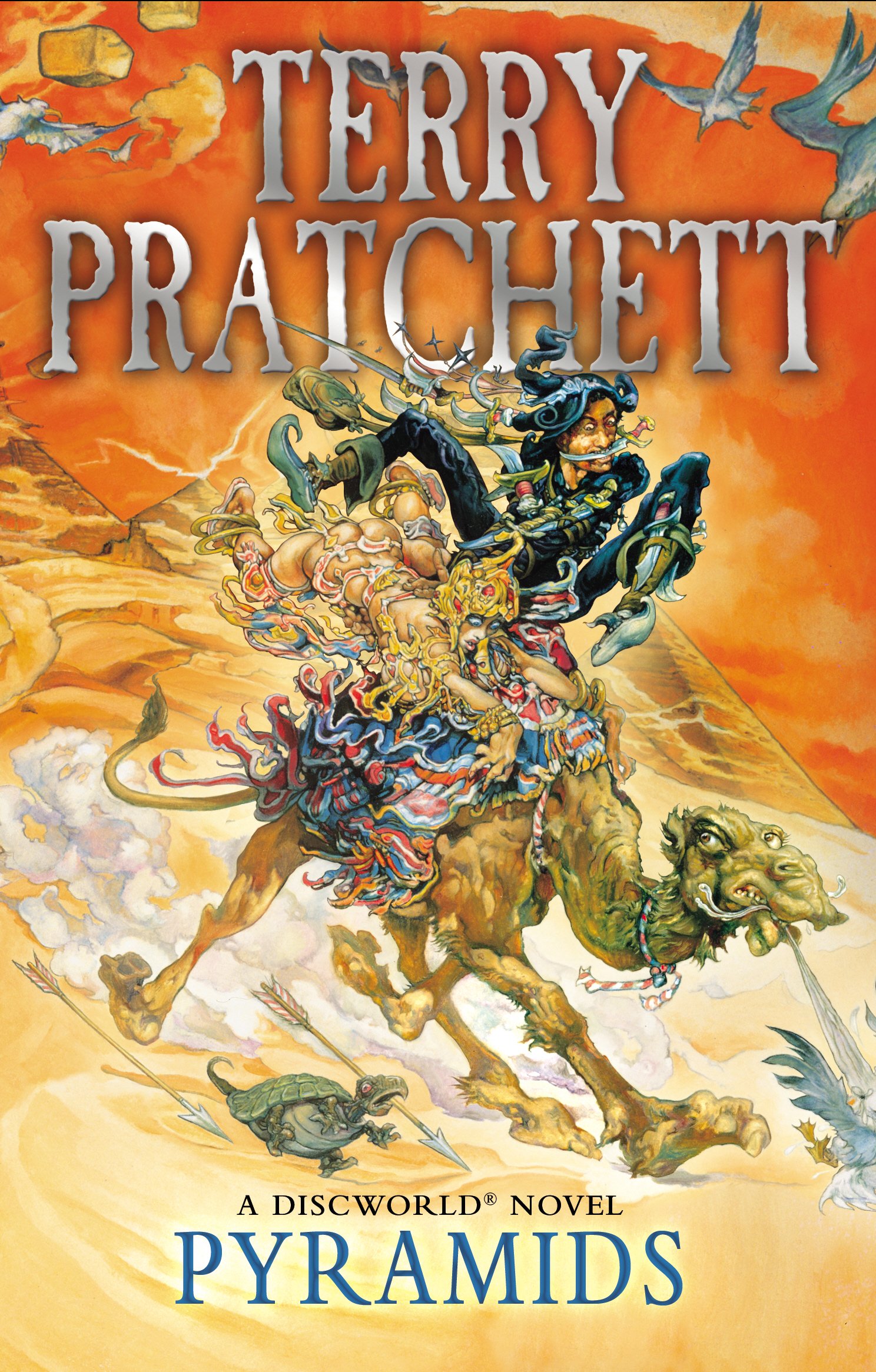
Pratchett Reread – 4. Mort

For me, this is the first five star read of the series. It made me laugh from start to finish. The characters were fully realised, the plot was more than just a series of jokes strung together and I couldn’t put it down.

It starts with Mort, an awkward teenager who doesn’t fit in in his small village. His father has heard that there is a hiring fair and takes Mort along. Unfortunately no one wants him until – at midnight, of course – Death turns up to take Mort as his apprentice. Mort’s father is happy just to see his son placed somewhere and so Mort’s new life begins.

This takes us to Death’s kingdom and we meet Ysabell, Death’s adopted daughter and Albert, his grumpy manservant, both of which are full of comic potential. Ysabell has been a teenager for a long time (as you do not age in Death’s kingdom) and as you can imagine this has had quite an effect on her mood. Albert seems like just the salt of the earth servant you might expect Death to have but it transpires that he was a secret he’d rather Mort didn’t know.

Death begins to show Mort the ropes, taking him to the more important deaths of the Discworld. Mort begins to learn about fairness – ‘There is no justice’ Death tells Mort, ‘Just me.’ This is a valuable lesson and one which Mort seems reluctant to learn. When he begins to do the duties, things quickly go wrong because Mort is reluctant to kill Princess Keli at her allotted time. This leads to many problems for Keli and for Mort.

Keli discovers that the world carries on as if she has died – history is stronger than individuals. Mort decides that he will try to fix things himself, seemingly oblivious to the fact that history will sort itself out and Death decides that he will go on a holiday know that he has an apprentice. Death decides that there are aspects of human life he would like to investigate – getting drunk, gambling and dancing eventually finding some sort of satisfaction working in a greasy spoon. Mort becomes more like Death while Death becomes more human.

There are interesting philosophical questions raised about life, death and history. There is action. And there are characters that are convincing that you care about. This definitely feels like the real beginning of the Discworld saga.

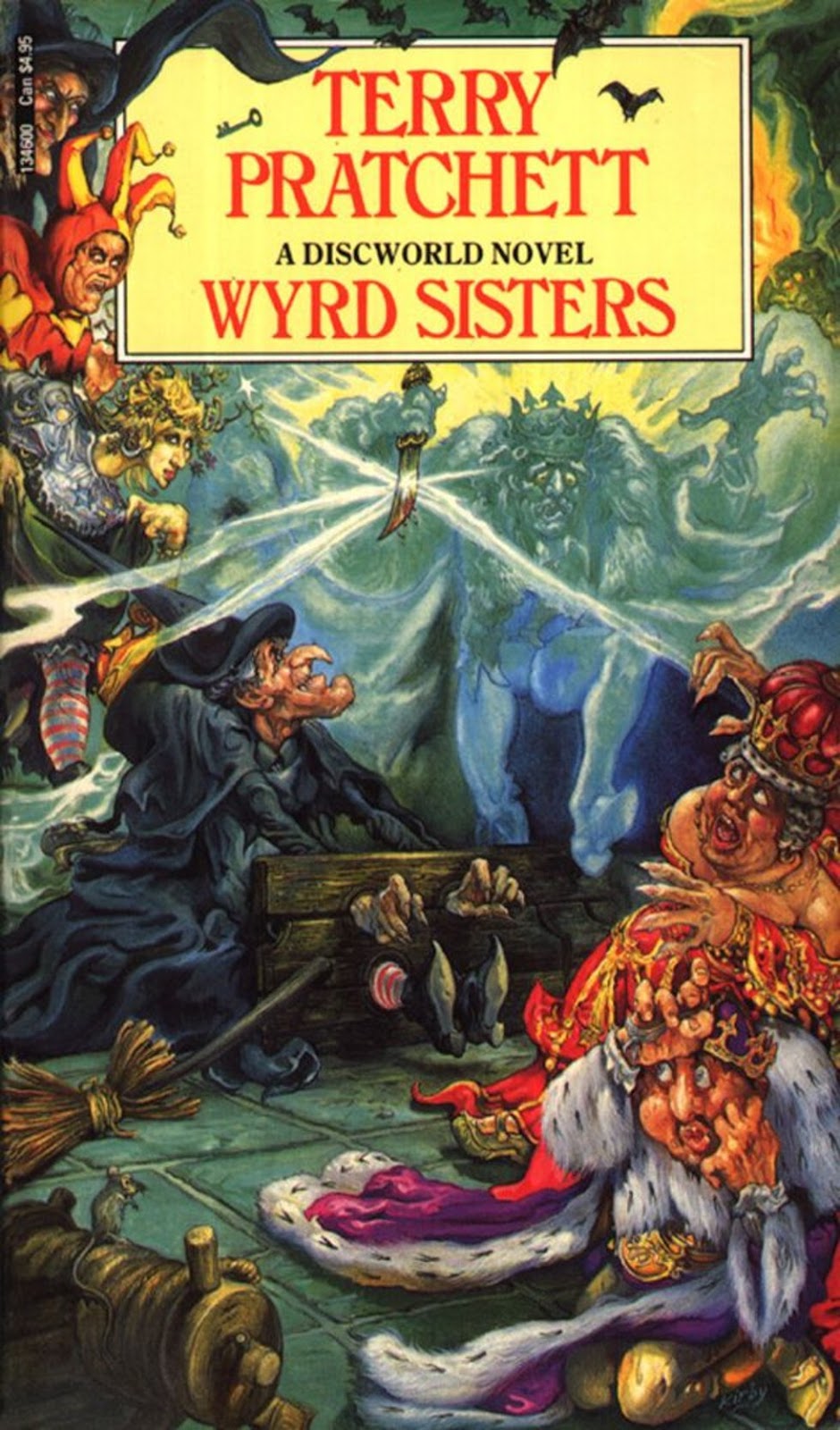
Pratchett Reread – No. 3 Equal Rites

Well, this was surprising. I enjoyed this much more than I expected. I’m really not sure what I disliked about it so much last time round. It may have been the division between witch (female) magic and wizard (male) magic which was seemingly reinforced by Granny Weatherwax. I was a little disappointed in Granny, I think, as I knew her from later novels before I read this one. She doesn’t seem quite her later self. The division felt entrenched in the first half of the novel although by the end it is less so.

I still thought that this time round but perhaps because I was expecting it I didn’t find it quite as jarring. Certainly, this is still underdeveloped in places. The Librarian is still quite a small character compared to his later appearances. Granny seems even more set in her ways although to be fair, she does end up giving in and taking Esk to Unseen University once she realises that she needs to learn wizard magic.

That aside, it trots along nicely as a story. Esk is a strong female character – headstrong and determined to do what she wants – something that means that Granny has to rescue her regularly. Granny is not quite fully formed but a lot of the things that are good about her are already there. She is one of my favourite Discworld characters but she is definitely better in the comic trio of Nanny Ogg and Magrat.

So overall, this was a fairly solid read – not my favourite but definitely moving in the right direction.

Pratchett Reread – 2. The Light Fantastic

Well, I enjoyed this a lot more than I expected and certainly a lot more than The Colour of Magic. It felt like things had fallen into place a little more. Rincewind and Twoflower felt a bit more well rounded and their relationship was more nuanced than in The Colour of Magic. The plot also trotted along at a good pace and the addition of the red star heading for the discworld made it quite exciting.

Other characters seemed a bit more like themselves as well. There is a scene where Twoflower tries to teach the four horsemen of the apocalypse to play Bridge and Death is utterly confused and fascinated which seems like the start of his attitude to humans in the rest of the series.

I’d forgotten that this was our first meeting with Cohen The Barbarian. At the beginning he is without his diamond teeth which forms a nice comic disparity between Cohen the tough guy and Cohen the old man. Twoflower, of course, is in awe of him. Others often underestimate Cohen although they soon come to regret that. In the course of The Light Fantastic, having travelled through time and space on the back of the luggage, he bursts through the teeth of a just awakened troll. Taking these diamonds and Twoflower’s idea of dentures, he fashions his diamond teeth.

We also meet the Librarian although he is not quite the character that he becomes in the later novels. In fact, he is just a note in the background music of the Unseen University, a passing piece of comedy. But then the other wizards are similarly underdrawn. In the later novels, the wizards are more static, Ridcully is arch-chancellor for a long time. I’d forgotten that he wasn’t always arch-chancellor. There is more comedic value in familiarity, I think, so I’m glad that Pratchett made the decision to keep things more static.

There is more social commentary than in The Colour of Magic. There are the sects of people who spring up with the advances of the star who want to rid the world of magic and are not afraid to use violence to do it. There is Ymper Trymon, a wizard who places organisation above all else. He is a great villain who is convinced that the world should follow a certain order and would like to fit people neatly into that order. He meets a suitably gruesome end which was very satisfying.

Overall, I was pleasantly surprised by how much I enjoyed this but it was still not as good as some of the later novels.

Doppelganger: A Trip into the Mirror World – Naomi Klein.

Genre: Academic, politics

Narrative Style: First person academic

Published: 2023

Rating: 5/5

Format: Kindle

Synopsis: Naomi Klein kept finding people confusing her with Naomi Wolf which only worsened as Wolf took a trip into the land of conspiracy theories and misinformation. Klein became obsessed with following Wolf’s Twitter account during Covid 19 and found herself unable to look away. Doppelganger is the result of this obsession, detailing Wolf’s fall from grace and the wider issues of misinformation, conspiracy theories and where it all leaves us as a society.

It was only recently that I discovered that Naomi Wolf had become a darling of the right, promoting conspiracy theories surrounding vaccines and appearing on Steve Bannon’s War Room podcast. She just hadn’t come up on my feed – not even since Musk’s takeover. I was surprised to say the least. I remember reading The Beauty Myth while I was at university and was impressed enough to go to see her talk at Waterstones in Manchester while promoting Fire with Fire: New Female Power and how it will Change the Twenty-First Century. While I didn’t like this book quite so much, I assumed that she would continue to be a respected academic writer. Boy was I wrong!

Klein begins by discussing the fact that people often mistake her for Wolf and the ramifications of that now that Wolf was promoting anti-vaccine conspiracy theories. Klein also does a good job of invoking the strangeness of the Covid 19 lockdowns which contributed to her becoming worryingly obsessed with Wolf and her cronies. At first, I wasn’t sure where Klein was going to go with this – it was interesting to read but seemed to lack Klein’s usual political commentary. However, as the book progressed, Klein widened her argument to include fake news, wellness vloggers, the situation in Palestine and her own Jewishness, bringing each topic back to what she calls the ‘mirror world’ and discussing where that leaves us.

The main topic of this book is disorientation – something that I often feel these days when watching the news or looking at tweets on X (something I can’t seem to stop myself from doing even though it is not a pleasant place these days). I had observed the increase in conspiracy theories during lockdown with a sort of grim humour, sometimes congratulating myself that I wasn’t so stupid. What I hadn’t realised was exactly how apt the term ‘mirror world’ really is. Those who are worried about vaccine shedding are responding to a real worry – the spread of infectious disease. Those who worry about enslavement via the QR codes used to check in to venues are responding to worries about privacy and data usage. Not that I’m suggesting that Wolf is correct when she suggests that vaccine technology can cause time travel and make the vaccinated into robots – these claims are patently absurd – but to dismiss these people as merely stupid is also unhelpful. Klein suggests that it may be that there is something lacking in the way the left has dealt with both these issues that has helped push people towards these theories.

By the end, this seemed more like a typical Naomi Klein book as she suggests that somehow we have to start looking for ways to work together rather than focusing on the things that separate us. As suggested in 2017’s No is Not Enough, Klein ends her book by saying everyone needs to work together if we are going to combat the climate crisis. This means looking beyond surface differences and beyond party politics. We need to stand together despite the fact that our politics and identities might differ. Fighting climate change is more important than all the rest.

Having said that, I find it hard to be especially optimistic about this happening. As I write, Donald Trump is about to be inaugurated for his second term as president with Elon Musk firmly at his side. Both men have used the disorientation that Klein describes to their advantage and I would imagine they will continue to do so. Mark Zuckerberg recently said that there would be no more fact checking on Meta platforms and X already seems like a free for all in this respect. It’s hard to be hopeful for the future.

TBR 10 Yr – You Before Me – Jojo Moyes

Genre: Chick lit, romance, disability

Narrative Style: First person from a number of different people, chronological

Rating: 2/5

Published: 2012

Format: Kindle

Synopsis: Louisa Clark is in need of a new job. The job centre sends her to be carer to quadriplegic, Will Traynor. Will is rude and miserable and at first refuses to acknowledge Louisa. She hates it but perseveres and soon, Will’s happiness begins to mean a lot to her. Then she discovers that Will has given his parents six months before he goes to Dignitas and ends his life and she tries many schemes to make him change his mind.

Reading Challenges: TBR 10 Yr Challenge hosted by Roof Beam Reader

Time on shelf: I bought this when the film came out. It was 99p on Kindle so I bought it but very quickly I decided I probably wouldn’t like it so it sat on the shelf.

I don’t know why I do it to myself. Whenever there is a book that is really popular and I decide to read it, I always hate it. (Where the Crawdads Sing, The Thursday Murder Club, The Time Traveller’s Wife to name but three.) I put off reading this for that very reason, not to mention that when the film came out, disability activists were up in arms. I wasn’t sure I wanted to ever read it. Putting it on this list meant that I had to read it.

It didn’t take long for me to be irritated. The characters were immediately stereotypical. Lou Clark was a quirky, working class heroine. Will was upper class, used to having his own way and sullen because he felt he was no longer in control of his life. I found the stereotyping offensive even without the disability angle. (Salt of the earth, working class heroine reminds buttoned up upper class hero what it means to love. How tedious.) Lou’s family seem to have stepped out of a dickens novel about poverty – sister Treena is a single mom, dad makes furniture and gets laid off halfway through( but luckily is saved by Will and given a job working for his dad!), mum spends all her time looking after Lou’s grandfather who has had a stroke. They all live in the same house and there is never enough money to go round. All of them seemed like “characters” rather than actual people.

I was also unconvinced by Lou’s relationship with her boyfriend, Patrick – a man obsessed with running and training and eating the right thing. Although Lou says that he was different when they first got together, it was very difficult to see how they had managed to have a relationship last for seven years. I certainly didn’t see why Lou still put up with him. He was unpleasant and only seemed to see a version of Lou that he would prefer – one that would train with him, for example. Lou, then, was ripe for falling in love and Will came into the picture at just the right time.

Of course, at first Will is singularly unpleasant and Lou wants to quit but money troubles mean that she can’t. Slowly, Will becomes more communicative especially after a visit from his ex girlfriend Alicia who is getting married to his best friend Rupert, both of whom are horrible. Then Louisa hears Mrs Traynor and Will’s sister, Georgina, talking about the fact that they had six months to convince Will he wanted to live. If they couldn’t do it, then he would end his life at Dignitas in Switzerland. Lou finds this hard to understand and so she decides that she will try to make the future as exciting as possible for Will as she feels that he should want to live, that she can make things more exciting for him and if she just tries hard enough, he will realise that actually life is good. It seemed obvious to me that Will would not change his mind.

I feel like there is no good way to end this narrative. First of all, there is the way it actually ends. Will, despite the fact that he loves Louisa, still goes to Switzerland. This is what angered the disability rights groups so much. Will has the money to pay for whatever he needs. He could live a reasonable life. He has people who love him. But still, he decides to kill himself. I understand that people could see this as meaning disabled people have no role in society but I do not think that this is what Moyes intended to say. In fact, I think that Will’s decision had more to do with the fact that he is unused to having to take anything into account when he decides to do something. Before his accident, he had money and he travelled extensively. He hiked and climbed mountains. After the accident, he has to think about his disability all the time and if it doesn’t stop him from doing something, it puts huge obstacles in the way. Louisa (and her mother) fail to understand this because they have to think carefully about every decision they make because they have no money and no spare time. Also, everyone, apart from Will, opposes the idea of going to Dignitas There are many moral arguments given against this decision in the novel. If Moyes’ felt that disabled people have no meaning within society, I think she may have chosen to play this a little differently.

So what about a different ending? I feel, although all those readers who say they cried may feel differently, that if Will had changed his mind, it would have been no better. In fact, as I neared the end of the novel, I was unsure what to wish for. I didn’t particularly want Will to kill himself but I was also offended by the idea that the love of a quirky working class girl might be enough to save the day. Neither Louisa nor her mother really think about what Will is going through. They think about the fact that they will miss him and they call him selfish for all the hurt that he will cause but they do not think about what he might feel, when he has yet another bout of pneumonia or when he gets an infection he can’t shake off. It seemed to me that Will wanted to have control over his death, to have a good death and be able to say goodbye to people. A fair enough wish, I would think.

Finally, I found the class politics of this novel annoying. Pre-accident, Will has money, a job in the city and is able to travel all over the world. Lou, by contrast, is working in a café enjoying the eccentricities of the customers. Their paths would not have crossed of not for Will’s accident. That’s one hell of a plot device. And then there is the fact that Will leaves her a lot of money so she can go to university and live a life she would not have managed otherwise. Suitable compensation for not having his company? I certainly didn’t feel it was the romantic ending that everyone else seemed to. Ultimately, she learns to be a better person through her contact with Will and then she gets to live a better life through the money he leaves her. Both of these left a sour taste in my mouth.

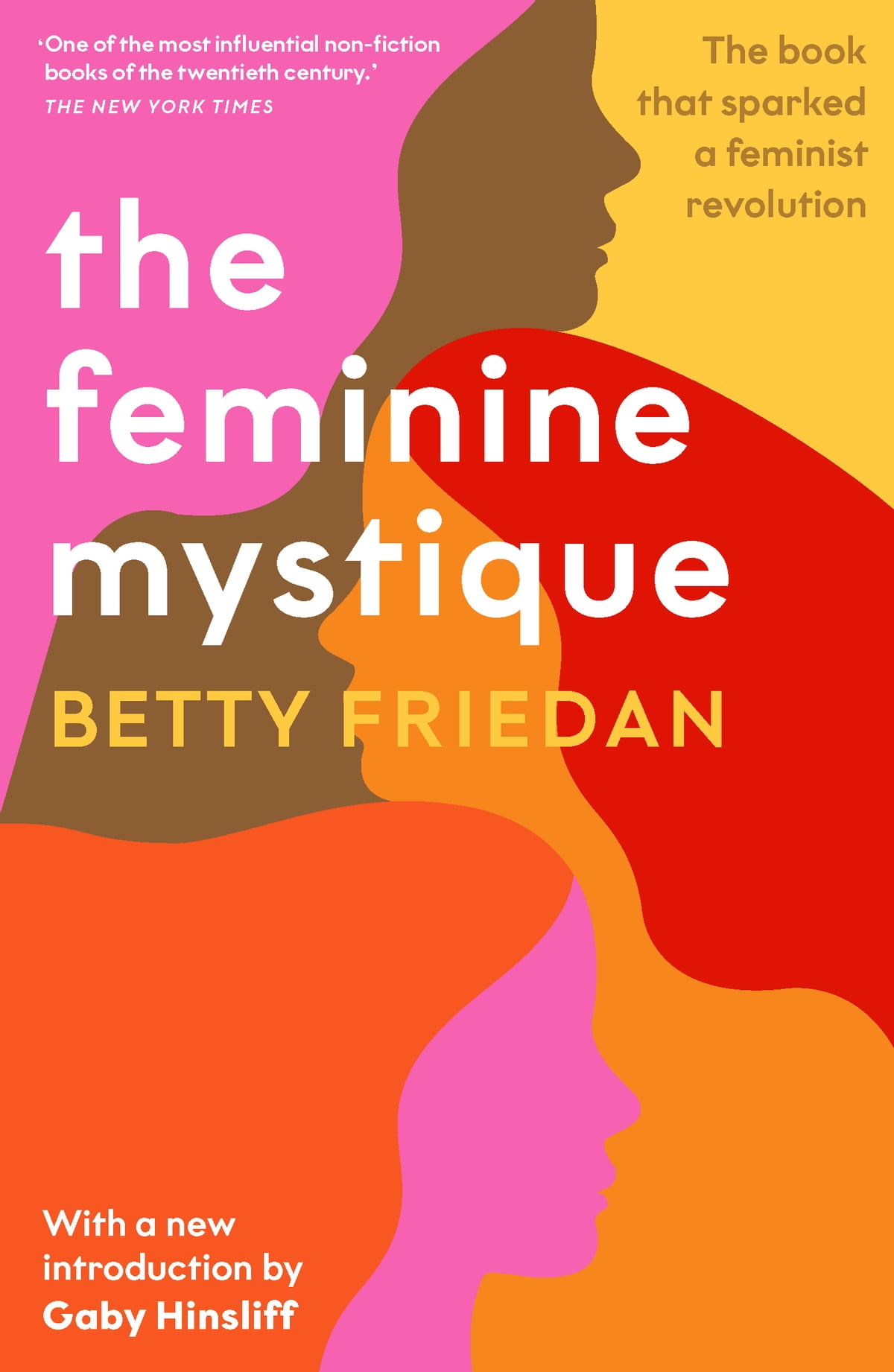
TBR Yr 10 – The Feminine Mystique – Betty Friedan

Genre: Feminism, Academic

Narrative Style: Academic

Published: 1963

Rating: 3/5

Format: Kindle

Synopsis: When Friedan does a survey of her old college classmates, she finds most of them are not using their education and she wonders why. She starts to speak to more women and realises that they have put motherhood and having a family first and many of them feel dissatisfied and don’t know why. She calls this ‘the problem with no name’. She comes to realise that the way American society frames femininity has forced women back into the home. These assumptions that women should be fulfilled merely from housework and children, she calls The Feminine Mystique.

Time on shelf: I bought this during lockdown (2020) after watching the TV series Mrs America.

Reading Challenges: TBR Challenge hosted by Adam Burgess at Roof Beam Reader.

I vowed to do more academic reading this year – I used to read a lot of academic works when I was studying for my MPhil and I really enjoyed it but I’ve got out of the habit lately. Friedan seemed a good place to start as she is such an important name from that era of feminism.

Friedan has an straightforward, anecdotal style which helped put across the sometimes complex ideas that she was using to support her idea that American women were pushed into being wives and mothers, rather than focusing on their careers. Even women who had been to college. She then outlined the factors that she feels hold women in this place.

I enjoyed reading this book. The beginning, particularly, still seemed apt today. There are still a lot of girls that can only imagine themselves as wives and mothers, still a lot of advertising that makes it clear that this is women’s role. You certainly never hear boys say that all they want in the world is to be someone’s father.

Friedan uses her own experience – describing how she chose marriage and motherhood over her career in psychology – to show how women felt frightened to wait too long to get married or get too educated. She discusses how men make all the decisions about what read in magazines (all the editors are men), about what advertising is directed at them (all the ad executives are men) and so they feel they have no choice but to become this infantilised version of a woman that these men have created. All of which fits with what I felt I knew of women’s role in the 1950s.

But as I read on, I found it harder and harder to be completely on Friedan’s side. Obviously, I don’t know what it was like to be a fifties housewife, trapped in a marriage, the only outlet for her energies her children but Friedan chooses to use the concentration camps as a metaphor for this which made me feel very uncomfortable. She says ‘In a sense that is not as far-fetched as it sounds, the women who “adjust” as housewives, who grow up wanting to be “just a housewife,” are in as much danger as the millions who walked to their own death in the concentration camps—and the millions more who refused to believe that the concentration camps existed’ and calls it the ‘comfortable concentration camp’ throughout this chapter. This is clearly an exaggeration and feels somewhat self indulgent. It trivialises the holocaust and makes Friedan’s rhetoric a little ridiculous. Friedan has since said that she feels ashamed of making such an analogy but that doesn’t make it any easier to read.

Friedan does a very good job of debunking Freud and his ideas about women which were very popular at the time when Friedan was writing. However, she is unable to escape his influence when she talks about homosexuality which she believes is due to bad mothering that she feels is softening the nation’s men. She calls homosexuality a ‘murky smog’ which is spreading over America. This is downright homophobic. It is obviously difficult to separate a writer from their time and thinking about homosexuality at the time was probably closer to Friedan’s ideas then ours in 2023 and Friedan has acknowledged her error in not supporting LGBT rights. Even so, it would be nice to think that Friedan would see that it was not just women that were harmed by the patriarchal society.

Having said that, Friedan does not acknowledge any women who are not like her – there is nothing of women of colour or working class women here – not even an acknowledgement that things might be different for them. The problem with no name’ is only a problem for those with the money and leisure to be bored. Those who wanted ‘more’ meaning furthering their education or starting a career, would presumably have the money to have a nanny or a maid. She also cannot imagine a woman without a man or a woman without children. This book is a solution to a problem that only a select group of women had.

Finally, as the book carries on, listing one thing after another, it becomes hard to imagine how any woman might break free of it. Indeed, if it so all encompassing that Friedan compares living in a white suburban home to the concentration camps, how has she managed to break free of it in order to point the way to other women? Is she some kind of super woman to have realised what the issue is and pass on her advice to other women who are like her?

Overall, I’m glad to have read this and I see why it was important. but I think I need to follow it up with reading some writing by women from the groups she doesn’t mention, starting with bell hooks From the Margin to the Center.

TBR 10 Yr – The Accidental – Ali Smith

Genre: literary fiction, family, experimental

Narrative style: Stream of consciousness from a number of different viewpoints.

Rating: 3/5

Published: 2005

Format: Paperback

Synopsis: Eve Smart and her family are on holiday in Norfolk when Amber appears at their door. Eve believes she is a student of her womanising husband, Michael. He believes that she has come to interview Eve. Amber is accepted into the family and lies to and manipulates every member of the household.

Time on shelf: Quite a while, I think. I’ve certainly had it as a alternative in earlier versions of this challenge. I have mixed experiences reading Smith and the last one I read – Autumn – left me disappointed so I put off reading this one.

Reading Challenges: TBR Yr 10 Challenge – Hosted by Adam Burgess at Roof Beam Reader.

I enjoyed the start of this book. I liked the different voices. I was interested in the characters and when Amber started to disrupt their lives, I wanted to see what would happen. I thought that there might be some explanation as to Amber’s appearance and was enjoying trying to work out what her relation to the family might be. Somewhere around halfway through, it started to get less enjoyable.

Smith writes in stream of consciousness for each character and it was this that first started to irritate me. The first time we hear Eve’s voice, it is the in the form of questions and answers which mimicked the style of Eve’s fiction which is styled as interviews with characters who died in World War 2. I found it irksome although it was undeniably clever. Later, when Amber has been with the family sometime, Michael, Eve’s husband starts to break down and so does the prose of his section, abandoning the formalities of a novel and becoming poetic, lacking punctuation and showing clearly that Michael is not the creative genius he imagines himself to be. Again, this was a clever way to show Michael’s inner turmoil but I found it irritating and it didn’t do much to further the plot.

In fact, plot seemed a minor consideration here. Amber has no relation to the other characters and no motive for disrupting their lives. She appears and disappears with no explanation. I admit I found this annoying but maybe I’m missing the point. I wanted closure and explanation and it isn’t really Smith’s style to give it. The other characters do change and move forward. Michael is suspended by his university for his behaviour towards his female students and has to take a more fatherly role to his two step children. Eve decides she needs get away from her family and from her writer’s block so she travels to the USA to discover he father’s other family. At the end, she is about to invade a family in the way that Amber invaded hers.

This is a novel about ideas, about boundaries and about the slipperiness of meaning. It’s about how the past affects the present and then the future. She is full of ideas. At the end, the family come home to find their home has been completely stripped of contents even down to the doorknobs. This felt like a step to far, another meaningless event that Smith is not going to explain.

This isn’t a terrible read. It’s better then I’ve made it sound because it is clever and because Smith can definitely turn a phrase but I wasn’t attached to any of the characters and at the end I felt nothing.

TBR Yr 10 5. Black Mischief – Evelyn Waugh

Genre: Satire, Classics

Narrative Style: Third person, chronological

Rating: 3/5

Published: 1932

Format: Paperback

Synopsis: Black Mischief is set on the fictional island of Azania and follows new emperor, Seth as he tries to set up his government and modernise the country. He is aided by his Oxford friend, Basil Seal who sees plenty of possibilities in the new country.

Reading challenges: TBR Challenge

Time on shelf: At least 10 years. It was in a boxset of classics that I got for Christmas one year. I put off reading it because might not have stood the test of time. But I have read Waugh before and quite enjoyed it so I thought I’d give it a go.

This was a strange and sometimes uncomfortable read. It is supposed to be satirical. Perhaps it was. It’s hard to know what people might have made of it at the time. To me. it felt muddled, unfunny and, at times, racist. It has certainly been my least favourite Waugh.

Of course, it is hard to judge a man outside of his time and I doubt very much that Waugh was saying things that were very different from what a lot of people thought at the time. It can’t be expected that writers will be able to predict exactly what ideas will change and how. Who knows what future generations will make of what current authors have to say and what ways we will be criticised.

So what was good – well, some of the satire did still stick. The way that Seth favoured everything that was modern regardless of its usefulness was amusing. Like the tank he brought to Azania without thinking of the heat. Like the boots he tries to make his army wear. He is constantly coming up with new and ridiculous ideas. He creates new money that is useless. He has no more idea about the country of Azania than any of the white diplomats. His Oxford education has merely widened the gap between him and his people.

All of the white diplomats and their families were ridiculous and incompetent. They were concerned with their own schemes and their own betterment. They didn’t care about the country and they didn’t care about the people who lived there unless it might affect their comfort and safety. All of which felt like it might be true.

But there were bad things. Waugh has no issue with the N word. He also uses ‘darkie’. One character goes by the name of Black Bitch. There is cannibalism. All of which are bad to our eyes but probably weren’t that outlandish at the time of publication. Without a doubt, though, the worse thing is that Waugh can’t imagine a future of self rule for Africa. Seth is out of touch with his own country, more like the white man than his fellow Africans. When he takes over the country, some of the diplomats plan a coup d’etat. They find Seth’s senile uncle, Achon and reinstall him on the throne (presumably because they will be able to control him). He promptly dies and Seth is killed by one of his ministers. The league of nations has to step in and claim the country. I found this the most difficult thing to deal with. I don’t know how big a feat of imagination it might have been for Waugh to picture an Africa ruled competently by Africans but I found the end of this novel rather depressing.

TBR YR 10 – The Moon is a Harsh Mistress – Robert A. Heinlein

Genre: Science fiction, Classics, Politics

Narrative Style: First person, chronological

Rating: 4/5

Published: 1966

Synopsis: The moon (Luna) is a former penal colony for Earth. They provide a lot of grain to Earth and are tied into an almost impossible to escape business structure that keeps Luna inhabitants poor and Earth well fed. The Federated Nations refuse to acknowledge Luna as a real country and release them from servitude. When Mannie Garcia, a computer technician realises that the central computer for Luna is self- aware, he, and his companions Wyoh and The Prof, start to consider the possibilities of rebellion.

Format: Kindle

Time on Shelf: A few years now. I had heard of it and was curious but slightly wary as I hasn’t got on very well with Starship Troopers, the last book I read by Heinlein.

Reading Challenges: TBR Challenge hosted by Roof Beam Reader

I really enjoyed this. I liked the politics – which seemed as apt as when Heinlein wrote it – and the style. The plot is generally quite exciting and for the most part, it moved quite quickly. It does get a bit gummed up in the middle when there are long political interludes during the setting up of the rebel group but by the end, the pace had picked up again.

The novel is written from Mannie’s point of view. His first person narrative is written in pidgin English with words taken from Russian and from Australian slang, for example and using a simplified grammar system. He is suitably cynical and generally easy with working outside of the law. He is the first one to realise that the main computer – which he christens Mike (short for Mycroft Holmes) – is self-aware and trying to make a joke when he attempts to send out a pay check for a ridiculous amount of money. The two quickly become friends and Mannie attempts to teach Mike what humour actually looks like.

Mannie attends a political meeting where he meets Wyoh, a visiting political activist. When the meeting ends in a riot, Mannie hides Wyoh and introduces her, and his mentor, Professor de la Paz to Mike. They begin to discuss the likelihood of rebelling and as Mike is able to calculate the odds of a number of scenarios, they are able to work out there best odds of succeeding.

Mike is an interesting character. He is like a cross between a walking encyclopaedia and a somewhat annoying child. He is able to develop a voice for himself and an image so that he can be the leader of the group – named Adam Selene. He also has a rebellious alter ego called Simon Jester who creates political slogans which are quickly taken up by the populace. It was interesting that I quickly forgot that Mike was a mere machine. There were times when I worried that Mike was not trustworthy – a strange thought to have about a machine – like, for example, when he reveals he has used Mannie’s voice to give orders or when I remembered that he was so interested in what a successful joke might look like.

The final chapter details the war between the Federated Nations and Luna. It is a welcom relief from the political talk and posturing of the previous chapter as there is plenty of action. Even so, the ending felt anticlimactic. Although they win their freedom, the new government soon falls within predictable lines. Disappointingly, Mike is taken offline during the bombardment and cannot be found. Mannie is distraught by this and mourns Mike as he mourns Prof (who dies of heart failure as soon as Luna’s freedom is secured). It is disappointing but maybe that is the way of revolutions.