Books Read in 2014 – 53. The Distant Echo – Val McDermid

2014tbrbuttonGenre: Detective
Narrative Style: Third person from a variety of viewpoints
Rating: 5/5
Published: 2003
Format: paperback
Synopsis: Four students find a girl, bleeding and almost dead, in a park on the way home from a party. A lack of any other suspects puts them in the firing line with the police and destroys their friendship. When twenty five years later, someone starts to kill them off, they feel they are back in the firing line. Will the real killer ever be found?
Reading Challenge: The TBR Challenge
Time on shelf: About three years. Not sure why. I guess, I forgot it.

This gripped me from the very first. I was convinced by the friendship between the four students – Alex, Ziggy, Weird and Mondo – by the end of the first chapter. I enjoyed the way that McDermid used their different viewpoints to add details to the story. They were all strong characters, some more likeable than others. There were many viewpoints – the police running the case, for example which gave the reader sympathy for them as they were unable to find the killer.
The pressure of being murder suspects takes its toll. The friendship – which has lasted since school – begins to break apart. The police investigation brings to light the fact that Ziggy is gay, which some of the group find hard to deal with. Then Weird finds God and the others wonder if that is a sign of guilt which further drives a wedge between them.
Twenty five years later and the first of the four is murdered. I won’t reveal who was killed but I will say that I was devastated as it was my favourite character. I was both surprised and impressed by McDermid killing of a character that I assume would be loved by most readers.
There are a number of red herrings in the second half of the book. McDermid gives just enough information to point you in the wrong direction while cleverly dropping hints as to who the real killer is. Once I realised who it was, the facts quickly fell into place and I realised what a master of the detective art McDermid really is. I will certainly be reading more.

Books Read in 2014 – 52. Will Grayson, Will Grayson by John Green and David Levithan

200px-WillGraysonGenre: glbt, young adult, romance

Narrative Style: switches between two first person narratives, chronological

Rating: 4/5

Published: 2010

Format: Kindle

Synopsis: On the streets of Chicago, two teenagers called Will Grayson are having the worst night of their lives. Then they bump into each other and their lives change. 

This was, for the most part, a very pleasing read. The chapters alternate between Green’s Will Grayson and Levithan’s will. They are suitably different from each other and have different problems. I preferred Levithan’s will from the first as I felt I could relate to his depression. Green’s Will seemed more determined to make problems for himself and was less likeable. I liked the lack of capitalisation in Levithan’s chapters as it fitted well with that characters low self-esteem.

The story moved along quite quickly and the romances were well handled. Will Grayson’s confusion over whether he liked Jane or not was funny and apt whilst the romance between will and Tiny was touching and difficult. Between them they seemed to cover all the possible teenage romance problems without being too unsubtle.

In fact, I was close to giving this novel 5/5. There were a number of reasons why I didn’t. First of all, I felt Green’s characters were too large for the page and like in The Fault in our Stars, they were hard to get attached to because they seemed to represent so much. Tiny, in particular was annoyingly loud and painfully self-centred. He seemed to embody every gay stereotype. will was more convincing because he was just a teen who happened to be gay. I was actually pleased when the romance between will and Tiny did not work because I felt that will deserved better.

I’m not a fan of musicals. Although there was no singing, obviously being as how it is a book but even so there were songs. And while they were often witty, they were annoying. People bursting into song – hypothetical or otherwise – does not appeal to me.

Finally, the ending seemed to be quite sudden. Partly, this was due to reading on my kindle which claimed 91% because there was an interview with the two authors and an extract from The Fault in Our Stars but I could have read more. I thought that all the Will Graysons offering support to Tiny was a little sentimental although the two Wills were both in better places at the end so that was pleasing.

All in all, a witty and insightful look at teenage romance. The sort of book I wish I could have read when I was sixteen.


Top Ten Tuesday – Top Ten Books for People who like character driven novels


7aabb-toptentuesday2

Top Ten Tuesday is a weekly meme hosted by the Broke and the Bookish. This weeks topic is Top Ten Books for people who like character driven novels. It was quite hard to pick ten as I could easily have listed more but here they are.

  1. Trainspotting – Irvine Welsh – one of my all time favourite books. The characters are so vivid and it’s great hearing them talk in their own voices.
  2. Talking it Over – Julian Barnes – Not my favourite Barnes (but The History of the World in 10 and a half chapters wouldn’t fit here.) but another really good use of multiple first person perspectives.
  3. The Robber Bride – Margaret Atwood – it’s always hard to pick an Atwood but I think the characters and plot in this one are really interesting.
  4. The Slap – Christos Tsiolkas – Different third person perspectives drive the narrative here – each adds details to the overall story. Very well written and plotted. A recent favourite.
  5. Gone Girl – Gillian Anderson – I must admit that I found this a little irritating but it is definitely character driven with two strong characters that are full of surprises.
  6. A Perfectly Good Man – A recent favourite. Gale’s writing style is gentle, letting things unfold and characters reveal themselves.
  7. The Perks of Being a Wallflower – Stephen Chbosky – An excellent bildungsroman with strong and believable teenage characters.
  8. The Fault in Our Stars – John Green – I wasn’t always convinced by the characters but there can be no doubt that they drive the action.
  9. The Hours – Michael Cunningham – The story of three women in three different ages.
  10. A Boy Called Gabriel – Damian McNicholl – Another excellent coming of age story which details growing up gay in Ireland in the 1970s.


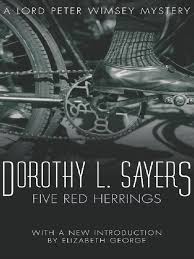
Books read in 2014 – 51. Five Red Herrings by Dorothy L. Sayers

eclecticchallenge2014_300

Genre: cosy mystery fiction 

Narrative style: third person, chronological

Rating: 2/5

five red herringsPublished: 1931

Format: paperback

Reading challenges: Eclectic reader challenge 2014 genre cosy mystery 

Synopsis: Campbell was not popular among his fellow artists so when his body is discovered in suspicious circumstances, there is no shortage of suspects. Lord Peter Wimsey has his work cut out working out truth from lies as all of the suspects seem to have something to hide. 

I bought this quite a while ago when I first started to read detective fiction and then just didn’t get round to it. I knew that it was going to a little old fashioned and safe and I like a fair bit of blood and gore in my detective fiction so it languished on the shelf until this year’s eclectic reader challenge. I’d never even heard of the genre of cosy mystery and had to look it up. I was pleased though that it would mean I would read Five Red Herrings at long last.

I did bring quite high expectations to the book. After all, Sayers is considered a master of the detective art. And in fact, I would have to say that was true. There was nothing wrong with the tightness of the plot. If anything it was too tight.

The first thing that irritated me was Lord Peter Wimsey himself. Of course, I knew he was going to be posh but he was just too jolly hockey sticks for me. If I’d been a character in this book, I’d have been tempted to off him the minute he called me “Old Horse”. Still that was a minor quibble and one that was down to my prejudices rather than Sayers’ writing. At the beginning, I was still enjoying the story and wondering who was the guilty one.

However, the plot soon became bogged down in train schedules and timetables of the murderers actions which were tedious to read. I also found it difficult to separate the artists from each other and couldn’t remember which alibi belonged to which artist.

At the beginning of the novel, Wimsey spots something that lets him know it’s murder. Instead of telling the reader, Sayers says in an aside that she won’t say what it is because the intelligent reader will know what it is. This annoyed me as I consider myself an intelligent reader but I couldn’t figure out what it could be. I felt that she was suggesting I was too stupid to work it out. When it was finally revealed, I felt better as it was not at all obvious.

In fact, I really had no clue about who did it. The various possibilities are outlined in the final chapters by various policemen and all are plausible enough. Unlike, the actual solution. maybe, I’m just peeved because I didn’t work it out but this was so ridiculously convoluted, I’m really not sure how Wimsey could have spotted it. In the end, it seemed like a detective novel solution rather than a real life solution.

This isn’t to say that the novel isn’t well written and it does all hang together, it’s just that the solution wasn’t satisfying for me and I can’t see me reading anymore of the Wimsey mysteries.

Books Read in 2014 – 50. I am Number Four – Pittacus Lore

Genre: Science fiction, Young Adult

Narrative Style: First Person, ChronologicalI_Am_Number_Four_Cover

Rating 2.5/5

Published: 2010

Format: Kindle

Synopsis: John Smith is number four, one of nine aliens who made their way to earth when their own planet was destroyed by the Mogadorians. These aggressive aliens are chasing down the remaining nine and have already killed numbers 1-3. John knows he is next.

There was good and bad with this book and I really wasn’t sure what to rate it. In the end it was more disappointing then anything so I decided on 2.5/5.

I thought the opening chapter – recounting the death of Three was very exciting and pacy and I was hoping that the rest of the novel would live up to this. Obviously, the pace had to drop a bit so the author could introduce us to John and Henri. However, it did take along time to pick up again. When it did, I enjoyed the battle with the Mogadorians as it was hard to see how the John and his friends could possibly win.

However, even then, I found the plotting clumsy. John suddenly realises what his special power (legacy) will be – just in time to use it to control the beasts the Mogadorians use for fighting. There were hints as to his ability with animals for the reader but John remained resolutely clueless until the crucial moment.

I found the romance between John and Sarah a bit mushy and some of the dialogue was truly terrible. (Not just there – some of the conversations between John and Henri are equally nauseating.) She accepts his alien status very easily – without question really and that didn’t ring true. The ending – which should have been emotional – was merely corny and irritating.

Similarly, Mark, who has been John’s sworn enemy at school, suddenly comes on side. Just in time to fight in fact. It is not satisfactorily explained how he came to be at John’s house at just the right time. He seems to have no trouble with the alien idea either. Sam was more convincing – desperately clinging onto the idea of aliens as an explanation for his father’s disappearance. He was more rounded than the other characters and when he realises that John is an alien, he tries to shoot him. This is at least a reaction of some sort.

Finally, I found the politics of the story a little too straightforward. Aggressive aliens versus peace-loving ones seems a bit of a cliche. The Loriens once almost destroyed their planet (the evolutionary stage that earthlings are at now) but realised in time that they needed to change their ways and live in harmony with the planet. There’s a lesson there and not a very subtle one. It’s an old story and one that is retold here in a clumsy, corny way.

Books Read in 2014 – 49. For the Term of his Natural Life – Marcus Clarke

Genre: Australian Fiction, Prison, Classicsfor the term of his natural life

Narative style: Varies – some third person, some first person extracts from diaries and letters

Rating: 4/5

Published: 1874

Format: Kindle

Synopsis: After discovering the truth of his parentage and promising his mother he will never reveal said truth, Richard Devine leaves home knowing he will never return. He comes across a crime already committed and is taken for the murderer. Unable to save himself, he is shipped off to Australia with the other characters that are to play out his fate with him.

The main reason I picked this up is that I can remember watching it in the eighties when it was televised. I could remember that I enjoyed it but not the details of the story so my expectations were high. I was not disappointed.

As I have mentioned before, I don’t find it easy to read classics as I tend towards modern fiction. Howver, while the language and sentence structure definitely dated the novel, the themes definitely still resonated and the plot was extremely pacy (my usual complaint about classic novels is the lack of action compared to the number of words expended.). This is a long book – 620 pages – but it never once dragged and I was never tempted to abandon it.

Richard Devine – or Rufus Dawes as he becomes – is the noble prisoner and is easy to empathise with. He becomes symbolic of the way that men are destroyed by a barbaric system carried out by bullying men. There is a clear moral here about a system that treats men like animals and then is surprised when animals is what they become. Interestingly, Clarke also hints that too liberal a system would not work either. He offers no solutions to how punishment should be meted out but simply shows that too lax or too strict does not work. I think that this is what makes it palatable – whilst Clarke has a clear point to make, he never moralises but leaves it to the reader to make up their own minds.

There is something a little soap opera-ish about some of the subplots especially as the twists and turns often are based on mistaken identity, loss of memory and coincidence. In the hands of a lesser writer this might have been hard to take but Clarke masterfully switches between the subplots and allows all his characters to become real to the readers – they are never mere devices.

If I have any complaint, it would be the length of time it took to read it. I did sometimes think, I’m sure this could all be set down with less words – Clarke goes into detail about everything including the geography of the prison islands. Howver, it would be hard to know what you could take out as every detail proves crucial in the end – even the geography which figures in the various escapes made by the convicts.

The ending of the novel is devestating and if I’d remembered it from the TV programme, I may not have managed to finish it. However, it is a fitting ending and anything else would have given a romance to the tale and made the reader forget the horror and pain of Rufus Dawes’ life.


Books Read in 2014 – 48. Philomena: The True Story of a Mother and the Son she had to Give Away – Martin Sixsmith

Genre: Biography, GLBT88d6b45af6786ed7d9322639cd94e4d4

Narrative Style: Journalistic – Third person with occasional first person input from Sixsmith

Rating 3/5

Published: 2009

Format: Paperback


I’m always a little dubious when someone loans me a book and says I think you’ll really enjoy this. First of all, the book that they then loan me represents something of what they think of me. Always a bit worrying. Secondly, there is the added pressure of whether or not you will actually like it and what they will think if you don’t. My mother in law loaned me this after she had watched the film and then read the book. She did warn me that it was very different from the film but as I hadn’t seen it, it didn’t trouble me much.

However, this book is not only different from the film, it’s different from it’s own blurb. The quotations from reviews on the back of the book suggest it is about a mother’s search her child. It is not.

I enjoyed the opening which described the life of Philomena and the other girls at the convent and what happened to them and the babies born to them. I also enjoyed the descriptions of attempts to stop the scandalous export of babies to the USA. However, after this point Philomena disappears from the story until the very end. I would have liked to know more about how life was for her after she gave away her baby. She isn’t mentioned again until the last chapters where she is dealt with in a cursory fashion.

The rest of the account is focused on Michael, the son she gave away. This story is interesting enough and Michael comes across well. Not only does he struggle with being an orphan but he faces the difficulty of being gay at a time when being open and successful within politics wasn’t possible. The choices he makes often come back to his status as an orphan and his attempts to find his mother add interest.

It doesn’t quite work for me. I’m not even sure why. It may be that a lot of the dialogue seemed stilted, unreal – a bit too exact to quite ring true. And Sixsmith seems a little too fascinated by the darker side of Michael’s personality and sexuality. It is a story viewed from a distance and it seems that Sixsmith felt little emotional connection with Michael. Overall the tone is too journalistic and it was hard to feel personally for the characters.

It seems a bit of a shame – there is definitely a story to be told here. Just not this one, in this way.


Top Ten Tuesday – once read authors.

7aabb-toptentuesday2

Top Ten Tuesday is hosted by The Broke and the Bookish.

Top Ten Authors only read once.

This wasn’t as obvious as I first thought. I tried to avoid listing people who had only written one book. Some authors I have been meaning to read more of, others not so much. It’s certainly reminding me of things that have been loitering around my TBR pile for quite a while.

1. Charlotte Bronte – Jane Eyre – obviously I suppose. I really ought to read more as I enjoyed this.

2. Tracey Chevalier – The Girl with the Pearl Earring – again an obvious choice. It was okay but not really my sort of thing.

3. Wilkie Collins – The Moonstone – quite a recent read – The Woman in White is quite high up my TBR list.

4. Douglas Copeland – Hey Nostradamus! – a good read – should definitely read more.

5. William Golding – Lord of the Flies – Had to read in order to teach which always seems to put me off reading any thing else by the author.

6. Doris Lessing – The Fifth Child – Didn’t like this much at all but she is much loved so perhaps I should have another go.

7. Michael Moorcock – An Alien Heat – I don’t normally like this sort of thing but I found this really enjoyable. Must read more.

8. Alice Sebold – The Lovely Bones – another read in order to teach.

9. John Steinbeck – Of Mice and Men. Of course. I read this at school and since then have taught it I don’t know how many times. It’s a fabulous book but the association with school puts me off reading anymore Steinbeck.

10. Kurt Vonnegut – Slaughterhouse Five – A marvellous read and like An Alien Heat, a real surprise to love it so much.


An excuse or an explanation: Why I’m finding it hard to get motivated.

As a teacher, I often find  myself pondering the difference between an excuse and an explanation and usually I decide it is dependent on whether you are the one making the said excuse or not. That is you give your reasons for the lateness of your homework or whatever and they seem solid to you and you know that they happened therefore to you they seem like an explanation. To the person listening, they seem less reasonable. They are focused on whatever it is that you haven’t done and also do not know whether you are telling the truth so it becomes an excuse in their mind. The other thing is time. At first, it may be an explanation but when the work still doesn’t appear and more reasons are given, they quickly turn into excuses.

I feel a bit like this at the minute whenever someone asks me about the follow up to Shattered Reflections. I truly expected that I would have a finished product by now. And Choose Yr Future is close to being finished – at least to the point where I would have beta readers look at it. That is what is particularly annoying. This hasn’t been an easy year for me – my mother died in January – but I’m starting to feel frustrated with my lack of motivation. I can no longer accept my own explanations. I need to do something to get back into the writing frame of mind.

I sit down with good intentions. Today will be the day I get back on track. But then I stare at the screen or the page and nothing happens. I can’t concentrate. I’m too tired. I feel like it’s been a year of getting nothing done. No writing anyway.

It isn’t just emotional problems either. It’s the many jobs you don’t realise you will have to do. It’s the still running up to Newcastle all the time in order to sell her house, sort out furniture removals and countless other jobs that need doing. It’s feeling like you never have a moment to yourself. And when I do have the moments then I can’t be bothered to do much.

So it’s a new term and I’m in the process of sorting out new students to tutor so I should have a good idea of how much spare time I will have. I’m setting myself small goals, moving towards the bigger one of having a completed novel. And hopefully I will stop feeling like I’m making excuses to myself when I can’t get anything done. Wish me luck.

Books Read in 2014 – 47. Let the Right One in – John Ajvide Lindqvist

2014tbrbutton

Genre: Horror, Vampires

Narrative Style: Third person chronological

Rating 5/5 

Published: 2009

Format: Paperbackdownload (14)

Synopsis: Oskar a loner, bullied at school and friendless, is over the moon when he meets Eli, the girl who moves into his apartment block. She seems a little strange but then so is Oskar. However, all is not as it seems and with Eli’s arrival comes a series of strange deaths and uncanny events. Oskar knows she has a secret but could not have imagined the full extent of her story.

Reading challenges: TBR challenge

Time of Shelf: I bought this not long after I watched the film which I really enjoyed. But then I was worried it wouldn’t live up to the film (whenever I read a book of a film, I seem to like it less than the film) so I started to avoid reading it. 

I was a bit nervous starting to read this. Not because I thought I might be scared – I rather hoped I would be – but because I had loved the film so much. (The Swedish original not the American remake.) I had high expectations. What if the book couldn’t live up to them? Well, I needed have worried. This book is amazing in its own right and while I enjoyed it more than the film, the film didn’t lose anything as a result. I could still watch it.

It is almost difficult to know where to start. As with all good horror, this is more than a story about vampires. It’s about good and evil and the very basis of what it means to be human. Eli – or Elias as it is later revealed – has to kill in order to survive ( if survive is really the right word) but is less monstrous than the man who helps her by killing young boys and bleeding them. He is eventually caught out by his own desire for young flesh and when  he becomes un-dead, it is this perversion that drives him to almost destroy Eli in one of the most disturbing encounters in the novel. As a vampire, he represents all of society’s great fears about the potential danger of the paedophile.

By contrast, Eli and Oskar’s relationship is almost innocent. They are both on the cusp of adolescence and their relationship slides between childish and adult. Oskar is more disturbed to discover that Eli is actually a boy (although one that has been castrated) than to discover he is a vampire. She gives him the confidence to stand up to the bullies at school and he gives her a much needed friend. They are both outsiders – the details of their difference are less important than the fact of it.

Where this novel really succeeds is the sense of place that  the reader is given. Like in the best of Stephen King’s work, Lindqvist shows the reader the smallness of his characters’ lives. The small town is suffocating, killing its inhabitants as surely as if it was the monster. And for the ones that are left alive at the end, there is no escape. Only back to the grey, dead landscape of their everyday life.

Having said that, the end of this story is not depressing and you can’t help feeling hopeful for Oskar and Eli. They are the ones that get away and even though one of them is hundred of years old and lives of the blood of others, you hope that they will be happy.