Books Read in 2015 – 25. A Long Way Down – Nick Hornby

2015tbrbutton

Genre: Humour, Drama, Mental Illness

Narrative Style: First person from four different points of view

Rating: 3/5

Published:2005Unknown

Format: Paperback

Synopsis: JJ, Martin, Jess and Maureen meet on the top of Topper House on New Year’s Eve. They all have the same intention. To jump. Instead, they decide to give it until Valentine’s to see if life is really worth living. 

Reading Challenges: TBR Challenge 2015

Time on Shelf: About 6 years. I loved High Fidelity but since then, I’ve liked each Hornby novel a little less so I avoided reading this one. 

I suppose it’s inevitable that a novel with such a high concept storyline would seem a little unreal at times. Each story emphasised different aspects of depression and reasons why someone might try to kill themselves. However, all four of them together on one roof was a little much and was hard to swallow.

Of course, it was apparent that they wouldn’t jump – otherwise it would have been a very short story indeed – but the narrative tension was in whether they would actually make it back to life. This was where the problems started for me. I wasn’t really drawn in enough by the characters’ stories. They were all a bit too much like characters and not like real people.

Martin was the fallen celebrity who only had his own stupidity to blame, Jess had a missing sister and parents who didn’t seem to really see her, Maureen had a disabled son who she had to care for 24/7 and JJ’s band had split up and he had lost his girlfriend. When it came down to it, the solutions to all their problems were quite simple but of course, when you are depressed, nothing is simple and Hornby does capture that aspect quite well. What was more difficult was liking or empathising with them. I didn’t care enough about them because they didn’t seem real.

I also found the constant switching of viewpoints a little annoying. I’d have been happier if each narrator spoke for longer, I think but as it was, it was hard to get to grips with any of their voices. It was a little like being shouted at by four incredibly needy people. At times I just wanted them to shut up.

Although this is a book about depression, it is at times very funny and Hornby is very good at capturing his characters’ foibles. There are some very funny set pieces which, although they didn’t always ring true, did make me chuckle.

At least there was no pat ending. Hornby realises that there is no straightforward cure for what ails these characters and so although they seem better, they are not cured. But it does seem that they are moving in the right direction. That was satisfying.


Books Read in 2015 – 24. The Giver – Lois Lowry

eclecticreader15

Genre: Young Adult, Dystopia

Narrative Style: Third person from one point of view

Rating 3/5Unknown

Published: 1993

Format: Kindle

Synopsis: Jonas’s world is perfect. No one is ever hurt or upset. Their roles are carefully chosen and everyone fits right in. Even death has become something to celebrate with the ceremony of release for the old. However, as Jonas discovers when he is given the role of Receiver of Memory, underneath the surface there is pain. But there is also love and passion and colour. Jonas has to decide whether the love is worth the pain.

Reading challenges: eclectic-reader-challenge-2015/- genre: Middle grade / Young Adult adventure

This book is interesting rather than exciting. At first, it seems that there is no problem with Jonas’s world. Everyone is happy because no one can remember or process upset or dissatisfaction. Everyone is the same. There are hints of the extent that the society is controlled – for example when Jonas takes an apple home that should have been eaten as a snack – but it isn’t until Jonas receives his new role at age twelve that the reader gets to see exactly what is missing from this society.

Jonas is to be the new Receiver of Memory. He has to visit The Giver who passes on the memories physically to him. Some of the memories are good – they are of family get togethers and having fun in the snow. Others are painful, memories of war or injury. Most interestingly, it transpires that Jonas’s people cannot see colour so that everyone is literally the same. (It isn’t explained how this has come about but I’m going to assume it was some genetic cleverness that somehow bred out the ability to see colour.) Jonas has already had hints that he can see colour and once he can, the world of his community seems terribly dull.

Quickly Jonas learns that nothing is quite what it seems. He discovers exactly what happens when people are released and realises with horror that some people – himself included – are allowed to lie to everybody else about what actually happens in their jobs or when people are released.

I was quite interested up until this point. The importance of memory – be it good or bad – cannot be doubted and when The Giver and Jonas decide to give some memories back to the community, I thought it would be quite exciting. However, the story just fizzles out from this point onwards and I think Lowry squandered what she created. Jonas runs away, taking with him a small child who is about to be released. They obviously quickly run into trouble away from the community as they have very little food and the weather is not controlled, unlike in the community. Jonas’s death seems inevitable although Lowry makes it into a spiritual experience where Jonas remembered one of the more pleasant memories he had been given.

This left me wondering exactly what point Lowry was trying to make. Obviously, Jonas died because he separated himself from the community so was she suggesting that any regime, however horrible, was better than individualism. It would have been more interesting to see the effect that the memories that were released had on everyone in the community but that is never mentioned.

Ultimately, this was an interesting idea that I feel was underdeveloped and left me with a bit of a sour taste. In the end, I just wasn’t sure what Lowry’s message was and that made me feel a bit uncomfortable.

Books Read in 2015 23. I am J – Cris Beam

eclecticreader15Genre: GLBT, Young Adult

Narrative Style: Third person, chronological

Rating: 3/5

Published: 2011

Format: Kindle9780316053617

Synopsis: J may have been born a girl but he has always known that wasn’t who he really was. Now he is seventeen, he realises that he needs to do something to bring his body into line with who he feels he is. However, his parents and friends don’t always find his new identity easy to deal with. 

Reading challenges: Eclectic Reader Challenge – genre diversity.

I always find it a bit of a problem reading accounts from a teenage point of view because the main characters always seem so self centred and difficult. Perhaps it is just too long since I was that age for me to really be able to identify with them. I’m sure that if you were the same age as J then you wouldn’t have this problem.

J is quite difficult to like. While I understand that being trans is difficult and would make you angry, there is little more to J than his anger and his gender. There is little sense of what sort of person he was. Perhaps this is because he is so desperately trying to be like the other boys that he never really develops his own identity. Again, I can see how this might be the case but it still made J difficult to get on with.

There is a lot of gender stereotyping in this book – and I have found this with other trans books I have read. A lot of boys do this, girls do that. This is never really questioned and I found that and J’s homophobia very irritating.

This book was not written by someone who is trans but by someone who has had a lot of dealings with people who are trans and this comes across I think. J is an amalgam of everybody who has ever been in his situation and Beam throws everything at the story – lying mother, distant father, friend who can only think of herself, older wise trans woman and so on.

There is no doubt that it is good that books about being trans are now being written and maybe if I was trans I would find more to identify with here. However, instead, I  felt detached and unable to completely empathise with J and that made me feel a little sad.

Books Read in 2015 22. Before I Go To Sleep – S. J. Watson (Contains Spoilers)

eclecticreader15

Genre: Thriller, Epistolary

Narrative Style: Diary entries, framed by a undated first person narrative

Rating: 2.5/5

Published: 2011Unknown

Format: Paperback

Synopsis: Christine has amnesia. Every morning when she wakes up, she can remember none of her recent life.She has lost nearly twenty years of her life. Every day, her husband, Ben, tells her what has happened to her. When her doctor suggests that she start to keep a journal, she soon discovers that things are not what they seem. 

Reading Challenge: Eclectic Reader Challenge 2015 – Genre epistolary.

I saw the film of this last year and I really enjoyed it so I assumed that I would also like the book. I was wrong. The film was taut and thrilling and for some reason it was easier to suspend my disbelief. However, the book just made me feel annoyed and by the end I couldn’t stop thinking about how many unlikely things had to happen for the outcome Watson gives us.

Like other books I have read that have narrative quirks – The Time Traveller’s Wife, for example – I find that they quickly wear thin and rub me up the wrong way. With Before I Go To Sleep, I kept imagining how long it would take Christine to re-read her ever-lengthening journal everyday. And then in the evening she had to find new ways to hide her writing from Ben. It quickly became repetitive.

Christine herself was annoying. In the film, Nicole Kidman was utterly convincing and also quite sympathetic. Christine in the book was a bit pathetic and her narrative voice spent a long time running round in circles which was also annoying. While it is understandable that she might not trust her memories – especially as her doctor tells her that amnesiacs often fill the gaps with fiction – but after a few times when she doubts everything, I was bored.

Having seen the film, I knew what the twist was and it was entertaining to look for clues about Ben’s real identity. (Actually, this may be responsible for my lack of patience with the narrative. Perhaps I expected her to notice more.) As the ending drew nearer, I hoped for the feelings of suspense that I felt in the film. And it was quite tense when Ben was driving her to the hotel as it is starting to become apparent even to someone who had not seen the film, that all was not what it seemed. However, there is another hiatus when Christine finds the pages that Ben has ripped out of her journal and I just couldn’t believe that she would have time to read them before he reappeared.

Then it was all reliant on Claire, Christine’s friend, who somehow works out where they are and saves the day. Mike is helpfully killed and Ben and Adam reappear. Very neat and tidy. Of course, Christine still doesn’t know if she  will remember what has happened but there are hints that she will as Doctor Nash informs her that they found no physical reason for her amnesia. I’m sure it would have been annoying if she had miraculously got her memory back. Nevertheless, this was an unsatisfactory ending and made me feel that the whole book had been a bit pointless. Overall, a disappointing read.

Books Read in 2015 21. The Casual Vacancy – J. K. Rowling

Genre: Social criticism, tragicomedy

Narrative Style: Third person from a variety of points of viewUnknown

Rating: 3/5

Published: 2012

Format: Kindle

Synopsis: When Barry Fairbrother dies suddenly, he leaves his place on the council unfilled. What follows is the scramble for his position between the other families in Pagford. It becomes a battle about social responsibility and exposes all the secrets that community members have been battling to hide.

After watching the TV programme, I had pretty much decided that I wasn’t going to read this. I didn’t really enjoy the adaptation but my mother in law said the book was so much better so when it came on offer for kindle, I decided to give it a go. Well, she was right, it was better than the BBC adaptation but I still didn’t enjoy it as much as I might have hoped.

There is an enjoyable amount of puncturing small town hypocrisy in this novel. That is the best thing about it without a doubt. The portrayal of Howard and Shirley Mollison is  the most successful in this respect. They are both grotesque examples of a small town England mentality and although their downfall takes a long time, it is worth the wait and was satisfying. It was a shame that other storylines and characters were not so well drawn.

One of the problems for me was Rowling’s almost neurotic need to prove that she is a grown up writer now. She throws everything possible at this novel. There’s drug addicts, child abuse, teenage sex, self harm, extreme poverty and anything else Rowling considers might be a bit shocking. When it transpired that Howard and Shirley’s daughter, Pat, is a lesbian and that is why she doesn’t get on with her parents, it left me feeling a little hollow. it felt like one cliche too far.

And that was the other problem. There are a lot of characters in this novel and they all have their morally troubling secrets and problems but because of sheer numbers some of them go underdeveloped and as a result are unconvincing. Others are stereotypical – like Stu Wall and his teenage rebellion or Terri Weedon whose drug addiction is a result of her own abuse as a child. They feel like stock characters rather than real people.

Still, it is paced well and the various plots come together in a suitably shocking ending. There is no doubt that Rowling can plot well. This is true of her Potter books as well and it goes some way to hide the other problems with her writing. The ending was much better than tthat of the TV version and I can’t help wonder why they changed it. It was hard hitting and exposed the lack of care at the heart of the community, any number of which could have stopped the tragedy happening.


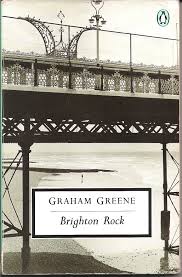
Books Read in 2015 – 20. Brighton Rock – Graham Greene

2015tbrbutton

Genre: Classics, Crime

Narrative Style: Third person from various viewpoints

Rating: 4/5

Published: 1938Unknown-1

Format: Paperback

Synopsis: Hale realises soon after he arrives in Brighton that his life is in danger. He is caught up in Brighton’s gang war. After he has killed Hale, Pinkie believes that he can escape earthly punishment but he didn’t expect the force for good that is Ida Arnold.

Reading challenges: TBR Pile Challenge

Time on Shelf: About 15 years. My husband read it almost straightaway when we bought it but it has taken me this long. 


When the opening line is ‘Hale knew, before he had been in Brighton three hours, that they meant to murder him’, you know that you are onto a winner. This book hooks you in immediately and does not let go. There is not a moment wasted as the plot is intense and taut.

The character of Pinkie was fascinating. He was both vulnerable and dangerous. His own background makes his path into violence seem almost inevitable. He is not much more than a child, trying desperately to mimic the methods of the men he sees around him. He is clever but untamed and has no moral code to speak of. He is the very model of a psychopath but Greene makes it possible for the reader to feel for him and the situation he has got himself into.

On the side of good is Ida Arnold, the woman who was with Hale just before he died. She barely knew him but is determined to discover the truth of his death. She is full of life and laughter, a strong character who will not give up. Thankfully, she is not a saint but an ordinary woman who decides that she must not let this one go. She is motherly and tries to look after Rose (who Pinkie marries to keep her from testifying against him) even when Rose does not want her help.

The character of Rose was the one weak link in the novel. I couldn’t see why she might fall for Pinkie so heavily that she would marry him immediately. She was dangerously naive and I wasn’t really convinced by her. I don’t think she was as well drawn a character as the others. It was hard to feel any sort of empathy with her about her bullheaded belief that Pinkie loved her.

This is very much a novel about earthly retribution versus that of the Catholic church. One of the only things that Pinkie believes in is the fiery depths of hell. He appears to believe that nothing on earth can touch him. I must admit that I do not know a lot about Catholicism or even religion as I have no beliefs and I think some of the finer points of this novel passed me by because of it.

Overall, though this was a fine thriller which kept me interested throughout and although Pinkie’s downfall seems inevitable, the exact nature of it was still a surprise and the ending of the novel is quite devastating. A very enjoyable read and certainly encouragement to read more of Greene’s work.


Why you need to vote

195359


I never understand why people say they won’t vote. It’s not something I have ever really thought of as a choice. It is something you have to do. It’s your responsibility to the country you live in – your responsibility to ensure that the right people are running the country. Or at least to try to ensure it.

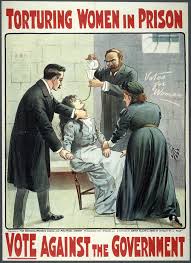
There are a number of reasons why I will always vote even though, as a political decision, it gets harder and harder. One of the most important ones is the fact that the vote for women was particularly hard-won and to not use it seems particularly disrespectful to all those women who were treated so badly by the Government at the Unknowntime. It isn’t even one hundred years since women over thirty got the vote. Those women were willing to die in order to gain the vote and people now squander it. There are still plenty of countries around the world where democracy does not exist. We are lucky to have a system which allows us to choose. We should celebrate that, not sit on our laurels complaining.

Of course, I know the system is not perfect and the choice now sometimes feels like no choice at all  – which of these rich white men will i choose – but the only way to change that is to use the one form of power that you have – that is to vote. In real life, I wouldn’t let anyone else speak for me and I won’t do that on polling day either. It is not empowering to not vote or to spoil the paper because the decision about who is going to run the country is going to be made regardless of that sort of toothless protest. In fact, we wouldn’t have been stuck with the coalition for these last years if more people had actually voted last time. After all, in general it is not the Tory voters who are disaffected. They will still vote. So everyone else needs to make sure they stop them from getting in again.

Finally, when we wake up on 8th May and we still have the Tories and some equally hellish version of a coalition, if you have not given your vote, then you cannot complain. In fact, you will only have yourself to blame. Don’t squander what is one of the most important rights that you have, get out there and vote on May 7th.

Books Read in 2015 19. The Swimmer – Joakim Zander (contains spoilers.)

Genre: Spy Fiction

Narrative Style: Third person from various perspectives interspersed with a first person narrative which details the past.

Rating: 3/520660867

Published: 2014

Format: Kindle

Synopsis: Klara Walden doesn’t suspect what she might be getting into when her ex boyfriend, Mahmoud Shammosh, gets in touch with her. Suddenly, she is in the depth of a political scandal that people are willing to do murder over and she is fighting for her life. On the other side of the world, a retired spy tells his story, hoping that he will never have to involve himself in Klara’s life. 

I enjoyed the start of this book quite a lot. It was pacy and the chapters from different points of view kept me guessing as to what was happening. There were hints about torture, terrorism and government cover ups, all of which seemed interesting. I couldn’t quite work out how the first person narrative would join with the present day scenario but it was clear that they would link up.

For me, the narrative started to disappoint when Mahmoud was shot. Not that this didn’t fit with the type of story but he was one of the more interesting characters in the novel and I felt that the story struggled a bit without him. (He had just revealed to Klara that he was actually homosexual. He was then killed off almost immediately as if there was no longer any space in the narrative for him now that he didn’t comply with the masculine presumption of such a genre.) Klara then had to continue on her own and she suddenly becomes this amazing super spy, following leads and avoiding the authorities. This is especially unlikely as it is her stupidity in trusting another ex that brings the authorities down on them and causes Mahmoud’s murder.

I haven’t read much spy fiction but what I have read always seem to have these moments of naivety that bring the authorities and those on the run into conflict. I can see why this is necessary but find it a little irritating as it means the characters swing between naivety and guile in a way that is less than convincing.

The end of this novel was also unconvincing. I felt that the storylines were building up to an almighty climax but in the end it was more of a damp squib. The spy – Klara’s father – saves her life and so is no longer useful in narrative terms so he is killed off. George – who has been kidnapped by the bad guys as he is able to speak Swedish – suddenly manages to escape and is also involved in saving Klara. I was never particularly convinced by this narrative strand but his steering of a boat in a terrible storm to just the right island stretched my disbelief to the very limit. After all this, Klara decides not to reveal the information but to keep it secret. Again, I understand the reasons for this but it still seemed desperately disappointing.

All in all, I think this is a genre I am going to avoid in the future for much the same reasons that I don’t watch these sort of films. The action moves the story and I have to admit, I prefer things that are character driven. I have trouble suspending my disbelief and I felt I would have liked more psychological investigation. It was’t a terrible book just ultimately not for me.


Books Read in 2015 – 18. Saints of the Shadow Bible – Ian Rankin

Genrre: Detective, Police procedural

Narrative Style: Third Person from various points of view21283302

Rating 5/5

Published: 2013

Format: Paperback

Synopsis: Due to a change in the double jeopardy law, an old case is being re-opened. An old case that involves Rebus’ old colleagues. There is suspicion of wrong-doing and they all swore an oath that they wouldn’t tell. Rebus finds himself caught between his old workmates and Malcolm Fox from the Complaints who is determined to get to the truth. 

I must admit, I didn’t love the first of the Rebus in retirement books, Standing in another man’s grave. It wasn’t terrible but it didn’t inspire me to read this one as soon as it came out. Finally, I gave in and bought it with my birthday Amazon voucher in November. It was so much better, I was sorry I hadn’t read it sooner.

I haven’t read any of The Complaints books but Fox has featured – albeit on the periphery – in the Rebus novels before so I was aware of him. He was an excellent foil for Rebus – a rule follower and a reformed alcoholic, he showed up Rebus’ faults in all their glory. Neither man really trusts the other but they manage to create a successful working relationship all the same. Giving a little of Fox’s past, Rankin shows how similar the men really are and how they have attempted to solve the similar problems that life has thrown at them in different ways. I would certainly be tempted to read some of the Fox novels although I’m not sure how well he would work as a lead character without the alternative of Rebus as relief from his uptightness.

The past and the future well and truly crash in this novel as Rankin shows the difference between policing then and policing now. It goes some way to show how Rebus has developed his own moral code and although he doesn’t always follow the rules, the reader is generally on his side because he isn’t just wantonly corrupt. There is a line drawn between him and the other Saints being investigated although it isn’t always clear exactly where it is. Rankin shows how easy it is for power to corrupt and how dangerous it is when anyone takes the law into their own hands but he does not make simple moral statements. He shows the complexity of any moral decision.

As ever, the twists and turns of the plot and main plot are not easy to unravel and keep you turning the pages. Rankin is a master at giving just enough to keep you curious but not quite enough to work it out fully. A real pager turner, I couldn’t put it down.


Books Read in 2015 – 17. Carmilla by Joseph Sheridan Le Fanu

eclecticreader15 Genre: Horror, Classics, Vampires Narrative Style: First person. Introduced as if part of a doctor’s case-notes Rating 3/5carmilla-240 Published: 1871 Format: Kindle Reading challenges: Eclectic reader challenge 2015 – genre: A story written before I was born. Synopsis: Laura and her father live in a solitary castle in Austria. One night, they witness a terrible coach crash and are persuaded to look after the victims daughter as she is considered too ill to carry on. Strange night time occurrences and appearances begin to bother Laura although she doesn’t immediately associate them with their new guest.  This early vampire story – which pre-dates Dracula by some 26 years – seems quite old-fashioned now. It is a story that has seeped into popular culture. Unfortunately when you then read the original version, it is hard not to feel it is a little predictable. This only shows the extent of the influence of Le Fanu’s story. I particularly enjoyed the opening with its creepy descriptions of the surrounding area and the hints of empty villages and deserted castles. The scene was very effectively set for what was to come. When a friend of the family’s daughter dies in mysterious circumstances just as she was about to visit Laura and the equally mysterious Carmilla appears just days later, the reader knows that something is not quite right. Equally, I found the build up of tension between Laura and Carmilla convincing and interesting. Laura is both attracted and repulsed by her guest and cannot put her finger on why. Carmilla is prone to strange romantic longings with Laura as their focus. These episodes are unsettling to Laura and probably would have been to readers at the time. However, momentum does not quite hold up and the revealing of Carmilla’s vampire status is a bit of an anticlimax. The General – the friend whose daughter died – recounts his own experience with Carmilla in a nearby ruined village. When Carmilla appears, he attempts to attack her but she is too strong for him, thus proving that she is indeed a vampire. At just the right moment, a vampire expert and hunter appears who just happened to know where the hidden tomb of Carmilla is. This ending seems a little rushed and underdeveloped. It’s a shame because I had enjoyed it up until that point.