Pratchett Reread – 4. Mort

For me, this is the first five star read of the series. It made me laugh from start to finish. The characters were fully realised, the plot was more than just a series of jokes strung together and I couldn’t put it down.

It starts with Mort, an awkward teenager who doesn’t fit in in his small village. His father has heard that there is a hiring fair and takes Mort along. Unfortunately no one wants him until – at midnight, of course – Death turns up to take Mort as his apprentice. Mort’s father is happy just to see his son placed somewhere and so Mort’s new life begins.

This takes us to Death’s kingdom and we meet Ysabell, Death’s adopted daughter and Albert, his grumpy manservant, both of which are full of comic potential. Ysabell has been a teenager for a long time (as you do not age in Death’s kingdom) and as you can imagine this has had quite an effect on her mood. Albert seems like just the salt of the earth servant you might expect Death to have but it transpires that he was a secret he’d rather Mort didn’t know.

Death begins to show Mort the ropes, taking him to the more important deaths of the Discworld. Mort begins to learn about fairness – ‘There is no justice’ Death tells Mort, ‘Just me.’ This is a valuable lesson and one which Mort seems reluctant to learn. When he begins to do the duties, things quickly go wrong because Mort is reluctant to kill Princess Keli at her allotted time. This leads to many problems for Keli and for Mort.

Keli discovers that the world carries on as if she has died – history is stronger than individuals. Mort decides that he will try to fix things himself, seemingly oblivious to the fact that history will sort itself out and Death decides that he will go on a holiday know that he has an apprentice. Death decides that there are aspects of human life he would like to investigate – getting drunk, gambling and dancing eventually finding some sort of satisfaction working in a greasy spoon. Mort becomes more like Death while Death becomes more human.

There are interesting philosophical questions raised about life, death and history. There is action. And there are characters that are convincing that you care about. This definitely feels like the real beginning of the Discworld saga.

Pratchett Reread – No. 3 Equal Rites

Well, this was surprising. I enjoyed this much more than I expected. I’m really not sure what I disliked about it so much last time round. It may have been the division between witch (female) magic and wizard (male) magic which was seemingly reinforced by Granny Weatherwax. I was a little disappointed in Granny, I think, as I knew her from later novels before I read this one. She doesn’t seem quite her later self. The division felt entrenched in the first half of the novel although by the end it is less so.

I still thought that this time round but perhaps because I was expecting it I didn’t find it quite as jarring. Certainly, this is still underdeveloped in places. The Librarian is still quite a small character compared to his later appearances. Granny seems even more set in her ways although to be fair, she does end up giving in and taking Esk to Unseen University once she realises that she needs to learn wizard magic.

That aside, it trots along nicely as a story. Esk is a strong female character – headstrong and determined to do what she wants – something that means that Granny has to rescue her regularly. Granny is not quite fully formed but a lot of the things that are good about her are already there. She is one of my favourite Discworld characters but she is definitely better in the comic trio of Nanny Ogg and Magrat.

So overall, this was a fairly solid read – not my favourite but definitely moving in the right direction.

Pratchett Reread – 2. The Light Fantastic

Well, I enjoyed this a lot more than I expected and certainly a lot more than The Colour of Magic. It felt like things had fallen into place a little more. Rincewind and Twoflower felt a bit more well rounded and their relationship was more nuanced than in The Colour of Magic. The plot also trotted along at a good pace and the addition of the red star heading for the discworld made it quite exciting.

Other characters seemed a bit more like themselves as well. There is a scene where Twoflower tries to teach the four horsemen of the apocalypse to play Bridge and Death is utterly confused and fascinated which seems like the start of his attitude to humans in the rest of the series.

I’d forgotten that this was our first meeting with Cohen The Barbarian. At the beginning he is without his diamond teeth which forms a nice comic disparity between Cohen the tough guy and Cohen the old man. Twoflower, of course, is in awe of him. Others often underestimate Cohen although they soon come to regret that. In the course of The Light Fantastic, having travelled through time and space on the back of the luggage, he bursts through the teeth of a just awakened troll. Taking these diamonds and Twoflower’s idea of dentures, he fashions his diamond teeth.

We also meet the Librarian although he is not quite the character that he becomes in the later novels. In fact, he is just a note in the background music of the Unseen University, a passing piece of comedy. But then the other wizards are similarly underdrawn. In the later novels, the wizards are more static, Ridcully is arch-chancellor for a long time. I’d forgotten that he wasn’t always arch-chancellor. There is more comedic value in familiarity, I think, so I’m glad that Pratchett made the decision to keep things more static.

There is more social commentary than in The Colour of Magic. There are the sects of people who spring up with the advances of the star who want to rid the world of magic and are not afraid to use violence to do it. There is Ymper Trymon, a wizard who places organisation above all else. He is a great villain who is convinced that the world should follow a certain order and would like to fit people neatly into that order. He meets a suitably gruesome end which was very satisfying.

Overall, I was pleasantly surprised by how much I enjoyed this but it was still not as good as some of the later novels.

Top Ten Tuesday – Books with a high page count

Top Ten Tuesday was created by The Broke and the Bookish in June of 2010 and was moved to That Artsy Reader Girl in January of 2018. It was born of a love of lists, a love of books, and a desire to bring bookish friends together. This weeks top ten is books with a high page count. I’m sometimes wary of reading long books because I hate not finishing a book so usually make myself carry on reading even if I’m hating it but here are 10 with 500+ pages

  1. Middlemarch – George Elliot – 912 pages – This was a lot better than I expected. Elliot’s prose was enjoyable and the story was fairly interesting. I’m not sure it really needed to be so long though.
  2. A Widow for One Year – John Irving – 576 pages – My second Irving and while not as good as The World According to Garp it was suitably weird and interesting.
  3. Middlesex – Jeffrey Eugenides – 529 pages – Very enjoyable tale of three generations of the same Greek-American family.
  4. Tigana – Guy Gavriel Kay – 676 pages – A second attempt at this one. An excellent fantasy novel. I’m glad I persevered this time.
  5. 11/22/63 – Stephen King – 849 pages – A interesting time travel tale, much better than the TV show with James Franco.
  6. Wolf Hall – Hilary Mantel – 653 pages. I read this last year and it was a bit of a slog. It started well and ended well but I felt a bit bogged down in the middle. Still unsure if I am going to read on.
  7. Moby Dick – Herman Melville – 720 pages – This was a bit of a slog. There are some good moments of adventure but also lots and lots of information about whales.
  8. Labyrinth – Kate Mosse – 515 pages. I really enjoyed this holy grail fantasy. It’s much cleverer than the Da Vinci Code although it’s just as absurd. I probably will read on but I haven’t yet.
  9. Gravity’s Rainbow – Thomas Pynchon – 776 pages – I did not enjoy or understand this one but I slogged my way through it. Not sure it was worth it.
  10. War and Peace – Leo Tolstoy – 1392 pages – This was a bit up and down. Some of it was really enjoyable but I found the war elements less interesting than the personal relationships of the various characters.

Top Ten Tuesday – Genre freebie – Horror

Top Ten Tuesday was created by The Broke and the Bookish in June of 2010 and was moved to That Artsy Reader Girl in January of 2018. It was born of a love of lists, a love of books, and a desire to bring bookish friends together.

How it works:

I assign each Tuesday a topic and then post my top ten list that fits that topic. You’re more than welcome to join me and create your own top ten (or 2, 5, 20, etc.) list as well. Feel free to put a unique spin on the topic to make it work for you! Please link back to That Artsy Reader Girl in your own post so that others know where to find more information.

This week’s Top Ten is a genre freebie. I have decided to choose horror as it is a genre I have read for a long time and one I still enjoy.

  1. Let the Right One In – John Ajvide Lindqvist – I read this after watching the film and enjoyed this much more. It’s darker and more disturbing’
  2. Thinner – Richard Bachman – For some reason this book has stuck with me. I read it a long time ago but it still gives me the creeps to think about it. The way he just keeps getting thinner still makes me shudder.
  3. The Rats – James Herbert – Another book that I read in sixth form but that had a long lasting effect on me. I’m not normally freaked out by animal stories but Herbet hits the right note of horror all the way through.
  4. The Stand – Stephen King – It’s hard to pick a Stephen King book – I easily could have picked 10 by him for this list – but this is one of the first post-apocalyptic stories I read which sent me down a new reading avenue for a while afterwards.
  5. Rosemary’s Baby – Ira Levin – This is a masterclass in suspense and even though I had seen the film, the book was still incredibly tense.
  6. I am Legend – Richard Matheson – I recently re-read this and I had forgotten how good it is. A vampire tale with a difference. Difficult to say much without spoilers but needless to say the film of this is one of the worst adaptations of a horror film that I have seen.
  7. The Road – Cormac McCarthy – More post-apocalyptic horror from McCarthy. I had read a couple of his westerns before this which blew me away. Shame he didn’t write more in this vein.
  8. Dracula – Bram Stoker – A classic and another story that the films don’t really do justice to.
  9. Some of Your Blood – Theodore Sturgeon – This is a disturbing tale which starts with the psychological evaluation of a soldier and doesn’t reveal what he has done until the very end. Very dark.
  10. The Invisible Man – H. G. Wells – I think this is my favourite of Wells’ books. Again, this is different from the film with a dark description of one man’s descent into madness/

Discworld re-read – The Colour of Money.

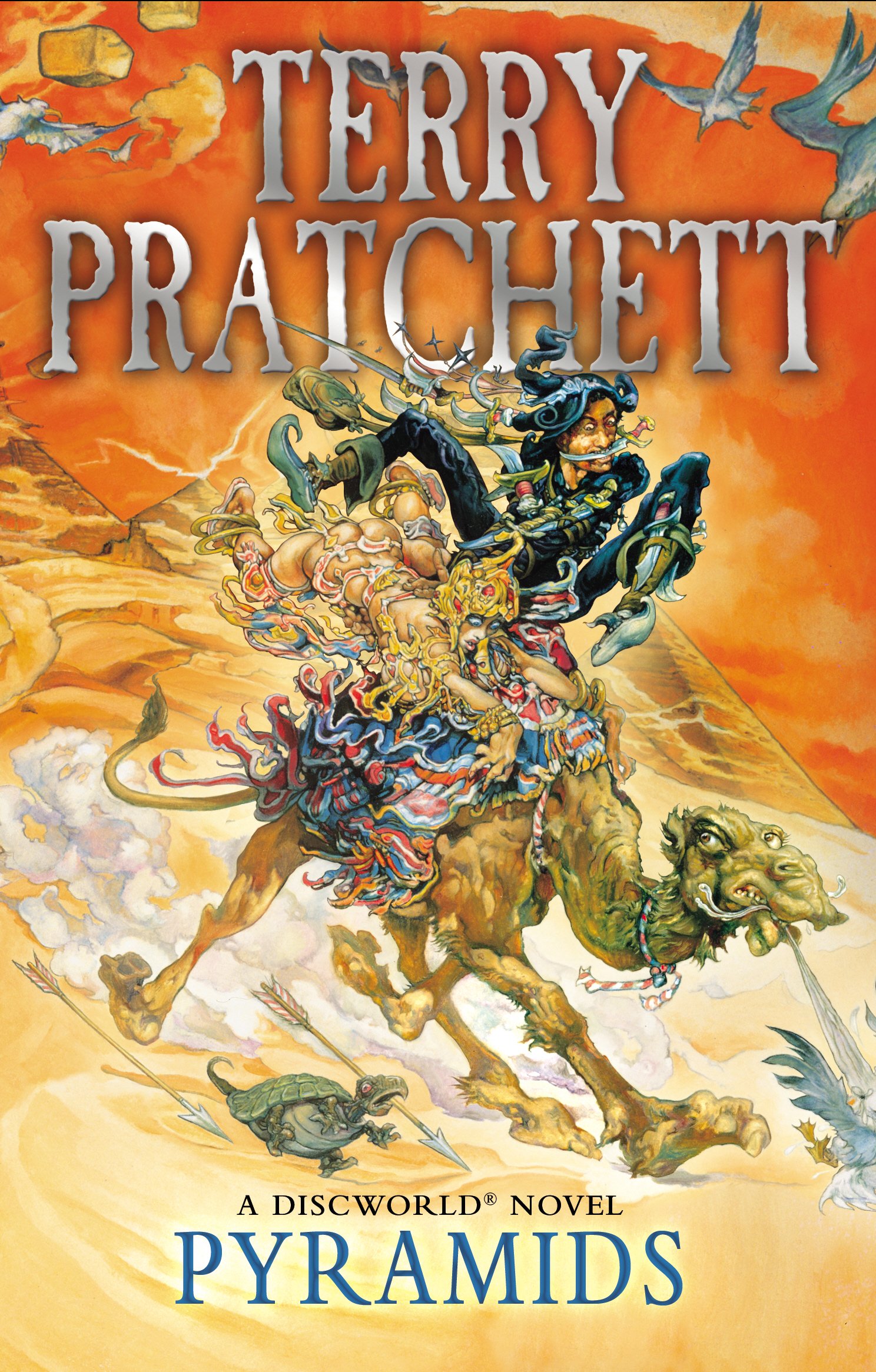
I decided that I would start to re-read the discworld books in order. It was a decision made because I wanted to read something that I knew I would like. I’ve been struggling a little so far this year with deciding what to read and then picking things that I don’t really get on with. I’m not intending to read only Pratchett but maybe every other book will be a Pratchett. I haven’t ever read the whole series in the right order. My first one was Pyramids which I bought in the early 90s. I enjoyed it but I was a bit slow to start reading any others (perhaps because it is a stand alone story). For a while, I picked them up in haphazard fashion, buying new releases while trying to catch up with previous ones although from about 2000 onwards, I was reading them in the right order.

So I started last month with The Colour of Magic. It is strange reading it now, a bit like watching the first episode of a comedy show that you really like but which didn’t quite gel at the beginning. The characters were all there, the setting was the same but things definitely felt a little undeveloped. Death was a different character, colder and less likeable. Of course, as yet, he hasn’t been Bill Door or the Hogfather so his character development is all in the future.

Rincewind and Twoflower make a good pairing though. Twoflower is an excellent comic invention with his naivety only matched by his ability to get into dangerous situations. Combined with Rincewind’s abilty at running away, this makes for some classic Pratchett comedy. Even so, I felt like there was something lacking. I’m not even sure what it was but I definitely didn’t enjoy this as much this time round. I already know that the next two books (The Light Fantastic and Equal Rites) are not ones that I love so it will be interesting to see what I make of them this time round.

Top Ten Tuesday- Top Ten Titles to do with Spring

Top Ten Tuesday was created by The Broke and the Bookish in June of 2010 and was moved to That Artsy Reader Girl in January of 2018. It was born of a love of lists, a love of books, and a desire to bring bookish friends together.

How it works:

I assign each Tuesday a topic and then post my top ten list that fits that topic. You’re more than welcome to join me and create your own top ten (or 2, 5, 20, etc.) list as well. Feel free to put a unique spin on the topic to make it work for you! Please link back to That Artsy Reader Girl in your own post so that others know where to find more information.

I’ve changed this weeks Top Ten a little as it related to book covers that are spring like. I’m not very good at remembering what book covers look like so I’ve gone for titles that relate to spring and nature.

  1. Hag-Seed – Margaret Atwood (2016) – One of my favourites of Atwood’s recent novels. A rewriting of The Tempest set in a prison, where Felix plans retribution for losing his job.
  2. The Trouble with Goats and Sheep – Joanna Cannon (2016) – This coming of age story started well and I enjoyed the narrative voice but unfortunately it became unconvincing.
  3. Flowers for Algernon – Daniel Keyes (1966) – A thought experiment about the effects of intelligence on the way other people treat you. An excellent read.
  4. The Swan Thieves – Elizabeth Kostova (2010) – I enjoyed reading this – I gave it 4 stars – but I admit I can’t remember much about it. It’s about art and Impressionism but it clearly didn’t make a huge impression on me.
  5. The Lost Language of Cranes – David Leavitt (1986) – When his son comes out, a father begins to question his own sexuality. An excellent family tale.
  6. Black Swan Green – David Mitchell (2006) – My favourite Mitchell – probably because it is the most straightforward. A coming of age tale.
  7. Where the Crawdads Sing – Delia Owens (2018) – Unlike almost everyone else, I didn’t get on with this book. I found it unconvincing and didn’t get on with the characters.
  8. Rabbit Run – John Updike (1960) This was a depressing read and although it was well written I didn’t enjoy it and I haven’t been able to make myself read anymore of the series.
  9. Cloudstreet – Tim Winton (1991) – An excellent family drama set from the 40s-60s in Australia.
  10. The Midwich Cuckoos – John Wyndham (1957) – When all the women in one village become pregnant at the same time, the children are bound to be a bit unusual. As ever, Wyndham is most concerned with how people react to the children and their telepathy. Much recommended.

Top Ten Tuesday – Authors new to me in 2024

Top Ten Tuesday was created by The Broke and the Bookish in June of 2010 and was moved to That Artsy Reader Girl in January of 2018. It was born of a love of lists, a love of books, and a desire to bring bookish friends together. This week’s topic is authors new to me in 2024.

I must admit, I wasn’t sure that I would have read enough new authors last year. I was surprised to discover that I had.

  1. The Origins of Totalitarianism – Hannah Arendt (1951) It was interesting reading this in the current climate and I was able to apply it to some aspects of current politics. Depressing how little seems to have changed. 5/5
  2. The Sellout – Paul Beatty (2015) A satirical look at race relations in the USA. 5/5
  3. The Ten Thousand Doors of January – Alix E. Harrow (2019) An interesting premise but ultimately a disappointing tale of travel between different worlds. 3/5
  4. Tigana – Guy Gavriel Kay (1990) I started to read this about 25 years a go but didn’t finish it so I think that it still counts as new to me. A very enjoyable albeit straightforward adventure story. 4/5
  5. Wolf Hall – Hilary Mantel (2009) This was a slog at times but I enjoyed the beginning and the end. 4/5
  6. A Killer’s Wife – Victor Methos (2020) This had been sitting on my kindle for a long time and I normally enjoy a bit of crime but I found the twists in this a bit unbelievable. 3/5
  7. Big Little Lies – Liane Moriarty (2014) This was lifted from chick lit by the subject matter of domestic abuse. I haven’t seen the TV programme but I would watch it after reading this. 3/5
  8. Labyrinth – Kate Mosse (2005) I really enjoyed this tale of a mysterious ring and book and the lengths that people will go to get it. 5/5
  9. Between Shades of Grey – Ruta Sepetys (2011) This is set in Lithuania during the second world war and details the horrendous treatment of Lithuanians by the Russians, something I knew nothing about. Another very enjoyable read. 5/5
  10. How Not To Be A Boy – Robert Webb (2017) An interesting autobiography which shows some of the pressures on men and boys to fulfil a certain sort of masculinity. 4/5

Top Ten Tuesday: The Most Recent Additions to my TBR List.

Top Ten Tuesday was created by The Broke and the Bookish in June of 2010 and was moved to That Artsy Reader Girl in January of 2018. It was born of a love of lists, a love of books, and a desire to bring bookish friends together. Each Tuesday, a topic is suggested. This week’s topic is Top Ten Books that are the most recent additions to your TBR list.

I have decided to try to read books that arrive on my TBR list more quickly. I bought Thirteen, Doppelganger and A Heart Full of Headstones with my birthday money and was given Faith, Hope and Carnage by my brother in law. So far I have read two of them and am reading a third. I will try to read Thirteen after that. Next on the list is Postcards from Scotland which I received for Christmas. I’ve put them into a pile on my bedside drawers rather than onto the shelves which has helped me to focus on them. It’s harder to keep track of books on my kindle but I’m hoping I can keep on top of them as well.

  1. The Human Condition – Hannah Arendt
  2. The Boy at the Top of the Mountain – John Boyne 2/5
  3. Faith, Hope and Carnage – Nick Cave and Sean O’Hagan Currently reading
  4. The Peripheral – William Gibson
  5. Thirteen – Tom Hoyle
  6. Doppelganger: A Trip Into the Mirror World – Naomi Klein 5/5
  7. The Passenger – Cormac McCarthy 4/5
  8. Postcards from Scotland: Scottish Independent Music 1983-95 – Grant McPhee
  9. A Heart Full of Headstones – Ian Rankin 4/5
  10. The Five: The Untold Lives of the Women Killed by Jack the Ripper

Doppelganger: A Trip into the Mirror World – Naomi Klein.

Genre: Academic, politics

Narrative Style: First person academic

Published: 2023

Rating: 5/5

Format: Kindle

Synopsis: Naomi Klein kept finding people confusing her with Naomi Wolf which only worsened as Wolf took a trip into the land of conspiracy theories and misinformation. Klein became obsessed with following Wolf’s Twitter account during Covid 19 and found herself unable to look away. Doppelganger is the result of this obsession, detailing Wolf’s fall from grace and the wider issues of misinformation, conspiracy theories and where it all leaves us as a society.

It was only recently that I discovered that Naomi Wolf had become a darling of the right, promoting conspiracy theories surrounding vaccines and appearing on Steve Bannon’s War Room podcast. She just hadn’t come up on my feed – not even since Musk’s takeover. I was surprised to say the least. I remember reading The Beauty Myth while I was at university and was impressed enough to go to see her talk at Waterstones in Manchester while promoting Fire with Fire: New Female Power and how it will Change the Twenty-First Century. While I didn’t like this book quite so much, I assumed that she would continue to be a respected academic writer. Boy was I wrong!

Klein begins by discussing the fact that people often mistake her for Wolf and the ramifications of that now that Wolf was promoting anti-vaccine conspiracy theories. Klein also does a good job of invoking the strangeness of the Covid 19 lockdowns which contributed to her becoming worryingly obsessed with Wolf and her cronies. At first, I wasn’t sure where Klein was going to go with this – it was interesting to read but seemed to lack Klein’s usual political commentary. However, as the book progressed, Klein widened her argument to include fake news, wellness vloggers, the situation in Palestine and her own Jewishness, bringing each topic back to what she calls the ‘mirror world’ and discussing where that leaves us.

The main topic of this book is disorientation – something that I often feel these days when watching the news or looking at tweets on X (something I can’t seem to stop myself from doing even though it is not a pleasant place these days). I had observed the increase in conspiracy theories during lockdown with a sort of grim humour, sometimes congratulating myself that I wasn’t so stupid. What I hadn’t realised was exactly how apt the term ‘mirror world’ really is. Those who are worried about vaccine shedding are responding to a real worry – the spread of infectious disease. Those who worry about enslavement via the QR codes used to check in to venues are responding to worries about privacy and data usage. Not that I’m suggesting that Wolf is correct when she suggests that vaccine technology can cause time travel and make the vaccinated into robots – these claims are patently absurd – but to dismiss these people as merely stupid is also unhelpful. Klein suggests that it may be that there is something lacking in the way the left has dealt with both these issues that has helped push people towards these theories.

By the end, this seemed more like a typical Naomi Klein book as she suggests that somehow we have to start looking for ways to work together rather than focusing on the things that separate us. As suggested in 2017’s No is Not Enough, Klein ends her book by saying everyone needs to work together if we are going to combat the climate crisis. This means looking beyond surface differences and beyond party politics. We need to stand together despite the fact that our politics and identities might differ. Fighting climate change is more important than all the rest.

Having said that, I find it hard to be especially optimistic about this happening. As I write, Donald Trump is about to be inaugurated for his second term as president with Elon Musk firmly at his side. Both men have used the disorientation that Klein describes to their advantage and I would imagine they will continue to do so. Mark Zuckerberg recently said that there would be no more fact checking on Meta platforms and X already seems like a free for all in this respect. It’s hard to be hopeful for the future.