Top Ten Tuesday – Halloween Special

Top Ten Tuesday was created by The Broke and the Bookish in June of 2010 and was moved to That Artsy Reader Girl in January of 2018. It was born of a love of lists, a love of books, and a desire to bring bookish friends together.

Today the top ten was a Halloween freebie so I have written a straightforward list of my favourite horror / supernatural novels.

  1. The Silence of the Lambs – Thomas Harris (1988) The relationship between Clarice and Hannibal Lector is what makes this novel.
  2. The Fog – James Herbert (1975) A mysterious fog seeps from a crack in the earth and drives people mad. A superb read.
  3. The Stand – Stephen King (1978) This contains one of my favourite pieces of writing ever where King describes the spread of a virus from the first sneeze onwards. Like The Road, a post-apocalyptic scenario.
  4. Rosemary’s Baby – Ira Levin (1967) Even better than the film (which follows the novel really closely.)
  5. I am Legend – Richard Matheson (1954) A last man standing tale with Robert Neville fighting the vampires for his humanity and the future of the world.
  6. The Road – Cormac McCarthy (2006). Perhaps not an obvious horror choice but the bleakness of the landscape and the dark violence earn it its place.
  7. Frankenstein – Mary Shelley (1818) I love this book and its commentary on the way society treats outsiders. It does what all good horror should do and make you think
  8. The Strange Case of Dr Jekyll and Mr Hyde – Robert Louis Stevenson (1886) A great story about hypocrisy and sin. I’ve taught this any number of times and it hasn’t lost its freshness.
  9. Some of Your Blood – Theodore Sturgeon (1961) A strange vampiric tale, told through letters and diaries. The pay off is definitely worth it.
  10. The Invisible Man – H. G. Wells (1897) Much better than the film, this is a dark parable about not being accepted by society and the repercussions of that.

Books Read in 2021 – 32. Jews Don’t Count – David Baddiel

Genre: Politics, Non-Fiction, Race

Narrative Style: First person

Published: 2021

Rating: 4/5

Format: Kindle

Synopsis: David Baddiel discusses the ways in which anti-Semitism is treated differently from other types of racism and prejudice using examples from the media, TV and social media.

Time on Shelf: Not very long. I read The Plot Against America at the start of the year and that sparked an interest in Jewish History. Earlier in the year, I watched Baddiel confronting Holocaust deniers for a TV program and that made me warm to him in a way I hadn’t previously so when this book came up on Kindle I bought it.

I have a mixed history with David Baddiel. When he first appeared on the comedy scene – or at least when I first became aware of him – he was with The Mary Whitehouse Experience and I loved that but then came the football years and his (and Frank Skinner’s) humour was too laddish and football based to appeal to me. Then I read Whatever Love Means which I really think is one of the worst books I’ve ever read. After that, I didn’t really take much notice of what he was up to. Then earlier this year, I watched Confronting Holocaust Denial with David Baddiel. If I hadn’t watched that, I certainly wouldn’t have read this book.

Baddiel begins by talking about a review of Charlie Kaufman’s first novel Antkind by Holly Williams. Williams complains that it has a ‘white-male-cis-het perspective’ and is, therefore, part of the patriarchal orthodoxy. However, the narrator – B. Rosenberger Rosenberg is described as having Jewish characteristics such as a Rabbinical beard and other characters behave anti-Semitically towards him. Baddiel feels, rightly I think, that this means the character is less privileged than Williams assumes.

Baddiel contends that unlike other forms of prejudice, anti-Semitism isn’t treated with any depth of seriousness. He gives examples of non-Jewish actors playing Jewish roles not meeting with any sort of outrage and whilst actors don’t have to black up to play a Jewish character, there are a number of characteristics that called be donned to show that you are playing Jewish. (He compared this to the outrage that greets a heterosexual actor playing a homosexual character which is probably a more apt comparison than blacking up.) I admit that I hadn’t really considered this before. Partly because I wouldn’t necessarily know whether an actor was Jewish or not but mostly because I wouldn’t have thought it was something I needed to think about. Baddiel suggests that this is one of the ways that Jews don’t count. He gives the example of Al Pacino in Hunters and Gary Oldman in Mank, accusing Oldman of not only being not Jewish but a supporter of Mel Gibson and his famously anti-Semitic rant. He asks how could this be allowed to happen?

He suggests it is because Jews occupy a unique position in society – that is as both high and low – privileged, famously running the world in many conspiracy theories and money hoarding on the one hand, low, rat-like and sly on the other. In this way, Baddiel discusses how Jews can be seen as both white and not white. He explains that while Jews might often look white, they don’t often feel white. That is they are not able to feel the sense of privilege that comes with being white. Their lives are not secure. They do not feel safe. As Baddiel rightly points out, we are not that many generations away from the Holocaust and its effects can still be felt. He talks about his own grandparents who fled to England in 1939 with his mother who was a baby. They had been rich but had been robbed of it all by the time they fled. When you know can lose everything simply because you are Jewish, you do not have privilege.

Baddiel discusses many instances of his interactions on Twitter and his experiences of being told not he is experiencing racism or not. He looks at the Labour party and Jeremy Corbyn’s abject failure to deal with anti-Semitism. It’s hard to imagine people leaping to Corbyn’s defence if any other type of prejudice were being discussed. In fact, Corbyn comes in for a lot of criticism and rightly so. Other people, such as Roald Dahl, are outed as anti-Semites.

It is easy to follow Baddiel’s arguments and I found them affecting and could understand his anger. I do think that his determination to focus on Twitter made his prose somewhat disjointed at times. Also, it is hard to take someone 100% seriously when they say they don’t count via a book they have had published which many will read. (I felt similarly when I read Why I’m No Longer Talking to White People About Race by Reni Eddo-Lodge.) But these are minor quibbles. Definitely worth a read.

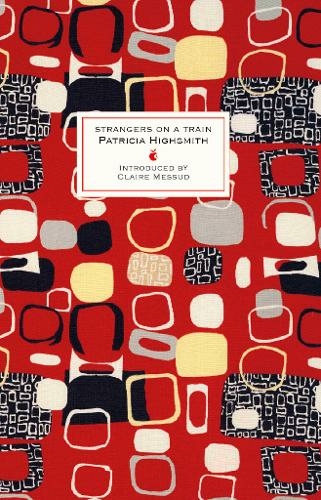
Books Read in 2021 – 31. Strangers on a Train – Patricia Highsmith

Genre: Crime

Narrative Style: third person, chronological

Published: 1950

Rating: 3.5/5

Format: Kindle

Synopsis: Guy Haines and Charles Bruno meet on the train. Bruno is immediately captivated by Haines and proposes that they sort out their respective problems by each murdering the person who is holding them back – Haines’ wife, Miriam, and Bruno’s father. There would be no link between them and neither would get into trouble. Haines is not keen and assumes that Bruno is talking hypothetically but when Miriam is murdered, he realises he may have to keep up his side of the bargain.

Time on Shelf: I’ve been meaning to read this for a long time but only recently purchased a copy.

This is starting to be a theme for this year’s reading but I didn’t enjoy this as much as I expected. Certainly, it was not as straightforwardly thrilling as The Talented Mr RIpley and I felt it lacked the tension of that novel. I did go back and forth between ratings as parts of it were very good but other parts left me feeling bored.

The novel starts strongly. The opening line – ‘The train tore along with an angry, irregular rhythm.’ – immediately gives the reader an impression of an unpleasant atmosphere. This is not the start of a happy story. Guy Haines is the impatient passenger, desperate to get where he is going so he can get a divorce from his wife. He is caught in his unhappy and hateful thoughts by Charles Bruno, rich and ridiculous, who joins his carriage. Bruno is full of wild ideas. The main one that he shares with Haines is the idea of two strangers, meeting briefly, carrying out a murder for each other, and then never meeting ever again. So far so good. I was hooked.

However, it then seemed to take ages for the first murder to happen. I didn’t feel the build up of tension. It felt stodgy and I wanted to get past it. This is partly due to the fact that I had an idea of what was going to happen. This isn’t a book one comes to blind. I knew there was to be action and I was impatient to get to it. This may be my problem not Highsmith’s.

There are moments of high tension after that but I didn’t feel that overall it lived up to the promise of the meeting on the train. Haines’ panic after he has killed Bruno’s father is well described and the way he falls apart even though he now has everything he wants is convincing but I expected that this would be impossible to put down and it just wasn’t.

One of the more interesting elements of the book is the way that it is a metaphor for the hidden nature of homosexuality at the time of writing. Two strangers meet on the train, they hook up and go on with their lives except Bruno keeps appearing in Haines’ life spoiling his marriage to his new wife, making Haines ashamed of the things he has done. Bruno equally knows the dangers of seeing Haines as they need to remain undiscovered but he cannot keep away. When he removes Miriam from the picture, he is making a space for himself in Haines’ life that he cannot possibly fill. Haines immediately marries again, pushing Bruno back out of his life. This was more interesting then the actual plot.

The ending was disappointing. Although I sensed that getting caught was actually a relief to Haines, it still felt anticlimactic. And I felt that Bruno deserved more punishment than falling from Haines’ boat. None of it felt very satisfying. Perhaps I’ll stick to reading the Ripley books.

Top Ten Tuesday – Bookish Pet Peeves

Top Ten Tuesday was created by The Broke and the Bookish in June of 2010 and was moved to That Artsy Reader Girl in January of 2018. It was born of a love of lists, a love of books, and a desire to bring bookish friends together.

Top Ten Bookish Pet Peeves

  1. An obvious romance – I’m not a big fan of romance in general but it works best, I think, when there is some genuine peril (if that is the correct word). I find it annoying when the end relationship is never in doubt. Example: How to fall in love – Celia Ahern – the female lead, Christine is trying to help Adam win his ex-girlfriend back but, of course, this isn’t what ends up happening. Tedious.
  2. A disappointing end to a series – It is annoying when you invest the time to follow a series of books and then it turns out to be a rubbish ending. It’s exciting when you know that you are coming to the end of a series and the letdown of a bad ending is magnified by the number of books you have read up to that point. Example: Mockingjay by Suzanne Collins. The main problem is how much of the action takes place away from Katniss but it also the lack of a hunger games and the tedious love triangle.
  3. A movie cover – I understand why publishers feel the need to do this but it really is annoying. I much prefer a nice art print or something more abstract. The problem with a movie cover is that it gives you an idea of what the characters look like and it is hard to move past. (Incidental peeve – On my kindle, often the covers update when there has been a movie version which is very irritating.)
  4. The problems of posh people – I really don’t want to read about people with money who often have to make problems for themselves because otherwise their moneyed lives would be just fine. They are generally obnoxious and unpleasant. Example: The Secret History – Donna Tartt. The obnoxious, snobby students are so full of themselves and their professor is even worse. They end up murdering because they are beyond normal morality. Just unpleasant. (See also Amsterdam by Ian McEwan,)
  5. When you buy the next book by an author or in a series and the cover design has completely changed. When you buy a lot of books by an author – be it all in a series or not – it’s nice if the books all look similar to each other and sit nicely together on the shelf. However, publishers and fashions change and so do covers. I’ve not got the money to rebuy books just so they all look the same although I know some people who have. Example: Rebus Series – Ian Rankin.
  6. Pretentious prose – I do find it annoying when the prose style gets in the way of reading smoothly. Don’t get me wrong, I appreciate a clever phrase as much as the next person but it should be fluid. It shouldn’t be the author showing off their vocabulary. Example: Any recent novel by Ian McEwan.
  7. When someone is killed or dies in order for another character to learn some life lesson. It is usually women that have to go through things or be killed and men who learn something about themselves or live an improved life because of what they learned. Example: Thirteen Reasons Why – Jay Asher. Hannah’s suicide, and all the things that lead up to it, are ultimately character development for Clay who realises what he needs to do to improve his own life.
  8. Teenage first person blues – I am quite far removed from my teenage years now but I do find myself reading fiction from the point of view of teenagers fairly regularly. I find it harder and harder to relate to a teenage narrator and their self centred worlds. Examples: Simon Vs The Homo Sapiens Agenda by Becky Albertalli and Call Me By Your Name by Andre Aciman, Turtles All The Way Down – John Green and the entire Divergent series.
  9. When they totally mess up the film / TV version – I’m not sure that this is really a book peeve but it is related. When you have really loved a book, you get excited to see what someone has done with it. While I know that everyone’s imagination is different but sometimes, directors seem to go out of their way to mess things up. Examples: The Book Thief, The Golden Compass, The Other Boleyn Girl to name but three.
  10. When it is impossible to suspend my disbelief – I think I am quite good at suspending my disbelief but sometimes things just get too ridiculous. Sometimes it depends on how good the prose is or how good the characters are and you would just about accept anything but if these are not so good then you are less able to disbelieve. Examples: Where the Crawdad’s Sing by Delia Owens, The Thursday Murder Club by Richard Osman and Snow White Must Die by Nele Neuhaus.