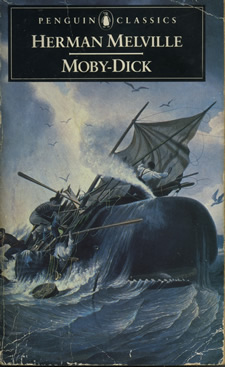
Books Read in 2021 – 16. Moby Dick – Herman Melville

Genre: Adventure, Classics, Madness

Narrative Style: First person but with soliloquies, encyclopedic entries and stage plays.

Rating: 3/5

Published: 1851

Format: Paperback

Synopsis: Ishmael is looking to join the crew of a whaling ship. When he agrees to join the crew of the Pequod, he is warned by the strange and slightly scary Elijah that he may be making a mistake. Ishmael ignores this warning and sails away under Captain Ahab who is obsessed with capturing the great white whale, Moby Dick.

Time on Shelf: This is one of the books we seem to have had forever. I’m not sure whether my husband bought it or if I did. Certainly, it has been there every time we’ve moved house suggesting it’s been with us for about twenty years.

This was a strange book. In some ways, it was exactly as you might expect – an adventure where a focused to the point of insanity captain takes his crew on a chase across the oceans hoping to gain revenge on the whale that took his leg. However, if it was only that, it would be a much shorter book. There are also long chapters on the nature of whales, on their biology and psychology, there are chapters written as scenes and soliloquies from a play. This is anything but a straight forward boys own adventure.

For a start, it is a good way in before Ishmael even gets on the ship. First of all, he arrives in New Bedford, needing a room for the night. The inn is overcrowded and he ends up spending the night with Queequeg, a tattooed cannibal who declares the next day that he and Ishmael are no married as they have spent the night together. There are a lot of detailed descriptions of Queequeg and his tattoos, as well as the other men at the inn, that seem full of longing. At first, Ishmael is nervous of Queequeg but he soon decides that it is better to ‘sleep with a sober cannibal than a drunken Christian’ and they decide to sail together. Once they have decided to sail on the Pequod, they are followed by Elijah who warns them against sailing with Captain Ahab, a warning they do not heed.

Captain Ahab proves to be focused on one thing only: revenge. Although they catch other whales – and we get in depth descriptions of the process – the real purpose of the voyage is to catch Moby Dick. Along the way, the Pequod meets nine other ships, all of which either add to the tension of trying to find Moby Dick or show some facet of Ahab’s personality. For example, they meet a captain who has lost his arm to the whale as Ahab has lost his leg. Later, they meet a ship whose captain is desperately trying to find his son who was in one of the whaling boats and is now missing. Ahab refuses to stop and help so focused is he on the search for the whale. This was a clever structural device, keeping the reader interested and showing Ahab’s growing mania.

Personally, I could have done without the descriptions of types of whales and the processes of whaling. As when I read 20000 Leagues Under The Sea, I felt they broke up the narrative and slowed down the pace. Not that they weren’t well written, they were and they give rise to questions such as what is a whale and indeed attempt to answer that question from different perspectives such as the whaleman, the philosopher and the scientist but they were still not really what I wanted from a work of fiction.

There is much to like about Moby Dick. It was easy to read and when there was action, it was well paced and exciting. The characters were suitably strange and intriguing and Ahab was completely monstrous. It described a range of different races, generally living in harmony, which was surely unusual in a book of that time. The ending was apt given Ahab’s insanity and determination to get the whale. I’m glad I read it but it will certainly be a while before I even think about whales again.

Books Read in 2021 – 15. Little Fires Everywhere by Celeste Ng

Genre: Chick Lit

Narrative Style: Third person omniscient narrator

Published: 2017

Rating: 3/5

Format: Kindle

Synopsis: Mia Warren and her daughter, Pearl, arrive in Shaker Heights, a carefully planned, quiet suburb, with the intention of at last settling down. Pearl immediately makes friends with Moody Richardson, the son of their landlord, Elena Richardson and he quickly introduces her to the rest of his family. The Warrens are different from the sort of people who usually live in Shaker Heights. Mia is an artist, a nomad and she doesn’t fit the Shaker norm. Soon the equilibrium of this placid suburb is shaken.

Time on Shelf: About a year. People seemed to love this book and the TV series so I decided to give it a go.

Let’s start with what was good about this book. I’m always a bit of a sucker for a outsider arrives in suburbia and shakes it up a bit sort of story. I know it’s a cliche but it is so enjoyable to watch safe comfortable people suddenly see a different side of life. Mia Warren, it is immediately clear, is the very person to do this. We don’t meet Mia properly straightaway but are given glimpses of her through the eyes of Pearl. Pearl has to explain why Mia doesn’t have a proper job but works part time in a Chinese restaurant in order to have some money but also have time for art. They have never settled anywhere before but Mia has promised that this time they will and Pearl immediately begins to put down roots. Mia is clearly different from women like Elena Richardson with their careful plans which always come to fruition and their seemingly perfect families.

At the start, it seems like this is going to be a story about Moody and Pearl. Moody is a likeable character, lacking the confidence of his older brother, Trip, who falls for Pearl almost immediately. Their friendship was sweet and I was quite taken by it and the ways meeting the Richardsons’ and seeing how the other half live affected Pearl who had never really had any friends before, never mind affluent ones. However, this was not the novel’s focus for long as we start to hear more from the adults.

This was one of the problems with this novel for me. At the beginning, when Mrs Richardson wakes up and realises that her house is on fire, she knows instantly that her daughter Izzy is responsible. I thought that this might be a focus along with Pearl and Moody’s relationship. But it isn’t. Apart from the backstory of why Mrs Richardson found it so hard with Izzy, there really isn’t much about it. This seems a shame as Izzy is the black sheep – like Mia she doesn’t fit the Shaker Heights’ mould. Instead, we get Mia’s backstory, Mr and Mrs Richardson’s backstory even the backstory of the family friends, the McCullochs who have adopted a Chinese baby after years of fertility struggles. A lot of this is in long flashbacks which I felt interrupted the narrative flow.

The story is an interesting one which touches on many issues around the idea of motherhood – surrogacy, transracial adoption, abortion, the idea of what it means to be a mother. It may be that this moral overload was just too much for the story to handle. Especially given that it clearly sets out what the reader is supposed to think.

Transracial adoption is a difficult issue and the writer does show both sides of the argument. Battle lines are drawn and the reader is clearly meant to side with Mia who thinks the baby should be returned to its mother. And, of course, when the people on the other side say they don’t see race and think that giving the child Chinese food is all they need to do to teach the child about its culture then it is easy to make that decision. It’s very easy to make moral decisions when the writer makes everything black and white. The only thing the McCullochs really have going for them is the fact they have money and, of course, that is what wins that day.

This is another problem. The writer knows what she wants the reader to think and she makes sure that is what they think. She doesn’t allow the reader to make up their own minds about the characters. I found this irritating. I’m capable of making my own moral decisions. I must admit that by the end of this, I didn’t really like any of the characters. Really no one comes out of this covered in glory. Mia and Pearl are on the run again. Mia, for all the writer seems to want to place her in the role of perfect mother, has made some frankly disturbing decisions and is far from being morally perfect. Of course, as is the way of these stories, after the damage has been done the outsider needs to go but I would have found it more satisfying if she had stayed and faced the music for once.

The worst thing for me though, and the main reason it didn’t get a higher rating was the way the narrative voice shifted viewpoints. It was incredibly annoying. A paragraph might start from one point of view and then, because there was something the reader needed to know, it would shift viewpoint so we could get that knowledge. Then it might shift back to the first viewpoint or it might shift again. I know that with third person narration, you get shifting viewpoints but the number of times this might happen in a short space of time was disorientating and, again, interrupted the narrative flow.

Overall, this wasn’t a bad read. All of the characters were changed by their interaction which was pleasing. It’s not a new story and it’s not a subtle one but it did hold my interest.

Top Ten Tuesday – Ten Most Recent Reads

Top Ten Tuesday was created by The Broke and the Bookish in June of 2010 and was moved to That Artsy Reader Girl in January of 2018. It was born of a love of lists, a love of books, and a desire to bring bookish friends together.

How it works:

I assign each Tuesday a topic and then post my top ten list that fits that topic. You’re more than welcome to join me and create your own top ten (or 2, 5, 20, etc.) list as well. Feel free to put a unique spin on the topic to make it work for you! 

This week’s topic – 10 Most recent reads

  1. All Quiet on the Western Front – Erich Maria Remarque (1929) 5/5

Classic war literature showing the horror of the trenches and the sacrifice of a generation. Very affecting.

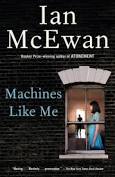
2. Machines Like Me – Ian McEwan (2019) – 2/5

Disappointing attempt at speculative fiction with unconvincing plot and characters.

3. The Problem with Men: When is International Men’s Day (and Why it Matters) – Richard Herring (2021) 4/5

A light hearted look at the reasons why some men are only concerned about International Men’s Day on International Women’s Day and what the ramifications might be. Very funny and intelligent.

4. Tinker Tailor Soldier Spy – John Le Carre (1974) 4/5

Classic spy novel with George Smiley trying to uncover a mole in the secret service. Very twisty and clever.

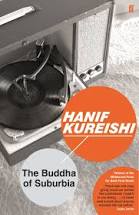
5. The Buddha of Suburbia – Hanif Kureishi (1990) 4/5

Coming of age in London in the seventies. Raises issues around race, sexuality and class.

6. Where the Crawdads Sing – Delia Owens (2018) 2/5

The ending spoiled this for me. Up until that point, this was an okay thriller with a sweet love story at the heart.

7. Middlemarch – George Eliot (1871) – 3/5

Very well written classic description of small town life. Characters are well drawn but the writing style was too long winded for me to really enjoy.

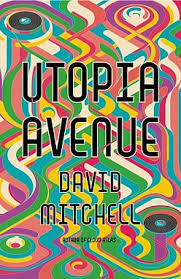
8. Utopia Avenue – David Mitchell (2020) 2/5

Not one of Mitchell’s best. Reasonable story spoiled by all the cameos of dead pop stars.

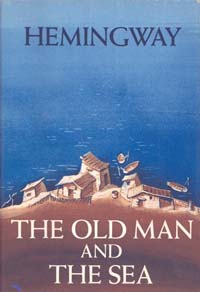
9. The Old Man and the Sea – Ernest Hemingway (1952) 3/5

I enjoyed Hemingway’s sparse writing style but the story of an old man catching his last fish did not appeal.

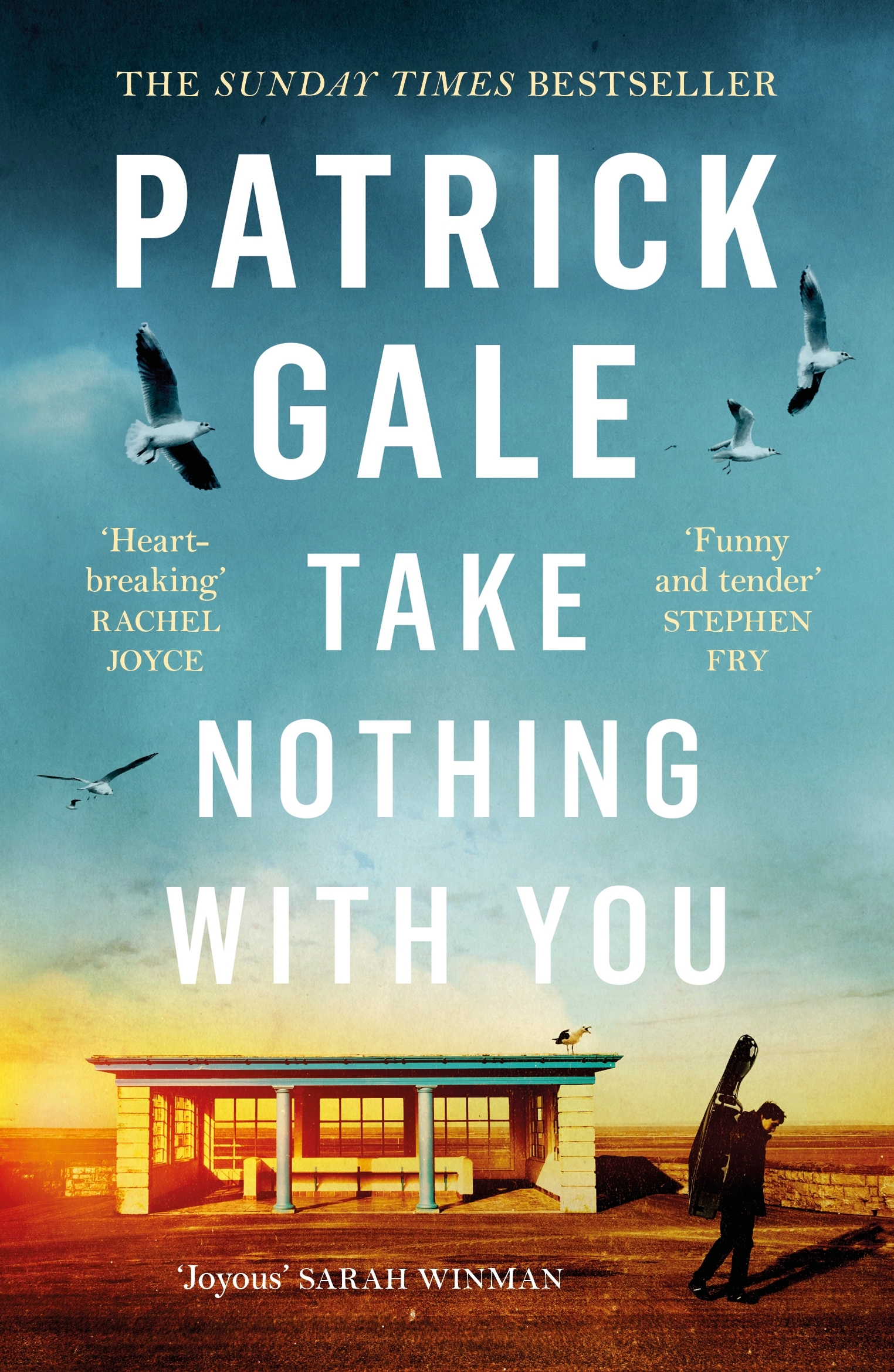
10 Take Nothing With You – Patrick Gale (2018) 5/5

My favourite read of the year so far. A combination of bildungsroman and romance with a lovely uplifting ending.

Books Read in 2021 – All Quiet on the Western Front – Erich Maria Remarque

Genre: War

Narrative Style: First person, chronological

Rating: 5/5

Published: 1929

Format: Kindle

Synopsis: Paul and his classmates are goaded by their teacher to join up and they are quickly shipped off to the front. Paul is able to stay with some of his classmates and he also meets Kat, an older soldier who becomes a mentor like figure to him. The battles are brutal and affect the soldiers mentally as well as physically. They are still young and the only life they have experienced is that of the front.

Time on Shelf: This has been on my list of things to read for a long time but I only recently acquired a copy.

This is a book I’ve been wanting to read for a while. I’ve read a lot of World War One literature (the Regeneration Trilogy, Strange Meeting by Susan Hill and The Absolutist by John Boyne being some of the best) and Wilfred Owen is one of my favourite poets, It was high up on the list of books I needed to acquire. Just before Christmas, it came up on my Kindle Daily Deal and I knew it wouldn’t be long before I read it.

As soon as I started to read it, I knew I was going to enjoy it. Paul’s narrative voice was compelling. He describes the battles and his thoughts and feelings with the same careful detail. It is impossible not to feel for him. He is only nineteen. He has known no life apart from the front. Unlike Kat, and the older soldiers, the boys have no knowledge of the outside world apart from their time at school. They have no wives or girlfriends waiting for them. One of Paul’s friends tries to cling to the idea of education, even going so far as to still be muttering formula when they are under fire. He can imagine an after the war which Paul cannot. It does him no good. He dies from a wound from a flare gun. Later on, on the death of another classmates, Paul says, “What use is it to him now that he was such a good mathematician in school?”

They were thrown into an intolerable situation. They had no knowledge of strategy (if indeed there was any) and none of the battles are named. Paul comments that they aren’t fighting the enemy but both sides are fighting death. They kill the enemy merely because if they don’t, they themselves will be killed, not because of any nationalistic fervour. I was often reminded of Owen’s poetry and particularly Dulce et Decorum Est. It is nowhere near fine and fitting to die for one’s country. It is painful, brutal and unnecessary. Towards the end, Paul says ‘Our hands are earth, our bodies mud and our eyes puddles of rain. We no longer know whether we are still alive or not.’ The soldiers are no longer completely human. They are weapons. They are the war itself.

There are lighter moments. Much is made of the camaraderie of Paul, Kat and the school friends. Kat is described as having a sixth sense when it comes to finding the things that they need. When they need straw for their mattresses, he finds some, also bringing horsemeat, fat and a pan to cook it in. Another time, Paul and Kat find and kill two geese, taking the meat to other of their party who were being punished for insubordination. One day, they are swimming in the river when they see some girls and they arrange to meet later. As the soldiers were not allowed on the girls’ side of the river, they have to take their uniforms off and swim naked to them, carrying their gifts of food above their heads.

All this just makes it more tragic when, one by one, Paul’s friends are killed off – each in a slightly different way. There is an infinite variety of ways to die on the front. Baum is blinded. He is thought to be dead but the next day he is seen wandering around no man’s land. He is shot before he can be rescued. Mueller is shot in the stomach. Westhaus is shot in the back and Paul can see his lungs as he breathes. Even soldiers that seem out of the war are not safe from death. Detering deserts but is picked up by the military police and is never seen again. Kropp is injured and he and Paul spend time in hospital together. Kropp ends up having his leg amputated. He vows to kill himself but when Paul leaves the hospital he hasn’t because of the camaraderie and the lack of a gun. However, it is strongly implied that he will.

It might sound like hyperbole but this is one of the few times that I’ve thought that this is one of those books that everyone should read. It is deeply affecting and shows the true horrors of warfare, the sacrifice of mere boys for a country’s political ambitions and the emptiness of blind nationalism. A must read.