Books Read in 2014 – 23. Mockingjay by Suzanne Collins (Contains Spoilers.)

Genre: Dystopia, Young Adult

Narrative Style: First person narrative, chronologicaldownload (6)
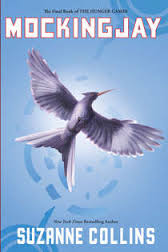
Rating: 2.5/5

Format: Kindle

Published: 2010

Synopsis: Having been pulled from the arena at the end of Catching Fire, Katniss finds herself in the hands of the rebels. She is reluctant to accept the role of Mockingjay but does so when she realises what the Capitol has done to Peeta. The battle for supremacy between the rebels and the Capitol begins in earnest.

This is definitely the weakest book of the trilogy. I was keen to read on at the end of Catching Fire. It wasn’t obvious what would happen to Katniss and I dived in straightaway. It wasn’t long before I felt disappointed though.

There were a number of reasons for this. First of all, Katniss is whinier than ever, determined to take the blame for everything and reluctant to accept her new role. I found her even more irritating than usual. She is naive in her views and the reader is probably supposed to find this innocently refreshing but to me it just seems unrealistic. Gale is much more pragmatic but no less annoying as he seems more a rebel mouthpiece than a real character. The transformation of Peeta to a tool of the Capitol didn’t convince either. He moved between good Peeta and evil Peeta at the mercy of the plot with little thought for his actual character. I didn’t believe in either role. Especially as it started to be apparent that he and Katniss would end up together. There was no tension as to whether his good side would return.

A bigger problem is that of the action, a lot of which happens away from Katniss. The reader is then given a couple of paragraphs about what has happened. (This will be solved in the film, I guess where they will be more able to use multiple viewpoints.) This is particularly troublesome after Katniss shoots Coin and there is a trial happening while Katniss is singing to herself in her cell. But it’s okay because she is found innocent and allowed to go home. Very unsatisfactory.

The ending was equally unsatisfactory. (In fact, about halfway through I realised that there was no way this could end in a way that would please me. I’m glad that Katniss didn’t end up with Gale but the idea that she was able to have a family with Peeta was just as problematic to me.) The epilogue was mawkish and sickening. I felt the same at the end of the last Harry Potter. I’m not sure why it is felt to be necessary. It wasn’t a fairy tale so why end with a happily ever after?

To end on a more positive note, there are some interesting ideas in this novel – the use of propaganda, the nature of warfare, the way power corrupts, for example – I just wish that they had been played out in a different way.

 

Books Read in 2014 – 22. Catching Fire by Suzanne Collins

Genre: Dystopia, Young Adult

Narrative Style: First Person narrative, largely chronologicalcatchingfire02-718973

Rating 3/5

Format: Kindle

Published: 2009

Synopsis: Following their win at the Hunger Games, Katniss and Peeta are preparing themselves for their victory tour and the next games. As this is a celebration of 75 years of the games, it calls for a special games to be designed, one which Katniss and Peeta will never forget.

I read The Hunger Games last year and I have to admit, I didn’t feel particularly compelled to read on. However, I always meant to read the others and so I finally got round to downloading Catching Fire and Mockingjay onto my kindle.

If anything, I enjoyed this more than The Hunger Games. The plot twists were a little less blatant and I loved the idea of the clock shaped games arena. The Capitol and the gamemakers seemed more cruel and some of the weapons / tricks played within the arena were truly horrible.

The book trotted along and I did find it hard to put down. I wanted to know that Katniss and Peeta would survive. Or rather how they would survive – the existence of a third book suggesting that they both lived through this one. I was glad to have the third one ready and waiting as the end of this one was much more of a cliff hanger than the last one.

I still found Katniss intensely annoying. She is constantly selfish, ignorant and mistrustful. The way she swings between Gale and Peeta is also irritating. While she is a strong lead character who takes action, she is often in the wrong or acts in a foolish way. She was hard to like. Whilst, on the one hand, Peeta is more sympathetic, in some ways he is just as annoying. His essential goodness doesn’t quite ring true.

The final reveal at the end of the book and Katniss’ reaction too it seemed a little forced and sudden. More subtle clues throughout might have helped with this. The appearance of Gale at the end and his rebel status also did not quite convince.

Maybe I’m being a bit harsh but I did feel that I constantly wanted to shake Katniss. Maybe, again, it is just that I am too far removed from Katniss’ age to really be able to relate to her. Certainly, the idea of these books is strong and interesting, I was left feeling that the execution could have been better.


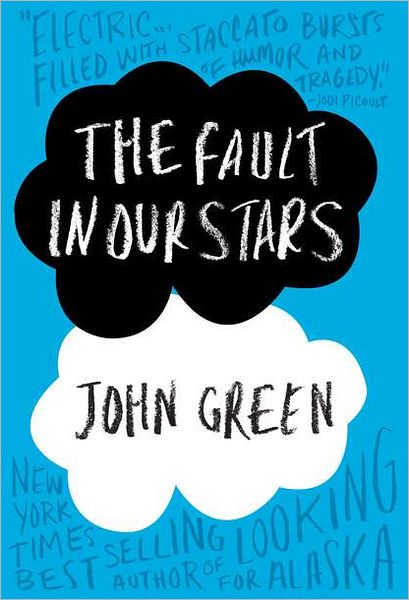
Books Read in 2014 – 21. The Fault in our Stars – John Green

Genre: Young Adult, Illness. Romance

Narrative Style: First Person Narrative, Chronological Timeline The_Fault_in_Our_Stars

Rating: 4/5

Format: Paperback

Published: 2012

Synopsis: Hazel has cancer and even though she is taking a drug to shrink her tumours, her prognosis is still terminal. At a cancer support group, she meets Augustus, seemingly recovered from his cancer, and discovers what life is all about.  

This is an excellent book for debunking myths and showing exactly how difficult it is for teenagers with cancer. It is funny and lively as well as being devastatingly sad. From the moment that Hazel meets Augustus, there is a sense that this cannot end well. (Otherwise what sense in telling the story.) There was always a sense of grabbing happiness while you can and one of the lessons Hazel learns is that you cannot stop people from loving you just so they don’t get hurt and equally you cannot stop yourself from doing the same.

I was impressed with the gallows humour in this book and it always felt right and didn’t step over the mark at all. I was a little wary of reading it, thinking that it might be too upsetting but in fact I found I laughed more than anything. There was one point towards the end when it is obvious what is going to happen and I put the book down, thinking I might not pick it up again. But I did and it was painful but not impossible to read.

One of the reasons I didn’t find it more upsetting, I think, is that it never stopped feeling like a book. The characters were well written and the plot moved well and wasn’t cliched but I never really suspended my disbelief. In the book, Augustus is obsessed with the metaphoric resonance of everything he does and the story often seemed symbolic rather than real as if everything was imbued with too much meaning.

Still, undoubtedly an important book about the importance of living even when you are dying.


Books Read in 2014 – 20. Dissolution by C. J. Sansom

Genre: Historical Fiction, Detective Fiction

Narrative Style: First person recount, largely chronological

Rating: 4/5

Format: Kindle

Published: 2003

Synopsis: Matthew Shardlake is commissioner to Cromwell during the dissolution of the monasteries. He is sent by Cromwell to investigate the death of a previous commissioner at a monastery in Scarnsea. When he arrives it seems that quite a number of monks are potentially guilty and Shardlake has to walk a difficult path to get to the truth. 51xcXRFlN0L

Tudor history is one of my favourite eras to read about and I love a good detective story so this seemed to tick all the boxes. The fact that it was set in a monastery and all the monks had some sin that they are trying to keep secret only added to the fun.

When Shardlake is first sent to Scarnsea and we are introduced to the potential murderers, it seems that any number of people could have murdered the previous commissioner. Clues and red herrings rain down through the plot with an astonishing quickness and Shardlake is quickly out of his depth. When the bodies start to pile up and he starts to feel pressured, he begins to make dubious decisions and mistakes.

The historical detail seems note perfect and I particularly enjoyed the various descriptions of Cromwell. The battle between traditional and new religion is well described and Shardlake is as uncompromising in his views about the new ways as the traditionalists were about theirs. Ultimately (like In The Name of the Rose) this is a story about knowledge and power and who should be allowed to have it.

I did find Shardlake to be an irritating narrator. I’m sure this was intentional but his peevish voice started to grate by the time I got to the end. This, and the fact that I worked out who the murderers were (although not why) before the end, were the reasons for this not being a 5/5 read. Other than that, it was a very enjoyable mixture of historical fact, political intrigue and detective story.


Books read in 2014 – 19. The Absolutist by John Boyne

Genre: Historical Fiction, War

Narrative Style: First person narration, Moves between 1919 and Tristan’s memories of the war

Rating: 5/5

Format: Paperback

Published: 2011

Synopsis: Tristan Sadler has decided to deliver letters written by Will eclecticchallenge2014_300Bancroft to his sister in Norwich. Will was shot as a coward but Tristan knows the truth of what happened and hopes to be able to tell Will’s sister his deepest secrets. 

Reading Challenges: Eclectic Reader Challenge: War. 

Having previously read The Boy in the Striped Pyjamas, I should have been more prepared for the onslaught on the emotions that this book provided. At the end, I was devastated. My mind kept playing over the details of the ending as if I could somehow change the narrative and give Will and Tristan a better ending.

The narrative begins with Tristan’s arrival in Norwich to give the letters to Will’s sister Marian. He had trained and fought with Will and it soon became apparent that he had loved him very much. Marian wants answers as to why Will died and proof that he was not a coward for laying down his arms and refusing to fight. the absolutist

At first it seems that Tristan’s great secret is his homosexuality and the physical acts that he and Will shared. Understandably at this moment in history, and in the army, this was something that both men found difficult to deal with. However, the truth of the matter was much more painful and dark. And although I had worked out exactly what Tristan had done, that didn’t lessen the trauma of actually reading about it.

The themes of this book run through many war novels – the nature of bravery, what makes a man, the effect of brutality on the psyche – but I don’t think I have ever read a novel that tackles them so directly. Before Will lays down his arms, another character, Wolf, is murdered by the other soldiers when he finally hears that he will not have to fight. The treatment of those who wished not to fight and those who could not was appalling – much worse than I’d realised. The treatment of Marian and Will’s parents is equally deplorable.

In the end, although Tristan’s behaviour was also deplorable, I had a lot of empathy for him. Boyne’s characterisation and use of historical detail is so good that it is possible to see past the terrible act he commits and see the man and the reasons behind it. Easily the best book I’ve read in an age.


A general update: It’s been a while…

It’s been a pretty hellish start to the  year. For various reasons, I’ve spent much of the last three months either emptying or filling boxes. Sorting things and throwing things away is another new pastime along with visits to the tip and the charity shop. It hasn’t really been conducive to making progress with my writing and it is only in the last few weeks that I feel that I have started to get back to normal.

In terms of blogging, I have managed to keep up with my book reviews and I am pleased that I have still been able to read a lot. (All that travelling around on public transport has to be good for something.) I’ve read four books from my TBR Pile which is in keeping with what I’d planned – one a month. And when I finish John Boyne’s The Absolutist, I’ll be halfway through the Eclectic Reader Challenge so that is all to the good.

I am finding time to write but I have been concentrating on existing projects rather than using writing prompts. Much as I love doing that, I feel that I have more pressing commitments. I have entered a couple of short story competitions and I am trying to prepare Choose Yr future for publication ultimately but beta readers before that. I’m also quite excited by my other project which now has the name of The Practise of Deception. So, at the minute, whatever time I can spare to writing is being used for these. I will get back to using the prompts, I’m sure when life has settled down a bit and when I need a new project. After all, The Practise of Deception grew from one of these prompts so they are useful as well as fun.

Books Read in 2014 – 18. Complicity by Iain Banks

Genre: Scottish Fiction, Thriller

Narrative Style: First person narrator interspersed with second person descriptions of murders. Largely chronological with some flashbacks.

Rating: 5/5

Format: Paperback

Published: 1993

Synopsis: Cameron Colley is a drug and drink addled journalist with an obsession with a series of murders that happened a few years ago. He thinks he might have a lead from an inside source. However, when the police start to investigate his movements, he realises that the murderer might be closer to home than he thought.

Reading challenges: TBR Pile Challenge.2014tbrbutton

Time on Shelf: about four years. I must admit I was avoiding this one because the last two Iain Banks that I read (Whit and A Song of Stone) were disappointing. Banks has written some amazing books but also some that I really don’t rate so I kept putting off reading this one.

This is the sort of book I love. Sex, violence, a completely bitter and fucked up narrator and a story line that races along at a serious pace; I couldn’t put it down. This is the sort of book that Banks excels at writing. Cameron Colley is cynical and politically knowledgeable but too destroyed by drugs and drink to do anything about it. When he starts to get tip-offs about a series of murders from a few years earlier, he thinks his journalistic time has come.

It was easy to take to Cameron. While he was lazy, addled and unreliable, he was also funny and intelligent. His voice was totally believable. When he is picked up by the police for the murders he thinks he has been investigating, you feel sympathetic towards him and know, for all his faults, that it can’t have been him. IainBanksComplicityEarly

Without revealing the actual murderer until quite near the end, Banks lays a lot of clues, a lot of which were red herrings. I’m not ashamed to admit that I thought I had this solved quite early on, only to realise that I had been taken in by a very clever writer.

After the revelation of the murderer and the secret that he and Cameron share, the pace does slow a little bit but there is still the tension as to whether Cameron betray this person one more time. Cameron also has to face his own complicity in this story and the personal lives of those around him. It is interesting the way that Banks weaves personal and political complicity and responsibility. In the end, Cameron decides (I assume) that he is already complicit and so avoids one last betrayal.

The ending of this book was quite poignant and sadder than I expected although there were hints throughout the book of Cameron’s ill health. There is an interesting parallel with the computer game he is obsessed with named Despot. At the start, in the game, Cameron is master of all civilization and nothing can stand in his way. By the end of the book, all is in ruin, both in life and in the game.

So, a very enjoyable journey. In fact, the best fiction I have read so far this year.