Cinematic Wish Fulfilment – Django Unchained

At the end of last week, I went to see Django Unchained and I have to say that I  loved it. Well, I love Tarantino, the extreme violence, the superb dialogue and the non-linear chronological structures all appeal. So much so that I was quite excited to go and I was not disappointed.

As with all good westerns, retribution was the main theme of Django Unchained. And retribution of a slave against his masters, was a revenge that the viewer could really get behind. Particularly, I thought, at the end when the toadying slave played by Samuel L Jackson got his comeuppance. That was a particularly satisfying moment.

Also, as with all westerns, even the good guys were really bad guys. Django himself has to go through hell to get his freedom and along the way commit acts of atrocious violence. King Schultz, whilst nominally on the side of good, and who helps Django with his scheme, is a bounty hunter who is willing to shoot a man in front of his son if it means he gets his money. This version of history shows us that no one escaped the depravity of slavery – whether it warped the mind of the slave owners or destroyed the slaves, both physically and mentally, it’s brutality was all encompassing. In this sense, the level of violence seemed apt to show the horror of such a system

Tarantino has been criticised for taking on the subject of slavery. Spike Lee, for example, has suggested that he finds the film – or rather the idea of the film, as he doesn’t feel obliged to see it before he passes judgement on it – offensive. Lee makes a number of assumptions in doing this, one of which

the-help

seems to be that the only people who are allowed to write about slavery are its victims. There is no doubting that this is a white man’s story about racism but that does not immediately mean that it will be racist. Of course, Tarantino is irreverent. Of course, the violence tends  towards the cartoonish. Perhaps these things do not fit with Lee’s views of what a film about slavery should be about but for me it was far less offensive than a film like The Help which was packed with racial stereotypes. Nevermind the idea of the charismatic white woman who saves the day. (see the following link for more re-created movie posters at ww.theshiznit.com.)

Finally, the main reason I like this film is the same reason that I like Inglourious Basterds. Tarantino seems  to be using his films as a sort of cinematic wish fulfilment, a cinematic version of the idea of if you had a time machine, what would you change. At the end of Inglourious Basterds, Hitler is absolutely obliterated. The explosion at the end of Django Unchained performs a similar function on history. It blows up the house and all in it and as Django and Broomhilda ride away from it, it is the very idea of slavery that is blown sky high. All the horrors of the system, Jackson’s house slave, the man who nearly cut off Django’s gentals, all of Candie’s warped acolytes, they all go up in flames. Apart from Django and Broomhilda, only two seemingly innocent female slaves are allowed to escape. The final explosion is cathartic, releasing Django from his past and allowing him to finally, actually be free.

Eclectic Reader Challenge – Historical Mystery – The Moonstone

IMG_0034

Read as a part of the Eclectic Reader Challenge

As I have mentioned in this blog before, I enjoy a mystery and while it pleases me when I work out the answer before the end and I can give myself an intellectual pat on the back, it pleases  me more to be ultimately puzzled. I am happy to admit that The Moonstone kept me puzzled for the most part. By the time that the thief is revealed, I had worked it out but Collins had given me all of the clues by this point so it really wasn’t a great feat. Up until that point, I had been fumbling in the dark in the same way that the characters were.

I particularly liked the structure of this book and the way each character adds their own details to the story as well as their own personal view of events. Each character was memorable from Betteredge, with his Robinson Crusoe obsession, to Ezra Jennings with his hidden past; all were interesting, all were distinctive. As the story unfolds, the reader occupies a similar position to Sergeant Cuff, fooled by events as they stand, unable to see the whole picture until much later on. This is a masterful novel that keeps the reader’s interest at all times.

The Moonstone and the trouble it causes in respectable England seem to me to represent the punishment for colonial crimes that the theft of The Moonstone represents. That the precious stone is restored to its proper place is a satisfying ending even though the lengths the Indians go to get the diamond may be unethical. Their sacrifice for the diamond is greater than anything that the other characters go through in the course of the novel.

This theme of past crimes catching up is present throughout the novel – in the form of Ezra Jennings and his mysterious past, Rosanna Spearman and may be the ultimate reason for Franklin Blake to ask for all to give their version of events – so that his past cannot catch up with him and to ensure his good name in the future.

I expected this novel to be good as it had been recommended to me many times but I did not expect it to be so clever, so enjoyable and so satisfying a read. A must read for all fans of detective fiction.

Keeping it small

I’ve never been very good at writing short stories. The smallness of the idea never seems to last. Choose your future started life as a fairly simple idea about a woman having a melt down in a supermarket because she couldn’t cope with the perfection of the genetically modified tomatoes. Once I started to write it though, it very quickly grew to the current 60000 words of a novel. The universe very quickly expanded outwards – like universes tend to do, I suppose. Because it is set in the future, I suppose there are details and ideas that I wouldn’t have to deal with if this was set in the normal reality of everyday life and this is pushing up the word count.

Now I am concerned that I have too many ideas. I’m already thinking that my first edit will be a drastic one, hacking away all the ideas and characters that do not work or are unnecessary. At the minute though, I am willing to let it expand. It might sound ridiculous  that I would let it grow to untold size in order to crop it at some point in the future. All I can say is I cannot tell at the minute which branches it will be that are culled and which will be allowed to stay. I have to let it sprout with absolute freedom. Only when I have seen the whole will I know about the various parts.


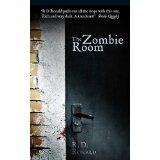
Eclectic Reader Challenge 2013 – Action Adventure – The Zombie Room – R D Donald

51zwoI7vcmL._AA160_This is a genre I am not really familiar with, I must admit and I didn’t really know what to pick when I decided to do The Eclectic Reader Challenge. The Zombie Room sounded interesting – it was about human trafficking and I expected it to be a traumatic read. I expected it to be difficult. That would have made it more interesting.

There was certainly a lot of action. The events never really stopped happening. However, somehow this didn’t make it into a page turner. There was no tension and I didn’t feel compelled to read this at all. In fact, if I hadn’t been reading it as part of this challenge. I doubt I would have made it to the end.

There are traumatic events in this book. But they are described in such a flat way that I did not feel effected by them at all. That was the main problem. I felt no connection to the characters, to the events. In short, I did not care. And it seemed that most of the characters did not care either. Nothing seemed to really effect them either.

Ultimately, I think this was the problem for me. I write psychological stories and I like to read them as well. This story was the very antithesis of a psychological story. There was no knowing the inside of the character’s heads. They didn’t seem to have emotions or even points of view.

It may be that this is typical of the genre. After all, action adventure does suggest events rather than anything else. If so, I’m not sure that I will want to read any further into it.

Typical Girls Don’t Rebel*

(From The Slits song Typical Girl)

I think it is probably because I have always been quite tomboyish that I have always been suspicious of the idea that gender might be hardwired in some way. I’ve always been more into the idea of gender as something that you do, something that you acquire or learn, rather than something that you have or are born with. As Judith Butler suggests ‘Gender is a kind of persistent imitation that passes as the real.’ It’s a role we all play. And, of course, it always seems that this hardwiring just happens to support traditional gender roles. How very handy.

As part of my research for Choose Your Future I have been looking into this idea. Are men really incapable of reading emotions or do we just not encourage them to learn? Are women really no good at reading maps or does the social belief that they are stop them from even thinking that they are. After all, if you are that person who doesn’t fit the stereotype, do you admit it or do you downplay your own ability in order to fit in.

It is surely far too difficult to separate nature and nurture. One of the first things that children pick up is what is expected from their gender. Parents are also so very concerned with their child fitting in. Even now, my mother expresses dismay at my fashion choices and tries to encourage me into things that she thinks are more feminine. As well as pointing out babies to me in the hope that I’ll find them so cute I won’t be able to resist my urge to get pregnant.

At the minute, I’m reading Delusions of Gender by Cordelia Fine. It could not be a more apt title. The relationship between the social and biological is extremely complicated and who can say which came first. Does our brain effect how we behave socially or does society effect the way our brain functions? What does the fact that some male brains process emotions in a different place to some female brains really mean? Can we really make judgements about behaviour from looking at which parts of the brain light up? It is not as obvious as you might think.

It certainly does seem true that social factors can effect our perceptions of our own and others’ genders. For example, women given a talk about women who achieve well in maths and science did better on the maths test that followed than women told the opposite. (It goes without saying that the ability of all women was, in actual fact, about the same.) Similarly, women tend to rate their ability at socially unacceptable traits such as being good at maths as being worse than it actually is.

What I think when I hear about research that suggests gender differences are hardwired is what’s in it for them. Why would it be good if these differences were hardwired. And of course, the answer to that is in the title of the blog. Typical girls don’t rebel; they are polite, demure, do the housework, stay in their place. And typical boys keep all the power for themselves.

Choose Your Future – New Project Excitement

Blimey, it has been busy these last few days. What with exam papers to mark and supply work going haywire, I seem to have been nowhere near my computer lately. At the same time, I am enthusiastically scribbling chapters of a new novel at any spare moment – on the tram or train, before I go to sleep and over breakfast. No moment can go to waste.

As I mentioned in an earlier blog, this will be a different genre and style from Shattered Reflections although some of the concerns are the same – sexuality, gender, power and violence – but also adding in other of my pet concerns such as the nanny state, reality TV and the class system. It will be set about 150 years in the future which is fun as it allows me to create a whole new world. In fact, as I am grumpy and given to moaning about everything, it is definitely not an issue finding things to write about. In fact, it is more difficult trying to rein myself and keep to the subjects that I have so far planned for.

I am toying with the name Choose Your Future but this has already changed a couple of times and will probably again. (I didn’t settle on Shattered Reflections until quite near the end of the writing process.) Certainly, it will be a title about choice as that is a major theme. I have written about 40000 words so far (more, actually, as that is the total from what I have had time to type up. There are notebooks waiting for that privilege).  At the current rate, it shouldn’t be too long before I have a first draft although that is just the first step in a long process of editing and reading, it is still quite exciting.

The joy of teaching Literature to teenagers

It is always entertaining trying to teach novels to 15/16 year olds whose attention span can just about manage a go on the x-box or to watch a video on Youtube before getting bored. A book is not very exciting in and off itself and it takes far too much concentration (from their point of view) to make it come alive. The first thing, on studying a new book, is always cries of ‘When will we be watching the film.’ (I once made the mistake of choosing Catcher in the Rye for my GCSE text for which there is no film and during which the kids sulked for the entire term. I was the meanest teacher in the world.)

Previously, I have taught Of Mice and Men and there is always some excitement at the first time that George calls Lennie a bastard. Especially if I am reading. It is funny how appalled pupils are at this swearing considering the fact that you hear them yelling fuck and cunt at almost random intervals when you make your way down the corridor. it’s hard to know which they find worse – that swearing is written down in a book or the fact that I would read it out as if it was perfectly normal. In fact, I always read it with a suitable amount of anger, which only adds to their astonishment.

This year, we are studying Lord of the Flies and there was a similar bit of joy to be had when Jack says ‘Bollocks to the rules.’ I wasn’t reading and the poor kid who was nearly died a death at having to say such a thing. Especially when I made him read it again, ‘with more feeling.’

Lord of the Flies has brought up a problem to do with language change. The use of the words ‘gay’ and ‘queer’ in this novel is very confusing for them. Especially as Simon is called both gay and queer in the same chapter. I could see that my explanations of what these words could also mean – happy or bright and odd or strange – were not cutting it. Regardless of what I have said to them, I would wager that at least one of them will write that in the exam that Simon was homosexual.

They are at least, starting to appreciate the storyline and I have really enjoyed reading it again. It still resonates, I think although I’m sure we all believe that we are so cultured now. You only have to watch some people in a crowd – say at the riots a couple of years ago – to know that civilisation is a very thin sheen indeed.

New Challenge Needed

Well, the 30 day book challenge is finally over. A sigh of relief then, definitely. But also the certain knowledge that I would like to keep up the blogging pace and I would now have to think of my own subject matter. No fun, this having to think lark.

So I would like to say two things in this blog. The first is a great big thanks to all of you who have liked my posts and those who have started to follow me during this last month. It is incredibly flattering and always a surprise when people like my posts and I never really expect it. I can’t imagine why anyone would want to see the inside of my head on the page. Sometimes I don’t even like it in there all that much. So, thank you all.

The second thing is I am looking for a new blogging challenge. Something similar to the 30 day book challenge which was good because it wasn’t reliant on my finishing a book under a time scale. If you know of anything like this, please let me know and I will consider doing it.