

Genre: Feminism, Academic
Narrative Style: Academic
Published: 1963
Rating: 3/5
Format: Kindle
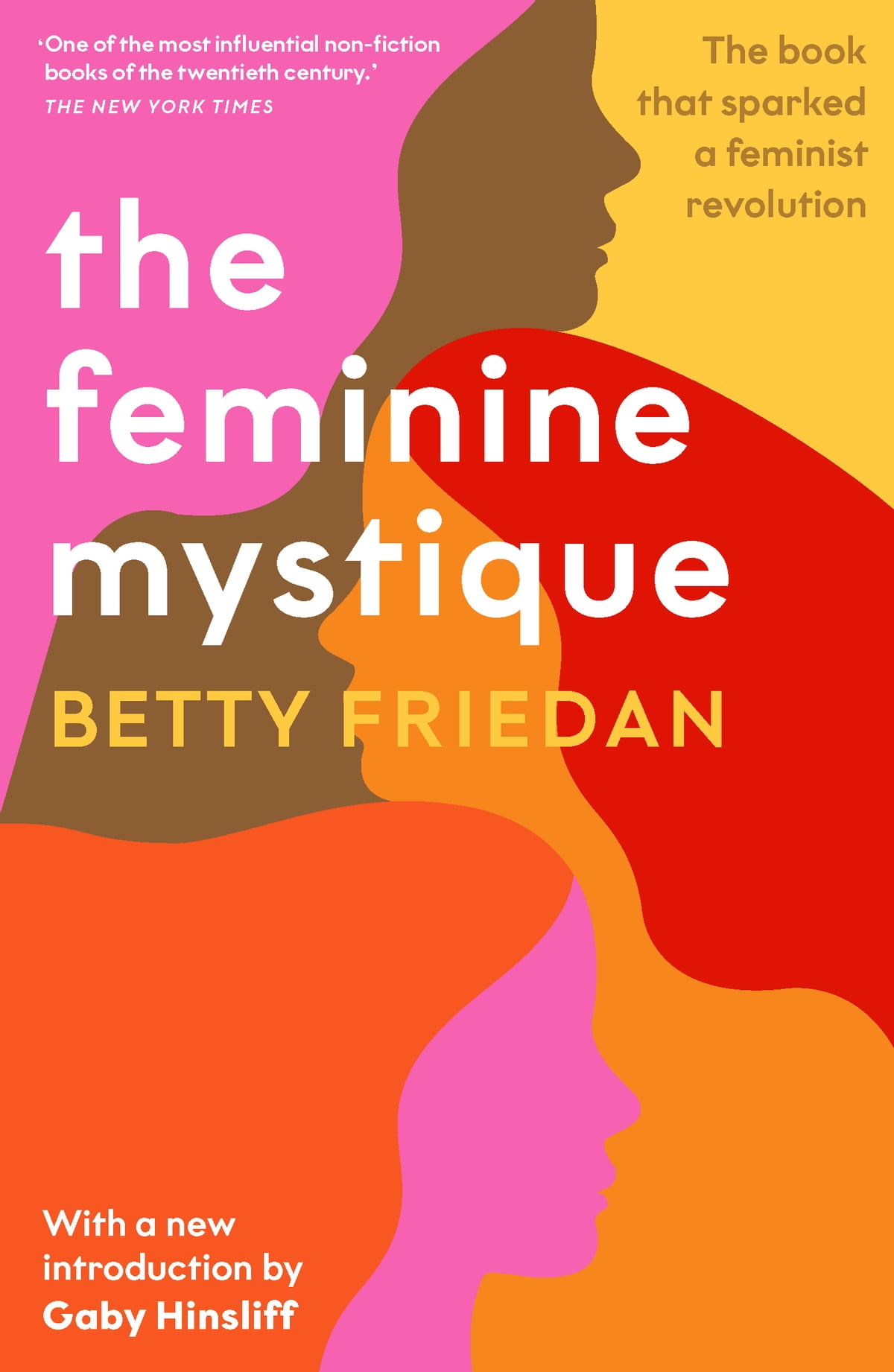
Synopsis: When Friedan does a survey of her old college classmates, she finds most of them are not using their education and she wonders why. She starts to speak to more women and realises that they have put motherhood and having a family first and many of them feel dissatisfied and don’t know why. She calls this ‘the problem with no name’. She comes to realise that the way American society frames femininity has forced women back into the home. These assumptions that women should be fulfilled merely from housework and children, she calls The Feminine Mystique.
Time on shelf: I bought this during lockdown (2020) after watching the TV series Mrs America.
Reading Challenges: TBR Challenge hosted by Adam Burgess at Roof Beam Reader.
I vowed to do more academic reading this year – I used to read a lot of academic works when I was studying for my MPhil and I really enjoyed it but I’ve got out of the habit lately. Friedan seemed a good place to start as she is such an important name from that era of feminism.
Friedan has an straightforward, anecdotal style which helped put across the sometimes complex ideas that she was using to support her idea that American women were pushed into being wives and mothers, rather than focusing on their careers. Even women who had been to college. She then outlined the factors that she feels hold women in this place.
I enjoyed reading this book. The beginning, particularly, still seemed apt today. There are still a lot of girls that can only imagine themselves as wives and mothers, still a lot of advertising that makes it clear that this is women’s role. You certainly never hear boys say that all they want in the world is to be someone’s father.
Friedan uses her own experience – describing how she chose marriage and motherhood over her career in psychology – to show how women felt frightened to wait too long to get married or get too educated. She discusses how men make all the decisions about what read in magazines (all the editors are men), about what advertising is directed at them (all the ad executives are men) and so they feel they have no choice but to become this infantilised version of a woman that these men have created. All of which fits with what I felt I knew of women’s role in the 1950s.
But as I read on, I found it harder and harder to be completely on Friedan’s side. Obviously, I don’t know what it was like to be a fifties housewife, trapped in a marriage, the only outlet for her energies her children but Friedan chooses to use the concentration camps as a metaphor for this which made me feel very uncomfortable. She says ‘In a sense that is not as far-fetched as it sounds, the women who “adjust” as housewives, who grow up wanting to be “just a housewife,” are in as much danger as the millions who walked to their own death in the concentration camps—and the millions more who refused to believe that the concentration camps existed’ and calls it the ‘comfortable concentration camp’ throughout this chapter. This is clearly an exaggeration and feels somewhat self indulgent. It trivialises the holocaust and makes Friedan’s rhetoric a little ridiculous. Friedan has since said that she feels ashamed of making such an analogy but that doesn’t make it any easier to read.
Friedan does a very good job of debunking Freud and his ideas about women which were very popular at the time when Friedan was writing. However, she is unable to escape his influence when she talks about homosexuality which she believes is due to bad mothering that she feels is softening the nation’s men. She calls homosexuality a ‘murky smog’ which is spreading over America. This is downright homophobic. It is obviously difficult to separate a writer from their time and thinking about homosexuality at the time was probably closer to Friedan’s ideas then ours in 2023 and Friedan has acknowledged her error in not supporting LGBT rights. Even so, it would be nice to think that Friedan would see that it was not just women that were harmed by the patriarchal society.
Having said that, Friedan does not acknowledge any women who are not like her – there is nothing of women of colour or working class women here – not even an acknowledgement that things might be different for them. The problem with no name’ is only a problem for those with the money and leisure to be bored. Those who wanted ‘more’ meaning furthering their education or starting a career, would presumably have the money to have a nanny or a maid. She also cannot imagine a woman without a man or a woman without children. This book is a solution to a problem that only a select group of women had.
Finally, as the book carries on, listing one thing after another, it becomes hard to imagine how any woman might break free of it. Indeed, if it so all encompassing that Friedan compares living in a white suburban home to the concentration camps, how has she managed to break free of it in order to point the way to other women? Is she some kind of super woman to have realised what the issue is and pass on her advice to other women who are like her?
Overall, I’m glad to have read this and I see why it was important. but I think I need to follow it up with reading some writing by women from the groups she doesn’t mention, starting with bell hooks From the Margin to the Center.
 kepagewriter
I haven’t read this but after reading The Golden Notebook a year or so ago I’ve been meaning to read more feminist studies from the ’70’s. I can see why they were important at the time but this, like The Golden Notebook, is so white and middle class as you say, I’m glad we’ve moved beyond that now. The references to concentration camps are just dreadful though.